As We Continue On

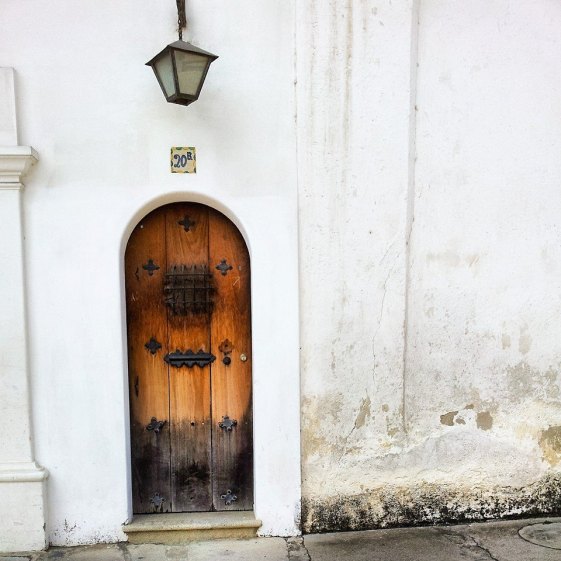
Second life DvoraFreedman

Photo: Dvora Freedman


Our lives are partially the story of others, interwoven into our own. In the good and the bad and the things that time may shift to someplace in between. We are who we let our story make us into. Like the seasons that spin about us, we recycle some bits of our story and reuse other aspects to rebuild or grow from. Through it all, our lives crease along the odd and unexpected, yet are fed by the mundanely profound interactions that form the backdrop to the breaths we take, each day, each moment, as we continue on.


For The Daily Post

Grain of The Past

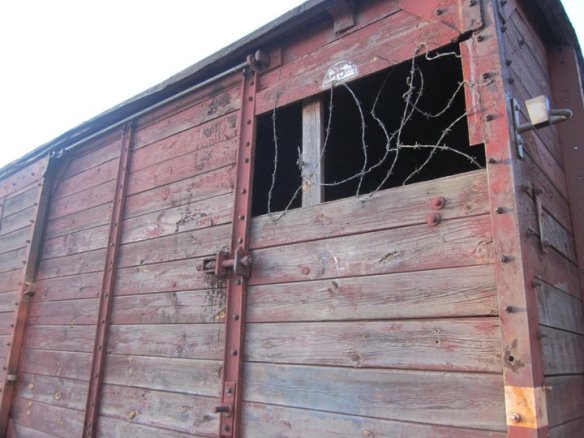
Poland OAsif

Photo: O. Asif

May the grain of the past

Tell the story.

May history speak

Of the truth

That must

Never be buried

Like heads in the sand,

Or in hesitant voices

That won’t take a stand.

May the stain of the past

Be the guide to these times

So no alleged ‘fine men’

Torch-lit hate in the night

Once again propagate

Let return

Evil’s blight.


For The Daily Post

Pancake Danger


balance4

This “Danger!” photo challenge made me laugh (okay, chuckle nervously, more like). Because to a child – or the adult remembering – the mismatch between what they know should happen and what seems not to, defies any sense or comprehension.

This was my reaction, as a young child, to the Balancing Rocks in Zimbabwe (at the time Rhodesia), to the southwest of Harare (at the time Salisbury). People strolled their leisurely horror … pointed and laughed and photographed their versions of pre-selfie memorabilia. My siblings climbed onto their certain crushing deaths, and no one seemed perturbed by the giants waiting to turn ant-humans (or their vehicles) into pancakes.


balancing rocks zimbabwe

Balancing Rocks. Photographer Unknown


Photo Challenge: Danger!


The Line

1656118_10151850678430989_893349416_n

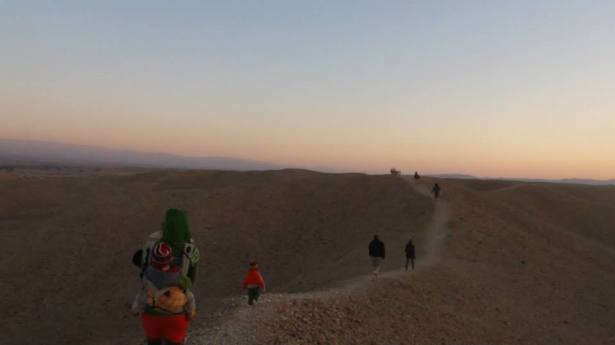
Photo by: A. Barlev


They walk the line as morning comes

As new day draws its dawn,

They walk as night approaches close

And sunset sinks alone.

They walk the line of now and then

Of sand and rock, death, growth,

They walk as footsteps mark the soil

And press it deep with hope.

They walk where many walked before

With others not yet born,

They walk in dust of those who passed

Of stories told and torn.

They walk to sew new roads to life

Connections old as time,

They walk a line of young and old

Their hearts as close as mine.

For The Daily Post

Darkness and Light

light path

As the holiday season comes into swing (even if the weather on the East Coast has not gotten the memo…), I find myself thinking of the theme of light that permeates the season; and of the fears of darkness it hopes to overcome.

Someone noted to me–rather resentfully–how angry they are with the holiday season “hijacked by all this talk of fear and dark and hate and ugliness.” I was a bit surprised, because to me it was the opposite: This is probably the most apt time of year to face polarities of light and dark … Oh, it is a most difficult subject to approach and manage, but what can be more timely than doing so in the time of celebrating light and highlighting the survival or the birth of a religion? Or humanity’s perception of possible ongoing life?

So I think of the realities of shadows that too many are hell-bent on casting (either in advocacy of terror or in preaching overgeneralized fear and hate); and I think of the many lights that can chase those shadows away. I think of those who somehow gravitate more toward dark than illumination; and of the many who find light a far more satisfying source of power than adding to the pool of dark.

This year the battle between light and darkness may be especially evident, but the struggle has been then for eons; as did the valiant effort to shine light onto darkness and highlight life, not death.

This time of year, particularly.

The approach of the longest night has always been a time of worry and wariness. All through history, humans have found ways to combat it with light and celebrations, prayer and devotion, with reminders of the light-to-come and the reminiscing on the light that did return even after times of darkness. The miracle of light and hope and life.

Peoples the world over have some holiday of light around this time of year. Christianity itself ‘piggybacked’ onto existing holidays (and moved the celebration of the ‘birth of Christ’ from the summer, when Jesus was actually born, to near the Winter Solstice), to fill the need to note light and rebirth at the time of utmost darkness. People always needed to remind and rejoice the slow return of longer daylight and the promise of regrowth, spring, future harvests; life.

So … maybe it is not so strange that we are facing yet another battle of dark and light in this time of archetypical struggle between a sense of doom and a holding on to hope. There have probably always been those naysayers who predicted death, destruction, loss (or who hung the prevention of awfulness on penance and ‘sacrifices’). However, history itself also shows how humanity repeatedly–universally–found a way to hold light high and sparkle it abundantly. Cultures chased dark not with gloom but with sharing light, kindness, warmth, and celebration.

May we, too, remember that light will come. Is already on its way to coming. May we hold fast to the knowledge that the days will slowly overcome the night of soul and darkness will lose hold and weaken. We can hasten it with sharing our own light. With spreading kindness. With opening our hearts to those in need. With refusing to feed or amplify the darkness. Dark needs growth to spread, but light is never diminished when it is shared. We can help it grow by holding on not to fear, but hope.

Wishing you and all a season — a lifetime — of light.

light

Mother’s Day–A History of Seeking Peace

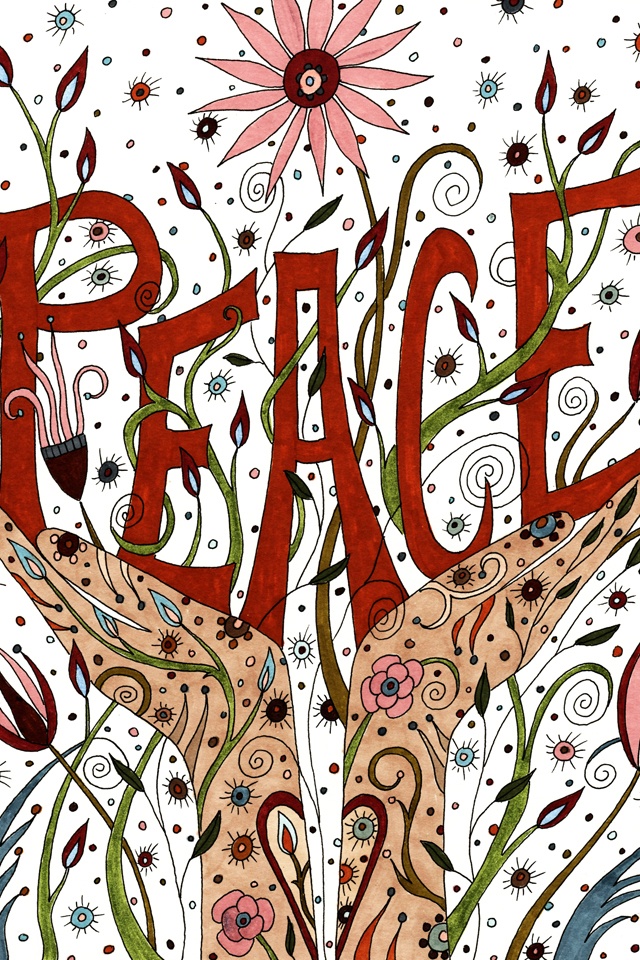
Peace is in our hands ~ artist Valerie Lorimer

Peace is in our hands ~ artist Valerie Lorimer

As we celebrate mothers of all forms and being, those carrying and bearing life, laboring to nourish and to nurture, guiding, teaching, holding, comforting, soothing, showing, listening, singing to and being with … Let us also remember where Mother’s Day originally came from and its purpose–a purpose that in its own way represents the yearning and dedication, hope and tenacity of mothering:

“let them then solemnly take counsel with each other as to the means whereby the great human family can live in peace…” (from the proclamation below)

Here is to peace. To no more carnage. To love. To hope. To no more lost children. To counsel of heart and reason. To no more war.

Mothers’ Day Proclamation / Julia Ward Howe (1870)

Arise, all women who have hearts, whether your baptism be that of water or of tears! Say firmly: “We will not have great questions decided by irrelevant agencies, our husbands shall not come to us, reeking with carnage, for caresses and applause.

“Our sons shall not be taken from us to unlearn all that we have been able to teach them of charity, mercy and patience. We women of one country will be too tender of those of another country to allow our sons to be trained to injure theirs.”

From the bosom of the devastated earth a voice goes up with our own. It says, “Disarm, disarm! The sword is not the balance of justice.” Blood does not wipe out dishonor nor violence indicate possession.

As men have often forsaken the plow and the anvil at the summons of war, let women now leave all that may be left of home for a great and earnest day of counsel. Let them meet first, as women, to bewail and commemorate the dead. Let them then solemnly take counsel with each other as to the means whereby the great human family can live in peace, each learning after his own time, the sacred impress, not of Caesar, but of God.

In the name of womanhood and of humanity, I earnestly ask that a general congress of women without limit of nationality may be appointed and held at some place deemed most convenient and at the earliest period consistent with its objects, to promote the alliance of the different nationalities, the amicable settlement of international questions, the great and general interests of peace.

(Julia Ward Howe, Abolitionist–she also wrote “Battle Hymn of the Republic”)

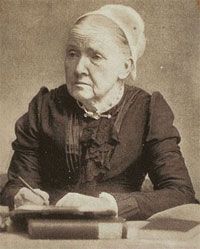
Julia Ward Howe

Julia Ward Howe

Proof of Trying

proof

She came to session in a huff.

“I am SO bad at history,” she stated bitterly. “I hate history.”

After letting in a bit of sympathy and a bit of gentle urging, she pulled out a stapled test striped broad with red–remarks, circled words and crossed out answers–the teacher’s mutilation. A large C dominated the top of the page. She threw the paper on the table, her face a salad of emotions: regret, embarrassment, disgust, disappointment, sadness, frustration, despair, shame.

“I’m not taking this home,” she said. “Can you keep it in my file here instead?”

“How about we look at the test together,” I offered, skirting the question.

She frowned (kids always pick on adult evasive maneuvers …) but nodded grudgingly. We went over the questions and her answers. She was actually almost correct on most, just not quite as the teacher wanted. The girl misinterpreted directions on a couple but wrote accurate facts; misplaced a number on a date; confused an ambiguous passive tense and so got the answer wrong (trick question, that one was); wrote the wrong sequence of correctly memorized events …

The teacher gave no quarter for mistakes of any kind, no leeway. The red marks slashed through the test in an assured hand of criticism. To add insult to injury, the bottom of the second page read “Try harder next time” … harshly assuming that the effort was what lacked, rather than skill or speed of processing.

In effect, the mistakes were very good proof of trying. They were signposts of the effort put in by a child who finds memorizing difficult and worked hard to understand the unfurling of what happened to whom where and when and why. She knew the material, even if the test plumbed all her weak spots and completely ignored the many things she studied.

Comforted some by the validation of her work, she calmed, vindicated that she wasn’t “bad at history” and bolstered by understanding that while the teacher had the right to take off points for errors, there were many places where knowledge came through, if imperfectly.

For the rest of the session we worked on attending to test questions: identifying exactly what was asked, highlighting important words in questions and directions, re-wording it if necessary, reading all the answers before settling on the best one, writing down key-words. Strategies for testing.

In the end she left with the offending graded test in her backpack, ready to take it home and armed with the understanding of what she did right, not only what came out wrong. Still disappointed, she was at least no longer ashamed.

“I think Ms. J sure does loves red,” she noted, a bit of snark in her voice but humor finally restored. “Maybe someone should get her a green marker …”

Rules? What Rules?

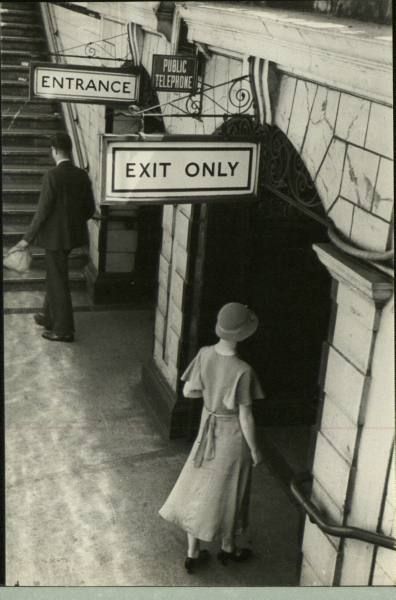
A friend sent me this photo, taken 1910 … and I thought, it was the best BEST example ever, of bending the rules … (or at least those rules that make no sense beyond to those who made them … )


livefree

I was reminded of it today, after speaking with a young boy who complained that he got into trouble–yet again–for breaking “another of the teacher’s stupid rules.”

The boy’s mother had her mouth already open to reprimand him for using a word one ‘should not say’ in the context of one’s educators … but I gave her one of my ‘please don’t’ looks … and she took a deep breath and nodded.

“What kind of rules?” I asked.

“Stupid ones,” he grumbled. Then seeing that I was actually waiting to hear an example, he sighed. “Like not being allowed to hold our pencils while we’re reading. She keeps taking points off when I break the rule.”

“Did she tell you why she doesn’t want you to do that?”

“I don’t know,” he shrugged, “because she said so?”

I chuckled. “Fair enough … sometimes grownups say that you should not do things just because they say so … but I was wondering if she ever actually told you why. Sounds to me she maybe has a reason–maybe kids play with their pencils? Drop them a lot and it is distracting? Doodle in the books?”

The boy peered at me with a look that let me know that I have just lost about 200 points of coolness in his view along with several dozen in the IQ department. “Sometimes we’re supposed to write in our books,” he stated, “… anyway, if she said it was for that it would make sense, sort of” he added. “I don’t drop mine. I just hold it. She doesn’t want us to hold the pencils just because.”

I raised an eyebrow. “Just because?”

“Yeah,” he stressed. “She said that we don’t need a pencil in our hands for our brain to read…” the boy pouted. “How does she know what my brain needs for reading? What if the pencil reminds my brain what the letters are?”

Point made.

I actually could see how it could do that.

I told the little guy that if it helps him to hold the pencil when he’s reading, to go ahead and do so.

He looked at me, suspicious. “It’ll get me in trouble.”

“Not if you tell her that I told you it’s okay for you to keep holding it if it helps your brain.” I smiled, more than a tad conspiring.

His eyes grew large, and the grin that followed had enough wattage to light up Manhattan’s night sky.


A Zoo in the middle of NYC

“My grandpa is very old,” the boy told me in a hushed tone.

“He is?” I smiled.

“Yeah, he even lived when it was no iPhone and no TV!” he announced. “That’s even very old.”

“I guess so,” I noted, keeping to myself the fact that I, too, lived well before there were iPhones (and when there were only black-and-white TVs).

“I think maybe they had a little iPhone, though,” the boy reconsidered, disbelieving a possible reality without the device. “Because they taked pictures … like with iPhone camera. My grandpa showed me a picture from when they had a zoo in the middle of New York.”

“The Central Park Zoo?” I offer.

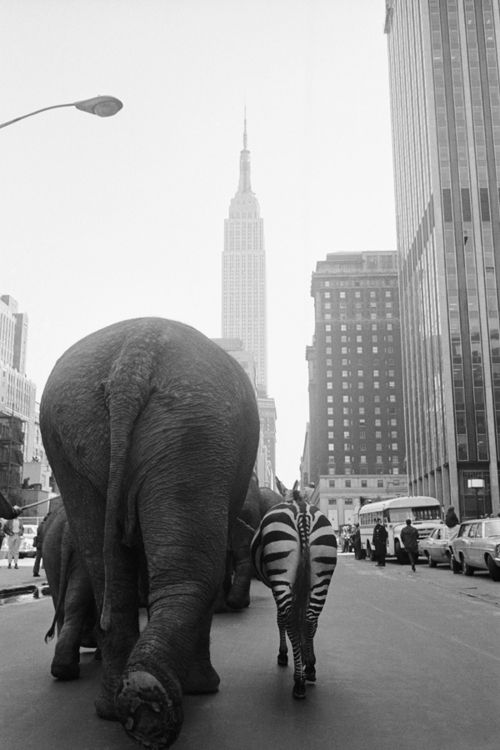
“No!” the admonishing tone lets me know I am completely off track. “We still have that zoo. Its not from old times. It is there now even. I mean a zoo in the middle middle middle of New York. In the middle of the street Empire building. With wild animals and elephants.”

“Maybe you are thinking of the Museum of Natural History?” I tried.

“You not listening,” he shook his head at me, exasperated at my inability to follow such a simple narrative. “I telling you and you’re not listening. They had a zoo in the middle of the middle of the street. Zebras and things. Walking around. Maybe it was when the dinosaurs still lived …” he mused.

I looked helplessly at the mother, who was doing all she could to keep a straight face.  This little guy did like tall tales, and I was wondering if this story was a combination of dream, stories, and wishful thinking. His mother’s levity confused me further.

“I’m sorry,” she giggled. “He did the same to me … You see, what happened was that my dad showed him some photos of old New York in a book and they came across this photo of … well … here, you’ll see …” She pulled out her phone (yes, an iPhone) and flipped through some apps before turning the screen so I could see.

“Told ya!” the boy trumpeted. “When it was a long time ago and my grandpa was still a little old they had a zoo in the middle of the middle of the street Empire Building! See?!”

NYC 1968 Circus in town

NYC 1968 Circus arriving in town, 33rd Street