Forget The ABC

Photo: Sue Vincent


“If you knew where it goes, would you follow?”

Efran peeked down the leaf-strewn stone shaft and rough steps. “I can see where it goes,” he pointed. “There.”

Jerow shook his head. It could be difficult to know with Efran, whose disposition tended to be ebullient to the point of daft, whether the lad was deliberately vexing or totally clueless. “Yes, you see what looks like the bottom of the stairs, but what’s behind it? Where does it go?”

Efran took anther step and leaned closer to the crack between the stones, absentmindedly pushing back the locks of hair that forever escaped out of his braid. “Well, only one way to know.”

“Wait,” Jerow reached for Efran’s arm. He glanced behind him toward the encampment they’d wandered away from. The trees obscured it. Unless others were stretching restless legs while the elders deliberated the day’s route over morning tea, no one would know where they are. “Shouldn’t we tell someones?”

“Why? So they open a whole new round of discussions about who should be allowed to go down there first and at what auspicious hour?”

Jerow had to admit Efran had a point. If the elders knew about this, they’d probably find reason to forbid it, and if they didn’t know about this, they’d forbid it all the more. Probably claim ABC and CBC.

“Advice Before Carelessness” and “Caution Before Curiosity” were endlessly drilled and just as often resented. How was anyone to learn anything new or do anything exciting if inevitable delays always took precedent to investigation?

Still, he wondered if in this particular case there was merit to at least asking before launching oneself into a crack in the ground. They were, after all, in what everyone knew were haunted territories. He looked around again, almost hoping for someone to stop them.

“Forget the ABC!” Efran dropped his feet onto the steps and used his arms to brace against the narrow walls. “I want to see! Stick to your letters or come with me!”


For Sue Vincent’s WritePhoto


Fixer Upper

Photo prompt: © Penny Gadd


“It that better?”

“No! You made it worse!”

“Sorry. What direction?”

“To the right! No, the left. I mean, to my right, not your right! There. No! Stop! You over did it. Now it’s worse again.”

“Fine. I’ll go slowly. Tell me when.”

“When. I mean, not yet. Stop! No, a little more.”

“Are you sure it isn’t straight? You’re a little lopsided yourself. Have a sip of water, maybe.”

“I’m fine. Stop micromanaging me. I’m concentrating. Shush and let me see …”

“Go ahead. Take your time. Don’t mind me. I’ll just perch here and twiddle my vines.”


For Rochelle’s Friday Fictioneers


Driving Mrs. Mama

Photo prompt: © Linda Kreger 


“Hope the driver remembers.” Ella fretted.

Lynn shrugged. “He’ll have to run us over if he forgot.”

“You two, line up already and stop the chatter!”

“Shush, Jerry! Let us cherish the fruits of our labor.”

Your labor?! Who manned the table saw and has more splinters than a cactus?”

“Poor Bearded Baby … I sanded them all! Quiet, here she comes!”

The van stopped at the cul-de-sac. The driver walked around to the rear and wheeled Mama down.

“Welcome home, Mama Jean!”

“Hey, Ella, ditch the camera! No slackers till the Driving Mrs. Mama Home Train clears the ramp!”


For Rochelle’s Friday Fictioneers


Prepositionally Prepared

tucker-good-_O_2XJp3cKs-unsplash

Photo: Tucker Good on Unsplash


Before first light was when she meant to leave, and working through the night she made sure to have everything she needed with her. When that was done, she double checked that all other items were stuffed into bags or packed inside boxes or sorted into their respective containers. It mattered to her that things maintain their places: on shelves, by couches, under cabinets, in canisters, outside on the terrace, underneath the eaves up at the attic, even stacked along the small shelves that she’d tucked between the twin beds of the guest room or strung across the top of the door-frame inside her closet. She believed it important for one to have whatever they needed near at hand while at the same time not letting life be scattered all over toward disorder.

It wouldn’t do to seek something and not find it untill after it was too late to be of any use. Or worse, redundant instead of necessary.

She was leaving and had no plan for or intention of return. But when they found the place, she wanted whomever it was to know that she had made arrangements on their behalf and had been on top of things to ensure their life, too, could be sufficiently organized.


(Just went to town and had some prepositional fun with that, I had … )

For Linda Hill’s SoCS prompt: Preposition

Whale Of A Time

Photo prompt: Dale Rogerson


Finally.

They sent the younger children on their way. They cleaned up after breakfast. Hung the wash. Made the bed. Picked up after the husband, the father in law, the older sons (who in almost all cases were sprawled, asleep, with an empty plate of this or that by their side, as boys of certain ages seem to be).

The market waited. And the dinner to start. But for the next hour, there was just them. Their gossip. Their shared stories of the minutia of struggles and laughter.

It was their sanity’s lifeline, midday at Juanita’s “Whale Of A Time.”


For Rochelle’s Friday Fictioneers


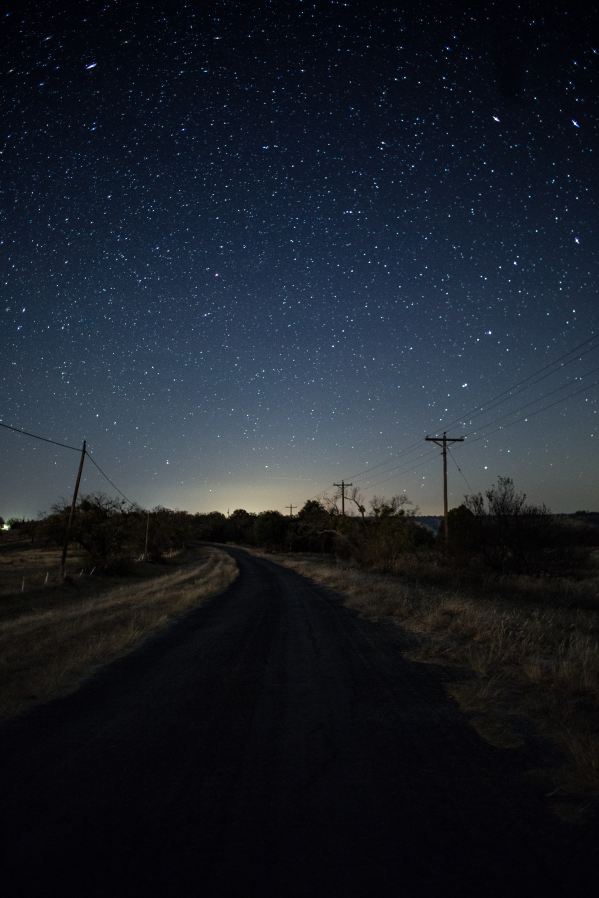
A Stranger’s Eyes

conner-baker-dXpWscmNgXw-unsplash
Photo: Conner Baker on Unsplash


Her hand clasped the steering wheel and she fought against the tears that threatened to blur the road ahead.

The wheels whirred over miles and miles of black as the stars spread a rotating canopy over her car. A bug atop a line drawn in the sand, she was. A smidgen on the wide expanse of life under the heavens.

She won’t go back.

She could not allow it.

He had her squelched under his thumb for so long that she did not recognize her own face in the mirror. Her eyes had become a stranger’s.

“There are times,” her mother once said, “when a woman must believe herself. You may think yourself broken, but you will love again the stranger who was your self.”

She’d thought it cryptic at the time, melodramatic.

She understood now. “I’m coming home to myself at last, Mom.”


For the dVerse Prosery prompt: Love after Love in 144 words


The Keys To Happiness

alfred-schrock-IEK9fXzLZKs-unsplash

Photo: Alfred Schrock on Unsplash


Two years, and he could hardly remember how he’d managed to survive before.

The rush. The never ending tasks. The constant worry. The being pulled a million ways by demands and the dreams of others.

He’d run on fumes for months on end, then crash and burn in ways that hurt not only himself but also the ones whose lives were closest. All those bridges he’d burnt.

It was the last burnt bridge that had paradoxically saved him. It became a light from burning embers. He’d flown out to care for an ailing uncle, but in truth just to escape the consequences of another interpersonal disaster. He expected to discover his uncle, who’d been the family’s previous pariah, on death’s door. What he did not expect was to find him so content.

“Live here,” were his uncle’s last words. “Need little. Use less. The Keys saved me. Claim your turn.”


For What Pegman Saw: Florida Keys


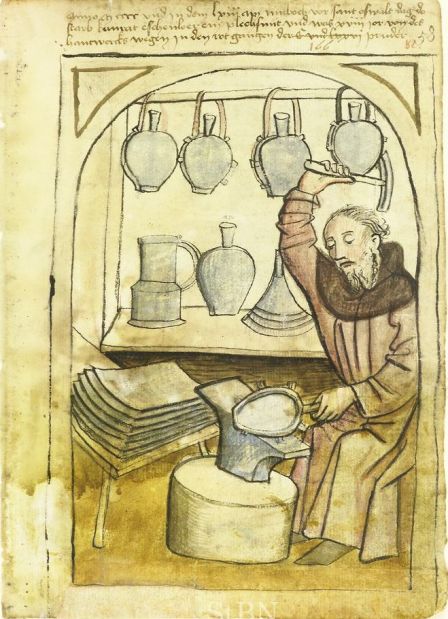
For A Comb

https://paleotool.files.wordpress.com/2014/08/tinsmith.jpg


“For all the Gods!”

“What is it?” I startled. This was the closest I’d heard Papa get to swearing.

He lifted the milking-pail to reveal a wet stain on the earthen floor. A defiant fat drop fell, confirming.

It was our only pail.

I emptied the soup-pot into our bowls. “I’ll scrub this, Papa. It’ll cool and do till the morrow, when I’ll take the pail to the tinker. He’ll repair it for my comb.”


For Sammi’s Weekend Writing Prompt: Tinker in 75 words


The Constitutional

Photo: Sue Vincent


“He never would’ve been out there without his hat.”

Elizabeth shook her head in suppressed exasperation. Of course her mother would find fault.

The older woman perched on the edge of the folding chair that Elizabeth and the fresh-faced health-carer had dragged over for her. The flickering episodes of weakness and disorientation had grown more frequent since Grandfather died. Perhaps it had been the shock of finding him, as her mother had, slumped against the edge of the bathtub. Perhaps it had been the letting go that followed endless years of caring for an increasingly ailing parent. Perhaps it was her mother taking on the role of family invalid.

The doctors certainly did not seem to know.

Or know the difference.

Not that Elizabeth could not understand the wish to let go. She could. Very much so.

Caring for her increasingly moody mother gave her a taste of what it had to have been like for her mother to endure the constant worry over and never-ending bitterness of a man who could no longer do what had sustained him. The amicable if somewhat taciturn grandfather had turned into a fussy, verbally cruel, bed-bound tyrant. Her mother’s father had to have become insufferable.

A little like her mother was becoming.

“They should’ve made a hat. It’s all wrong without a hat.” Her mother scowled.

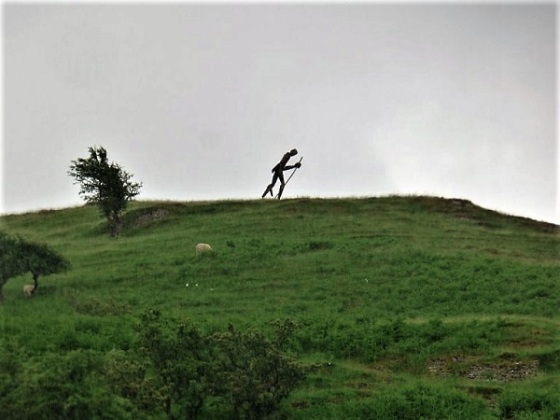
The figure on the hill leaned into the wind. Impossibly lithe and utterly determined, it embodied how Elizabeth the young child had known him. As far back as she could remember, Grandfather never missed a day of what he’d called his “constitutional.” Rain or shine or wind or hail or mist or blazing sun, her grandfather would leave on his solitary afternoon walk, returning — like clockwork — when the sun had disappeared behind the hill.

Elizabeth would wait for him, her child’s body pressed against the stone fence that bordered the estate, and watch his shadow edge on home, his walking stick as part of him as any limb could be. At some point his tweed pants would materialize at the bottom of the shadow, and in another step or two the rest of him would unveil into certainty.

By the time he’d reach the gate, his windblown face would hold a smile for her. He’d nod a welcome, compensating with it for the long wait, for the yearning that he’d take her along (he never did, nor had he taken any of his children before that), and for the fluttery worry that perhaps the shadowed figure was not Grandfather at all, but in fact an elf or ghost or some trickster’s apparition.

She gazed at the silhouette on the hill, its stride frozen forever in the time before a stroke changed everything.

Hat or not, this was how he’d want to be remembered.

“He’d stuff the hat in his pocket when the wind was high,” she whispered, her voice full of sudden sorrow. “He’d pull it out and put it on a step before he reached the gate.”

Her mother’s mouth opened in preparation for automatic argument, but then the wrinkled corners turned down as a quiver shook her chin.

“He did,” her voice a child’s in elder’s clothing. “It is exactly what he’d do.”

Elizabeth squeezed her mother’s shoulder and the older woman placed a trembling hand over her daughter’s.

“It is perfect, then,” her mother murmured. “I’d forgotten. Take me home, Lizzy. Let us allow him his constitutional in peace, now that he can once more go about it.”


For Sue Vincent’s WritePhoto Challenge


Gravity

Photo prompt © Jan Wayne Fields


“The box said up to 20 people,” Martin insisted.

I gazed at the purple awning below and my eyes rested momentarily on my cousin’s bare feet. He inherited Uncle Georgie’s hairy toes, I noticed. His impulsive stubbornness, too, it seems.

“That’s not what they meant,” I shook my head.

Martin glared at me as if my IQ wouldn’t make it past the bottom inch of a ruler.  “Twenty people is twenty people, Ralph. Math is math,” he announced and launched himself from the garage’s roof onto the tent.

CRASH!

And gravity is gravity … I sighed. I had 911 on speed dial.


For Rochelle’s Friday Fictioneers