Blessings and a Whisper

Photo: Sue Vincent


Lush grass now grew over the span of stones, though none had grown there in the many years when the passage of feet had mowed and flattened any seedling that had found a crack in which to nestle.

The water gurgled as it had, though, flowing like a ribbon of careless abandon underneath. Incoming. Through. Not one look back. Away.

She wondered if the fish silvering in the stream were the descendants of the ones who’d flapped among the rocks and dove out of the reach of all manner of two-legged hunters. Their instincts certainly remained the same.

Like hers.

Honed by years of flight, and generations of bare escape from calamity and disaster and all manner of two-legged hunters’ spread of misery.

For centuries the stones of the old bridge had been the thoroughfare of goods and news — both good and not — from isolated farms to the town’s market and from the town into the farms, and in that order. It had withstood war and fights and blight and playful dares and cruel shove-overs. It streamed with rain and baked with sun and creaked with ice and endured more than one direct hit of lightning. It had heard the laughter of small children and the cries of same, sometimes not much later after. Where rugged wheels and heavy hooves had carved ruts of rattling passage, now weeds took hold to cover any sign of man.

It stood deserted, and perhaps relieved, since the new and wider bridge was built a bit further downstream. The modern pathway accommodated simultaneous travel in both directions as it carried the weight of the machines that belched dark stains onto its tar.

She’d been warned against attempting to put any weight on the old bridge. They all were. “It’s held by no more than blessings and a whisper,” her grandmother had cautioned. “One step onto the wrong stone and it could collapse.”

And yet, it had outlasted both Grandmother’s life and Mother’s and seemed poised to outlast hers, as well. Perhaps blessings and a whisper were better mortar than the speeding up of time.

“And you don’t have much long to wait to outlast me,” she murmured as she walked to the water and bent to dip her palm. Cold.

As she would be, sans blessings or a whisper, before much more water churned indifferently along, passed under the bridge, and was gone.


For Sue Vincent’s WritePhoto Challenge


Therefore

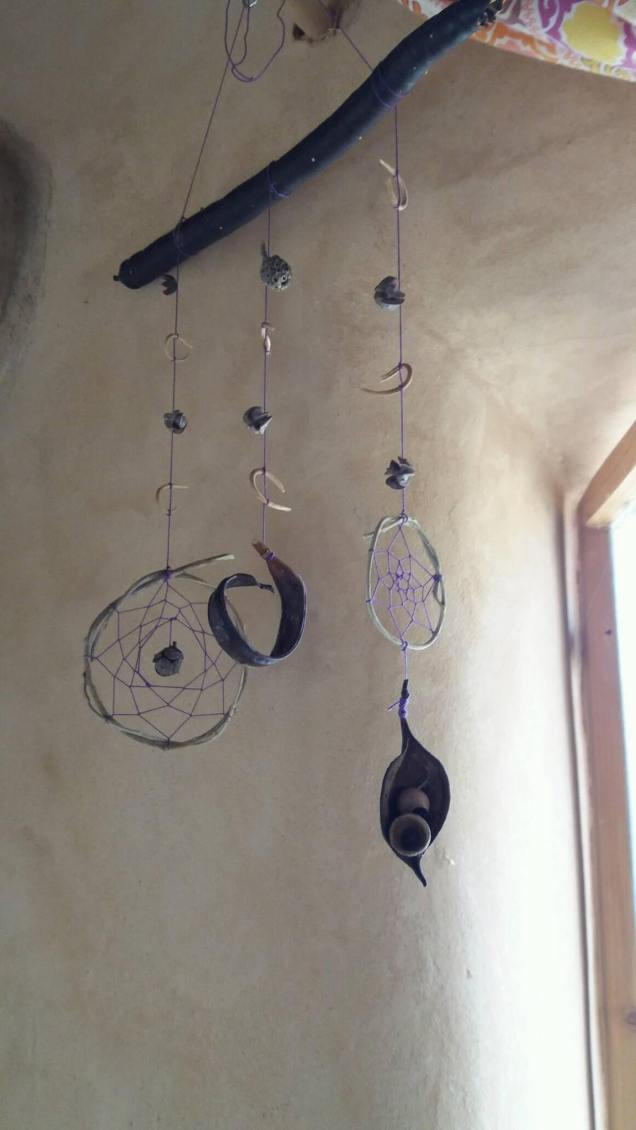
dream catchers OsnatHalperinBarlev

Photo: Osnat Halperin-Barlev


It has come to her before.

The message that had felt like lore

And made a home

Inside her core.

It ricocheted in her heart

Amidst the four walls

Of her soul.

Her spirit knew it,

And therefore,

She left her door open

For more.


For Linda Hill’s SoCS challenge: For/Fore/Four


In Translation

valentin-salja-762005-unsplash

Photo: Valentin Salja via unsplash


“You can’t do it.” Lizbeth scowled.

Betty shrugged a shoulder at her cousin and put the hand-bound manuscript in the box beside her.

“You’ll ruin it.”

“I won’t,” Betty countered. “I’ll be gentle.”

“That’s not what I meant!” Lizbeth folded her arms and planted her feet firmly on the dusty floor of their late aunt’s apartment. Her color rose. She was jealous but would never admit it.

Betty always got the best of everything: Summer camp, long visits with Aunt Mathilde, a degree in writing, even a dad who taught her Swedish.

“I’ll be gentle in my translation,” Betty caressed Aunt Mathilde’s poetry booklet. “Dad will help. Her words languished long enough without being read.”


For Sammi’s Weekend Writing Prompt: Translation in 115 words


When She Leaves

shallow focus photography of brown tree trunk

Photo: Mahima on Pexels.com


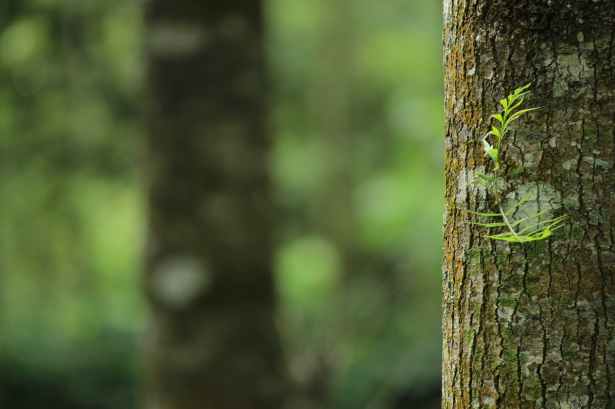
When she leaves, there will be time enough for all the things that should have happened and yet didn’t. When she leaves, a space will open to allow what was yearned for but manifested not. When she leaves — in a week or month or year or decade — a leaf would turn to let the newness grow.

When she leaves.

Yet for the time being she remains.

She has no choice. Or not a real one.

She plods along the rutted path made by the heavy feet she’d dragged so many times before. She does what must be done. She smiles. She nods. She cooks. She holds.

She finds in every day a small reminder of the hope. A sliver of a dream. A memory of what is yet to come.

It sustains her.

It has to.

It’s all she has.

Until she leaves.


For the SoCS writing prompt: Leaves


Contented

Photo: Sue Vincent


There was nothing wrong with her beyond that she could not abide much in the way of interference, and had always preferred the company of fair-folk and the song of wind and dust-in-light to the over-stimulating presence of other humans.

She’d gotten through the requisites of growing up: the schools, the get-togethers, the expectation of having friends, the beck and call of work one needed in order to make a living. She’d endured the close proximity when needful, but mostly let the din of people’s voices wash over her like an avalanche, while she curled up inside her mind and sustained herself on preserved pockets of precious solitude.

Most wouldn’t have believed her had she laid bare her wistfulness for isolation. Or perhaps some would have, but had never said it. She did not much care to find out which of the two or neither it was.

Three decades had passed and the half of another, before she began wondering if she’d live to see the exit of another year or self-combust under the pressure of life’s demands for what felt like constant interaction.

Then Aunt Carolina passed. She left behind a small fortune in savings bonds and an old house no one would have wanted. The latter was to be torn down and the land sold to become someone else’s problem.

Or so the estate managers thought.

Cilia fought them with a ferociousness that surprised her at least as much as it had anyone who’d ever known her. It wasn’t that she’d been a pushover till then, only that she had never found it worth the effort to try and exchange one relative discomfort with another. This was different.

This house was what she suddenly did not know how she had ever lived without.

In the end they relented after she gave up all claims to any of the funds Aunt Carolina had left. She’d get only the cottage and its contents. None of her cousins — not even Marley-the-Meddler — objected. Their share grew with her out of the pie.

The attorney warned her that the house would sooner gobble up what savings she had than be a home that could house her. “The gloomy place is centuries old,” he warned. “It doesn’t even have running water.”

“Aunt Carolina had lived there till she died,” was her retort.”She bathed. I’ll manage.”

She did much more than that.

For the first time in her life she could feel herself actually breathing.

The garden’s stone walls wrapped around her like a hug of moss and ancient patience. The cottage creaked and cracked and breathed as if it was itself alive with memories and whispered sighs of times before. And she did not have to explain to anyone how none of that was a menace. The walls held echoes of calm solitude. The garden wreathed itself in growth. The birds chirped. The kits of a fox mewled. The silence gleamed.

She knew why Aunt Carolina had refused to leave.

“We are like twins stretched over several generations,” she murmured into the fire as the wind whistled in the chimney and the elves made a racket in the trees outside her door. “You must have known, someplace, that I will need to find this. As you had, in your time.”

She stretched her feet and giggled at the big toe that the hole in her sock had liberated. A wooden box sat, heavy, in her lap.

She’d come across it in the crawlspace earlier that afternoon. She’d climbed up after a noise she thought was a squirrel’s nestlings. Instead she found a loose board, half-an-inch of dust, and a pile of rags atop a box.

“The house and all its contents,” she smiled in recollection of Aunt Carolina’s will. “I should have known you’d leave more than enough behind to keep the roof above us for another eon.”


For the Sue Vincent’s WritePhoto Challenge


Cryptography

https://crimsonprose.files.wordpress.com/2019/06/no-junk-mail-1.jpg?w=640&h=427


“How would this work, exactly?”

Jason shrugged and bent to scratch a bug-bite on his ankle, shaggy mane covering his face.

Mark narrowed his eyes. “Seriously, Man, who’d put a mailbox on a crypt?”

Jason straightened, and not for the first time, Mark couldn’t help but think of puppets with too many strings and too few fingers to operate them. Everything about Jason was too long, too lanky, too loose. It was as if someone had forgotten to tighten the screws in his friend’s joints. He’d known Jason since Second-grade, yet something about seeing his classmate’s movements in this setting, woke a bell of alarm in Mark’s belly.

He moves like a mummy, he realized. Shuddered. Shook it off.

“My Granny says some use it,” Jason replied, oblivious.

“For real?”

The tow-headed boy nodded. “Requests for revenge, mostly, she says. After all, it is the crypt of a mass-murderer.”


For Crimson’s Creative Challenge


The Winner

wesley-eland-678737-unsplash

Photo: Wesley Eland


It was never about the money, or the endless calculations, or the disappointment she learned to expect and accept. The odds were against her. She knew that. Everyone said so. Many laughed.

And yet …

She could scarce believe it when she saw the numbers and date and words line up, when she knew that for once — in the way that mattered most — she was the winner.

She rubbed her eyes. Checked everything again.

She called to double check. Her heart thrumming in her chest.

She wrote down every detail: The place. The time. The plan. The day when her life would forever change.

Or had it changed already?

That night she tossed and turned and even though she finally fell asleep, she woke before dawn with her heart aflutter, and gazed into the ceiling till the morning brought with it the first few rays of sun.

A day reborn. Herself, perhaps, as well.

Nights will never be the same, she thought. Nor mornings.

Nor any other time in any other hour. Winter or summer. Light or dark.

She counted down the days, excited beyond words and somewhat frightened — should she tell? Who to? How much to share? How much to keep to herself?

Eventually she’ll have to. …

Oh, there will be a celebration! She could list in her mind the friends who’d rejoice with her. She could also note the dread of recognizing those whose green-eyed-monsters might awaken. Will she lose friendships over this? Will jealousy taint what she’d never quite dared to believe would be awarded her?

“I won the lottery,” she whispered to herself, holding the bit of paper between shaking fingers. “They’ve checked it out and they’ve agreed. It’s approved. Two more weeks … I won’t believe it till I’m there. Till after. Till I’m back home with a new life in my hands.”

She pulled out the photo. Drank it in. The ebony chubby cheeks. The dimple in the elbow. The eyes. These eyes …

“I’m coming, Bomani …” She kissed the picture that the orphanage included with the adoption papers. “Mama’s coming for you, my little son-to-be.”


For V.J.’s Weekly Challenge: Lottery


Not Disappointed

john-westrock-766541-unsplash

Cape Disappointment (Photo: John Westrock on Upsplash)


The damp timbers creaked under her feet as she wondered if the fog would lift. She half-hoped it would not.

She was still small and timorous when her uncle had brought her here for the first time. “And you won’t be disappointed,” he had laughed, the lines about his eyes creasing in merriment.

It was only later that she understood his joke. It still made her smile.

Indeed, she loved Cape Disappointment. Even in the fog. Perhaps especially in the fog, in its unique magic. She’d read that almost a third of a year’s hours are spent in fog on the headland, masking rivers, hugging sand.

A gust of wind dripped cold into her collar and she laughed. Her uncle used to shake a branch onto her. This felt like a gift.

“You were right, Uncle,” she wiped a tear. “This place did not disappoint. Neither did you. Not once.”


For What Pegman Saw: Cape Disappointment, Washington, USA


Remotely Social

Heidi House AtaraKatz

Photo: Atara Katz


She’d have preferred to not have even as much contact with others as the job required, but the alternatives were worse, and she couldn’t argue with the benefits:

A roof over her head.

Supplies.

A stipend for the necessaries.

The most-days-solitude.

Granted, there were days when she could feel the walls press close around her and the vistas felt airless. She’d scan the horizon, then, wondering when someone would stop by that she could talk to. Vulnerable in her need, her fingers would reach for the radio, yearning to hear a voice that was not her own, and she’d make some excuse about checking the weather or changing the date of the next airdrop.

And yet she could not wait to end the conversation – if that was what one could call the brief exchange with the dispatch to arrange a fly-by or a stop-drop of supplies – so the last of the vowels could evaporate into the quiet.

Human contact suffocated her.

Its lack bore holes into her soul.

It was untenable, and all she could do is try and find some semblance of balance between loneliness and overwhelm.

There were no roads to the respite cabin, only footpaths, or for those who braved the crosswind, a rocky field in which to try and land a chopper. The nearest town was a hard three-days trek through the mountains.

Once in a while she’d see a shepherd who’d misread a storm and sought shelter. Sometimes another ranger would stop in during an upkeep task, to resupply or send an update to headquarters. Those were hardy, silent persons like herself, who welcomed a warm bowl of soup, a place to dry their clothes, and a break from the wind, but needed little in the way of clucking.

The trekkers, for whom the respite cabin was intended, thankfully limited themselves to the brief season when the weather was most forgiving. Her outpost was stationed on what was a remote route even for the most intrepid hikers, and yet some evenings in midsummer the small cabin would be bursting at the seams with chatter and the smell of unwashed feet, damp shoes, and giddy overconfidence. The bunks slept eight. To have even three occupied felt to her like eighty.

The trekkers would all leave in early morning, bellies full of oats and faces flushed with sleep, and she would not know if their eagerness was for the day’s exertions or to get to where they could safely gossip about the agonies of trying to wrest a word out of the reticent resident ranger.

She’d grow skinless by the time fall brought with it a piercing cold and the relief of rarer human sightings.

It would be weeks into winter before her fingers reached for the radio, pining to hear another person’s word.

So she was not prepared for the knock that came, an hour into night in early winter.

There was no storm. No ranger’s late arrival. No shepherd.

Just a youth. Half-frozen and her belly swollen, and in her eyes a look that pleaded urgent need even as it warned to keep a distance.

It could have been herself.

Fifteen years back.


For the SoCS prompt: Social


Endless Harmony

a solitary figure on a beach against a wide ocean.

Photo: Sue Vincent


She’d never have believed the vastness had she not been there to see it.

In person.

On the edge of endlessness.

The breath of eons crashing at her feet.

The spray of ancient rhythms that had been there

All along.

Through war and storm and hope and flood and cold and warm and days like this when no one but herself was there to witness it.

She’d never have believed the power that it held, contained within each curl of wave, in every roll of whitecap licking sand.

It filled her.

With awe and ache and gnawing yearning to something that went beyond her words and into thoughts unformed, or perhaps ones made of memories in utero: the hiss, the beat, the drums of hearts.

And this.

Another memory

To merge into

In endless harmony.


For Sue Vincent’s WritePhoto (2nd week)