Do Not Be Reticent

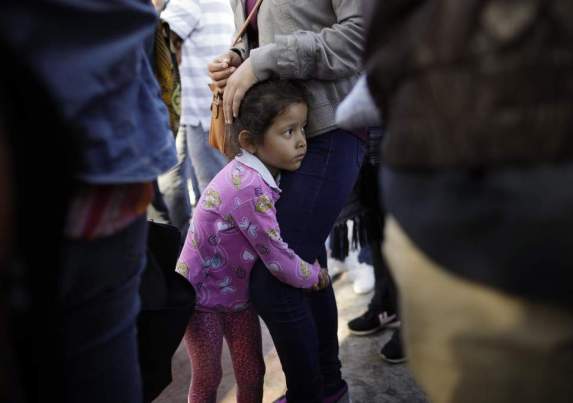
child-us-mexico-border Photo - AP Gregory Bull

Photo: AP / Gregory Bull


Do not be reticent

About the truth.

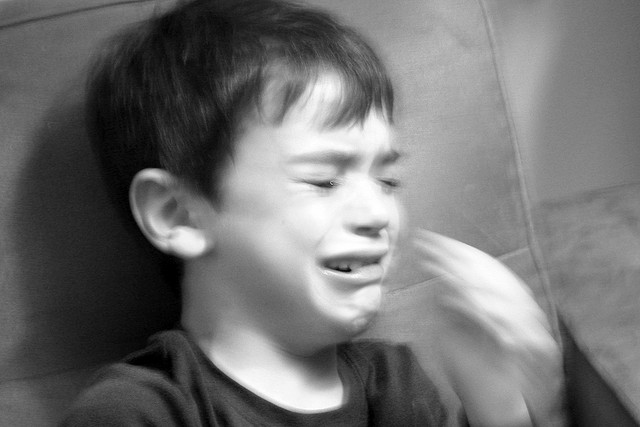
When stolen children

Cry

Deprived of trust

Of hope

Of warmth,

Those of us who have

A voice

Must use it,

For the helpless

Cannot.


Merriam-Webster’s word for July 27, 2018:

Reticent

This post continues the blogging challenge in which Merriam-Webster’s Word of the Day, serves as inspiration a-la the “Daily Prompt.”

Want to join me? Feel free to link to this post on your blog, and/or post a link to your blogpost in the comment section below so others can enjoy it, too. Poetry, photography, short stories, anecdotes: Go for it!

For more visibility, tag your post with #WordOfDayNY, so your post can be searchable.

“Follow” me if you want to receive future prompts, or just pop in when you’re looking for inspiration. Here’s to the fun of writing and our ever-evolving blogging community!




Mercurial


AIA_md


“I met that man before I got here,” James had whispered while they were getting shackled for the long bus ride to the mines. The three of them were part of a shipment of fifteen long-faced youths in assorted shirts and pants. Their jail considered itself cutting-edge in social reformation. Same reason wardens used the euphemism “bunkmates” instead of “cellmates”: sounded better. Wearing donated clothes that inmates washed themselves was considered rehabilitative. A life-skill of boxers and holey socks hung on bunk-rungs to dry.

“What man?” Bobby had asked.

“Someone,” James had hissed. James always knew “someone.” Rarely closely—he had a knack for making people angry. As soon as Marcus learned the word “mercurial,” he knew exactly whom it fit. James had been raised by a gang, and if that group was anything like the bunch he himself had run with, in which individuals turned against each other to gain favor with the marshals, Marcus doubted gang life taught good friendships.

(Excerpt from “Apples in Applath”)


Merriam-Webster’s word for July 15, 2018:

Mercurial

This post continues the blogging challenge in which Merriam-Webster’s Word of the Day, serves as inspiration a-la the “Daily Prompt.”

Want to join me? Feel free to link to this post on your blog, and/or post a link to your blogpost in the comment section below so others can enjoy it, too. Poetry, photography, short stories, anecdotes: Go for it!

For more visibility, tag your post with #WordOfDayNY, so your post can be searchable.

“Follow” me if you want to receive future prompts, or just pop in when you’re looking for inspiration. Here’s to the fun of writing and our ever-evolving blogging community!


Obviated Healing

adult aged baby care

Photo by icon0.com on Pexels.com


If I could just forestall the suffering

Of little ones

Locked by a heartless bind

And prevented even from the comfort

Of their parents’ loving arms.

If I could somehow stave off

Their sorrow

And their helpless rage

For what should never have been made

Reality

At their tender age.

If only we all raised our voices

And demanded cruelty stop,

Maybe those who caused the pain

And obviate the healing

Will make way

For better others

Who would lead not by agony

But hope.


Merriam-Webster’s word for July 14, 2018:

Obviate

This post continues the blogging challenge in which Merriam-Webster’s Word of the Day, serves as inspiration a-la the “Daily Prompt.”

Want to join me? Feel free to link to this post on your blog, and/or post a link to your blogpost in the comment section below so others can enjoy it, too. Poetry, photography, short stories, anecdotes: Go for it!

For more visibility, tag your post with #WordOfDayNY, so your post can be searchable.

“Follow” me if you want to receive future prompts, or just pop in when you’re looking for inspiration. Here’s to the fun of writing and our ever-evolving blogging community!


Kind of Famous

Rose DvoraFreedman

Photo: Dvora Freedman


“I’ll be famous,” she said, twirling and eyeing her reflection in the mirror. She was wearing a particularly twirl-worthy skirt and a shiny pair of sandals.

“Yep, famous,” she repeated with finality. She spun a few more times then stopped mid-turn to face me. “Do you know what famous means?”

I raised an eyebrow in half-query, half-invitation. Children’s explanations are immensely more informing than anything I might attempt to guess at.

“It means everybody knows you and everybody likes you a lot.”

“It does?” I lent a slight undulation to my voice in what I hoped was just a smidge of challenge for the second part.

She’s a perceptive little one. She caught it. Paused. Frowned. Pursed her lips and pursed them again in front of the mirror to inspect the effect. “Well, everybody knows famous people,” she countered and puckered her lips a few more times to make a point. “But … maybe not everybody likes them?”

I smiled and raised my eyebrow again.

She straightened and crossed the room to lean into me. “Because some famous people can be bad?”

I wrapped an arm around her shoulders. “Some. Sometimes people get famous but not for very good things.”

She nodded into my side. “Like Hitler and … you know?”

“Yes. Hitler … and some other people … are known for doing very very bad things.”

“I don’t want to be that kind of famous.”

I gave her a squeeze. “I understand. I wouldn’t worry … You are nothing like that … You have a beautiful, loving, caring heart. It’s not a bad thing to want to be famous. Most famous people aren’t bad. Most people in general aren’t bad. Famous and not famous ones.”

She leaned into me a moment longer. She knows hardship. Young as she is, the pain of cruel actions isn’t abstract to her.

I took a deep breath to remind her she was safe. She followed. Took another. Shook the pensive worry off and looked down into her magnificently twirl-worthy skirt.

“Well,” she stood and made a quick half-turn, watching the edges of the fabric lift and roil and dance and fly. “I’ll be the good kind of famous.” She walked back to the full-length mirror to reinspect her reflection. “The beautiful heart kind …”


For The Daily Post

The Blanket

diaryofaquilter

photo: diaryofaquilter.com


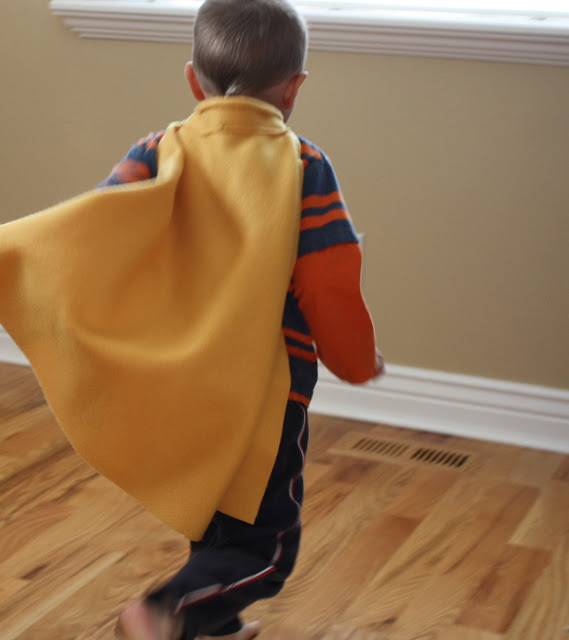
He took it with him everywhere: School, the doctor’s office, the park, the car, the dinner table. He carried it in hand, in the backpack, over his shoulder. It was to him a cape, a comfort, a memory of tucking in, a constancy.

It’s always been there. He couldn’t remember a time before.

Well-worn, oft-washed, much-handled.

His blanket.

Never out of sight.

He’d sit before the washing machine and watch it spinning, floppy, in a foamy sea. Later he’d guard the dryer as the blanket tumbled, already impatient to come back warm and scented into his arms.

He’d place it at the ready on the bathroom stepstool to guard him as he washed. A sentinel over his pajamas.

It waited right under the chair at mealtime, in temporary exile from his lap after his argument that the blanket could make an excellent napkin had failed.

Even at school, where he wasn’t allowed to hold it, he’d leave a small blanket-ear peeking out of his cubby; to remind him it was there, with him, waiting for the end of the school-day.

It was a coat of heart, a shroud of courage, a cover against storms of any kind.

It was almost part of him. His blanket.

Then the fire came. He was carried half-in-sleep and heavy-headed, by a man whose giant shadow painted wall-monsters against the orange flicker and the swirling smoke.

There was more flicker outside: blue and red and white and blinding. Shouts and calls and creaks and cries and movement. Yellow coats, red truck, bright door, funny mask.

And no blanket.

It was gone. To Blanket Heaven.

A spark in the sky now. A spot of cloud. A star.

Lost along with Curious George and Teddy Ben and his dinosaur car.


For The Daily Post


Tenacity

orphanage


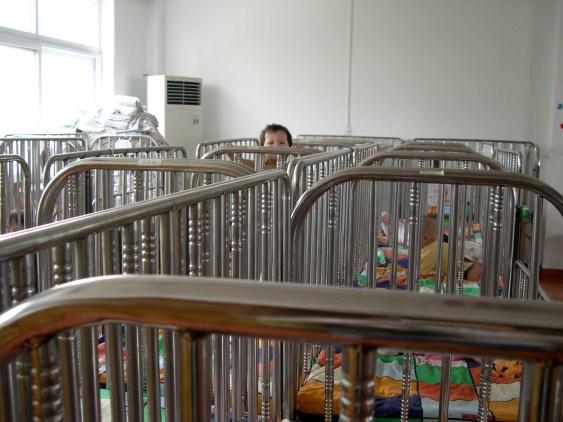
He lay alone. A crib among a sea of cribs.

No one. No home.

Lifted, unwrapped, rewrapped, put down.

Indistinct sounds

Disembodied cries: His own? Others? Anyone?

His voice ignored.

Too many babies, too few staff.

He learned to rock himself to sleep.

His mind took him away from hunger, fear, despair, exhaustion.

Alone.

Alone.

Alone.

Contracted world. Folded unto its own.


Eternity.


Then in the numbing monotony

Different arms.


Lifted into chaos

Faces too close, movement too rapid, changes too many.

Sounds mouthed.

Rapid. Jumbled. Urgent.

Unknown.

Numbness threatened, overwhelm piled on.

Snail in. Check out. Burrow deep into alone.


Still something tugged. Come back.

Smiles. Cooing. Soft hands.

Gentle rocking that filtered into his own and

Enveloped

Awakened

Yearning. Sorrow. Despair. Hope. Panic. Need.

Too much. Too much. Too much.

He fled into his mind.

He peeked out. Fled back in.

Moments alternated:

Aware, away, awake, afraid, alarmed, asleep.


Days passed on

Eternity or weeks or months.

Soft words repeated gently

More faces

More holding arms

In rocking, humming, tenderness

Language.

Song.

New scaffold rose as

Meaning slowly dispersed fog

Into words.

A world.

Gentle hands.

Comfort.

Soothing voices at disembodied cries: his own?

His own.

His voice.

Calling.

For someone.

To come.

And they come.


For The Daily Post

Symptomatology

Reflection--Photographer unknown

He over-eats because he’s nervous.

She over-sleeps because she’s sad.

He hits because he doesn’t know another way to show he doesn’t understand.

Her stomach hurts when there’s a test

His when a certain uncle comes.

She ‘checks out’ when her parents fight

or students raise a hand.

He cries with every little scratch.

She’s stoic with a shattered arm.

Their eyes glaze over at the sight of checkered shirts

Or painted nails

A hairdo

A certain aftershave

Or lip balm.

He can’t sit still.

She won’t stop day dreaming.

He mopes. She cries. He pouts. She flies

Off the handle

If someone meets her eyes.

He wets the bed.

She carves red lines into her thigh.

He fights because he’s scared.

She spits because she’s feeling trapped

and

flirts because it is the only way she knows

to interact.

They’re judged

For all

Of the above

When in fact

Their behaviors speak a loud broadcast

Of unabated stress

And lives

That turned

Hard

To survive.


For The Daily Post

Tom’s Secret

The animation video below was chosen to lead the European Day on the Protection of Children against Sexual Exploitation and Sexual Abuse which is held on November 18.

The five-minute video had been originally launched in Hebrew, and was since translated to Russian, English, and French. It guides parents, teachers, and other caregivers in ways to identify and react to cases of sexual assault and abuse in children. It has been incorporated into learning programs in Europe, Asia, and the United States.

The clip portrays with sensitivity and clarity the reactions children often have to sexual abuse: dissociation, denial, secrecy, fear, worry, shame, and more. It also shows the behaviors children might display and which should be treated as red flags: reluctance to do things or go places they might’ve enjoyed before, irritability, sadness, refusal, lack of appetite, bed-wetting, physical complaints, etc. While these may not be specific to sexual abuse, they are often representation of distress, and need attending to.

It is a fact that most children who endure sexual abuse don’t tell. At least not directly.

It is also a fact that many parents/teachers/caregivers don’t know when to ask or how to ask or what to do or say if they find out something did take place. They may not understand how a child can seem okay, even when they are internally not okay. Even those who want to help, may not know how to go about it.

This video offers a good start.

Watch it. Share it widely.


For the Hebrew version, and more information (in Hebrew) about sexual abuse of children, and ways to identify and respond to red-flags, click on the link to an article below:

http://www.ynet.co.il/articles/0,7340,L-4880054,00.html


Nadine Burke Harris on: How Childhood Trauma Affects Health Across a Lifetime

What if there is an exposure that affects health and development dramatically and is more prevalent than HIV, cancer, and Hepatitis combined and yet most doctors do not screen for it? What if you knew of an exposure that increases the risk for heart disease, diabetes, early death, inflammatory diseases, premature birth, metabolic syndrome, depression, anxiety, suicide, and more? What if that exposure was at the base of many learning disabilities, attention issues, and behavior issues and if there was a lot to do to help reduce this risk?

Wouldn’t you want to know about it?

Wouldn’t you want it to be treated as a priority in healthcare and public interest? I know I would, and do. Nadine Burke Harris is sure, too. Listen to her amazing Ted Talk–this is a brief talk that you’ll want to pass along!

How childhood trauma could be mistaken for ADHD

child brain

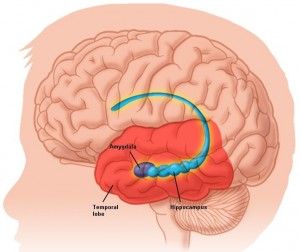
This is an immensely important article. Not because traumatized children cannot have ADHD–they can, and many do–but because children with ADHD must also be screened for trauma. They are already at a higher risk for maltreatment and overwhelm, and trauma may also lower their ability to manage stimuli and process information, exacerbating inattention.
Trauma and attention for learning are at cross purposes–this alone is a good enough reason to assess what part trauma may play in a child’s clinical presentation.
And of course–if there is trauma that is ongoing, we are all of us entrusted with doing all we can to identify it and stop it, so that children can be safe.
Until we ensure they are safe and FEELING safe, we cannot truly expect them to lower their hypervigilance or attend to what the teacher is saying in class. We cannot expect their brains to respond well to medications that are meant to treat inattention when their survival may feel as it hinges on remaining in hyper-vigilance mode and constantly scanning for danger.
I highly recommend reading this article.

Rebecca Ruiz's avatarACEs Too High

Acry

[Photo credit: woodleywonderworks, Flickr]

Dr. Nicole Brown’s quest to understand her misbehaving pediatric patients began with a hunch.

Brown was completing her residency at Johns Hopkins Hospital in Baltimore, when she realized that many of her low-income patients had been diagnosed with attention deficit/hyperactivity disorder (ADHD).

These children lived in households and neighborhoods where violence and relentless stress prevailed. Their parents found them hard to manage and teachers described them as disruptive or inattentive. Brown knew these behaviors as classic symptoms of ADHD, a brain disorder characterized by impulsivity, hyperactivity, and an inability to focus.

When Brown looked closely, though, she saw something else: trauma. Hyper-vigilance and dissociation, for example, could be mistaken for inattention. Impulsivity might be brought on by a stress response in overdrive.

“Despite our best efforts in referring them to behavioral therapy and starting them on stimulants, it was hard to get the symptoms under control,”…

View original post 1,765 more words