What we see; why we don’t

now where...

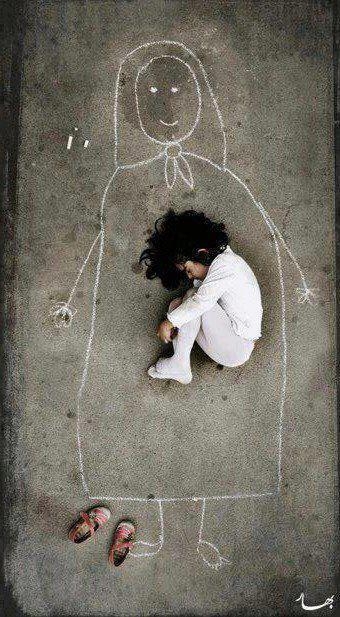
Photo Credit: A.M.

“How come they didn’t see it happening?”

“How could they let this happen?”

“How is it possible that it took place and no one knew?”

“How can they say they didn’t see?”

“Can people really be this blind?”

“Don’t they care?”

“Don’t they see?”


Maybe they didn’t. The improbable is possible. People can be that blind. Even when they care, they may not see.

It is easy to see what one wants, what’s congruent, what matches assumptions or views or held beliefs. It is easy to recognize what one had learned already, to follow perceptions already accepted, ways familiar … easier to understand words that resonate with what does not burden with new challenges or calls for reassessment or brings up shame.

Shame. People don’t like to see what brings up shame.

The very whiff of it can bring on denial. Projection. Deflection. Blame of others. Avoidance. Cold shoulder. Dismissal. Refusal. Minimization of the pain of others to avoid feeling one has done wrong, seen wrong, is wrong.

Shame tugs along with hate and violence, in words or action or both. Inflicting pain on others might get justified or explained away … A way to keep downtrodden what one thinks should stay unnoticed, un-make-wave-able, quiet, under rugs, buried. Unseen.

It takes time, heart, and bravery to crack and drain shame.

It is easier to blame. To point fingers. To make “an other” to scapegoat or distance from. To claim misfortune due to one’s abilities, affiliation, religion, political leanings, nationality, age, gender, race, vocation, location, possessions or lack thereof.

To yell “false claims”, “exaggeration”, “attention seeking” or the newest term: “fake news.”

Shaming is a weapon of pseudo self-preservation for those who need to ensure the pain of another remains unseen and one’s own comfort can stand unprovoked.

Shame silences:

Unspoken words of wounded children

Pleas of disrespected women

The worlds of the oppressed, belittled, turned against them.

The desperate, the lost … unanswered. Unaccepted. Unacceptable.

Unseen.


It does not need to so remain.

To face what was already there but eyes were closed to, is the first step to unmaking shame. To healing pain.

May we find ways to see. May we take heart to act. May we become for others what we need or needed them to see in us, to do for us, to hold with gentleness.

May the unseen become the visible.

May shame be drained.

each other


For The Daily Post

Tom’s Secret

The animation video below was chosen to lead the European Day on the Protection of Children against Sexual Exploitation and Sexual Abuse which is held on November 18.

The five-minute video had been originally launched in Hebrew, and was since translated to Russian, English, and French. It guides parents, teachers, and other caregivers in ways to identify and react to cases of sexual assault and abuse in children. It has been incorporated into learning programs in Europe, Asia, and the United States.

The clip portrays with sensitivity and clarity the reactions children often have to sexual abuse: dissociation, denial, secrecy, fear, worry, shame, and more. It also shows the behaviors children might display and which should be treated as red flags: reluctance to do things or go places they might’ve enjoyed before, irritability, sadness, refusal, lack of appetite, bed-wetting, physical complaints, etc. While these may not be specific to sexual abuse, they are often representation of distress, and need attending to.

It is a fact that most children who endure sexual abuse don’t tell. At least not directly.

It is also a fact that many parents/teachers/caregivers don’t know when to ask or how to ask or what to do or say if they find out something did take place. They may not understand how a child can seem okay, even when they are internally not okay. Even those who want to help, may not know how to go about it.

This video offers a good start.

Watch it. Share it widely.


For the Hebrew version, and more information (in Hebrew) about sexual abuse of children, and ways to identify and respond to red-flags, click on the link to an article below:

http://www.ynet.co.il/articles/0,7340,L-4880054,00.html


Stressful Situations Simulation: A resource

Below is a good resource and simulation of stressful situations that can be immensely helpful to parents and caregivers. I especially recommend the ones involving “Family Support”: “Calm Parents, Healthy Kids” and “Building Family Bonds.” These scenario simulations inform, teach, and actively guide parents and caregivers through various scenarios of interactions with toddlers in commonly challenging situations.

The resource can be invaluable information for parents and caregivers who are inexperienced and/or may have had less than good enough parenting themselves, and who may not know how to facilitate clear, supportive interaction with their own children, especially under stress. The simulation is presented in a non-shaming, educational way, and provides the participant with an active role in choosing different ways of responding … and being able to see the possible reactions to them … It also allows the participant to ‘re-do’ situations so they can experience how better choices can bring better results …

Practicing is important for any skill, let alone for skills one needs to apply in stressful situations. The very way our brain processes information is affected when we’re stressed, so it helps to already know what to do beforehand. Also, our own stress and how we manage it gets communicated and passed onto children in our care. This makes it doubly important to learn and practice (and then be able to model) new skills when one is calm and in neutral situations–as this simulation allows one to do.

Calm, informed caregivers help raise calm, healthy, competent kids. This can help!

I highly recommend you take a look and see:

https://conversationsforhealth.org/#conversations

bubble happy


Communication and Collaboration

Upcoming Webinar!

Communication and Collaboration: Multidisciplinary treatment of traumatized/dissociative children

Friday, May 20, 2016
2:00 PM – 3:30 PM Eastern Time

Registration now open! (please see disclaimer in bottom of post)

spacornerJuly12no5

Photo Credit: A.A.

Abstract
Treatment of traumatized and dissociative children is most often discussed in the context of psychotherapy. However, traumatized and/or dissociated children often come into contact with additional professionals. Like all youngsters, traumatized children need to manage everyday interactions with caregivers, educators, and routine childhood medical and dental care. Yet many also face clinical interactions with speech-language pathologists, occupational therapists, physical therapists, medical professionals, and more. This is because trauma places children at a high risk for developmental issues, and because children who already have developmental and/or health issues are highly vulnerable to trauma. In addition to clinical care, many traumatized children encounter legal personnel, forensic evaluators, child protective services, foster care staff, etc.

Posttraumatic and dissociative reactions are not limited to the therapist’s office. Just as communication issues aren’t segregated to speech-language pathologist’s office, asthma to the doctor’s, or sensory integration issues to occupational therapy. Various issues can complicate children’s presentation and behavior, and traumatized youngsters are often judged as difficult, aggressive, manipulative, immature, unpredictable, and inattentive. This can result in painful consequences (e.g. loss of placement, shaming, treatment failure), which further increase stress and reinforce the need for dissociative coping. In addition, caregivers routinely face challenges that can affect course of treatment, and professionals do not always ‘speak the same language’ when it comes to describing, assessing, and treating the child (and/or family). Even when professionals are trauma-aware, coordinated care is not always easy to achieve … and yet is essential for effective stabilization, minimizing compartmentalization, and carryover.

This webinar will look into the often complex realities of caring for traumatized/dissociative children and adolescents, the tapestries of clinical encounters many face, and how these may shift throughout infancy, childhood, and teen years. The challenges (and potential) of coordinated care and communication will be discussed, as would logistical and ethical limitations and suggestions for managing them. Clinical vignettes will serve as a window into ways for improving communication among child/family professionals, and will provide examples for practical solutions for increasing regulation and decreasing posttraumatic activation in all involved. The role of caregivers and the child as part of the team will also be examined.

Objectives
Upon completion of this webinar, participants will be able to:

  • Identify the connection between trauma and care utilization in children and adolescents.
  • Describe three challenges to coordinated care
  • List five strategies therapists can apply to improve communication and coordination in the multi-disciplinary treatment of traumatized/dissociative children

For more information and to register

Disclaimer: I volunteer my time and expertise for this webinar, and do not receive any financial gain from it. Registration fees are collected by ISSTD, which hosts the webinar, is responsible for all fees and/or refunds, and provides an option for CEs for attendance.

“A Bandaid for my heart”

She asked me if I knew about dying.

I said I knew it hurt when someone we love died.

She nodded and fiddled with the pencil, poked the tip against her finger, poked again. Again.

I wondered if she was trying to make the hurting take a form she understood through the pinprick of a just-sharpened pencil. I gently put my hand on hers.

She looked up at me, thankfully without embarrassment or worry of judgment. Feelings weren’t easy for this child, whose very early years were filled with much that couldn’t be expressed and had no wording. Her grandfather passed away right before her birth and a hue of grief lingered many months, adding to her mother’s post-partum depression. Her mother has recovered since, and the home was generally caring, but unspoken early patterns of if-you-are-quiet-you-won’t-overwhelm-mom and waiting for another’s space to open so you can have your needs met still played out often. The girl, not yet ten, was more likely to attend to others’ feelings than her own; more likely to dismiss her anguish to not distress others.

I smiled at her and she smiled back shyly. Her eyes glistened and she sniffed.

“My dad told you?”

“Your mom did.”

Her eyes flew to mine, surprised at being thought of. She took another breath. Tears slid down her cheeks.

“I’m sorry, Sweetie.” I handed her a tissue and snuck a bit of extra affection into the gesture. Just because. She noticed. Smiled the sad smile again.

Her great-grandmother died two nights before. Her father’s grandmother was a fixture in the child’s life. A rock. The one who filled the gaps, stepped in, held, held on. An elder in the best sense of the word. There was a love there that spanned generations. A special bond with this child.

It was a gentle death, the mother said. Doctors believed the grandma had passed away peacefully in her sleep. No pain. No long decline. That was a blessing, but for the child this loss still hollowed.

“I didn’t get to say goodbye,” she whispered.

“I know. I’m sorry.” I moved a strand of hair off her cheek. “You can still say it. Maybe not in the way you’d have wanted, but still …”

“Yeah,” she sniffed. Dismissed. Reconsidered. Looked up. “How?”

“Any way you can think of, almost.”

She pondered. “Dad said she can hear me. In my dreams. In my thoughts.” Her eyes probed. She wanted to believe it.

“I believe that’s possible, yes.”

“How?”

“I don’t know exactly. I just feel it. In my heart. About people I love and passed away. It feels right to me that we are still connected, that in some way they can hear me.”

Her eyes overflowed again but her face softened. “I think I’ll talk to her. Tonight, maybe. You know, just me and her.”

I nodded, smiled.

She sighed. Drew in a shuddering breath. Sighed again.

“I miss her,” she whispered. “It hurts. I wish I had a Bandaid for my heart.”

hands-and-heart


What PTSD teaches us about human frailty and resilience

The link below will lead you to one of the best interviews about PTSD I have ever seen, hands down.

The fact that Rachel Yehuda is my cousin is an added bonus–I am ever so proud of her: for the person she is, for the work she does, for the wisdom and empathy she imparts, for how she has literally changed the field of PTSD in the last 25 years.

(I recommend reading the transcript, not just viewing the snippet of video on the site)

Take a look. Take a read. You will be glad to have taken the time:

Ingenius: Rachel Yehuda

http://nautil.us/issue/31/stress/ingenious-rachel-Yehuda


experience

On The Matter Of Monsters

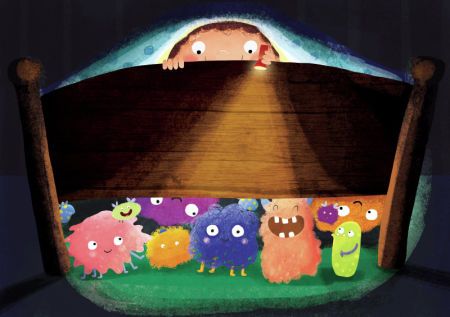
Angelika Scudamore - monsters under bed scene

http://www.angelikasillustrations.com: “monsters under bed scene”


Zane’s mother looked exhausted. I asked her if all was well.

“He won’t go to sleep unless I’m with him, he is taking forever to fall asleep and waking me up several times every night,” she sighed. “It is exhausting.”

“How come?” I asked, looking from the preschooler to his mother.

“It’s the monsters,” he chirped to clarify.

“For the hundredth time, Zane,” his mom exasperated, “there is no such things as monsters and there are certainly none in your room!”

“Is too!” his lower lip tightened in determination then began to tremble.

Zane’s mom took in a long breath and mouthed a silent “help.”

I smiled gently. The matter of monsters comes up often. Many young children–especially between four and six years of age–go through a period where they fear monsters. Under the bed, in the closet, behind the curtains/desk/wardrobe/chair, camouflaged among the stuffed animals on the top shelf … At the age where imagination and reality can merge and the veil between what’s real and what could be is thin, many children find the dark ominous and fear the parting with parents for the night and being left to their own thoughts and imagination. They are often too young to verbalize what it is they fear, exactly, but the feelings are still there: scary, dark, sneaky; the territory and making of monsters.

Scared or fearing to become so, they plead, coerce, and cry for their parents to stay and make sure they are okay.

Some are reassured by the adult checking under bed or dressers. For others, securing the closet door closed can suffice. However, for many, the fear remains in the ‘what if’ category: “what if the monster comes later?”, “what if the monster opens the door?”, “what if it is invisible and you can’t see it?”, “what if it just pretending to be my shoes but it will scare me later?”

Perception, reality, and belief make a sticky trio; and declaring monsters nonexistent rarely helps. To many children–as with Zane–this only makes the fear grow further and adds frustrated loneliness onto it, making nighttime doubly scary.

Zane’s mother needed her sleep. Zane needed his to feel safe. It was time to bring out the ‘big guns.’

I looked at the boy. A messy head of curls, brown piercing eyes under thick brows, a smattering of freckles on a button nose, wide lips, and a tongue that likes to slip out during speech and activity regardless of whether its presence is required (the tongue thrust being the main reason he sees me for speech-therapy).

The little boy regarded me. He needed to ascertain whose side I was on. “I have monsters,” he announced, “under my bed.”

“Yikes,” I replied. “This sounds scary.”

He smiled and turned to glare victoriously at his mommy.

She looked at me with uncertainty.

“You also see monsters!?” he checked, suddenly a bit wary of the possibility. Monsters being real is one thing. Monsters being REAL is quite another.

“Nah,” I shook my head. “But you say you do, so maybe they are there.”

He nodded quickly.

“What do they look like?” I wondered aloud.

“I don’t know!” he exclaimed. “They are hiding under my bed and it’s dark.” He followed that obvious fact with an ‘adults-can-be-so-thick’ look.

“Oh.” I demurred. “What if you turn on the light?”

“You can’t see them in the light. They do magic.”

“Hmm…”

“If I go to sleep by myself they will come and get me,” he warned. “Mommy says they not there but they are.”

“Well then,” I breathed. “I’m not in your house and I haven’t seen them, but just in case they are there, have you tried telling them you don’t want them there?”

“They don’t know English,” he responded.

“They don’t?” I let my voice rise some.

“No!” he explained, “they only speak Monster.”

“Hmm…”

He nodded sagely.

“…and they eat children,” he added for emphasis, then his eyes grew big with fright at the possibility of his own words and he backpedaled, “…um, maybe … if they really hungry.”

“We can’t let that happen,” I said.

He nodded again, reached for my hand.

I squeezed his little palm in reassurance. Children may be small but their fears can still be big, and their imaginations; bigger.

“Good thing we know what to do,” I stated.

He looked at me hopefully.

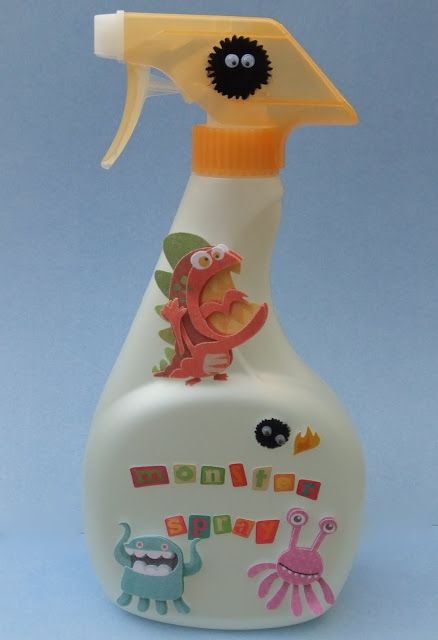
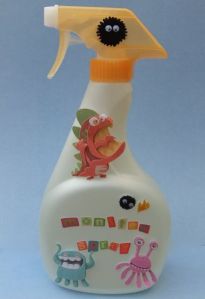
I pursed my lips in contemplation. “Have you tried Monster Spray?”

“Monster Spray?” This sounded intriguing.

“Yeah. They hate the stuff. Makes their noses itch.”

His eyes grew again, this time with wonder. He looked at his mom, clearly expecting her to know everything there is to know about sprays and all manner of remedies.

She raised her palms up in bewilderment and gave me an ‘I hope you know what you are doing’ glare.

“It works every time,” I reassured both of them.

“What’s Monster Spray?” Zane asked. “Mommy, you have to listen, too,” he ordered. “Because you didn’t learn it yet.”

I swallowed a chuckle. I was waiting to see how he would get back at her for not believing him that monsters waited under his bed waiting to eat children (maybe … if they really hungry…).

“It’s a spray and it makes monsters go away. It smells the same as an air freshener or perfume. The monsters don’t know the difference,” I said meaningfully. Mom’s eyebrows lifted and the corner of her month twitched a bit. Good. One aboard.

“Like in the bathroom?” Zane’s eyes narrowed suspiciously.

“Sort of. Doesn’t have to be the same one, though. You can pick any scent you like. They hate all of them. Makes their noses itch. Here is what you have to do. You listening?

He was.

“First, you find a spray that smells good to you. Mommy can help you choose. Next you make a sign that says “Monster Spray” and you tape it on the bottle …”

He nodded in approval. It was important to label things. Especially when it came to monsters.

“…and before you go to sleep you spray a bit under your bed, and if you want you can spray a little in the air, and that’s it. If the monsters are there they will say: ‘Oh, no, Monster Spray, we better come another day!’ and they’ll go away.”

Zane’s jaw hung open in delight. “For really?”

“Yep,” I nodded. “Works every time. If there are monsters there, they’ll run away from the monster spray.”

“What if they come tomorrow?”

“If they come another day, they’ll have to deal with more monster spray … and they’ll say: ‘Oh, no, Monster spray …”

“… better come another day!” he completed, his eyes shining.

“So we’ll have to do this forever?” Zane’s mom. I could sense her wariness about committing to nightly spray-bottle battles till Zane was in college.

“Oh, no,” I clarified. “You see, once you do it a few times, if the monsters come again they will say: ‘Oh no, more Monster Spray; we better go another way.’ They hate this stuff so much, they will tell all their monster friends to go another way!”

“Better go another way!” Zane clapped his hands, intoning, “Oh, no, Monster Spray; better go another way! Hey!” he paused, “Spray-way!” he lisped. “It rhyme!”

“It does indeed!”

“Spray, spray, go away,” Zane sang to himself and doodled as I explained the ‘anti-monster process’ to his mother.

Any scented spray would work. Body mist or freshener or even bottled water with some essential oils, vanilla extract, or lavender for scent. The scent will help Zane remember that the ‘Monster Spray’ is working, and can make associations to feeling safe and in control. I recommended keeping the spray bottle within reach, in case he woke at night and needed a ‘booster squeeze.’

As we returned to speech-sound practice, we spent part of the session making a label with the words “Monster Spray” on it, complete with a drawing of a dark-green/red/black blob (“that’s the monster, but you can’t see it because it is under”) and a figure in a cape holding a spray bottle like a sword (“that’s me, because I am super-Zane”).

The progress report the following week was that the monsters had such itchy noses the first time Zane used the newly minted spray on them, that they declared right away: “Oh, no, Monster Spray; Better go another way.” When a few monsters did not get the memo and tried their luck a few nights later, Zane spritzed them and they reportedly scuttled away to warn all others that: “Zane has Monster Spray, better go another way!”
monster Spray1