A Forever Family

The little boy was beaming yesterday.

“You know what?” he said, having barely parked himself on the little chair in my office.

“What?” I pretended.

“I’m SO happy.”

“You are!” I exclaimed, smiling. Even a boulder would see that the little guy was delighted. Delighted and relieved, actually.

“Now my parents can be my REAL parents!” he gushed. He sobered then–this boy does not take family for granted. Abandoned at birth with visible deformities, trundled through foster care homes and more losses, and finally finding an adoptive home with parents who were dedicated to him and where he was cherished. “If something happens to Daddy …” he paused, “then Papa will still be my father.”

He reached for my hand, excited and a little scared at what he just stated, momentarily overwhelmed by the proximity of both loss and hope. It took a lot of love to get this boy trusting that his home was a ‘forever home’ and that he was really wanted; and sometimes worry still snuck in, triggered by the destabilizing challenges of very real uncertainty.

Such as when he needed surgery and only one of his adoptive parents was allowed to escort him to the operating room, because only ‘legal guardians’ could, and the law did not allow both his parents to adopt him, only one. Daddy was recognized as his parent. Papa was not. It scared him that people could say that Papa was somehow not his real father, that other people could — again — decide about his life.

Or when his legal parent was away on business and the new school guard gave the boy’s papa trouble picking him up because there was no official note on file indicating that he was among the ‘approved caregivers.’ It took a tense while to locate the classroom teacher to confirm that this man that the boy called “Papa” was indeed one of his parents and had collected the boy from school before. For several days later this little boy refused to go to school. He insisted on waiting for Daddy to return. He was scared that school people won’t let Papa take him home.

Now in my office, this little boy fiddled with my bracelet, as children often do when they are feeling a little tender but need to be the ones establishing how much connection to allow. “Sometimes at nighttime I have bad dreams … about having to go back to foster care.” He looked up at me, dark eyes like deer in headlights, hair framing his little face in a frizzy halo.

I squeezed his hand gently. He looked at his papa, who was sitting quietly with us, his own eyes bright, and allowing his son–son in all ways but legally until now that the Supreme Court declared the constitutional right for equality in marriage and family–the space for these complicated feelings.

The boy reached out for his father and received a hug. “It is  going to be more safer now, right?” the boy asked, face buried in his father’s shirt.

“Sure is,” the father planted a kiss on his son’s head, who at not yet six years old was already a veteran of too many worries. “Your home is with me and Daddy. We are a family, you and Daddy and I.”

“And Priscilla!” the boy added in reassured indignation. “You forgot Priscilla!”

His father chuckled. There was no forgetting Priscilla the ever-into-something dog. “Of course, Priscilla is part of our family, too!”

The boy snuggled into his father’s hug another moment. Sighed contentedly. Peeked at me and smiled. “The judges said that my Papa can also be my father now. Like my Daddy. Forever and ever and ever and ever.”

family

Kids and Screen Time: Data, Reality, and Possibility

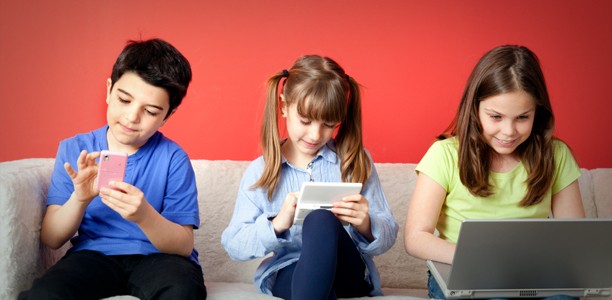
ScreenTime

When I grew up, television was a very small part of daily life, and was the only screen in the house. Telephone conversations were usually brief (and attached to the wall through the cord in the main room of the house, they only allowed limited privacy). Most daily interactions were face-to-face. Social interaction with peers and siblings certainly were face to face.

Now most homes in developed countries have several screens in different configurations: TVs, laptops, computers, tablets, phones, game consoles, DVD players, other interactive toys that come with a screen.

Children spend a lot more time facing a screen than they ever did. What is the impact of that?

Like every tool, screen media is neither good nor bad–it is HOW you used it and HOW MUCH you used it and what it DISPLACES that matters.

In this electronic age, children have more access to more education materials in quicker and more convenient ways than ever before. Media and information are powerful, but not neutral: If not taught how to discern information on the web, children do not learn how to conduct research or pick out primary source or secondary source, how to identify fact from biased blog or a complete fallacy. They may believe everything they read online–both truth and blatant misrepresentations. They need to be taught how to use information, how to cross-check, how to learn.

Education with the use of screens has replaced some of the methods of learning that were used in not-too-long-ago times. They have benefits and limitations. They can replace some older methods of research and increase efficiency and effectiveness of learning. They can connect people from far places to work together. They can bridge over differences and stigmas. However, they can also displace the interactive collaboration of listening, analyzing other people’s opinions and views, and working together interactively in real space (rather than over the internet in shared documents or through ‘attachments’ or searching to copy other people’s reports through google …).

Outside of educational screen time (i.e. the time children spend watching screens for learning, whether formal or informal), there are also the many hours a week that children spend playing or gazing at movies or music videos, or in texting incomplete sentences in stunted spelling to their friends on social media or phones. These hours often displace actual face-to-face interactions and all that comes with them: reading social cues, body language, emotions, tone of voice. Electronic communication is a poor substitute to actual interaction. Emoticons are a very crude representation of people’s facial expressions, and while they can lend ‘color’ to a message, they are not the real deal.

Children who spend too many hours staring at screens spend too few hours interacting with others and learning skills for interpersonal communication, for reading other people’s emotions and body language, for taking turns and listening.

In an article on NPR, about “Kids and Screen time–what does the research say”, researchers found that removing screen time (and effectively, the replacing of that back with social interaction and TALKING TO EACH OTHER and engaging with others), helped children be more able to recognize facial expressions. The benefits were significant even after five days of no screen time.

While some people advocate total electronics removal … I am not an advocate of removing all electronics: we live in a time where media and internet, email and web searches are enormous tools. It would be a form of social isolation to cut children off from the ability to interact with the world. However, it can be unhelpful to have too much screen time, as it displaces other kinds of social engagement that are just as important. Children do not know what they are missing when they stare at screens instead of interact with people–it is our job and responsibility as adults to help them learn to communicate and socialize.

Infants learn how to interact, how to engage, how to interpret communication and intent–through facial expression and through immediate dyadic interaction in many different settings over many interactions. It is a learning that continues throughout childhood and into young adulthood (and some may say, throughout the lifespan). We need to be mindful of not displacing personal interaction with screen time.

It is possible to do both–though that calls for moderation and boundaries (things that children need to learn, anyway). Additionally, it needs to be not only the children … adults who spend all their times staring at a little screen are displacing time of interaction WITH their children and are becoming models for what we do not want to reinforce.

There is no one recipe that would work for everyone–the right balance is different for different people at different times. What does make sense to me, is to be mindful and be honest:

  • Do not demand of your children something you do not follow yourself …

* Create windows of time when screens are not used in your home: a ‘curfew’ time for phones, or an evening a week without any electronics, a ‘no virtual communication’ weekend day, maybe decide on no electronics in mealtimes (basic politeness, that …), or on other ways to limit screen time. For everyone.

  • Make sure that you are a good model for turning off electronics and doing more than just lifting your eyes momentarily from one …

Young children, especially, are vulnerable to not developing what they SHOULD be developing. If their little faces are stuck to a screen rather than interested in another person, and if their interactions are the brief raising of eyes (or the parent’s brief raising of eyes) from a screen to nod or follow a direction; they would not learn how to engage well, they would not know to be good communicators, or listeners, or readers of social gestures, facial expressions, body-language, and signs.

This is not an either/or. Electronics and screen time, interpersonal social time: It can be an and/and, but it needs to be mindful, lest we raise a generation of children who do not how to interact … and fail them by not providing them the opportunities they needed to learn.

To read the article: “Kids and Screen Time–what does the research say” on NPR, click on the title, or click below:

http://www.npr.org/sections/ed/2014/08/28/343735856/kids-and-screen-time-what-does-the-research-say

Because I understand me!

From Pintrest

From Pintrest

She heard noises coming from her daughter’s room. A heated conversation, animated chattering.

She listened at the door. Changed tone, one voice, empathetic discussion. She peeked–no toys involved, no dolls. Just her four year old sitting on the bed, talking earnestly.

“Who are you talking to?” she asked.

“Me.”

“How come you’re talking to yourself?”

A surprised look, a ‘duh’ voice: “But Mommy! Because I understand me!”

What do you do with a melted child?

I could hear them before they even entered the building … his screech, her frustrated murmuring, unclear words with clear intent to hush and stop the fussing.

It did not get better in the vestibule, or the stairway. Screaming, banging on the rails (there’s fantastic echo in the building–apparently it is spectacularly irresistible for maximizing the effect of tantrums).

The mother’s pleas inched up in volume, from “stop this” to “please behave” and “you are making too much noise” to “other people are going to get mad at you” and “if you don’t stop this there’d be no playdates.” The immediate effect was a proportionate rise in the child’s loudness.

I decided to go meet them half-way. It is not something I usually do, so my very appearance in the hallway was enough to generate sufficient surprise to elicit momentary silence. I capitalized. “Sounds like you are having a hard day,” I noted, directing my words to both red-faced figures, one with mortification, one with the exertion of maximizing vocal output on steep stairs.

“I’m melting,” he noted, quite matter of fact, I might add.

“Oh,” I responded.

The mom looked from him to me and back again. “Melting?”

“A meltdown, I suppose,” I smiled, turned to the boy. “It sure sounds like a major meltdown.”

He nodded emphatically, satisfied.

“Do you think you had enough of a meltdown for one time?” I offered my hand to him. “It sounds pretty exhausting.”

He considered, placed his little hand in mine. Turned to his mother with a rather smug expression. “I done melting now.”

“I’m glad,” she managed.

“What was this about?” I wondered aloud.

“He wanted to be the one to press the button for the bus stop …”

“Ah.”

“But someone else on the bus already pressed it … so he refused to get off …”

I looked at him with a raised eyebrow. He nodded, approving of the testimony. “It was my turn to push the button,” he accused.

“Hmm, maybe other people on the bus didn’t know that.”

He looked shocked at the very notion. How could anyone not know what he clearly had?

We climbed. He pondered.

“It only got worse from there,” his mother added, still debriefing. “I had to carry him off the bus, screaming. He threw himself on the ground …”

It explained the stage of his clothing … it had rained earlier …

“He got himself all wet …” she sighed, “I’m sorry for bringing him in such a mess.”

He turned to her, his face a mask of indignation. “Of course I wet, Mama! I was melting!”

meltdown1

Nadine Burke Harris on: How Childhood Trauma Affects Health Across a Lifetime

What if there is an exposure that affects health and development dramatically and is more prevalent than HIV, cancer, and Hepatitis combined and yet most doctors do not screen for it? What if you knew of an exposure that increases the risk for heart disease, diabetes, early death, inflammatory diseases, premature birth, metabolic syndrome, depression, anxiety, suicide, and more? What if that exposure was at the base of many learning disabilities, attention issues, and behavior issues and if there was a lot to do to help reduce this risk?

Wouldn’t you want to know about it?

Wouldn’t you want it to be treated as a priority in healthcare and public interest? I know I would, and do. Nadine Burke Harris is sure, too. Listen to her amazing Ted Talk–this is a brief talk that you’ll want to pass along!

Outdated or Misinformed? Childhood Maltreatment in college textbooks

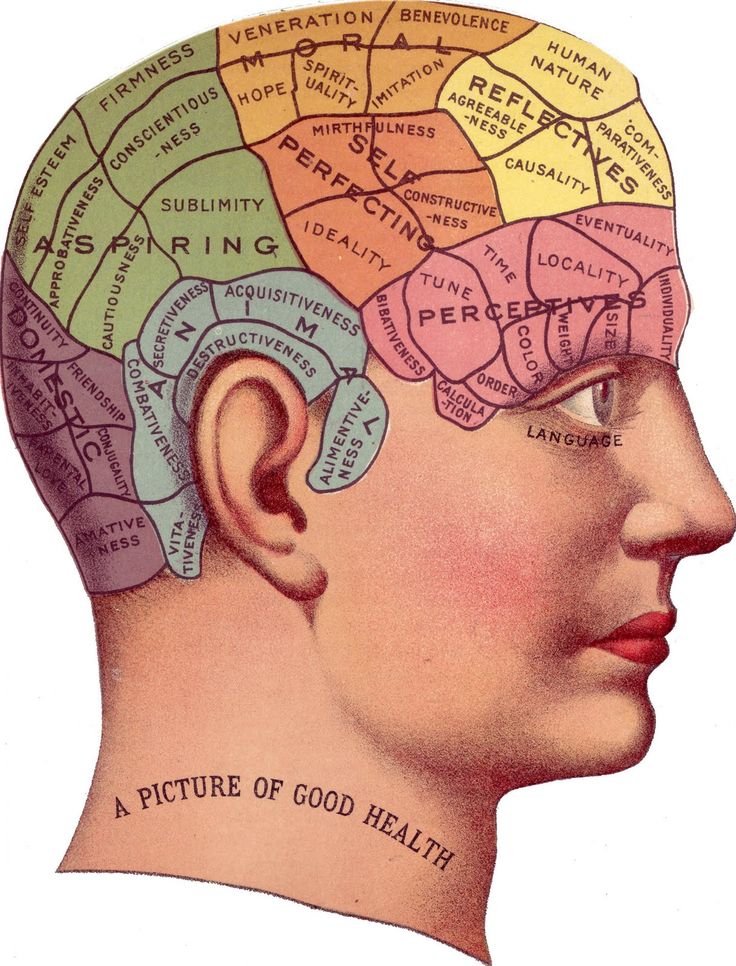
Vintage Phrenology: thegraphicsfairy.com

Vintage Phrenology: thegraphicsfairy.com

There are over 1,000,000 substantiated reports of child maltreatment annually in the US alone (US Department of Health 2013). The impact of maltreatment on development and health is indisputable. The last two decades showed brisk research in the area of trauma and dissociation all over the world. It is therefore quite surprising to find psychology textbooks to be so behind the times (and behind the data) on covering child maltreatment. This leaves hundreds of thousands of students a year with less-than-accurate information that may impact their ability to identify or understand the aftermath of child maltreatment.

In an important article (also see full link below), Brand and McEwen review the three leading introductory psychology textbooks and how they address (or not address) childhood maltreatment and its aftermath. The results are distressing in lack of citing of current data (as in  many textbooks on psychopathology).

One can hypothesize why prominent textbooks will not sufficiently cover such an important topic (one would think they would find it essential to cover well if only for the known health effects of childhood maltreatment across the lifespan, in both physical and psychological health, costs, and healthcare utilization). Maybe it is as simple as using outdated resources or not keeping up with research and known data. Maybe it speaks to more widespread issues of denial and minimization of childhood maltreatment. Maybe other reasons. Regardless of why the textbooks are lacking, the reality remains that the textbooks leave students un-informed on the topic.

The good news is that this can be changed! The data is available–it just needs to be included and reviewed better!

Hopefully having more awareness to this will allow students and faculty to challenge the choice of textbooks and to demand better coverage of such a relevant issue. Students are shortchanged when they are under-informed and when data is slanted or may appear to be biased or outdated.

What can you do?

Let your faculty, librarian, and fellow clinicians and students know that our college students deserve a more cohesive review of childhood maltreatment. Share the article below. Talk to professors who teach these courses and support them in seeking better balanced textbooks. The research is available, it simply needs to be included rather than avoided. Let us work together for improving information in education!

Coverage of Child Maltreatment and Its Effects in Three Introductory Psychology Textbooks / Bethany L. Brand, PhD, and Linda E. McEwen, MA

http://traumapsychnews.com/2015/01/coverage-of-child-maltreatment-and-its-effects-in-three-introductory-psychology-textbooks/

The Connection that Never Was

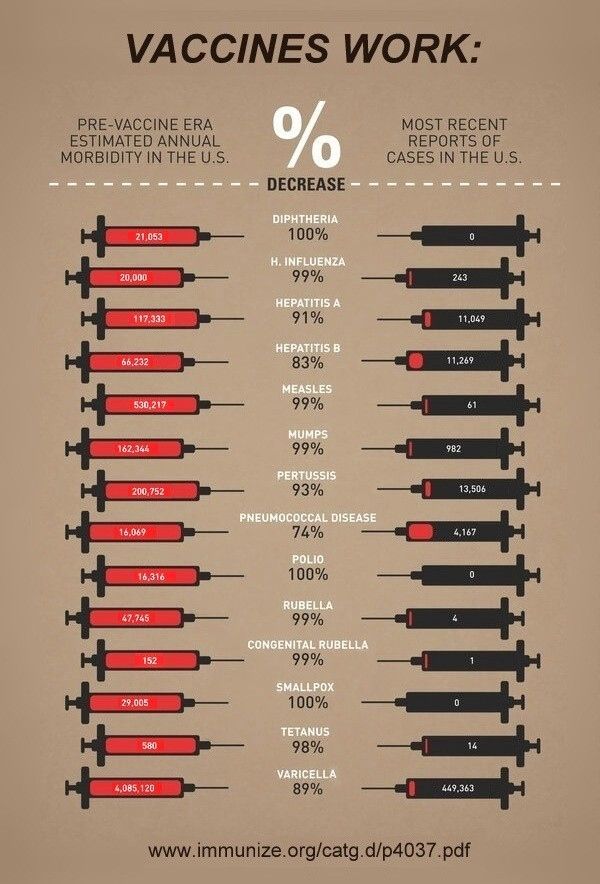
Am sharing the article below because there is benefit to reducing the worry and panic and misconceptions among those who still hear things about the supposed connection between autism and vaccination, and don’t know or never had good access to the facts.

This recent article in JAMA is one more study that shows NO CONNECTION between the MMR Vaccine and Autism. In fact, there never WAS a connection. In fact, no peer reviewed studies ever did show a connection. The study that caused the original panic was — by the admission of the researcher himself — made up and the results were falsified. The article was withdrawn a long time ago from reputable journals, and the scientist has been discredited for the results he falsified. Furthermore, his claims were never replicated (not surprisingly, given that they were false from the get go), and there has never been any support for the connection.

Some children may have adverse effects to vaccines–or to any medication or substance for that matter. Children can react to cotton, wool, milk, wheat, sugar, natural vegetable dyes, sweet potato, eggplant, broccoli, eggs–just about anything. This does not make the rare reactions mean that these substances should be avoided generally, or that they ’cause’ diseases. Vaccinations do not cause autism. There has never been any support for that, and many people did try to find it. They did not.

I hope this current publication in one of the most prestigious and rigorous journals in the world will help straighten out some of the facts for those who are still worried.

Vaccines save lives. They do not cause Autism. Never had.

http://jama.jamanetwork.com/article.aspx?articleid=2275444#

vaccines work

Happiness glide

happy chipmunk

“I had the best weekend ever!” the preschooler’s eyes sparkled.

“Oh, wow, that’s so great!” I responded, grinning. It is contagious, you know, this kind of zest for life. And the enthusiasm of this little one was particularly catching. He literally beamed delight.

“We had the best ever dinner and the best ever pizza!” he bounced on his heels, the words not coming nearly fast enough. “And I saw the best movie ever on the Netflix. And my grandpa makes the best popcorn and it like magic in the microwave and I have the best pajamas ever!”

“You have new pajamas?!” My monkey brain had to assume.

He paused and regarded me with some confusion. “I already HAVE the best pajamas ever! It’s superman pajamas!”

Silly me.

He kicked off his shoes and glided on the wood floor with his socks, balancing with his arms. “Wheee! Best floor ever!”

“Did you have the best weekend ever, too?” he added, not quite waiting for a response before sighing contentedly. “You did, right? Because it was the best weekend ever!”

The details change a bit; there’s not always popcorn, sometimes its just TV and not Netflix, sometimes it is the park, or playing ball, or baking cookies, or his dad reading him  story. Doesn’t matter. The weekend is always–always–the best one ever.

And it makes for Happy Mondays; every one.

Books and stories: a recipe for laughter and growth

From Pintrest

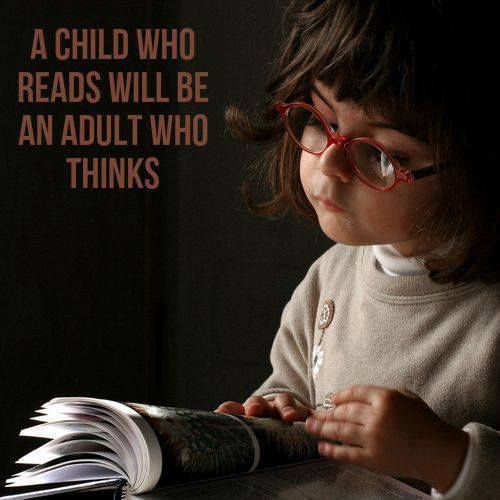
From Pintrest

Oh so true … that a child who reads will be an adult who thinks. Reading opens doors, windows, paths, and secret passages to all manner of worlds and imaginations, language and vocabulary, expression and understanding.

Reading matters.

A reading child is also preceded by a child who is being read to and is spoken to and with, and who experiences being part of conversations and experiences, narrative and the day to day stories of life lived and happenings that happen …

Because:

A child who is read to will be a child who listens, imagines, thinks, wonders, comprehends and symbolizes… A child more likely to read and enjoy reading …

A child who is talked to, who participates in conversation and discussion, is a child who knows to ask questions and answer queries, offer opinion and listen to that of others, be curious about others’ experience and tolerant of differences, ideas, and views… A child more likely to read and enjoy variety in what they read …

A child who is listened to–and is shown how to reciprocate and take one’s turn in listening–is a child who can relate and remember, reminisce and realize, teach and learn, listen, comprehend and think… A child more likely to read and find books a place for expanding understanding and relating …

So …

Did you open a book today? Did you tell a story? Make a story together? The story of going to the store, of cleaning up the room together, of salad making and laundry folding, of visiting the park and counting dogs with spots and kids in strollers, of the rainbow of colors in the produce aisle and the funny thing that silly dances do to your feet and heart and smile …

Go tell some stories. We’re never too old or too young!

Trauma’s Memory Problems : A good article

child trauma

Trauma all too often brings up the detective in people, prods them to question, pin point, dissect accounts, weigh relative credibility. It is an odd thing, given the reality that trauma–by its very essence of overwhelm and shutting down of language centers, processing, and memory integration–affects how one may be able to remember, recount, and narrate it. Trauma is difficult to articulate and often too difficult to comprehend, even to know. And yet, it is often demanded to be phrased in exact details that go beyond every-day memory. As if trauma memory should be, somehow, more stellar, subject to higher standard, to bigger scrutiny.

Granted, there may be a motive in it: people would rather believe trauma is less frequent and not as severe. If there are holes in a story, maybe it is ‘proof’ that it did not take place, or not as badly, or not deliberately … At the same time, there is an inherent lack of understanding about how memory and overwhelm conflict and contradict each other. In some ways, a misremembered, disjointed, incoherent event fraught with numbness and confusion may well BE one of a trauma … rather than be proof of something not happening …

Trauma is a problematic thing for memory.

People remember trauma differently. Some remember constantly, vividly, intrusively. Some remember oddly. Some remember snippets, or sensations, or disjointed unease that seems disconnected from anything that seems to make sense. Some remember sometimes. Some remember not at all.

Children, especially, may find not remembering safer than to try and manage the overwhelming reality of what to let reality in may mean. They may have to keep things in the ‘not knowing’ folder to go on and push away reminders that make no sense, they recant, reverse, deny, ignore.

In the article below, the author explores memory and trauma, denial and dismissal, inaccuracies and interpretations, shame and judgment, burden and prejudice, reality and myth.

It is a worthy read for anyone who has been touched by or knows someone who has been touched by trauma (that should include the lot of us, really …). It is an even worthier read if one keeps in mind how it would be all the more difficult for children to conceptualize and remember trauma cohesively, when they have less tools with which to manage what they had endured, and are more vulnerable to misconceptions about what it says to them, about them, about those who hurt them, about the world, about who they may be or have become.

​I Was Sexually Assaulted As A Child. Here’s Why I Didn’t Remember For Years.

http://thinkprogress.org/health/2014/12/23/3606576/memory-and-sexual-trauma/