Communication and Collaboration

Upcoming Webinar!

Communication and Collaboration: Multidisciplinary treatment of traumatized/dissociative children

Friday, May 20, 2016
2:00 PM – 3:30 PM Eastern Time

Registration now open! (please see disclaimer in bottom of post)

spacornerJuly12no5

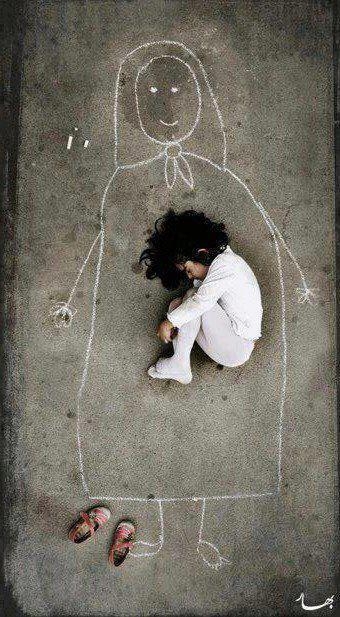
Photo Credit: A.A.

Abstract
Treatment of traumatized and dissociative children is most often discussed in the context of psychotherapy. However, traumatized and/or dissociated children often come into contact with additional professionals. Like all youngsters, traumatized children need to manage everyday interactions with caregivers, educators, and routine childhood medical and dental care. Yet many also face clinical interactions with speech-language pathologists, occupational therapists, physical therapists, medical professionals, and more. This is because trauma places children at a high risk for developmental issues, and because children who already have developmental and/or health issues are highly vulnerable to trauma. In addition to clinical care, many traumatized children encounter legal personnel, forensic evaluators, child protective services, foster care staff, etc.

Posttraumatic and dissociative reactions are not limited to the therapist’s office. Just as communication issues aren’t segregated to speech-language pathologist’s office, asthma to the doctor’s, or sensory integration issues to occupational therapy. Various issues can complicate children’s presentation and behavior, and traumatized youngsters are often judged as difficult, aggressive, manipulative, immature, unpredictable, and inattentive. This can result in painful consequences (e.g. loss of placement, shaming, treatment failure), which further increase stress and reinforce the need for dissociative coping. In addition, caregivers routinely face challenges that can affect course of treatment, and professionals do not always ‘speak the same language’ when it comes to describing, assessing, and treating the child (and/or family). Even when professionals are trauma-aware, coordinated care is not always easy to achieve … and yet is essential for effective stabilization, minimizing compartmentalization, and carryover.

This webinar will look into the often complex realities of caring for traumatized/dissociative children and adolescents, the tapestries of clinical encounters many face, and how these may shift throughout infancy, childhood, and teen years. The challenges (and potential) of coordinated care and communication will be discussed, as would logistical and ethical limitations and suggestions for managing them. Clinical vignettes will serve as a window into ways for improving communication among child/family professionals, and will provide examples for practical solutions for increasing regulation and decreasing posttraumatic activation in all involved. The role of caregivers and the child as part of the team will also be examined.

Objectives
Upon completion of this webinar, participants will be able to:

  • Identify the connection between trauma and care utilization in children and adolescents.
  • Describe three challenges to coordinated care
  • List five strategies therapists can apply to improve communication and coordination in the multi-disciplinary treatment of traumatized/dissociative children

For more information and to register

Disclaimer: I volunteer my time and expertise for this webinar, and do not receive any financial gain from it. Registration fees are collected by ISSTD, which hosts the webinar, is responsible for all fees and/or refunds, and provides an option for CEs for attendance.

What PTSD teaches us about human frailty and resilience

The link below will lead you to one of the best interviews about PTSD I have ever seen, hands down.

The fact that Rachel Yehuda is my cousin is an added bonus–I am ever so proud of her: for the person she is, for the work she does, for the wisdom and empathy she imparts, for how she has literally changed the field of PTSD in the last 25 years.

(I recommend reading the transcript, not just viewing the snippet of video on the site)

Take a look. Take a read. You will be glad to have taken the time:

Ingenius: Rachel Yehuda

http://nautil.us/issue/31/stress/ingenious-rachel-Yehuda


experience

Kids and Screen Time: Data, Reality, and Possibility

ScreenTime

When I grew up, television was a very small part of daily life, and was the only screen in the house. Telephone conversations were usually brief (and attached to the wall through the cord in the main room of the house, they only allowed limited privacy). Most daily interactions were face-to-face. Social interaction with peers and siblings certainly were face to face.

Now most homes in developed countries have several screens in different configurations: TVs, laptops, computers, tablets, phones, game consoles, DVD players, other interactive toys that come with a screen.

Children spend a lot more time facing a screen than they ever did. What is the impact of that?

Like every tool, screen media is neither good nor bad–it is HOW you used it and HOW MUCH you used it and what it DISPLACES that matters.

In this electronic age, children have more access to more education materials in quicker and more convenient ways than ever before. Media and information are powerful, but not neutral: If not taught how to discern information on the web, children do not learn how to conduct research or pick out primary source or secondary source, how to identify fact from biased blog or a complete fallacy. They may believe everything they read online–both truth and blatant misrepresentations. They need to be taught how to use information, how to cross-check, how to learn.

Education with the use of screens has replaced some of the methods of learning that were used in not-too-long-ago times. They have benefits and limitations. They can replace some older methods of research and increase efficiency and effectiveness of learning. They can connect people from far places to work together. They can bridge over differences and stigmas. However, they can also displace the interactive collaboration of listening, analyzing other people’s opinions and views, and working together interactively in real space (rather than over the internet in shared documents or through ‘attachments’ or searching to copy other people’s reports through google …).

Outside of educational screen time (i.e. the time children spend watching screens for learning, whether formal or informal), there are also the many hours a week that children spend playing or gazing at movies or music videos, or in texting incomplete sentences in stunted spelling to their friends on social media or phones. These hours often displace actual face-to-face interactions and all that comes with them: reading social cues, body language, emotions, tone of voice. Electronic communication is a poor substitute to actual interaction. Emoticons are a very crude representation of people’s facial expressions, and while they can lend ‘color’ to a message, they are not the real deal.

Children who spend too many hours staring at screens spend too few hours interacting with others and learning skills for interpersonal communication, for reading other people’s emotions and body language, for taking turns and listening.

In an article on NPR, about “Kids and Screen time–what does the research say”, researchers found that removing screen time (and effectively, the replacing of that back with social interaction and TALKING TO EACH OTHER and engaging with others), helped children be more able to recognize facial expressions. The benefits were significant even after five days of no screen time.

While some people advocate total electronics removal … I am not an advocate of removing all electronics: we live in a time where media and internet, email and web searches are enormous tools. It would be a form of social isolation to cut children off from the ability to interact with the world. However, it can be unhelpful to have too much screen time, as it displaces other kinds of social engagement that are just as important. Children do not know what they are missing when they stare at screens instead of interact with people–it is our job and responsibility as adults to help them learn to communicate and socialize.

Infants learn how to interact, how to engage, how to interpret communication and intent–through facial expression and through immediate dyadic interaction in many different settings over many interactions. It is a learning that continues throughout childhood and into young adulthood (and some may say, throughout the lifespan). We need to be mindful of not displacing personal interaction with screen time.

It is possible to do both–though that calls for moderation and boundaries (things that children need to learn, anyway). Additionally, it needs to be not only the children … adults who spend all their times staring at a little screen are displacing time of interaction WITH their children and are becoming models for what we do not want to reinforce.

There is no one recipe that would work for everyone–the right balance is different for different people at different times. What does make sense to me, is to be mindful and be honest:

  • Do not demand of your children something you do not follow yourself …

* Create windows of time when screens are not used in your home: a ‘curfew’ time for phones, or an evening a week without any electronics, a ‘no virtual communication’ weekend day, maybe decide on no electronics in mealtimes (basic politeness, that …), or on other ways to limit screen time. For everyone.

  • Make sure that you are a good model for turning off electronics and doing more than just lifting your eyes momentarily from one …

Young children, especially, are vulnerable to not developing what they SHOULD be developing. If their little faces are stuck to a screen rather than interested in another person, and if their interactions are the brief raising of eyes (or the parent’s brief raising of eyes) from a screen to nod or follow a direction; they would not learn how to engage well, they would not know to be good communicators, or listeners, or readers of social gestures, facial expressions, body-language, and signs.

This is not an either/or. Electronics and screen time, interpersonal social time: It can be an and/and, but it needs to be mindful, lest we raise a generation of children who do not how to interact … and fail them by not providing them the opportunities they needed to learn.

To read the article: “Kids and Screen Time–what does the research say” on NPR, click on the title, or click below:

http://www.npr.org/sections/ed/2014/08/28/343735856/kids-and-screen-time-what-does-the-research-say

Nadine Burke Harris on: How Childhood Trauma Affects Health Across a Lifetime

What if there is an exposure that affects health and development dramatically and is more prevalent than HIV, cancer, and Hepatitis combined and yet most doctors do not screen for it? What if you knew of an exposure that increases the risk for heart disease, diabetes, early death, inflammatory diseases, premature birth, metabolic syndrome, depression, anxiety, suicide, and more? What if that exposure was at the base of many learning disabilities, attention issues, and behavior issues and if there was a lot to do to help reduce this risk?

Wouldn’t you want to know about it?

Wouldn’t you want it to be treated as a priority in healthcare and public interest? I know I would, and do. Nadine Burke Harris is sure, too. Listen to her amazing Ted Talk–this is a brief talk that you’ll want to pass along!

How childhood trauma could be mistaken for ADHD

child brain

This is an immensely important article. Not because traumatized children cannot have ADHD–they can, and many do–but because children with ADHD must also be screened for trauma. They are already at a higher risk for maltreatment and overwhelm, and trauma may also lower their ability to manage stimuli and process information, exacerbating inattention.
Trauma and attention for learning are at cross purposes–this alone is a good enough reason to assess what part trauma may play in a child’s clinical presentation.
And of course–if there is trauma that is ongoing, we are all of us entrusted with doing all we can to identify it and stop it, so that children can be safe.
Until we ensure they are safe and FEELING safe, we cannot truly expect them to lower their hypervigilance or attend to what the teacher is saying in class. We cannot expect their brains to respond well to medications that are meant to treat inattention when their survival may feel as it hinges on remaining in hyper-vigilance mode and constantly scanning for danger.
I highly recommend reading this article.

Rebecca Ruiz's avatarACEs Too High

Acry

[Photo credit: woodleywonderworks, Flickr]

Dr. Nicole Brown’s quest to understand her misbehaving pediatric patients began with a hunch.

Brown was completing her residency at Johns Hopkins Hospital in Baltimore, when she realized that many of her low-income patients had been diagnosed with attention deficit/hyperactivity disorder (ADHD).

These children lived in households and neighborhoods where violence and relentless stress prevailed. Their parents found them hard to manage and teachers described them as disruptive or inattentive. Brown knew these behaviors as classic symptoms of ADHD, a brain disorder characterized by impulsivity, hyperactivity, and an inability to focus.

When Brown looked closely, though, she saw something else: trauma. Hyper-vigilance and dissociation, for example, could be mistaken for inattention. Impulsivity might be brought on by a stress response in overdrive.

“Despite our best efforts in referring them to behavioral therapy and starting them on stimulants, it was hard to get the symptoms under control,”…

View original post 1,765 more words

The Childhood Adversity Narratives: Learn. Share. Educate.

ACES

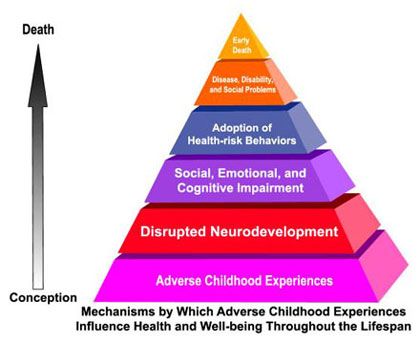
How do childhood adverse events affect development? How do they impact health? How much does it cost society to have children exposed to adverse events? What are the social ramifications? How does childhood adversity reflect in mental-health? In illness? Can we prevent childhood adverse events? Why is it worth it for society to invest in prevention and treatment of childhood trauma?

And other questions: What is more harmful: second hand smoke or childhood maltreatment? How is that reflected in funds or investment in prevention or treatment? Where does asthma come in? What can we do about any of this, anyway?

To find the answers to these questions and more, check out this amazing presentation (also available in PDF and PPT on the site–see links below).

This free resource is available due to the generosity of Frank and Karen Putnam along with their colleagues, who created this presentation in the hope that it will be widely disseminated and that it be used as an education resource for the public as well as for researchers and clinicians. The presentation details the prevalence, impact, treatment, and importance (it is highly possible!) of prevention of child abuse and neglect. The authors encourage everyone to use the presentation and share it.

The slides are available on the website http://www.canarratives.org/

To view the Power Point Show: CAN_Narrative_4-26-15-v2L4

To download the pdf: http://static1.squarespace.com/static/552ec6c7e4b0b098cbafba75/t/553e3673e4b09e094f914b8f/1430140531869/CAN_Narrative_4-26-15-v2L4.pdf

Outdated or Misinformed? Childhood Maltreatment in college textbooks

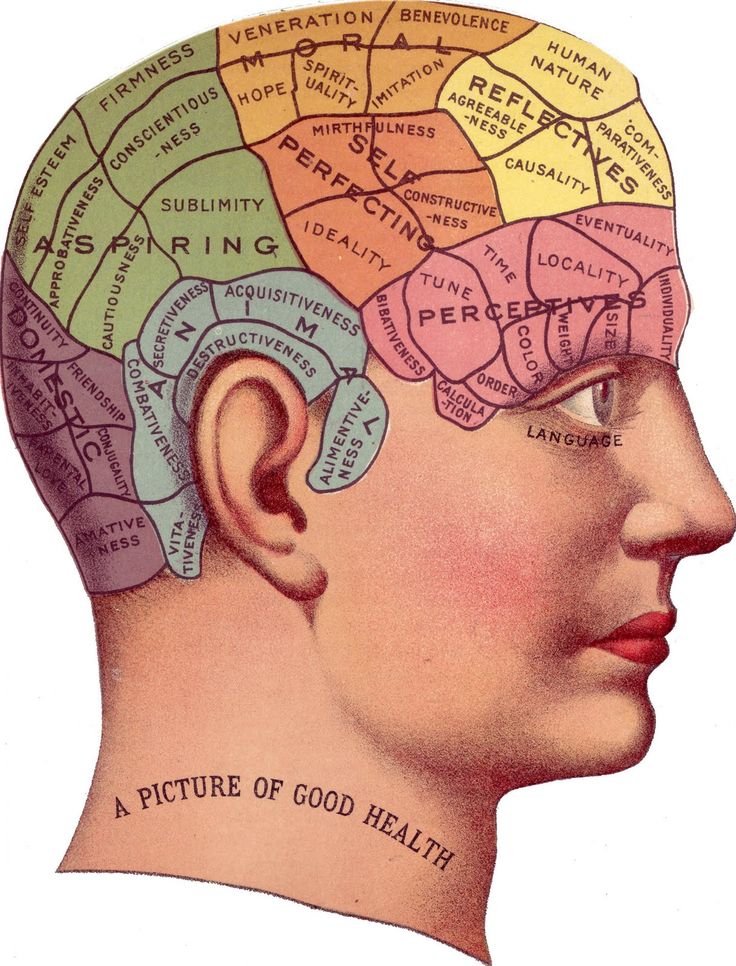
Vintage Phrenology: thegraphicsfairy.com

Vintage Phrenology: thegraphicsfairy.com

There are over 1,000,000 substantiated reports of child maltreatment annually in the US alone (US Department of Health 2013). The impact of maltreatment on development and health is indisputable. The last two decades showed brisk research in the area of trauma and dissociation all over the world. It is therefore quite surprising to find psychology textbooks to be so behind the times (and behind the data) on covering child maltreatment. This leaves hundreds of thousands of students a year with less-than-accurate information that may impact their ability to identify or understand the aftermath of child maltreatment.

In an important article (also see full link below), Brand and McEwen review the three leading introductory psychology textbooks and how they address (or not address) childhood maltreatment and its aftermath. The results are distressing in lack of citing of current data (as in  many textbooks on psychopathology).

One can hypothesize why prominent textbooks will not sufficiently cover such an important topic (one would think they would find it essential to cover well if only for the known health effects of childhood maltreatment across the lifespan, in both physical and psychological health, costs, and healthcare utilization). Maybe it is as simple as using outdated resources or not keeping up with research and known data. Maybe it speaks to more widespread issues of denial and minimization of childhood maltreatment. Maybe other reasons. Regardless of why the textbooks are lacking, the reality remains that the textbooks leave students un-informed on the topic.

The good news is that this can be changed! The data is available–it just needs to be included and reviewed better!

Hopefully having more awareness to this will allow students and faculty to challenge the choice of textbooks and to demand better coverage of such a relevant issue. Students are shortchanged when they are under-informed and when data is slanted or may appear to be biased or outdated.

What can you do?

Let your faculty, librarian, and fellow clinicians and students know that our college students deserve a more cohesive review of childhood maltreatment. Share the article below. Talk to professors who teach these courses and support them in seeking better balanced textbooks. The research is available, it simply needs to be included rather than avoided. Let us work together for improving information in education!

Coverage of Child Maltreatment and Its Effects in Three Introductory Psychology Textbooks / Bethany L. Brand, PhD, and Linda E. McEwen, MA

http://traumapsychnews.com/2015/01/coverage-of-child-maltreatment-and-its-effects-in-three-introductory-psychology-textbooks/

The Connection that Never Was

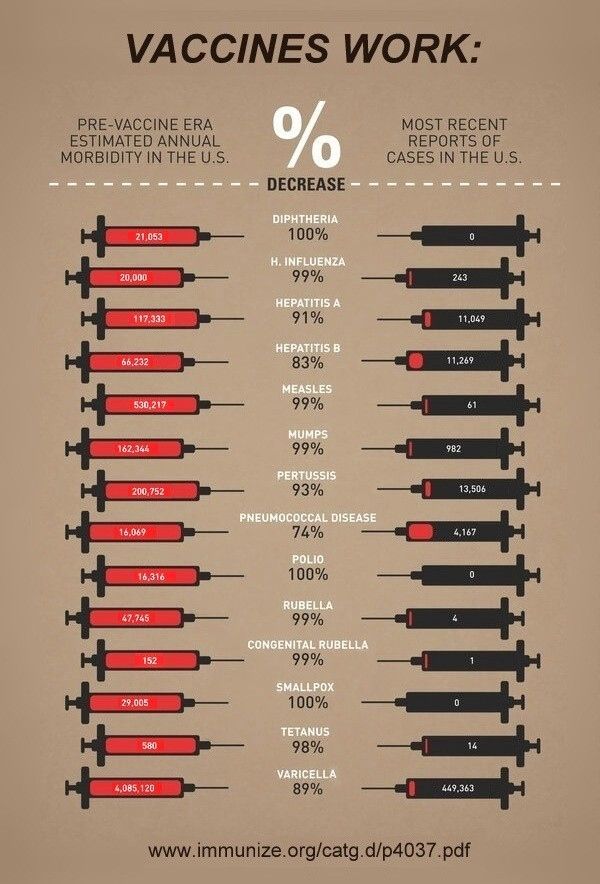
Am sharing the article below because there is benefit to reducing the worry and panic and misconceptions among those who still hear things about the supposed connection between autism and vaccination, and don’t know or never had good access to the facts.

This recent article in JAMA is one more study that shows NO CONNECTION between the MMR Vaccine and Autism. In fact, there never WAS a connection. In fact, no peer reviewed studies ever did show a connection. The study that caused the original panic was — by the admission of the researcher himself — made up and the results were falsified. The article was withdrawn a long time ago from reputable journals, and the scientist has been discredited for the results he falsified. Furthermore, his claims were never replicated (not surprisingly, given that they were false from the get go), and there has never been any support for the connection.

Some children may have adverse effects to vaccines–or to any medication or substance for that matter. Children can react to cotton, wool, milk, wheat, sugar, natural vegetable dyes, sweet potato, eggplant, broccoli, eggs–just about anything. This does not make the rare reactions mean that these substances should be avoided generally, or that they ’cause’ diseases. Vaccinations do not cause autism. There has never been any support for that, and many people did try to find it. They did not.

I hope this current publication in one of the most prestigious and rigorous journals in the world will help straighten out some of the facts for those who are still worried.

Vaccines save lives. They do not cause Autism. Never had.

http://jama.jamanetwork.com/article.aspx?articleid=2275444#

vaccines work

Trauma’s Memory Problems : A good article

child trauma

Trauma all too often brings up the detective in people, prods them to question, pin point, dissect accounts, weigh relative credibility. It is an odd thing, given the reality that trauma–by its very essence of overwhelm and shutting down of language centers, processing, and memory integration–affects how one may be able to remember, recount, and narrate it. Trauma is difficult to articulate and often too difficult to comprehend, even to know. And yet, it is often demanded to be phrased in exact details that go beyond every-day memory. As if trauma memory should be, somehow, more stellar, subject to higher standard, to bigger scrutiny.

Granted, there may be a motive in it: people would rather believe trauma is less frequent and not as severe. If there are holes in a story, maybe it is ‘proof’ that it did not take place, or not as badly, or not deliberately … At the same time, there is an inherent lack of understanding about how memory and overwhelm conflict and contradict each other. In some ways, a misremembered, disjointed, incoherent event fraught with numbness and confusion may well BE one of a trauma … rather than be proof of something not happening …

Trauma is a problematic thing for memory.

People remember trauma differently. Some remember constantly, vividly, intrusively. Some remember oddly. Some remember snippets, or sensations, or disjointed unease that seems disconnected from anything that seems to make sense. Some remember sometimes. Some remember not at all.

Children, especially, may find not remembering safer than to try and manage the overwhelming reality of what to let reality in may mean. They may have to keep things in the ‘not knowing’ folder to go on and push away reminders that make no sense, they recant, reverse, deny, ignore.

In the article below, the author explores memory and trauma, denial and dismissal, inaccuracies and interpretations, shame and judgment, burden and prejudice, reality and myth.

It is a worthy read for anyone who has been touched by or knows someone who has been touched by trauma (that should include the lot of us, really …). It is an even worthier read if one keeps in mind how it would be all the more difficult for children to conceptualize and remember trauma cohesively, when they have less tools with which to manage what they had endured, and are more vulnerable to misconceptions about what it says to them, about them, about those who hurt them, about the world, about who they may be or have become.

​I Was Sexually Assaulted As A Child. Here’s Why I Didn’t Remember For Years.

http://thinkprogress.org/health/2014/12/23/3606576/memory-and-sexual-trauma/