Imagination

door to sea

Open a door to imagination.

Re-visit forgotten times of untethered awe still left of childhood. Do not worry–your spirit does and always knew exactly how. Just go.

Open a door to imagination.

Let what isn’t, could not, would not be–become. In your mind’s eye, make reality.

Open a door to imagination. Fret not. You can’t get lost. You are already home.

Think of wonder. Fathom fairies. Fly aboard an eagle. Cradle soft onto the foaming sea. There are no rules to conjuring. No timeline. No bonds of gravity, age, physics. Relativity folds time onto itself. Explore.

Open wide the door.

For a moment or an hour. For a blink or afternoon, reshape yourself along the creases you never saw were possible new vistas. Find magic in the corners of your heart. It is there. It never left.

Open a door to imagination.

Breathe in light. Discover open spaces beyond air, beyond even what you believed could be imagined. Understand. Expand.

There are worlds out there. Awaiting your inspiration.

And more doors await. Beyond. Right here. Keen to open. You.

To imagination.

Happy Flying!

tooth fairy
This is the sweetest story of an eight year old with a lost tooth and an obliging tooth fairy, but most of all, it is the story of a principal who understood, and did what he could.

And that, as we know, is a lovely whole lot!

Here is the story from Vancouver:

Principal Writes Letter to Tooth Fairy

A letter from a B.C. principal to the Tooth Fairy on behalf of an eight-year-old girl has gone viral after it was posted on the school’s Facebook page.

Avery Patchett is in Grade 3 at James Hill Elementary School in Langley and last week she lost her third tooth during class. Her teacher gave her a necklace to help her keep the tooth safe, but when she went outside at recess to play she tripped and fell, knocking the tooth into the dirt.

“When I was running up the stairs, maybe my tooth necklace was loose,” said Avery. She was upset that she had lost her tooth as she wanted to give it to the Tooth Fairy that night.

“When I tripped and lost it, I lost it forever,” she said. “I looked a couple of times and I still haven’t found it because the tooth looks like rocks.”

That is when her principal, Chris Wejr, stepped in to help.

Avery came to him crying about what had happened. “She was upset because she had lost her lost tooth and she was worried the Tooth Fairy wasn’t going to come,” said Wejr.

“I said ‘well, I’ve sent a letter to the Tooth Fairy before and it worked’ and I said ‘what do you think about us sitting down and writing up a formal letter with our logo on it and everything and giving that to the tooth fairy?’”

So they wrote a letter together and Avery took it home to give to the Tooth Fairy.

“She gave me five dollars,” she said.

tooth-fairy-letter

Wejr had previously helped a student at his former school through a similar experience and said it is important to help kids in this way and to share these stories. When he posted the letter on the school’s Facebook page, it immediately generated a huge response.

“It shows that people want to hear the positives,” he said. “There’s so many incredible caring moments that happen in schools every day and they don’t get shared, so we try to share the positive moments that happen at school once in a while.”

Avery’s mom Debbie said she did not expect this at all from her child’s principal. “I just thought, ‘wow, it’s a really nice gesture’,” she said.

“He took something really small and made this a memory for her that will last forever, and it is a small gesture, but it means everything,” she added. “We hear so many horrible stories every day, it’s nice to hear this story, this small little story, this little gesture.”

Wejr said the lesson here is that sometimes adults need to stop and make sure they show kids they care and help them in moments of distress.

“Sometimes the small things can really have a large impact if we just take the time,” he said.

© Shaw Media, 2014

 To see a video clip of the story, click here.

Three’s Company!

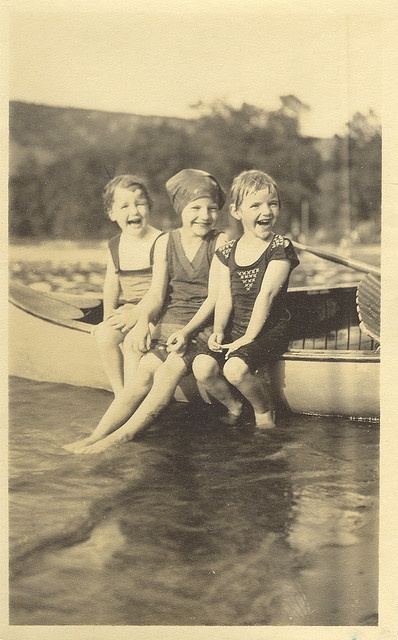
friends1

A little boy on the street this morning: “Mommy, when can I have a play-date with Bobby and Martin?”

Mommy: “You just did on Sunday. Don’t you remember? In the park?”

Little guy: “Yeah, but its already more before than yesterday!”

Mommy (chuckling): “Okay, let me call Bobby’s mom and see if you can play with him later this afternoon or tomorrow.”

Little guy (pedagogically admonishing): “Martin, too, Mommy! We’re friends together!”


Ah, friends together! Best friends are immensely and unquestionably lovely, but in my view–and this little guy’s clear statements–the third wheel theory is wildly overrated. Philosophically speaking, a third wheel can indeed offer an extra level of stability … Truth be told, there’s nothing quite like triple decker fun: gales of laughter multiplied, mischief bubbling like a shaken soda-bottle … Not too few and not too many (and if you’re a skipping gal, enough for double-dutch!)

I can see then in my mind’s eye. Three little fellas: this curly top boy, Bobby, and of course, ‘friends together’ Martin … There they go, conquering the playground and marshaling a bench for headquarters. The Three Musketeers. The Trio. The Triple Besties.

Come to think of it–when is the last time you got together for a tricycle of laughter. How long has it been since you had a play-date of ‘friends together?’

I know it’s been a while for me, and overdue for some revision. How about you?

Three’s company. Pick up the phone. Do not delay. Go play!

friends2

Passover to Freedom

matzo vase

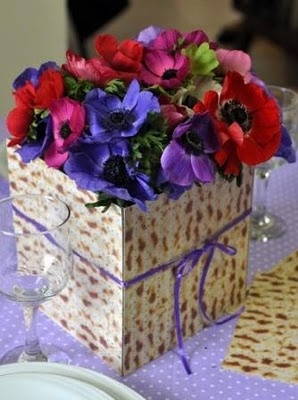
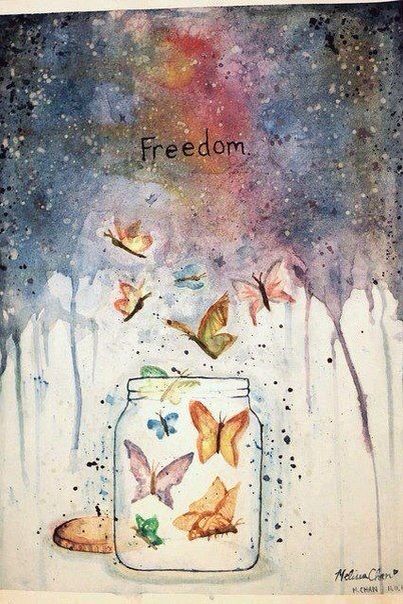
However you celebrate, note, commemorate or endure it, may this Passover–this Spring Holiday, also called the “Holiday of Freedom” herald your personal freedom from whatever binds you: worry, fret, self-critic, anxiety over judgment, unhealthy-habits, petty choices … and any manner of sticky strings-attached. May you be freed.

May this also be a time to end present day bondage. Present time slavery. Let us move to end it. Let us not look away.

Let us end trafficking in all its manifestations and myriad ‘cultural’, ‘economical’, ‘religious’, or political pretenses. Let us end the bondage of child-laborers; of girl-brides; of ‘modern-day’ slaves; of the abuse of sexual exploitation; of people forced into indentured servitude, an enduring poverty, a withheld education, and subsequent misery and desperation.

Let it be done. Over. Made no more. We are one. Let us all put forth to let our people go.

May this time of highlighting the freeing of a People from slavery and injustice of exploitation, murder, and impunity–become a springboard to reforming the similar injustices of today.

Let us no longer be appeased by looking away or minimizing (and by it passively endorsing those who–still today–consider slavery acceptable). Let the voice of freedom ring loud and clear: We shall not be content in the reality of human enslavement, cruelty, hatred, inequity, injustice and indignity. Let our people. All people. Go.

May this Passover be a passing of a threshold, a springing open the bloom of transformation and potential. Hope. Release. Rebirth. May it be, a time to Free.

freedom

The Math of Light and Dark

You cannot fight hate and violence with more hate and violence, any more than you can conquer darkness with more darkness. Adding darkness only increases blackness. To subtract shadow, add light.

(Na’ama Yehuda)

Dhammakaya Temple, Thailand: 100,000 Monks Praying for Peace, (Luke Duggleby)

Dhammakaya Temple, Thailand: 100,000 Monks Praying for Peace, (Luke Duggleby)

Tree Life


“Are trees sad when people cut them?” The little boy came out of a week of school focus on earth, nature, resources, deforestation, and endangered animals.

“What do you think?” I returned the question. He has a reason for asking, after all.

“Yeah,” the seven-year-old sobered. “I think trees get sad because then they die and they can’t make leaves and flowers and acorns anymore.”

I nodded, sensing he has not quite finished and wanting to give him time to find the words.

A quiet moment passed, then his right eyebrow shot up the way it does when he gets an idea. Ideas for mischief, yes; but also for an answer that eluded him or a solution he did not see before. He touched the top of the table with his fingertips, and his eyes wandered over the floor, the bookcase, the closet door.

“You think maybe the trees are also not so sad,” he continued, “if people make stuff from them and then they get to be other things?”

“Um…hmm …” I noted in agreement, letting him work this through.

“Like if the tree gets to be a table or a chair or even a book then it is still important, right? But …” his young face wrinkled in too-old-for-his-age consternation, “but … maybe the trees are sad if they get burnt in the fire or something … because then they’re gone and can’t be anything anymore?”

“I see what you mean,” I offered, “but what if burning the wood helps keep people warm in the winter or cook their food?”

He brightened. “Yeah! I think maybe then the trees don’t get so sad … because they kind of make the food … ” His face got transformed once more, this time to seriously didactic, “But … but people still have to be very careful to not cut too many trees, right?”

“Right … ”

“… because the trees want to grow and be happy and also the squirrels and the birds need trees and monkeys and other things. Bugs, even. Some animals live on trees,” he instructed me, “That’s where they build their home. So people have to be careful because it is not fair to break all the animal homes and chop off all the trees to make things …” he paused. “And anyway, you can make tables from other things, too. Like plastic. Or maybe even a rock … I think …”

He quieted for a moment, his eyes wandered again around the room and rested on my bookshelves, on the National Geographic magazines on the side table, and the paper-packed folder with his work peeking out of the backpack on the wooden floor.

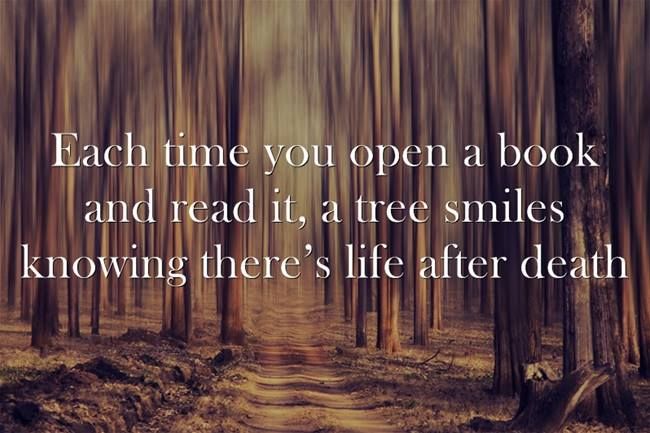
“I think trees really don’t mind if they get to be books, though” he added, satisfied. “Because then they can tell stories even if they can’t talk. I love trees and I love books.”

Couldn’t have said it better myself.

treelife

Find the Unexpected

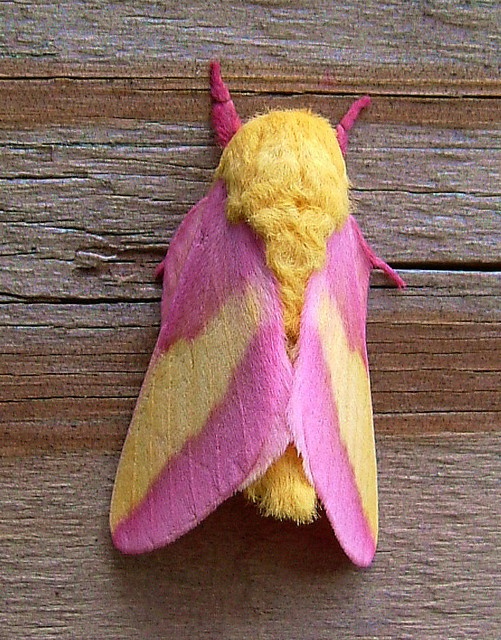
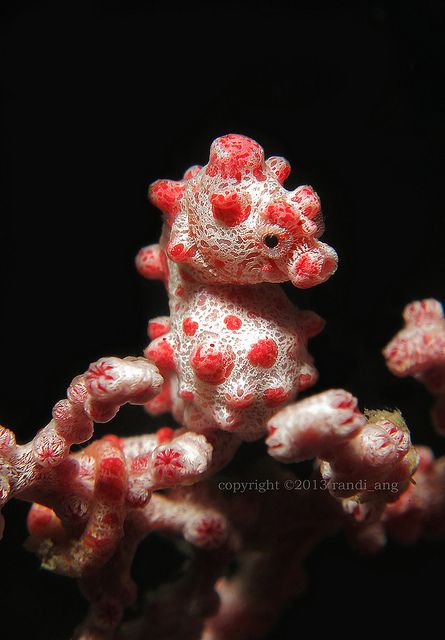
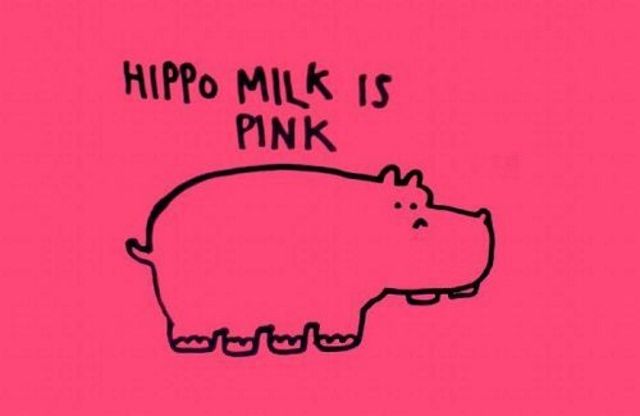
Today, find something unexpected. Learn a fact you did not know. Claim a new piece of knowledge or practice a new skill. Watch an animal you’ve never seen before. Read a bit of trivia that surprises, gives a chuckle, raises eyebrows, tickles curiosity for more.

Today, practice the experience of wonder.

Today, remember what it was–can be like, often is–to be a child.

Rosy Maple Moth

Rosy Maple Moth


Bargibanti Pygmy Seahorse

Bargibanti Pygmy Seahorse


T-Rex Trivia

T-Rex Trivia

Hippo Trivia

Hippo Trivia


Perspective …

Life rushes by.

Essential tasks tick looming.

Hardly a single second left to breathe …

Slow down … take heed …

Even in the midst of chaos,

the heavy endless canyons of dark asphalt,

and sky-high gray concrete,

even in the angry honking of a thousand yellow taxis,

in the press of harried people on the streets,

in the tasks that frustrate waiting,

in the overwhelming wish for time and needs–

Pause now.

Find perspective.

Take a moment.

Change your point of view to rise above

and slow the moment’s speed.

It’s there. Believe.

Even in the concrete jungle

There’s a wide green lung

Awaiting, present; a potential reprieve

A slower pace

A gentler space

Reminding you to pause and breathe …

nyc from above

Clapping, singing, and Peek-A-Boo

A query came from another young mother:
“I have a six-month-old baby and I’m a single mom without much money to take her to mommy-and-me classes and such. Are there games or activities I can do with my baby at home to help her language development? She’s healthy and doing everything she’s supposed to do at this age, the doctor says. Thanks, Doing My Best.”


Dear “Doing My Best”,

It sounds to me like you are on the right path already by even wanting to know how to do more with your little one! Being a single mom is difficult, let alone having limited funds. The good news is that you don’t need to spend money on classes and expensive toys and gadgets–YOU, and things you already have at home, are the best ‘tools’ for your baby–you likely have everything you need already!

Babies have an innate ability to develop language, and are marvels in how they manage to make meaning of the world around them. Almost all they need for it is you and exposure to language through you–their caregiver. She needs your attention, sensitivity, time, and commitment. There are many things you can do during your everyday activities with her that would foster comprehension, listening, turn-taking, sound production, connection, shared attention and cognitive development–all the makings of language and communication development.

Language exposure is important, so talk to your child about everything you do. Use her name when you call her, look at photos of herself and yourself and other people she knows–point to the photos and tell her who these are. Books are great, as well. Read to her every night–it is never too early to start and make it a habit. Board books are sturdy and great fun, and you can let her turn the pages if she wants (lift-flap books where she can ‘find’ things are fun, too).

You don’t need to buy many books–maybe just get a few favorites. Borrow the rest at the library. Take her with you if you can and choose the books together. Make this part of your fun time. You don’t need to read every word in a book, either–flow with it, narrate the pictures, respond to her reactions (e.g. “yes, you are touching the lion, that’s the lion and he can roar… and that’s the giraffe, look how tall it is! It can reach all the way up in the tree!”). Make book-reading part of your connecting and listening time.

Everyday activities are excellent opportunities for language exposure: narrate whatever you are doing together, when you are out on a walk, in the playground, food shopping, or doing household chores (she can help …) such as folding laundry, straightening up, or mushing cooked veggies for her food (“Oh, here’s your red shirt! Let’s fold your shirt so we can put it in your drawer. Look how nice and clean it is! Now…where are your socks–here’s one sock, and here’s the other… You want to hold the socks? Here you are. Oh, aren’t you smart! You know they go on your feet! Let’s put them on–one sock on this foot, and another sock for that foot …”) etc.

Take turns by playing games like peek-a-boo, clapping, nursery songs that have predictable body movements (the wheels on the bus, itsy-bitsy spider … borrow a CD from the library if you don’t remember them, you’ll know them by heart in no time…). Take turns banging on things to make noise together (you don’t need to spend money on a drum, an upside down pot with a spoon works great, too …), build a ‘tower’ from a few blocks and knock it down, then build again and let her knock it down (plastic cups or containers work well. You can fill closed containers with some dried beans of pasta if you want–for heft and sound–just make sure they are sealed tight!). Babies love repetition, so be ready to do this quite a few times.

You can roll a ball back and forth, pick up toys together (it may take a while, if she decides that taking out of the box is just as much if not more fun!), hand her spoons to put in the drawer, fill and empty a basket of lemons or oranges (no items smaller than a Ping-Pong ball, because they can be a chocking hazard), fill and empty a cup with water during bath-time.

Model symbolic play: ‘feed’ the stuffed animals and dolls with a spoon, put them to bed, ‘offer’ them a bottle. Put them in the stroller and take them for a walk in the house, play peek-a-boo with the dolls and let her have a turn, as well.

Through it all, talk to her. Listen to what she is ‘saying’ (babbling…) back. Comment about what you are doing. Comment a lot about what she is doing, her expressions, the sounds she’s making, how she might be feeling, how she makes you feel. Praise her for achievements (picking up a cheerio and managing to get it into one’s little mouth is no small feet of coordination!), let her know you are interested and that she is interesting, lovable, adorable, and fun.

Language development is closely related to and develops right alongside cognition, motor ability, sensory ability, listening, and understanding things about the world (e.g. you let go of the spoon with sweet potato on it, and it falls on the ground, making pretty splatter…! Mommy picks it up and wipes the floor, and when you let go of it, it falls again! How fun!…). Use your everyday interactions with your little one to comment on your world and hers, on your shared experiences. You don’t need commercial specific toys: let her play with wooden spoons, plastic containers (these can nestle, and you can also put things in them…and take things out…), an empty seltzer bottle with some pasta in it, pots and pans. A dish-towel makes a great ‘peek-a-boo’ cover, and a blanket for the teddy bear, too.

Babies and toddlers are utterly and preciously amazing. She’s already learning every day, and you have the opportunity to be her most important connection, attachment figure, playmate, and teacher–all in one. Enjoy her, and I wish the two of you oodles of fun!
clap