So …
What are you waiting for?
Wherever you are–go and have it!
Make your day one to behold.
Breathe in beauty. Breathe in light. Breathe in peace. Breathe in joy.
It is your day to live in fully
It is your day to enjoy.

So …
What are you waiting for?
Wherever you are–go and have it!
Make your day one to behold.
Breathe in beauty. Breathe in light. Breathe in peace. Breathe in joy.
It is your day to live in fully
It is your day to enjoy.


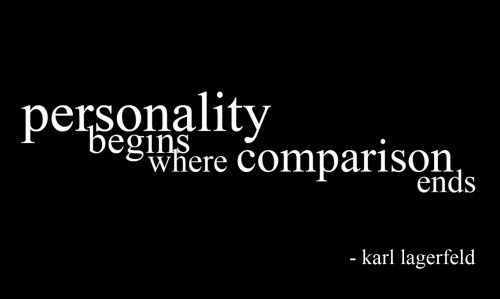
In this world of constant media tally, hierarchy, and perceived competition, it is all too easy to compare ourselves to others. It is especially easy to rank ourselves relative to those who do things better, achieve more, seem to know more, have more, do things with more ease than we managed so far. After all, there seems to be an endless stream of listings–the best in this, the most accomplished in that, the richest/biggest/strongest/thinnest/best-dressed/most-tweeted/most-friended/most-bought … It is as if we are expected to place ourselves along ordinal strings of relative abilities (and by extension, relative worthiness). As if we are to define ourselves by where others are. To chase the pace of others so we not lose our spot.
Compare yourself to others, and neutral becomes unimportant. You either win, or lose. You are either the best, or risk being the worst. You run: for more wealth, more friends, more recognition, better placement. You look behind your shoulder. You run some more.
Comparison itself is not a bad thing. It can serve as catalyst for progress–you may see someone achieve what you did not know was possible, and it can give you hope to try for dreams you did not dare believe you could make real before. However, it can also–and all too often do–serve to put yourself down, to discourage, to dissuade, to convince yourself that you just don’t have what it takes (though supposedly others do). Comparison can have you believe that you cannot do it and might as well give up on the dream before you even try it. Because others already did it better. Or got there first. Or would.
Comparison is energy–it just is. How we use it defines whether it binds or frees us. Whether it restores or drains. Having awareness of what is possible builds. It infuses motivation. It sustains. It fosters growth. However, relative worthiness stilts. It instills anxiety. It fosters disillusion. It chips at self-worth.
You have the power to choose which forms of comparison you use. Be wary of how you compare, to whom, and why you do so. If you choose to compare yourself to others to show how better you may be than some; know that alongside whatever you think you are measuring, you will also be planting a seed of doubt and failure by making your own worth dependent on your relative ranking among others. If, on the other side, you compare yourself to what you could before and where you’ve come from and what you now believe is possible; know that alongside this perspective you’d be planting seeds of strength and clear-seeing. You will be inviting possibility, expansion, gratitude, and generosity.
Comparing yourself with others–by definition–nurtures shoots of jealousy. They may be well hidden under social platitudes and self-deceit, but you must know that if your sense of who you are depends on where you place in relation to the success of others, there will be some spot of wishing for another’s failure so that your space may advance.
This is not necessary for growth. Like light, more progress by more souls only means brighter futures for each one and less darkened corners for all.
Set yourself free of rank and skin-deep importance. This does not mean you just lean back on half-baked laurels and dismiss the need for further growth. Rather, it calls for finding motivations that do not include climbing over others to get ahead. It calls for identifying the mountains that are uniquely yours to climb and the vistas that are meant for you to see. It releases possibilities that no one can take away from you, for they are within you, and not dependent on another’s stumbling or bowing down or burning out.
Use others’ success as guideposts, not podiums. Utilize their abilities as mentoring for what is possible. Identify what you would and would not accept as paths to growth. Find hope in journeys that belay what you used to believe your could do, then chart anew. There are no limits and there is no race but those you place against your own old habits or lazy bones.
You’ll be stoking the fire of your own dreams, rather than the engine that spins the hamster-wheels of others. Cut ties to relative succeeding, you will enable others to follow and snip free their own. Disavow competition for self-knowledge and self-prodding. Your horizons will become clear of motivations that were soaked and cloaked in jealousy and greed. You’ll walk where you are meant to walk and be who you are meant to be.
Moreover, you will forge a path for young ones, caught as they may already be in constant ranking as a measure of self-worth.
Become a beacon for individual ability. For less competition. More growth.


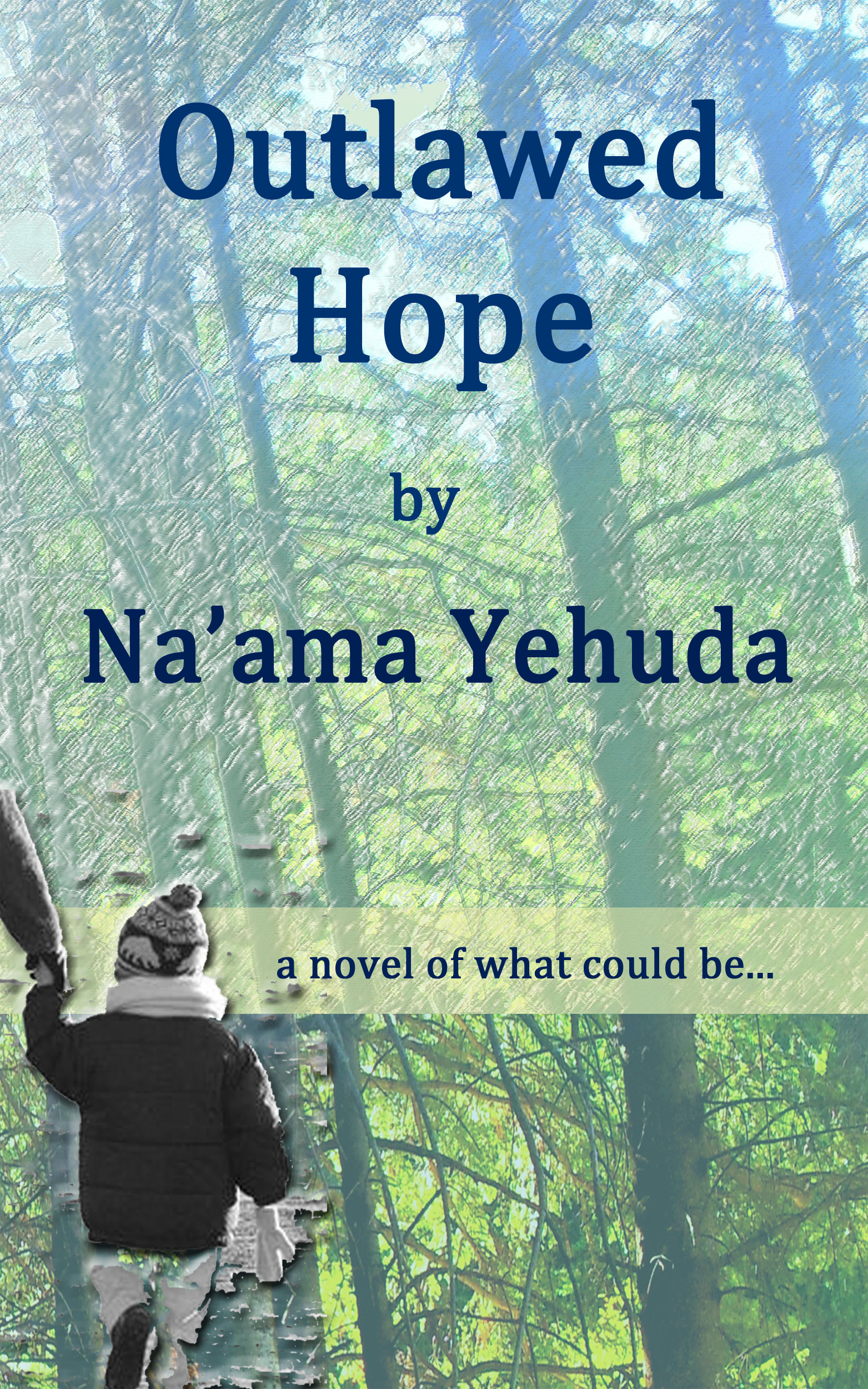
Outlawed Hope cover
“An amazing book!”
“One of the best!”
“Thrilling!”
“A sublime read!”
“Outstanding!”
“Brilliant, enchanting story telling …”
“A captivating and addicting page turner!”
“A winner!”
“Marvelously written, fascinating book!”
“Na’ama Yehuda has written a gem of a read!”
“Provocative, introspective, and hopeful … read it, enjoy it, and most importantly, discuss it with your reading circle.”
THANK YOU, ALL!
Want to take a peek? See below …
“Outlawed Hope” by Na’ama Yehuda (Published December 4, 2013)
Synopsis: Abandoned as an infant, adopted, and then forgotten until seventeen, Aimee was raised for an unknown future. Outlawed Hope is her story, the story of the Outlaws who birthed her, the Society that raised her, and the infant she finds. Aimee needs to save the infant from a future she knows too well. Through dangerous close calls, Aimee discovers that she isn’t who she thought she was, and nor are those around her. Why was she abandoned? Who found her? For the truth, Aimee must face stunning revelations. She is trained to comply, but cannot—it would doom her and the baby she struggles to protect. Can she find another way, and at what cost? Outlawed Hope is a story of loss, unexpected empathy, brutality, and heartfelt resilience.
Advance reviews:
“A story of escape and capture, the power of hope, and the heroics necessary to ensure a child’s future.” Meredith Blevins, The Hummingbird Wizard (The Mystic Café)
“Reminiscent of Margaret Atwood’s The Handmaid’s Tale, Outlawed Hope is a compelling, fast-paced novel set in a less-than-utopian society. We feel the race of Aimee’s pulse as we follow the twists and turns of her journey, meeting various characters who help, hinder, sabotage, and heal both her past and future. In this first novel by Na’ama Yehuda, change is given the ride of its life and hope is anything but outlawed.” Adele Ryan McDowell, Author of Amazon Bestseller Balancing Act: Reflections, meditations and Coping Strategies for Today’s Fact Paced Whirl.
Available on:
Nook: http://www.barnesandnoble.com/w/outlawed-hope-naama-yehuda/1117555597
iBookstore: https://itunes.apple.com/us/book/id773444300
Kobo: http://store.kobobooks.com/Search/Query?fcmedia=Book&query=1230000200869

5-year-old: “When people die do they go right to heaven?”
Me : “What do you think?”
Kid: “I think maybe they go to the factory first.”
Me : “The factory???”
Kid : “Yeah. Where they make the wings.”

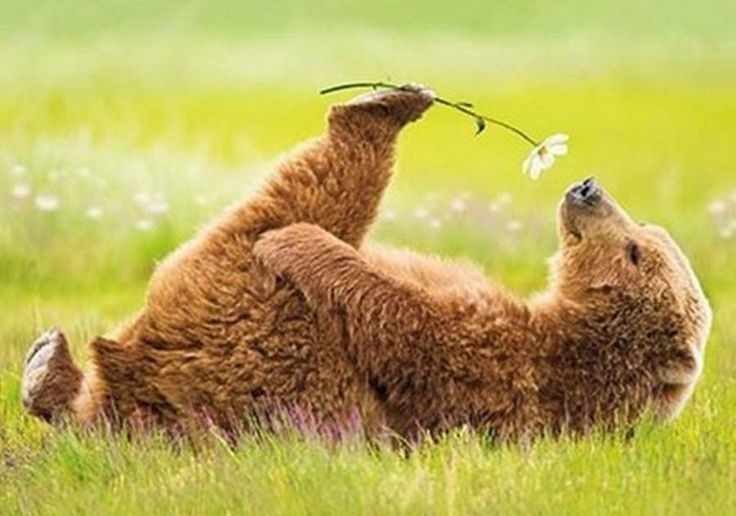
“Be happy for things that work” (Na’ama Yehuda)
“Be happy for things that work.” Na’ama Yehuda, MSC SLP

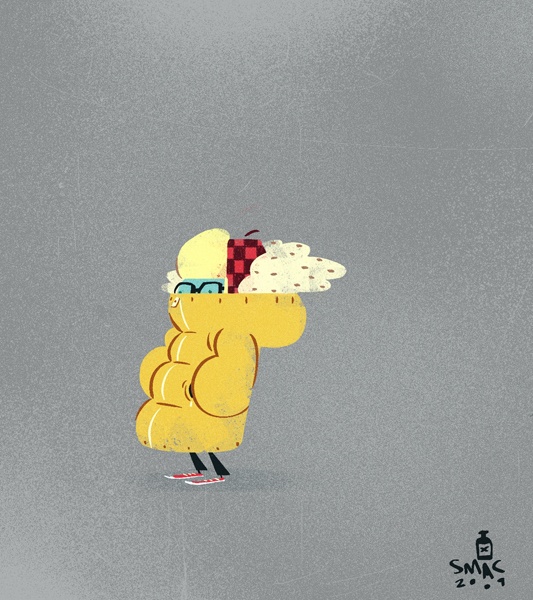
Toddler on the street–temps below freezing, and the little guy is bundled up like an onion: scarves, hat, puffy coat over hoodie and who knows what else–his little arms sticking out scarecrowishly–all you see is eyes and a tip of nose …
“Mommy, my hands went away from my body and I can’t find my thumb.”

“Color inside the lines.”
“Re-write these letters.”
“Sit on your circle.”
“This is not playtime.”
“Keep to the right.”
“Climb the ladder, not the slide.”
There is a good reason why we direct children. We want them to learn to follow rules and obey instructions. We want them to listen. We need them to pay heed. After all, laws and guidelines are part of an orderly society and are important for maturation, regulation, and delaying gratification. Rules help maintain safety. They help define the difference between free play and guided study, between teamwork and individual projects, between creative writing and a summary of a given book or essay.
Rules and guidelines are good. It is healthy for them to be challenged and okay to keep rules even if a child thinks they are stupid or unnecessary (as long as we truly know why). Boundaries clarify what is and isn’t acceptable, where and when and how. There’s nothing wrong with structure. Or with following directions. Or with consequences when one chooses to do otherwise.
Structure is a good thing. So is knowing what’s expected. At least as long as those do not become a means to an end. As long a they are not ways to exact conformity and control, paths to making our adult life easier, roadblocks to creative thought, plugs for personality.
When we extend guidelines into demanding unified and unjustified conformity, we risk snuffing out individuality. It is then that we may end up raising robots, not children. It is then that we gag magic and bind wonder, imagination, awe.
When we say things such as:
“Elephants aren’t purple, color it gray.”
“You can’t draw two suns in the sky. There is only one.”
“Stripes do not go with polka dots. You’ll look funny. Go change.”
“This doesn’t look like Mommy–she has long hair, not short.”
“Don’t mix the Lego with the blocks.”
“You can’t just make up rules–this game has an instruction sheet.”
“People don’t eat olives with cookies.”
“Stop making things up.”
There is nothing wrong with purple (or rainbow) elephants, with three suns, pattern mix-and-match, people who look like aliens and aliens who look like mice, Legos with blocks and carton boxes and a Barbi perched on for a knight, with new rules for old games, and with plenty of made-up imagining.
Order has a place, as does chaos and unpredictability. We ask our children to tolerate our rules and limitations … it is only reasonable that we train ourselves to tolerate (even encourage!) theirs, wild as they may seem to be.
Let your child out of the box. You’d be amazed what children can achieve. How much they can create, plan, build, conjure, put together. How far their brilliant, fresh thinking, free mind can go!
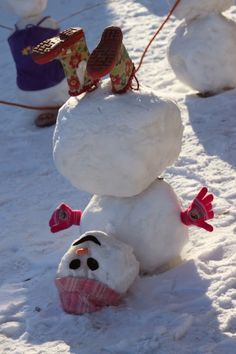
Think Outside the Box!

A three-year-old, upon hearing that tonight is the “Oscars” resisted going to sleep. No matter what. Full tantrum ensued. When his parents tried to tell him that it was “not for kids,” he burst out crying, insisting that “it WAS for kids” and that it was not fair that they were going to “watch Oscar.”
Took them a while to understand that their little guy had every right to be cross, considering that he was thinking about … well …
The ‘other’ Oscar…


A place to improve my writing skills, and that's all.
We're not thriving, we're creatively photosynthesizing under duress.
History of the Bloomingdale area on Manhattan's Upper West Side
A creative miscellany of mythic fantasies
a weekly flash fiction prompt inspired by google maps
A community for writers to learn, grow, and connect.
To participate in the Ragtag Daily Prompt, create a Pingback to your post, or copy and paste the link to your post into the comments. And while you’re there, why not check out some of the other posts too!
I can't sleep...
Alternative haven for the Daily Post's mourners!
never judge a girl by her weight
original fiction and rhyme
You have reached a quiet bamboo grove, where you will find an eclectic mix of nature, music, writing, and other creative arts. Tao-Talk is curated by a philosophical daoist who has thrown the net away.
A photographer's view of the world - words and images to inspire your travels and your dreams
Life in progress
Straight up with a twist– Because life is too short to be subtle!
WordPress & Blogging tips, flash fiction, photography and lots more!
Light Words


 Na'ama Yehuda
You must be logged in to post a comment.