When The Ice Breaks

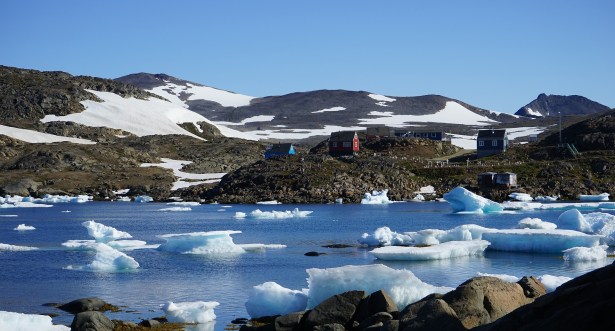
greenland icebergs-933003_1920

Photo: Barni1 by Pixabay


He said he’ll be home when the ice breaks.

And every day she waited, one baby tugging at her skirts and another growing restless under her heart, and tried to not look at the field of crosses planted right outside her window. Reminders of the many who the frigid sea or dark winters or the loneliness of this place at end of the world had claimed.

Some days she hated Greenland. The endless nights. The gnawing cold. The monotony of the same few faces and the bickering that eventually picked open old scabs and gauged new hurts for the next arctic dark to revisit.

Other times she couldn’t fathom living any other place. Summer’s endless light. The sparkle on the water. Pups, babies, and not-so-babies frolicking. The wide spaces full of breath and warmth that thawed old sorrows into joy. It felt like coming home.

Will he?


For What Pegman Saw: Greenland


To The Seashore

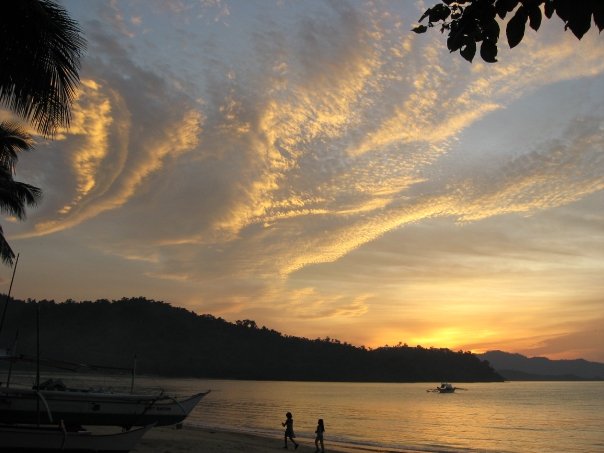
sunset PortBreton2 SmadarHalperinEpshtein

Photo: Smadar Halperin-Epshtein


I will go to the seashore

Where the waves touch the sky.

I will go to the seashore

To kiss the day fond goodbye.

I will go to the seashore

Where the boats come on home,

And the children still play,

And the sun’s last rays roam,

And my soul sings with the surf

Where it has always belonged.


For Sammi’s Weekend Writing Prompt: Seashore in 59 words


The One Place

Photo: Sue Vincent


She ran and wouldn’t stop till she got there.

It didn’t matter that she had a stitch in her side or that something hard in her backpack kept slamming into her ribs or that the lower branches of some trees slapped burning licks against her cheeks.

She would not stop.

At last she saw a glimmering reflection and the slight opening in the dense woods that signaled she was almost there.

Her attention drawn to the sight ahead, she missed a crawler root and fell hard. She lay there, the breath knocked out of her and pain coursing through her body where it hit the ground. A gnarly stump poked out of the earth not two inches from her eye. It would have done real damage.

She was almost too miserable to care but her eyes still filled with tears. For the pain. For the helplessness. For the exhaustion. For so much more she could not find the words for and couldn’t afford to. Not yet.

She had to get up or she’d never move again. The backpack pressed heavy against her and she couldn’t help but remember other weight pinning her down. Unwelcome. Uninvited. More tears sprung. Then sobs that came from someplace between her diaphragm and belly button and competed with the stitch already jabbing through her chest. It was too much. It had all been. Too much.

Finally, after what seemed a decade, her breath calmed and she found strength to push up to her elbows, then her knees, then up to lean against a tree and shift her weight gingerly onto each leg.

Nothing broken. Or nothing broken that would prevent her from getting there. Her elbow throbbed and she was bleeding from scratches on her face and a badly skinned palm. There would be more abrasions underneath her pants where a tear bloomed red at the knee. But she was up, and some burden had lifted in the crying, even if it left her heart hollow with sorrow and echoing with despair.

She filled her lungs with a long breath and a tardy sob escaped to join the others but then her body shuddered one last time and she steadied.

She walked on. Not running now, just dogged determination.

The forest peeled away to reveal the clearing. The pond glowed and the purple light remained as she’d remembered. Lush greens licked the muddy banks and a clump of cattails whispered in an almost nonexistent breeze. The tree, too, was still there, just as it had been before: it’s bark missing in places, it’s silvery leaves rustling as the very breath of the place coursed through it from root to leafy tip.

“I’ve come back,” she breathed, and touched her scraped palm to the exposed trunk. Skin to blood to skin.

An echo filled her chest and she knew it knew her, and the relief made the jagged hole in the center of her self heal some.

This was the one place she never felt completely alone in.

She’d last left it thinking that her old life would not chase her to the new, and she had tried – for longer than she thought she could endure – to pretend that she no longer longed for what she had believed in and had given up. She could give it up no more.

“Will you help me?” she whispered. “I’d forgotten how.”

And the tree rustled and a ripple ran across the water and into her core, and her body softened so completely that she slid to sit leaning against the trunk. Welcomed. Invited. Warmed.

She’ll sleep. And she will dream. And she will wake to find the way back to herself. To her true realm in her rightful time.


For Sue’s WritePhoto prompt


Unabashed Bash

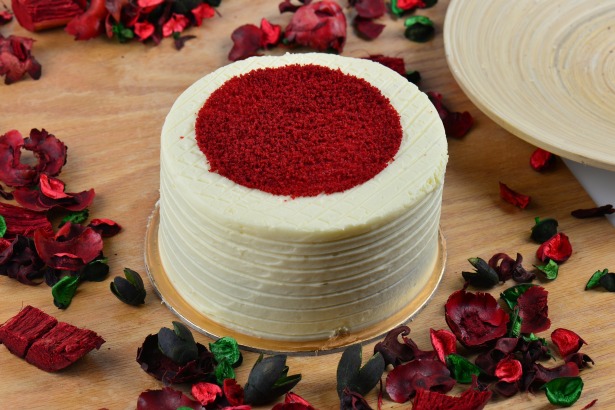
red-velvet-cake-3960016_1920

Photo: Fawaz Sharif


She would not apologize for throwing a party to celebrate her last menstruation.

“Oh, but I will have a bash, if only to bash the preconceived notion that we women have any reason to be bashful about our body’s machinations,” she declared when her husband paled at the idea and her sons bloomed into a matching shade of pink.

“We gals bleed for a good chunk of our lives,” she pressed on, ignoring the slight green hue that crept onto her sons’ faces. “It is the blood of life, the blood of disappointment, or relief, or missed opportunity … but it is our blood, made by our bodies and relinquished so new lining can accept a future product of intercourse.”

“Mom …” her eldest groaned, but she silenced him with one of her ‘looks’ and glared a warning at her youngest, who appeared ready to chorus. At seventeen and sixteen they had squirmed through several variations of “the talk” in their lives, and would survive this one, too. Especially as they were old enough to be instrumental in causing a female’s monthly cycle to not cycle … If they were capable of ravishing girls’ bodies with more than their eyes, they should be able to stomach the realities of what girls’ bodies are capable of, as well as what women both endure and celebrate.

“I’m not going to force you to be here for the party,” she clarified. The vivid relief on all three of her menfolk’s faces was hilarious even if she couldn’t help being somewhat insulted. “What I will not do is lie about what this party is for.”

Her body had reached a milestone, and she wasn’t going to pretend it was nothing worth a mention. Not when the two young men (and the one which had preceded them but never made it through to birthing) were proof of the very miracles that female bodies – like her own – had been capable of till now. This called for proper celebration.

She rummaged in her bag and pulled out a scribbled-on napkin. “Let’s see. I’ve made a list. There will be invitations, perhaps shaped like uteri, or like tampons. I hadn’t decided.”

Now that her attention was no longer fully on them, her sons eyed each other and began to beat a slow but determined retreat. She raised an eyebrow in their direction and did not challenge them, but when her husband deigned to follow his offspring, she tapped the seat next to her in more order than invitation.

He sat.

He’d learned long ago that anything to do with “women’s time” was best not argued with or over. He hadn’t the foggiest idea what it would be like to have a period (or be pregnant or lose one or give birth or nurse babies, for that matter), and he wasn’t sure he wanted to have more of an idea of any of it. Certainly not the bloody business, which always gave him the queasy willies. So he kept his mouth shut and nodded at what he thought were appropriate intervals as his wife kept on with her planning monologue.

It did not stop his mind from sending fervent prayers that Carrie or Michelle or Linda, or anyone with double-X chromosomes, and therefore far more suited for such planning, would stop by or call and rescue him from being his wife’s audience.

“So,” she enthused, “for the cake? What do you think? Red velvet?”

His favorite. Well, not anymore.

He didn’t think he’d be able to touch the stuff again.


For the SoCS prompt: abash/a bash/bash


Ice Maiden

castell-deudraeth-portmeirion-wales-p

Photo: Castell Deudraeth in Portmeirion, Wales


“My room is haunted,” Daria mentioned over toast and jam.

Margaret rolled her eyes and Daria stopped chewing.

Margaret sighed. Vacation or not, her twin was sure to find drama someplace.

“Honest, M! Something kept whispering ‘Aber Iâ’. What does that even mean?”

“Ice haven, Miss,” their waitress manifested with more tea, Welsh rolling heavy on her tongue, “also, glacial estuary.”

“And?” Daria pressed.

“There used to be a mansion on these grounds, Miss. In the 1700s. Was called ‘Aber Iâ’.”

“See?” Margaret looked pointedly at her sister. “You must’ve heard someone say it and it stuck in your mind.”

“Someone said it in my room!” Daria insisted. “All night!”

The waitress shifted uneasily. “What room are you in, Miss?”

Margaret glared.

“Might be the bwbach, see?” the young woman fiddled with her apron. “She can be restless sometimes but she’s never done no one any harm.”


Trivia:

  • bwbach — ghost or phantom in Welsh
  • Aber Iâ — Ice Haven or Glacial Estuary in Welsh. Also the name of an old mansion that used to stand on the grounds of what is now Castell Deudraeth, a hotel in Portmeirion Village, Wales.


For What Pegman Saw: Portmeirion Village, Wales


Celebrity Stalk

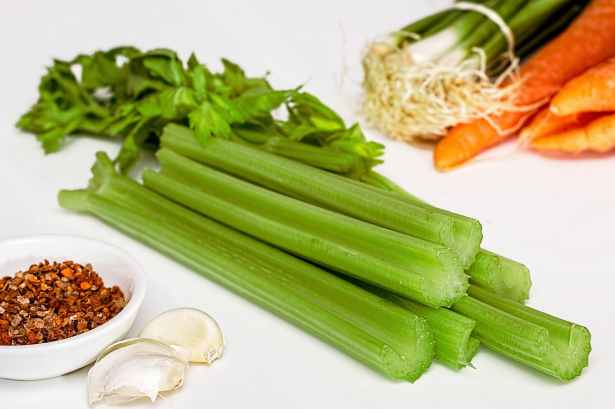
green celery carrots and pepper flakes garlic

Photo: Pixabay on Pexels.com


“I will not celebrate with celery,”

She said, and then

She frowned,

For no celebrity that’s

Worth her salt

Will turn down green

When it is found.


“We can still have a

Celebration,”

She tried correcting course,

But the celestial already

Knew

She had no true

Remorse.


For the SoCS prompt: Cele-

(I was having WAY too much fun with this one! 😉 )

The Perfect Shoes

20190224Photo Courtesy of Susan Spaulding


She came across them at the thrift store, squashed in a box along with moth-eaten scarves, a pair of slacks with holes that could tell many stories, two helplessly dented hats, and some fabric scraps.

She was about to lift a shoe to ask about the price when the proprietor glanced in her direction. “Those are by the box,” he drawled. “Take it or leave it. No picking.”

“How much?” She swished her hand inside the box and shrugged, worrying he’d overcharge her if he detected interest.

“Thirty.”

Her eyebrows hiked up on their own accord. The shoes alone were worth ten times as much.

“Twenty, final offer,” he misinterpreted her gesture.

She gazed into nearby containers till her thrumming heart settled down and she could pour something less jello-like into her legs.

“I’ll take it.”

She carried the box to the car fully expecting to hear the shopkeeper’s voice calling her back to point out a mistake. No call came.

Finally at home, she rescued the shoes, stuffed them with tissue-paper, and placed them reverently under Great-Great-Grandma’s bridal gown. Family lore was that she’d had big feet and had to wear men’s shoes. Those were a perfect match.


For Susan’s Sunday Photo Fiction


First Summit

himalayas-407_1920

Photo: Simon on Pixabay


He grew up in the shadow of Sagarmatha, where people’s moods shifted with Miyolangsangma’s and with the weather on the mountain foreigners insisted on calling “Everest.”

“Sagarmatha is her palace,” Dādā warned. “The uninvited should not trespass into the realm of the Goddess of Inexhaustible Giving. She turns many back. Some die.”

Most in the village agreed, and still they sent men to guide foreigners to the summit. Faith did not pay for necessities, while the visitors, eager if unequipped for the altitude and Miyolangsangma’s moods, paid well. Surely the Goddess understood.

“Foreigners are ignorant,” the old man argued. “But you know better than to show irreverence.”

He did know better. But Dādā needed medicine.

“I’ll stop by Rongbuk Monastery,” Garvesh proffered on the eve of his first ascent. “I will get the monks’ blessing.”

“It will not stop Karma,” his grandfather sighed. “Or what may be our last goodbye.”

∞ ∞ ∞

Trivia and Glossary:

  • Dādā — Grandfather in Nepali.
  • Sagarmatha — The Nepali name for Mount Everest. The Sherpa people believe that the mountain and its flanks are imbued with spiritual energy, and one should show reverence when passing through this sacred landscape, where the karmic effects of one’s actions are magnified.
  • Miyolangsangma — The “Goddess of Inexhaustible Giving” is a Tibetan Buddhist Goddess who Sherpa Buddhist Monks believe had lived at the top of the mountain.
  • Rongbuk Monastery — Also called the “sacred threshold to the mountain” is an important pilgrimage site for Sherpas who live on the slopes of Everest in the Khumbu region of Nepal.
  • Sherpa — One of the major ethnic groups native to the most mountainous regions of Nepal (as well as certain areas of China, Bhutan, India, and the Himalayas). The term sherpa or sherwa derives from the Sherpa language words Shar (“east”) and Wa (“people”), which refer to their geographical origin in Tibet.


For What Pegman Saw: Mount Everest, Nepal


The Critic

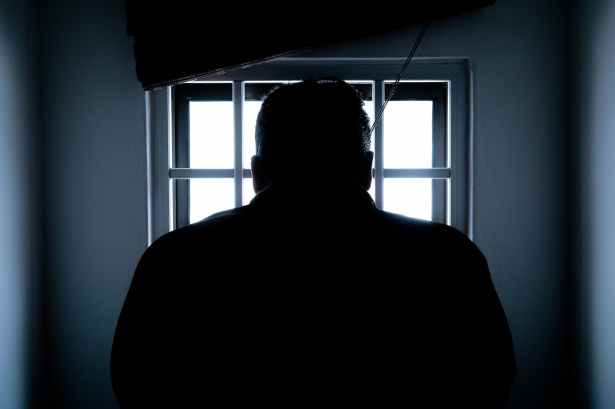
silhouette of a man in window

Photo by D. Tong on Pexels.com


It was his job to be the critic.

He’d taken it on when he was but a child and there was naught by chaos all around him.

Criticizing was a way to put some order into madness, to have at least the illusion of control.

Not that he’d criticize them openly and risk the switch or belt or backhand or the things that were … well … worse.

But criticize he did.

Mostly himself.

At first as practice.

Then as habit.

Then as something he would do without even a pause to think.

Offer a knifing critic.

Of his actions. Of his wishes. Of his hopes. His thoughts. His dreams.

What had began as coping, turned a prison.

And the jailer was inside him.

The sentencing, his own.


For the SoCS Saturday Challenge: Critic(al)