Fussy Fossa

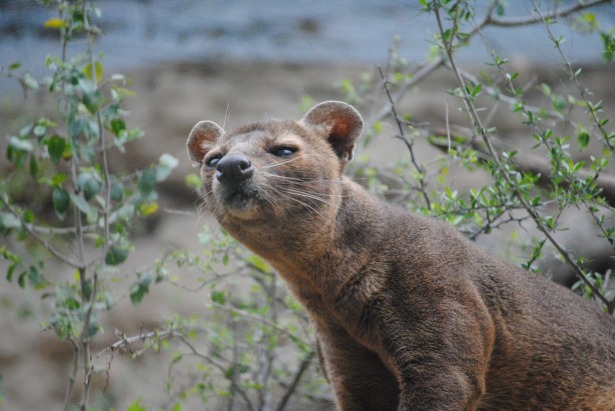
fossa-676878_1920 SeaReeds from Pixabay

Photo: SeaReeds on Pixabay


“Is it a mongoose?” Molly squinted.

“Kind of cat.” Alfred raised his camera.

“No cat nor mongoose. It’s a Fossa. Belongs to the Viverrids.” Know-it-All Natalie noted, head-to-toe in expensive expedition gear.

“Vye-ve-whats?” Molly blurted.

Alfred shot Molly a warning glance, but it was too late.

“Viverrids. Civets. Genets. Or, if you need the very basics: Mammals. Endemic to Madagascar. Carnivorous. Eat lemurs, mostly, though they won’t turn their nose at lizards or birds or tenrecs.”

Alfred sighed. There’d be no stopping the Nataliepedia now. The woman was the bane of their group. He eyed the animal. Vye-ve whatever. Looked like dorky cougar to him.

“Nice fur,” he tried.

“You better not even think of it,” Natalie admonished, delighted. “They’re protected by fady. That’s local for taboo, in case you didn’t know that, either.”

Bet you aren’t, Alfred grumbled internally.  Are fossa too fussy to have YOU for lunch?


For What Pegman Saw: Madagascar


Life Abridged

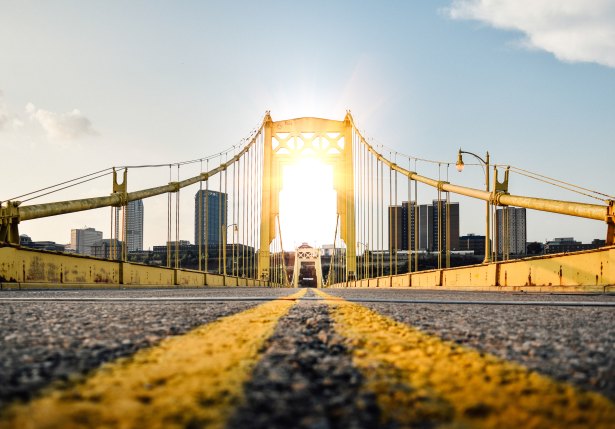
willie-fineberg-unsplash 10th st bridge Pittsburgh PA

Photo: Willie Fineberg via Upsplash, 10th St. Bridge, Pittsburgh, PA


She waited.

One more step and she’d have gone more than half-way across, but she found herself unable to move further. She sat on the asphalt, frozen by cemented legs.

So she waited. It was early, but sooner or later something will come by and she’d find out the price of her betrayal.

All her life she’s been bordered by this bridge, the yellow metal rising like a sun in her horizon: untouchable, unapproachable, dangerous.

They were raised to never cross it.

“Evil lives beyond this bridge,” her father had preached in daily sermons in their basement, the family huddled on aching knees and wreathed by incense, fear, and smoking wicks. “Leave here and your soul will be eternally forsaken. Abandon my teachings and you will not be saved.”

Well, she’d had enough. She could tolerate no more of his invasive ‘instruction.’

And she was ready.

To not be saved.


For What Pegman Saw: Pittsburgh, PA


Reclaimed Royalty


https://naamayehuda.com/wp-content/uploads/2019/03/7d39a-co.jpg

Lord O’Neill’s Cottage, Ram’s Island (from article in the Dublin Penny journal – 1830s) 


He’d come from royalty. Or at least from those who should’ve been but history had been too blind to realize their value. He’d seen promise in his older brother James: a lust for power and a need to force his will onto others. But James hadn’t shown enough self-preservation for a prince. A pity … but at least it left no issue of seniority.

Since childhood the conspiring doctors tried to claim him ill with “grandiosity.”

His mother failed to see. “We come from farmers, Thomas. Always have.”

Perhaps she truly believed her forefathers were but serfs to the O’Neills, but he knew better. He’d seen himself in the drawing, and it fit what he’d always known: He was destined for more, a royal progeny.

He’d take the island by force. It’ll make them realize it was past time he reclaimed what was his by rights, even if forgotten by history.


For What Pegman Saw: Northern Ireland


When The Ice Breaks

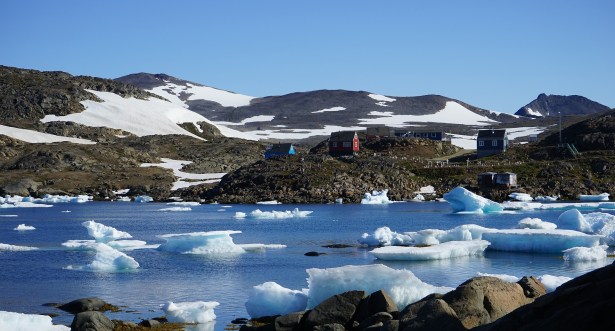
greenland icebergs-933003_1920

Photo: Barni1 by Pixabay


He said he’ll be home when the ice breaks.

And every day she waited, one baby tugging at her skirts and another growing restless under her heart, and tried to not look at the field of crosses planted right outside her window. Reminders of the many who the frigid sea or dark winters or the loneliness of this place at end of the world had claimed.

Some days she hated Greenland. The endless nights. The gnawing cold. The monotony of the same few faces and the bickering that eventually picked open old scabs and gauged new hurts for the next arctic dark to revisit.

Other times she couldn’t fathom living any other place. Summer’s endless light. The sparkle on the water. Pups, babies, and not-so-babies frolicking. The wide spaces full of breath and warmth that thawed old sorrows into joy. It felt like coming home.

Will he?


For What Pegman Saw: Greenland


Ice Maiden

castell-deudraeth-portmeirion-wales-p

Photo: Castell Deudraeth in Portmeirion, Wales


“My room is haunted,” Daria mentioned over toast and jam.

Margaret rolled her eyes and Daria stopped chewing.

Margaret sighed. Vacation or not, her twin was sure to find drama someplace.

“Honest, M! Something kept whispering ‘Aber Iâ’. What does that even mean?”

“Ice haven, Miss,” their waitress manifested with more tea, Welsh rolling heavy on her tongue, “also, glacial estuary.”

“And?” Daria pressed.

“There used to be a mansion on these grounds, Miss. In the 1700s. Was called ‘Aber Iâ’.”

“See?” Margaret looked pointedly at her sister. “You must’ve heard someone say it and it stuck in your mind.”

“Someone said it in my room!” Daria insisted. “All night!”

The waitress shifted uneasily. “What room are you in, Miss?”

Margaret glared.

“Might be the bwbach, see?” the young woman fiddled with her apron. “She can be restless sometimes but she’s never done no one any harm.”


Trivia:

  • bwbach — ghost or phantom in Welsh
  • Aber Iâ — Ice Haven or Glacial Estuary in Welsh. Also the name of an old mansion that used to stand on the grounds of what is now Castell Deudraeth, a hotel in Portmeirion Village, Wales.


For What Pegman Saw: Portmeirion Village, Wales


First Summit

himalayas-407_1920

Photo: Simon on Pixabay


He grew up in the shadow of Sagarmatha, where people’s moods shifted with Miyolangsangma’s and with the weather on the mountain foreigners insisted on calling “Everest.”

“Sagarmatha is her palace,” Dādā warned. “The uninvited should not trespass into the realm of the Goddess of Inexhaustible Giving. She turns many back. Some die.”

Most in the village agreed, and still they sent men to guide foreigners to the summit. Faith did not pay for necessities, while the visitors, eager if unequipped for the altitude and Miyolangsangma’s moods, paid well. Surely the Goddess understood.

“Foreigners are ignorant,” the old man argued. “But you know better than to show irreverence.”

He did know better. But Dādā needed medicine.

“I’ll stop by Rongbuk Monastery,” Garvesh proffered on the eve of his first ascent. “I will get the monks’ blessing.”

“It will not stop Karma,” his grandfather sighed. “Or what may be our last goodbye.”

∞ ∞ ∞

Trivia and Glossary:

  • Dādā — Grandfather in Nepali.
  • Sagarmatha — The Nepali name for Mount Everest. The Sherpa people believe that the mountain and its flanks are imbued with spiritual energy, and one should show reverence when passing through this sacred landscape, where the karmic effects of one’s actions are magnified.
  • Miyolangsangma — The “Goddess of Inexhaustible Giving” is a Tibetan Buddhist Goddess who Sherpa Buddhist Monks believe had lived at the top of the mountain.
  • Rongbuk Monastery — Also called the “sacred threshold to the mountain” is an important pilgrimage site for Sherpas who live on the slopes of Everest in the Khumbu region of Nepal.
  • Sherpa — One of the major ethnic groups native to the most mountainous regions of Nepal (as well as certain areas of China, Bhutan, India, and the Himalayas). The term sherpa or sherwa derives from the Sherpa language words Shar (“east”) and Wa (“people”), which refer to their geographical origin in Tibet.


For What Pegman Saw: Mount Everest, Nepal


Zēngzǔfù’s Bridge

Image result for Jiangxi province China free

Photo: pngtree.com


He had made the pilgrimage as promised. He didn’t know if he believed the ancestors would know he’d kept his word, but life was complicated enough without angering spirits, ancestral or not.

And it would have made his mother happy to know he’d visited the bridge his great-great-great-great-grand (or however many generations it was) had helped build. She’d always longed to make the trip back herself, and couldn’t.

“The sweat of your ancestor dripped into the stones,” his mother had told him, “his blood and thus yours lives in them.”

He heard her voice in Jia’s when the child, sober in pigtails and pink frilly dress, studied the structure. “So this is where we came from?”

He nodded.

His daughter walked to the first pile and touched it reverently. “Zēngzǔfù built this one,” the six-year-old stated. “Nǎinai told me. She showed me in my dream last night.”


For What Pegman Saw: Jaingxi province of China


Nest Egg

a view of the island of tortolia, british virgin islands

Photo: silvervoyager


It was the view that caught his heart when they’d first visited Tortola. The twins had just turned ten. He’d gotten a miserable case of traveler’s diarrhea and spent two days cocooned inside Aunt Essie’s cottage while everyone else was at the beach. He’d initially felt sorry for himself, but then the quietude enveloped him, and he found himself cherishing the time away from chit-chatter and the demands of the children, love them though he did.

He’d recovered sufficiently by the third day, and the shore was fabulous. Still a piece of him remained on the cottage’s porch, gazing into the horizon, sipping bland tea, and feeling a calm he hadn’t known possible.

They’d visited several more times over the years and when Aunt Essie died, she left him the cottage to sell, “for a nest-egg.”

The boys were in college. Bernice had moved on. He decided to move in.


For What Pegman Saw: British Virgin Islands


The Cost of Living

smallpox hospital Roosevelt Island IngeVandormael

Photo: Inge Vandormael


She had come to make a new life.

She found illness. She found death.

And life, perhaps, hiding in the shadows

Of her convalescing sorrow,

Waiting

To take hold.


She had come in search of meaning.

She found a babble of confusion.

Within. Without.

Rising skyward. Buried underground.

She found hope, too. For things she didn’t know

Even had names

But sprouted meaning

In the corners of what she believed

Was ruined,

But had in fact been opened

To allow in the winds of change.


She came seeking answers,

And found the cost

Of living

Paid for little more than added questions,

And that she had to look

Quite closely

At what wasn’t there,

To find

What she did not even know

She had been searching for.


Photo: The old Smallpox Hospital on Roosevelt Island (a narrow island set in the East River between Queens and Manhattan).

For What Pegman Saw: Manhattan Island


Tempting Karma

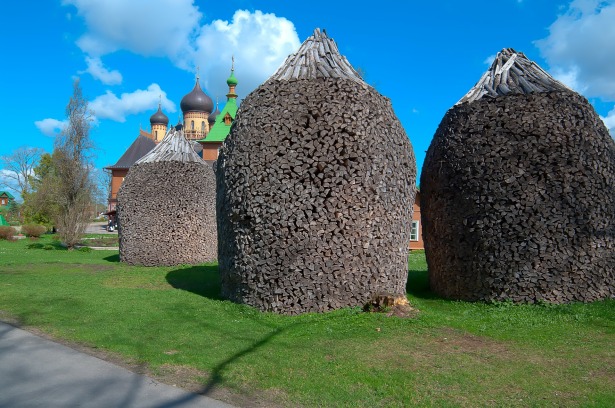
estonia-96312_1920

Photo: canesjurij on Pixabay


“I’ll be building what?”

“Holzhausen. Firewood stacks.” Brother Joosep pointed at several rounded structures that looked like hermit huts (and that I had desperately hoped were not accommodation for trekker volunteers).

I didn’t know whether to be happy these weren’t meant as my lodging, or to be terrified at the prospect of having to produce one of those. The contraptions had to be twenty feet tall, and I could not imagine how anyone pulls out a piece of wood without the whole thing toppling on their heads. The mere thought of the Karmic penalty for causing the death of a monk was giving me palpitations.

“Do you need anyone to peel potatoes?” I tried.

The monk grinned. “Brother Ruuben, our cook, has all the hands he requires at the moment. However, we might need you to bring in some wood later. It helps ward off the evening chill.”


For What Pegman Saw: Estonia

Trivia: Holzhausen are a centuries old European method of stacking firewood. Many are about 2 meters tall (6-9 feet), though some – as in the above photo from a Monastery in Estonia – can be upward of 6 meters in height (~ 20 feet). Holzhousen are self-standing structures that are reportedly quick to make and don’t need to be braced. The circular format is not only self-supporting but provides good airflow for split wood to dry quickly. As the wood is stacked, rows are angled down slightly toward the center. This helps drain rain and melted snow and helps support the tapering of the stack.