A six-year-old adopted child:
“My first Mamma said I was a mistake, but you see, she made a mistake. I’m not a mistake. Her mistake was that she didn’t know how to love me. I feel sad that she wasn’t very good with love.”
I am humbled.




The woman on my answering machine sounded anxious: “I got your name from a friend of mine. You come highly recommended and you really helped her kids. I know you are really busy but can you please call me back about my child? I have a 5th grader who really needs your help.”
I called her back. Based on her wording–and her urgency–I fully expected to hear details about a child who is falling behind academically. A child with teachers worrying about difficulty with vocabulary, comprehension, attention, expressive writing, memory, fluency, or a combination. Possibly a referral from an orthodontist about tongue thrust issues, or about stuttering. Or hearing remediation.
The mother’s pleading was real enough, but the cause for it surprised me (though it ought not to–this is not the first time!): Her son, entering 6th grade in the fall, was receiving “only B+ and A-” on his reports and tests. She wanted “to give him some extra help so he can do better at school.”
Being a clinician, I don’t see children unless there is cause to see them. Normally developing children don’t usually need speech-language-therapy. Still, sometimes parents don’t know how to exactly explain the difficulties their children are experiencing, so to be sure there is no issue needing remediation, I probed some more: was there a particular reason she thought he should be better than he was already doing? What were her son’s strengths and weaknesses, did he receive assistance in the past? Though the child’s grades were very respectable, especially for a highly competitive private school, grades don’t tell the whole story about a child’s abilities. Also, some children can be good students and still perform below their actual potential because their actual ability is excellent, not average. It is important then to find out what holds them back. Was that the issue here? Why would a mother worry about a child’s basically good–if not exceptional–academics?
From the information the mother provided, it seemed that the child’s ERBs were average and that his IQ test (which had been required for his school admission at the time), showed average abilities in both verbal and performance measures. His vocabulary scores have always been age-appropriate. He conversed well in two languages, and read voraciously. The child was solidly within the 60th percentile or so in all measures. Moreover, the mother reported that he is a happy, social, kind young man with many interests, who enjoys sports and likes most his teachers. Even by the mother’s own account, the child was doing well.
And yet, as she was seeking ‘help’, apparently not well enough.
There are several issues in why this is a problem. One is that grades can be inflated so that they do not actually reflect a child’s abilities in a race to showcase a higher class/school average than may otherwise be warranted. It doesn’t have to happen in all schools to be a problem. Paradoxically ‘partial inflation’ would even make it worse: if some schools inflate grades and push “B”s to look like “A”s, then a “B” in a school that does not inflate grades can appear a failure in comparison even though the measured ability is the same.
Another problem is that in today’s competitive education and unrealistic expectation for ‘above average’ performance from everyone (a statistical impossibility), even good is no longer good enough. Even a ‘real’ B, is not seen as adequate for a student who may well be a B-student. Average is unacceptable. Excellence is required. B and A- are not sufficient. Especially not when there are the of A+ and even A++ or A+++
In a timely article in CounselingResource, Gordon Shippey, a Licensed Professional Counselor from Atlanta, touches on this very topic, as well as the realities of grade inflation. His article, “A is for “Acceptable”, is a must read.
Among many other things, Shippey notes: “If A was acceptable, there would need to be A+, A++ and A+++. In fact we’d need as many different gradations as could reasonably be detected. This would give exceptional students something to aim for beyond “A.”
Actually there ARE already the A+ and A++ and A+++ as realities in some schools. Students now no longer aim for 100 on a test (that became ‘merely acceptable’) but feel the pressure need to get ’105 or 110 or more for ‘bonus’ or a ‘truly well done job.’ It may give excellent students some margin of distinction, but it does not release the squeeze on others, for whom even an “A” no longer seems okay.

When I went to school, 100 was as high as you could get. It meant perfection. It meant no errors, best performance. Full stop. Now 100 is ‘almost best’ and ‘almost excellent’; and an A paper or even an A+ paper does not equate with remarkable.
The bell curve did not shift, but the names we call each place on the curve did. A no longer depicts a small portion of children with superior performance (7% or so, of students). Now A is for Average.

Normal Grade Distribution Curve
There is something seriously wrong when average performance for an average student is looked at as failure. Average children are not stupid. Average means “as expected.” Average means “okay.” Children with average school performance are presenting skills equivalent to what is expected of the majority of children their age. Expecting all children to be ‘above average’ is not realistic. Pushing a good-effort B student to get only “A”s (and above) is a recipe for stress and worry, for frustration, disillusion, anxiety.
I certainly understood the mother’s plea. She was being carried along in the currents of requirements and expectations Shippey speaks about, and she believed–and her belief was strongly reinforced by teachers’ notes, societal pressure and the higher-education reality–that it was required of her child to be remarkable. Remarkable is the new ‘expected.’
Grades used to be a measure of a child’s ability and effort. We rightfully demanded that children to do their best and put an honest effort, but it was pretty clear that not everyone could be at the top of the class. By definition, this cannot be.
Nowadays, grades are not so much a measure of a child’s ability and effort as they are an artificial soup made of an (often unfair) measurement of a teacher’s skills, a school’s ranking and a district’s relative superiority. Grades are measured for political gain and their manufacture sustains a multimillion industry of ever reinvented ‘teaching programs’ (and recently, ‘common-core’ goals), which are rarely developed by educators. Grades are big business. Less so about the kids.
The saddest part is, that children know it.
Children always sense unfairness or hypocrisy, they may not know to explain it but they feel when they are in a halls of mirrors. They realize that they are cogs in a machine. They perceive that they are being measured by academic yardsticks that do not really measure them and yet they are to be judged solely by.
The system needs to change. It is unhealthy, and children are reflecting it–in anxiety, depression, disillusion, burn-out, anger, attitude, apathy, a sense of invisibility and impossible demands.
In the meanwhile, the dilemma of this mother (and many other parents)–and in a way mine as a clinician who can hone a child’s ability or give them a leg up–is whether to feed into the system and push that child forward. Whether to put him into intense tutoring and ask him to perform beyond his skills and at the price of other areas of development; or leave him to learn at his normal (if average) rate and enjoy his childhood at the price of his potential future.
If it were your child, your potential client, what would you have done?


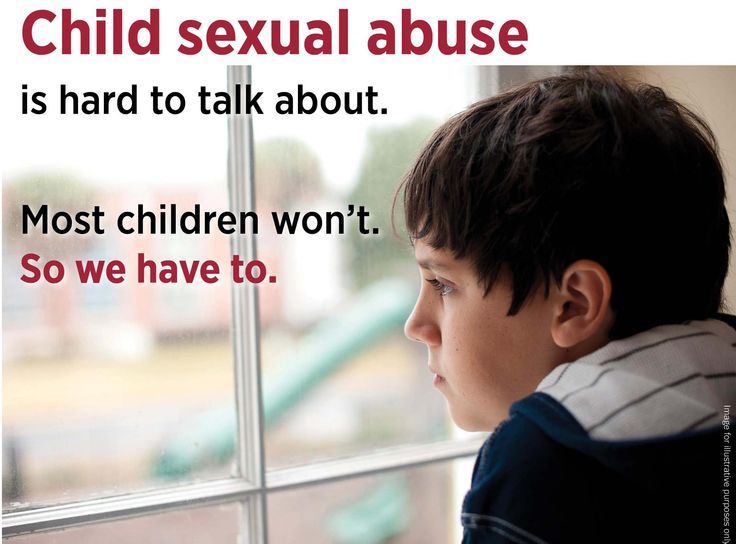
When it comes to keeping children safe from sexual abuse, many parents are baffled as to what to do. They don’t want to scare their children or give them ideas about the world being unsafe, and at the same time worry that lack of safety skills may place their children in danger of being exploited.
Parents don’t know when to start, how to bring the topic up, what to say (and what not to say). Many prefer to not bring up the issue at all, or focus only on ‘stranger-danger’–even though 90% of child sexual abuse happens in the hands of people familiar to the child (and upward of 75% by caregivers). It is difficult to conceive that children can be harmed this way. No one wants to believe that people they may know could be unsafe. We want to believe we can keep them safe from everything and everyone. Always. Moreover, the whole issue can bring up painful memories in those who pushed away their own experience of inappropriate touch.
Embarrassment, too, often complicates caregivers’ discourse about sexual abuse, as does worry about questions that one may not know how to respond to or that would raise issues of immodesty.
Even among those parents and caregivers who do discuss safety and sexual-abuse prevention, many don’t realize that keeping children safe goes beyond a one-time ‘talk’ about the topic.
Fortunately, there are resources like the one below, which do an excellent job introducing the issue of safety and body boundaries in children, from infancy through to adolescence. It is a very good place to start!
If you are a parent or a caregiver–read it. It may give you information or suggestions you did not think of before. If you are not a direct caregiver–share this with others who are. They will thank you. More importantly, the children would be safer.
http://www.themamabeareffect.org/empowering-our-children.html

Of course, children’s safety extends well beyond sexual abuse prevention. Verbal and physical abuse, bullying, and neglect are other sad realities for all too many children. We all should be vigilant to notice, intervene, and seek help for any child at risk. Any risk. It is our responsibility as adults to do so.
This resource, and other educational and practical tools for improving child safety are only one step and target certain risks, but are still immensely important to read and incorporate. This offers a very good start. Following these recommendation can help.
The reality is that even with all the information and education possible, we may not be able to stop some things from happening once. However, with good information and open communication, we can at the very least teach our children what to listen to (and what not to listen to or believe), and we can reinforce clearly how they can come to us with any discomfort, concern, worry, or imposed secret. This can help can minimize the likelihood of the unwanted happening. Just as important if not more–by providing children with good, ongoing, open communication about their bodies, their right to safety and honoring their intuition–we can ensure that what might happen will not escalate and will not happen again. Because they’ll come to us. Because they’ll tell. Because we will make it stop.
Click. Read. Learn. Share.
http://www.themamabeareffect.org/empowering-our-children.html

Today, I marvel at the universality
Of love.
At the way deep care connects us all.
And should. And can.
How it forms us.
How it spells the words of heart upon a child’s new soul.
How it breathes hope into desperation.
How it nourishes across languages and color, tradition, race, religion, state, connecting all.
How it writes upon the slate of birth
And opportunity.
How it shapes resilience to withstand strife and sorrow.
How it holds through thick and thin, through calm and turmoil.
Today, I marvel at the universality,
At the miracle.
Of love.
So utterly expected
So innately ordained
So perfectly humane
Yet so often bent by apathy, oblivion, ignorance, senseless hate, violence, disdain.
The very shock we feel at its absence
In itself speaks volumes
Of Love’s natural flow.
Its ingrained, spirit-sustaining need.
The bounty of fortitude and growth that it can seed.
Today,
I marvel at the awesome
Touching
Never mundane
Breathtakingly beautiful
Universality of love.









Today,
Let your heart
Melt away
With sweetness …
Soft beginnings
Filled with
Love’s potential
Miracles at play
And so
Melt away
With tenderness
Today …







The young girl stomped up my stairs red-faced, eyes shining with unshed tears, her usually tidy light hair disheveled, one pigtail-holder dangling dangerously close to losing hold. She slammed her book-bag on the floor, pulled at her coat sleeves and sat huffy by the table, arms crossed.
“What’s going on?” I asked.
“Nothing.”
Well … I was far from convinced … It seemed more like anything but.
“Sure looks like something is going on …” I offered, “you look upset, and you usually don’t just throw your bag on the floor and sit down … ”
“Sorry,” she mumbled and reached over to right the bag, not seeming particularly enamored with me, either.
“Oh, I don’t care about the bag,” I stated, realizing I could have certainly worded myself better. “I was just saying how you looked upset. I know that when I feel like tossing a bag onto the floor like that it is usually because I’m feeling upset.”
“Yeah.”
I waited.
“So I’m upset, okay?!”
The I said what you wanted me to say, so are you happy now? tone was evident, and it made me smile.
Wrong move. The girl’s forehead darkened. “What? So it’s funny?”
“No! Not at all!” I back-paddled, volume of smile lowered considerably. “I was smiling with affection. You don’t have to talk about any of this if you don’t want to. I’m just sorry that you are having a rough day.”
Silence. The child backed into the chair, progressively slumping as if all the air leaked slowly out of her. I waited. When she said nothing, I placed my hand on the table close to her, offering support. She looked up at me, unhooked one arm and played absentmindedly with my bracelet, then took my hand, and looked up again. Her green-gray eyes were brimming now and I could see that there were two trails of dried tears already on her cheeks, prepared to shuttle the incoming ones.
“I hate it when everyone tells me what to be!” She blurted, voice choked.
“Yeah,” I said softly.
“I am upset!” She stated. “A lot! All kinds of upset. Remember how we worked on feeling words and synonyms and opposites and all that stupid nonsense?”
I smiled. I did remember. Of course I did not think that any of it was even close to nonsense (especially not ‘stupid nonsense’ …), but I didn’t think being persnickety would help and so I kept my mouth shut about that.
“Well,” she half-smiled, realizing. “Sorry … not stupid nonsense, but sort of. It was really boring … but, anyway … I’m also feeling really annoyed and irritated. Disgusted, too. All part of upset, isn’t it?”
“Aha,” I confirmed, figuring that as she was doing a really good job herself, the best I could do was keep myself from interfering or thinking I knew what she wanted me to say.
“So I am. Upset. Angry. Frustrated. Whatever. Why do adults get to make decisions about my life? It is my life, not theirs!” She looked up at me, her pretty face now more sad and disappointed than angry. Putting feelings into words often does that … Verbalizing helps emotions clarify and flow.
“I’m sorry,” I said. I did feel sorry. I hate seeing children upset, and I know how helpless kids can feel sometimes–some of them absolutely all too often and this particular child more often than I’d like her to. I also felt proud of her. For a girl who not too long ago had very few words with which to describe anything, let alone her own feelings, this was seriously wonderful progress.
“My mom says I can’t go to sleep-away camp,” she finally spat out, letting go of my hand in dejection and curling back into herself. “She says that ‘I need the summer for catching up with schoolwork’ … What about what I need? What about if I need a break?” The tears cascaded now, the unfairness of it all flooding her.
I sighed. This was going to be the girl’s first time at sleep-away, and she was looking forward to the four-week-adventure for just about forever. Her cousin and a good friend were also planned to go to the same “sports and fun camp”, as she called it, and it had been my impression that the parents were naturally wary to have their little girl away for the first time, but still supportive. Whatever brought this on, I did not think that canceling the camp was a good solution, and certainly not for supposed academics.
She looked up at me, suddenly suspicious. “Did you tell her that I need to stay home to do school work all summer?”
I certainly did not, but even before I could say anything, she took a breath and shook her head, “I know you wouldn’t, though. You always say playing is important, too. You don’t even like homework for kids with long schooldays. I heard you tell my mom that, on the phone …” she looked up mischievously, imparting a secret. “Don’t tell her … she doesn’t know … but I listened on the other line …”
I chuckled. Eavesdropping is not the most polite thing, even if I couldn’t say I blamed her for being curious to know what was being discussed when the topic was herself. Talking about boundaries and appropriate behavior could wait, however.
“You’re right,” I said. “I do think playing is important. As important as learning. Sometimes even more important. I’m not sure why your mother said what she did, but if you’d like me to, I would speak to her about the summer camp. In fact, I want to know from her what this is all about.”
Hope dawned behind the tears. “You’d tell her I should go?”
This got another chuckle. Smart cookie, this one. “Well … I certainly think it is a good idea to have a break, and personally I would like to see you going, but parents have all kinds of considerations … I would like to speak to your mother about this but I don’t know that I will tell her that you ‘should’ go.”
“Okay …” she deflated some. “I wish you would tell her, though. She’d have to send me there if you say so.” Sigh. Shrug. The child finally unzipped and emerged from her coat (I was wondering how long she was going to let herself be cooked, with the heat on in the room besides). She hung the coat on the back of her chair and moved an arm–slightly defiantly, I thought–over her eyes and cheeks. Why bother with a tissue when there is a sleeve nearby … and when she can thereby show her discontent for my not promising to order her mother around some …
I smiled, and she smiled back, blushing slightly. Kids know when we see through them (though we are sometimes far less perceptive when they see right through us!).
We went on with our session, but before she got picked up by her babysitter the girl stopped me mid-sentence as I was discussing a task we were completing. “You won’t forget to talk to my mom, right?”
“I won’t,” I promised.
“I mean, don’t forget to tell her I was really annoyed and angry and frustrated and all kinds of upset about it!”
You bet’cha, little one. And so well done … No way I would forget, and me all kinds of proud of you for that …

A query came from another young mother:
“I have a six-month-old baby and I’m a single mom without much money to take her to mommy-and-me classes and such. Are there games or activities I can do with my baby at home to help her language development? She’s healthy and doing everything she’s supposed to do at this age, the doctor says. Thanks, Doing My Best.”
Dear “Doing My Best”,
It sounds to me like you are on the right path already by even wanting to know how to do more with your little one! Being a single mom is difficult, let alone having limited funds. The good news is that you don’t need to spend money on classes and expensive toys and gadgets–YOU, and things you already have at home, are the best ‘tools’ for your baby–you likely have everything you need already!
Babies have an innate ability to develop language, and are marvels in how they manage to make meaning of the world around them. Almost all they need for it is you and exposure to language through you–their caregiver. She needs your attention, sensitivity, time, and commitment. There are many things you can do during your everyday activities with her that would foster comprehension, listening, turn-taking, sound production, connection, shared attention and cognitive development–all the makings of language and communication development.
Language exposure is important, so talk to your child about everything you do. Use her name when you call her, look at photos of herself and yourself and other people she knows–point to the photos and tell her who these are. Books are great, as well. Read to her every night–it is never too early to start and make it a habit. Board books are sturdy and great fun, and you can let her turn the pages if she wants (lift-flap books where she can ‘find’ things are fun, too).
You don’t need to buy many books–maybe just get a few favorites. Borrow the rest at the library. Take her with you if you can and choose the books together. Make this part of your fun time. You don’t need to read every word in a book, either–flow with it, narrate the pictures, respond to her reactions (e.g. “yes, you are touching the lion, that’s the lion and he can roar… and that’s the giraffe, look how tall it is! It can reach all the way up in the tree!”). Make book-reading part of your connecting and listening time.
Everyday activities are excellent opportunities for language exposure: narrate whatever you are doing together, when you are out on a walk, in the playground, food shopping, or doing household chores (she can help …) such as folding laundry, straightening up, or mushing cooked veggies for her food (“Oh, here’s your red shirt! Let’s fold your shirt so we can put it in your drawer. Look how nice and clean it is! Now…where are your socks–here’s one sock, and here’s the other… You want to hold the socks? Here you are. Oh, aren’t you smart! You know they go on your feet! Let’s put them on–one sock on this foot, and another sock for that foot …”) etc.
Take turns by playing games like peek-a-boo, clapping, nursery songs that have predictable body movements (the wheels on the bus, itsy-bitsy spider … borrow a CD from the library if you don’t remember them, you’ll know them by heart in no time…). Take turns banging on things to make noise together (you don’t need to spend money on a drum, an upside down pot with a spoon works great, too …), build a ‘tower’ from a few blocks and knock it down, then build again and let her knock it down (plastic cups or containers work well. You can fill closed containers with some dried beans of pasta if you want–for heft and sound–just make sure they are sealed tight!). Babies love repetition, so be ready to do this quite a few times.
You can roll a ball back and forth, pick up toys together (it may take a while, if she decides that taking out of the box is just as much if not more fun!), hand her spoons to put in the drawer, fill and empty a basket of lemons or oranges (no items smaller than a Ping-Pong ball, because they can be a chocking hazard), fill and empty a cup with water during bath-time.
Model symbolic play: ‘feed’ the stuffed animals and dolls with a spoon, put them to bed, ‘offer’ them a bottle. Put them in the stroller and take them for a walk in the house, play peek-a-boo with the dolls and let her have a turn, as well.
Through it all, talk to her. Listen to what she is ‘saying’ (babbling…) back. Comment about what you are doing. Comment a lot about what she is doing, her expressions, the sounds she’s making, how she might be feeling, how she makes you feel. Praise her for achievements (picking up a cheerio and managing to get it into one’s little mouth is no small feet of coordination!), let her know you are interested and that she is interesting, lovable, adorable, and fun.
Language development is closely related to and develops right alongside cognition, motor ability, sensory ability, listening, and understanding things about the world (e.g. you let go of the spoon with sweet potato on it, and it falls on the ground, making pretty splatter…! Mommy picks it up and wipes the floor, and when you let go of it, it falls again! How fun!…). Use your everyday interactions with your little one to comment on your world and hers, on your shared experiences. You don’t need commercial specific toys: let her play with wooden spoons, plastic containers (these can nestle, and you can also put things in them…and take things out…), an empty seltzer bottle with some pasta in it, pots and pans. A dish-towel makes a great ‘peek-a-boo’ cover, and a blanket for the teddy bear, too.
Babies and toddlers are utterly and preciously amazing. She’s already learning every day, and you have the opportunity to be her most important connection, attachment figure, playmate, and teacher–all in one. Enjoy her, and I wish the two of you oodles of fun!

It was an urgent message.
“I have a little boy. He just turned three, and he suddenly can’t talk!” The mother’s voice was pressed with worry. She forgot to leave a callback number and the number on my caller ID showed as “Private Number.”
She called again the next day and I happened to pick up. I knew immediately that it was the same person who’d left the message–the urgency in the voice was palpable. She was flustered when she realized she did not leave a phone number–she’d been waiting for me to call back all of the day before, late into the evening. My heart ached for her. It does not take much to worry a parent, and a major change in any child’s behavior is alarming.
“He’s always been a little talker, you see,” she said after I asked her to tell me a bit more about what the problem was. “He started talking really early, actually,” pride filtered into the concern, a hint of smile of remembering. “Said his first words even before he was one, and he was putting sentences together before his second birthday. We used to laugh, my husband and I, about how he never shuts up …” her voice caught. “But now he can barely talk! He tries, but it is like nothing’s coming out!” Her own voice rose in worry.
“Can he sing?” I asked.
“What?” My question surprised her. It was intended to, in some way, though I had other reasons for asking it. I didn’t want to describe the boy’s speech for her, didn’t want to put words in her mouth, but I did want to get some information about possible clinical presentation.
“Can he sing?” I repeated gently.
“Yea … actually …” her voice turned pensive, surprised, a little confused. “He sings really well. He’s not stuck at all when he’s singing! He loves singing … It is when he’s trying to tell me something that he gets stuck. He gets all red in the face from trying and I don’t know what to do to help him. He’s repeating the same sounds ‘mm….mm’ or ‘I I I I’ and can’t get a word out. It takes forever for him to say something.”
We spoke a bit more. Apparently this started the week before, though there were days in the week or two before that when when he would “stop” on a word, or repeat the beginning of a sentence a few times before “diving into it.” This first born little boy had no history of medical issues, there were no major changes in the house or in his life recently, no illness, falls, medications, ear infections. His articulation was stated to be “super clear” and his language was reportedly rich. He could tell stories and speak in sentences and “knew a ton of words.” He was a happy toddler and other than the occasional tantrum had an overall jolly disposition, which this ‘inability to talk’ did not mar. For all his red-faced stress, the mother admitted that she did not think that he was all that bothered by it and “just stood there and stayed stuck…” It was her who was alarmed, and her husband. “My husband has a co-worker who is a stutterer,” she said quietly, as if divulging a shameful secret. She did not need to add what she was fearing, what her husband feared–that their little boy was going to become that co-worker. A Stutterer.
I agreed to see the little guy for an observation and parent consultation, but had no opening till the week following. In the meanwhile I suggested to the mother to just let him be and not draw too much attention to his speech (including refraining from telling him to “start again” or “say it slowly” or “breath deeply”…). I recommended they continue reading to him, regular routines, and listen to him (even if it takes him a long time to get a sentence out) while maintaining interest and without making a big deal out of the dysfluency. I recommended lots of songs and music–for fun, but also because they can give a sense of fluency and reinforce a feeling of success and ease for the boy. We chuckled over how she’d just have to live with listening to the dude’s favorite playlist a few thousand more times…
She called me two days before our scheduled appointment.
“He’s fine!” she called into my machine. “It’s like he never got stuck at all! I don’t know what happened but he just woke up yesterday and he’s not getting stuck! I thought he was doing better but I thought that I was just hoping … but he’s just … talking up a storm! Do we still need to come?”
We decided to defer the consultation, and to have her call me if need be at a later date. I explained that this might have been an episode of “Developmental Dysfluency” or “Developmental Stuttering” and that these sometimes recur, and if so, she can call me immediately, or watch and see what happens for a week or so before she does that. Whichever she prefers.
Developmental Dysfluency (AKA Developmental Stuttering) affects many children. In fact, 75-90% of children between the ages of 3-5 have times of dysfluency in one form or another and the vast majority of them do not continue to stutter. Sometimes dysfluency happens once. Sometimes it recurs. While dramatic, most times it is nothing to worry about. That said, if it recurs, if it continues for a long time, if the child seems upset by it, avoids speaking, seems embarrassed, etc., if there’s family history of stuttering, and if it causes stress and worry in the family; then an evaluation and follow up by a speech-language-pathologist are very important.
Stuttering can become a life-long issue, and it can impact people’s communication. Early intervention helps and can sometimes prevent stuttering from becoming complicated. It is also important to ensure that the speech issues are not related to problems with motor-planning, retrieval, processing, or other issues that need clinical help.
In this little guy’s case, his dysfluency recurred a few months later, and I got to meet him. His mother also brought a videotape of his interactions at home (including the cutest singing in the tub!) and took him to an ENT and had a hearing test done at my request. The boy’s language indeed was superb, and he showed no issues with motor-planning, social communication, or articulation. There were no issues of concern about his development or abilities. He was not bothered at the least by getting “stuck”, and commented to me, unperturbed, “sometimes my mouth gets a traffic jam.” His mother was not so alarmed this time around. The second dysfluency episode passed a few weeks afterwards, and did not return.
There are some theories about what causes dysfluency/stuttering in toddlers and young children. Many echo this little guy’s theory, and state that it is a ‘traffic jam’ of sort–a temporary mismatch between language skills that are improving and sentences that are getting longer and more complex; and motor skills that are not yet up to the challenge–literally too many instructions coming down the pipe for the coordination the child has at present to execute in timely manner.
Stuttering may have a genetic component, but that does not mean that having someone who stutters in the family dooms children in the family to same. Not everyone who is predisposed to stuttering does stutter, and whether one continues to stutter following dysfluency episodes depends on many factors. These include the child’s personality, and ability to regulate frustration, their other communicative and developmental strengths and weaknesses, their age when the stuttering begins, how easily frustrated they become, their life circumstances (e.g. trauma increases the risk), whether there are other speech and language issues, and the reactions of people around them (e.g. if people get worried, the child may become aware that something is ‘wrong with them’ and feel embarrassed or nervous or worse, ashamed), to name a few. The latter reason, especially, is why it is so important for those around the child to get support about how to react, what to do, and especially what NOT to do or say. It is always better to do what this mom did, and reach out to a professional for a consult, than try to ‘fix this’ on your own.
Treatment for stuttering is available, and can be very successful, especially in children (the more years one stuttered, the harder it can be to treat, though even adults can improve and sometimes overcome stuttering after years of difficulty). There are different approaches and methods to the treatment of stuttering, as well as different possible underlying issues that cause it in the individual person. So one size does not fit all–not one method works for everyone–and it is important to look for a clinician who will assess, consider, and match the treatment that is most appropriate to a particular person and be flexible to adjust it as need be.
I got a call from the little guy’s mom not too long ago. He’s starting Kindergarten and is into drama classes and theater. “He still sings in the bath,” she told me, “and sometimes I think that he does not shut up from the moment his eyes open to when they close at night …”

For more information about stuttering, click here.

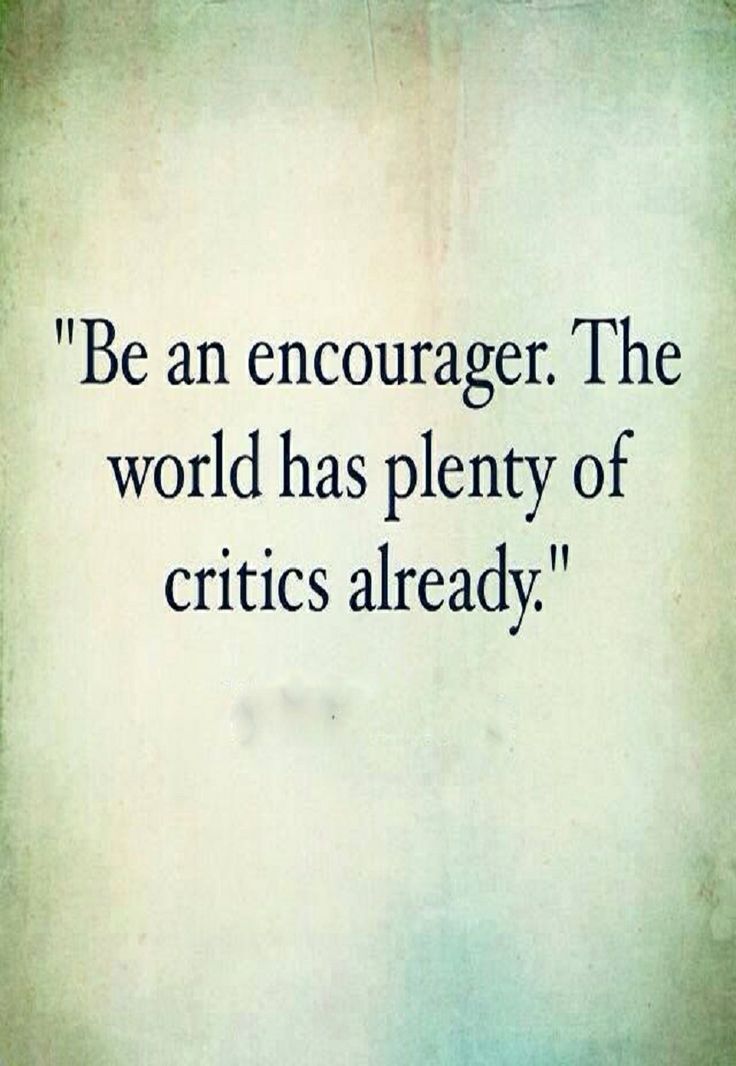
How many times have you been tempted to point out what needs fixing? Wanted to highlight what is wrong, what “can use a tune-up”, what one should be doing differently, or more of, or with less drama, or with more oomph, more boldness, better self-image, assertion, courage, ease?
We have all been there, prodding someone along with good intentions (and other times with a bit of righteous indignation of “I told you so” and “no wonder you are as you are, if only …”). We see someone stuck, repeating old mistakes, mired in old pattern and fogged-up insight recognition … and we point it out–not to hurt, oh, no–only as an intended kindness. We hope a kick in the right region will do the trick this time.
We mean well, but we forget the price of shaming. We underestimate or look away from the price of boring holes in someone for the sake of our sense of having done something ‘for them’ (when we did it for our own need maybe just as much if not more). Shame stilts. It burrows. It slips whatever good intentions into the cracks between what already feels broken and has it ooze away into the void. It makes the distance from targets loom larger and comparisons ache harder.
Almost no one gets criticized as much as children do. Children bear the brunt of much correction. Often. And in what should be counter-intuitive, the very kids who struggle most with getting something right, are the ones to get the most critic for once again doing it imperfectly, for again being wrong. For not following the directions. Again. For missing something. For not listening well enough, not trying hard enough, not having the right attitude.
When criticizing them, we certainly do teach the children something: we show them we are focused on their errors, not their strengths; on the target, not the path; on the final product, no matter the effort or progress. Critic chips another bit of self-esteem and makes exuberance too pricey to risk finding. It does not build. It hollows out.
Showing the way works better. Breaking down a task to smaller steps aids faster. Pointing out what worked as a path to follow gets farther. Encouragement helps more.
Encouragement does not equal the blind empty phrasing for a mediocre effort with: “this is a masterpiece and you are always the most amazing child ever born and all you do is perfect”–kids smell the shallowness of that a mile away. Praising indiscriminately is as irrelevant as constant criticism. It is white noise. It does not help the child see where her effort mattered not lets her trust that you see a difference and even care to note the true wheat effort from off-handed chaff.
Encouraging means giving balanced credit for an honest effort. It means a fair praise that matches the magnitude of accomplishment for that child at that moment, while still providing firm support when efforts fail. It means letting the child know that you notice. That you see THEM and not only their ability relative to others, even as you help them find a better way to measure up.
Children meet plenty of critic without what we might think we ‘owe’ them as a way of caregiving. They don’t need more people holding mirrors to their flaws. The world will quite surely provide enough of that. Encourage. I’ve never met a child who cannot use a little more.
Some equate critic with being honest. With “saying like it is” and “facing reality” and “toughening up.” This is not honesty. It is boot-camp. Actual honest critic is only one that comes when the words one says (one’s tone, one’s posture–critic is communicated in much more than words), flow from a well of true encouraging. It is so only if the message is imparted with sensitivity and care that ensures it builds, rather than tears down, puts down, whittles, or compares. Only if on the heels of pointing out a place for improvement, there is the vista of all the effort put forth already, a detailing of the next step–and a helping hand.
A rule of thumb: critics abound out there already. Least of them being the inner critic that you’ll instill within a child with alarming speed. Be an encourager. An honest buddy offering support along the roughest patches and a ‘that-a-girl’ when each are overcome.
Encourage. It is nourishment for growing. It is like water on parched land.

This is a beautiful story.
Not a new story, as those go, but still freshening and as heartwarming as the day it was first aired. It tells a story that is timeless. Of kindness. Of empathy and care.
It is a story of a regular man who did something quite extraordinary and by that touched the hearts of many along the route. Literally.
This won’t take long–not even three minutes, actually–but it will make your day.
Watch and smile.
http://www.youtube.com/embed/9hnbmml8fOY

A place to improve my writing skills, and that's all.
We're not thriving, we're creatively photosynthesizing under duress.
History of the Bloomingdale area on Manhattan's Upper West Side
A creative miscellany of mythic fantasies
a weekly flash fiction prompt inspired by google maps
A community for writers to learn, grow, and connect.
To participate in the Ragtag Daily Prompt, create a Pingback to your post, or copy and paste the link to your post into the comments. And while you’re there, why not check out some of the other posts too!
I can't sleep...
Alternative haven for the Daily Post's mourners!
never judge a girl by her weight
original fiction and rhyme
You have reached a quiet bamboo grove, where you will find an eclectic mix of nature, music, writing, and other creative arts. Tao-Talk is curated by a philosophical daoist who has thrown the net away.
A photographer's view of the world - words and images to inspire your travels and your dreams
Life in progress
Straight up with a twist– Because life is too short to be subtle!
WordPress & Blogging tips, flash fiction, photography and lots more!
Light Words
 Na'ama Yehuda
You must be logged in to post a comment.