The Look

Atilla the tractor 1


“It is looking at me.”

“What is?” I was dozing off in the delicious sun on the first dry weekend we’d had in a while. The lush grass under me felt springy.

I thought the word was so apt. Springy. The double meaning of the season and the bouncy vivaciousness of it all.

“It is looking at me.”

I inhaled slowly with more resignation than irritation. I might’ve known this would not go as I had envisioned. While I was content to lie still and let the sounds of the birds and the hiss of the breeze and the faraway whir of a tractor in someone’s field fill and nourish me, Marlee had been tugging on grass-blades and clucking her tongue and shifting positions every three seconds.

She’s always been flighty. A flit-bit full of frown and furrow, forever on the edge of tumbling from one thing to another.

I loved it about her. She was the counter-weight to my molasses and the engine to my stasis. Her hypervigilance also made my idea of a relaxing afternoon where we do nothing, an utterly foreign thing.

Perhaps an even frightening one.

I opened my eyes. “What’s looking at you?”

“That.”

I raised myself on an elbow and scanned the field. There was no one there.

Marlee sat, violin-string-tight, eyes glued ahead.

I followed her line of sight. Nothing. Not even a bunny. Just a tractor that most likely belongs to the farmer whose land we might be trespassing on. I squinted against the glare – the cab was empty – there was no one there.

Marlee did not move.

Resigned now, I sat up and stared harder. A caterpillar undulated up a flower’s stem by my knee. A bird dove at the tractor, perched momentarily on a mirror, and flew away.

“The bird?” I chanced.

Marlee shook her head but her eyes remained trained on the vehicle. “The tractor,” she said. “That thing has eyes. I swear it blinked at me.”


For Crimson’s Creative Challenge


Home Idyll

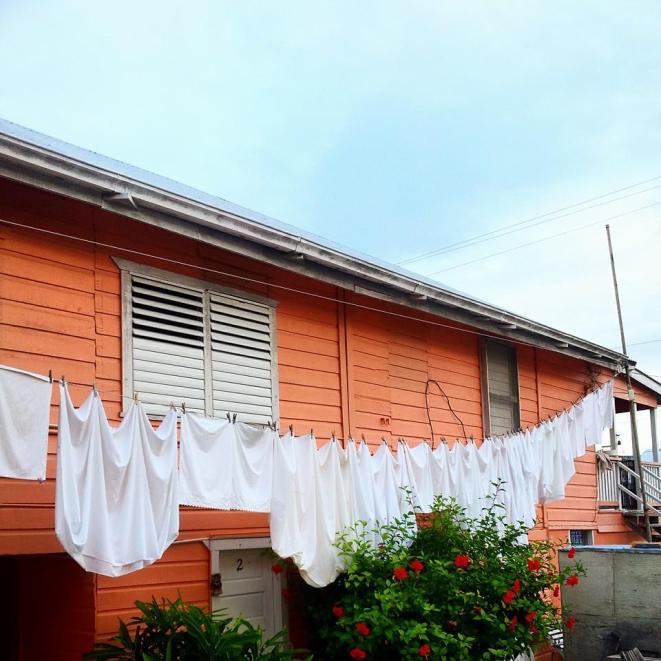
Belize InbarAsif

Photo: Inbar Asif


She leaned against the painted wall and exhaled a sigh of relief.

She was finally home. Hardship over. She was free. All was going to be as she needed it to be.

The freshly laundered whites fluttered in the sea breeze and the rush of waves sang in her ears. A dun puppy yipped at a bird. The baby slept at her feet.

“Have you eaten?” Grandmama called, a loving voice on the wind.

“I’m coming,” she smiled and bent to lift the bassinet.


For Sammi’s Weekend Writing Prompt: Idyll in 84 words


The Apprentice

The monochrome image shows the base of a tree with a hole, like a doorway, through its base...

Photo prompt: Sue Vincent


“It requires one step through.”

She squinted at the trunk. “I can see the other side.”

“So it would seem.”

She circled the tree and peeked through the opening. “It is as I said. I can see your legs.”

“I’m sure you believe you can.”

His calm voice infuriated her, but she knew that getting riled up will only lead to another long lesson in teaching her self-control.

She breathed.

He nodded.

She turned away from him and breathed again and then counted to ten for good measure. She could almost imagine him chuckling, though she knew he probably would not give her the satisfaction of seeing him react that way. Still, she could feel his amusement. It had been the hardest thing for her. His mild dismissing mockery. It was a constant reminder that she was a mere neophyte swimming furiously upstream in hope of getting even the smallest measure of trust, let alone recognition.

Why did he take her on when he had so little regard for her?

She circled the tree one more time. In part to move some of her agitation, but also to use the trunk as some shelter from her mentor’s scrutiny. She knew what her eyes told her: A hole in a tree, a gap she could toss a pebble through (not that she’d dare, now that he told her what it was), certainly of no size to fit a person.

She also knew that eyes can lie.

Still she resisted.

“Perhaps you aren’t ready.”

In spite of herself she felt her fingers clench. She hated when he did that. It made her feel like a child to be goaded.

Perhaps I am not, she retorted in her mind.

“Indeed, perhaps you’re not.”

Her eyes flew to meet his. She had suspected for some time that he could read her mind, and it felt like someone’s wandering hands rifling through her underwear drawer.

“I could read it in your eyes,” he noted, confirming rather than reassuring.

“What if I go through with it?” she sighed. She felt not so much resigned as she did defeated. He always got his way in the end. She could flail about and delay and prolong the path and belabor the process, but inevitably he got her to do things as he’d wanted. Half the time she thought his goal was to get her to where she would no longer resist him, while half the time she felt that the day she ceased rebelling would be the day he tell her that she’d failed completely.

Even now he did not answer till she asked again.

“You will see what there is for you to see.” He lifted his hand to indicate it was time for her to suspend all judgement, ignore her perceptions, and walk through the tree that he said was a portal.

“Is this the last test?” she fretted.

At that he chuckled. “It is never the last test …”

As she turned toward the tree she heard him add in a small voice that perhaps was made with mind, not larynx, “not for you, not for me.”


For Sue Vincent’s WritePhoto


What If?

Photo prompt © Ceayr


“Are you sure this is the house?”

“It says 345.”

“What if it’s the wrong number?”

“It’s not.” She unfurled a sweaty fist to show him the piece of paper and its slightly smudged pen marks. “It says right here.”

“What if you wrote it down wrong?” His eyes met hers, mirroring her apprehension and amplifying the seeds of doubt that tightened shoots of worry in her stomach.

She shook her head, courage evaporated.

It was one thing to flee their miserable surroundings. Another entirely to knock on the door of the father who’d rejected them even before they were born.


For Rochelle’s Friday Fictioneers


The Sultan

Portrait: Sultan Saifuddin of Tidore, Czartoryski Museum, Krakow


“Kesultanan Tidore does not betray its people,” the Sultan waved his hand to dismiss the envoy. “We are not Ternate,” he added, ignoring his advisor’s frown.

The envoy left, stiff-backed, and the Sultan sighed and rose from his seat. It was past time for lunch.

“I do not like the Portuguese any more than I like the Dutch,” he admitted.  “Neither have our well-being in mind. But the Spaniards have helped us resist the Dutch’s dogged attempts at making us their puppets. I will not become Ternate.”

“The Sultan speaks wise words,” the advisor bowed. “As for the trade?”

“I will take the Dutch’s payment for the cloves my people grow,” Sultan Saiffudin’s smile was tight, “and I will gift it to my people, whose support I trust more than that of the Dutch East India Company.” His smile dropped. “Make no mistake, the Dutch’s only aim is monopoly.”


For What Pegman Saw: Raja Ampat, Indonesia


Perpetuity

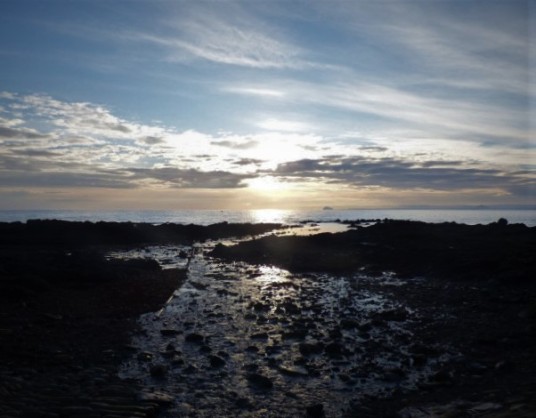
a channel of water flowing out to sea, with the sun reflecting on the water.

Photo: Sue Vincent


“You know,” she said, “this will be home.”

I looked around. Marsh and bog and semi-dry patches that high tide or rain were sure to turn completely water logged. It looked a misery.

“It will, too,” she added, even though I hadn’t said a word. She always knew to read my body’s thoughts, even when I voiced no words and moved not a muscle.

Some days it made me hate her. For my utter lack of privacy.

Other days I felt indebted beyond measure for not having to find ways to explain when words had never been accessible enough to match my thoughts with meaning. And for being seen by her when no one else seemed able to or cared to try.

“Wanna know how?” Fiona pushed a heavy lock of hair off of her eye and I knew then that she already had a plan, and that the plan was sounder than the muddy ground we stood on. I knew that gesture, that flowing move of clear-eyed determination that carried with it more than just a touch of crazy. For neither one of us was sane, but Fiona was nuts enough to get us out of scrapes I did not see a way out of. Somehow my sister, younger by three minutes and wiser by ten decades, thought ahead in moves others did not appear capable of anticipating. It had saved us, more than once, of certain death.

She was about to do so now.

“How?” I asked, though I knew she didn’t need me to.

“Stilts.”

She yanked a twig out of the soggy ground and scratched a diagram into the patch of godforsaken earth in the end of nowhere anybody, that an hour earlier I did not know existed, let alone that it belonged to us by ancestry through crumbling deeds that no one since an ancient relative had made use or taken any heed of.

“They thought the place too wet,” my sister noted as the outline of an elevated house rose like a phoenix from the lines she etched into the dirt. “But not Friar Felix. He saw the same potential that I see. The fish and clams and seaweed. The crabs. The cattails by the spring that makes the stream that gurgles out to the sea. A place to be.”

She glanced up at me and the hazel in her eyes reflected the sun’s rays along with something far older. Like a memory not of hers that nonetheless also held on to our own desperate need for belonging.

“I don’t know if he knew, Finley, but Friar Felix had bequeathed the deed to this land to his sister’s children, and to their children’s children in perpetuity.”

My sister turned her gaze onto the water and her voice dropped to a whisper in the wind.

“We are those children’s children’s children, Finley. This is our home. It will be home. You’ll see.”


For Sue Vincent’s WritePhoto Challenge


At The Window

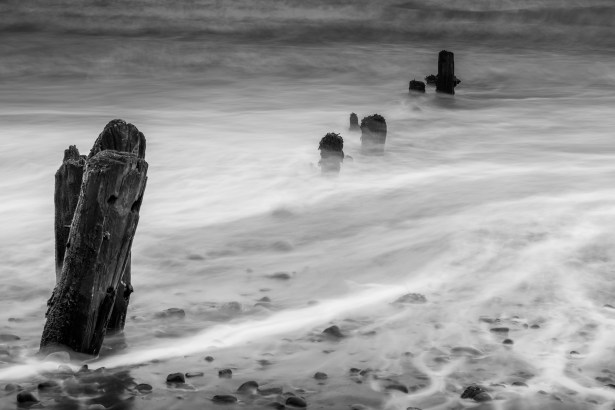
Wacton church window


She’d drag her trunk over every time she was left alone. It did not happen nearly often enough, so she faked head-hurts when her need got too great.

She’d drag the trunk over and place the foot-stool atop it. Gather her skirts and climb to stand precariously on it, balancing on tiptoes.

It was the only way to reach the window.

It was the only way to look out.

The only way to see the fields. The light upon the water in the distant pond. The green or bloom or brown or white of seasons. The birds. The trees. The world outside.

She didn’t know how long she’d have to stay confined to the Women’s Tower. Probably till she was of age to be married off and be conveyed in a shuttered carriage to the Women’s Tower in some other lord’s estate. The curse of her birth.

Highborn girl-children did not go out of doors very often. They did not spend time in the courtyard after infancy and were never unveiled or unaccompanied. Their chastity required they not be seen.

She watched the peasants’ children frolicking. She watched the girls work the fields, herd the geese, chase stray ducklings, spread seed for the hens, milk the goats, cut the hay, grind the wheat, slap cloth against the rocks at the sparkling stream. She could almost feel them breathe, though when she tried to draw breath herself it only let in suffocation. So much so she sometimes did not need to fake a head-hurt after that.

The latticed windows did not open. Two narrow slats near the corners of the tower room did respond to her mother’s lock in fine weather to allow air through cracks barely as wide as her wrist. Not that she was allowed to try and push an arm through them. It would be unseemly.

Still, she tried. Once. The marginal openings met a stone ledge’s resistance after a few inches’ opening.

Protection from invaders and wild-men, she was told.

Guarantee against escape of any kind, she thought.


For Crimson’s Creative Challenge


It’s The Tropics

Photo prompt © Susan Eames


“How long has he been sitting there?”

Brody shrugged. “Was there when I got here.”

Linda glanced at her husband’s torso. Brody had two hues: pasty-white or lobster-red, and it took him about an hour to transform from one to the other. He was reaching lobster status. At least an hour, then.

“What’s he doing?”

Brody scratched under his shades, and Linda noted to herself that his face was following his chest’s example. “On the phone?”

“Put your shirt on, Captain Obvious. But why there? Is he watching for something?”

“It’s the tropics, Dear. Pirates, runaway coconuts, or tsunamis.”


For Rochelle’s Friday Fictoneers


Not Blueberries

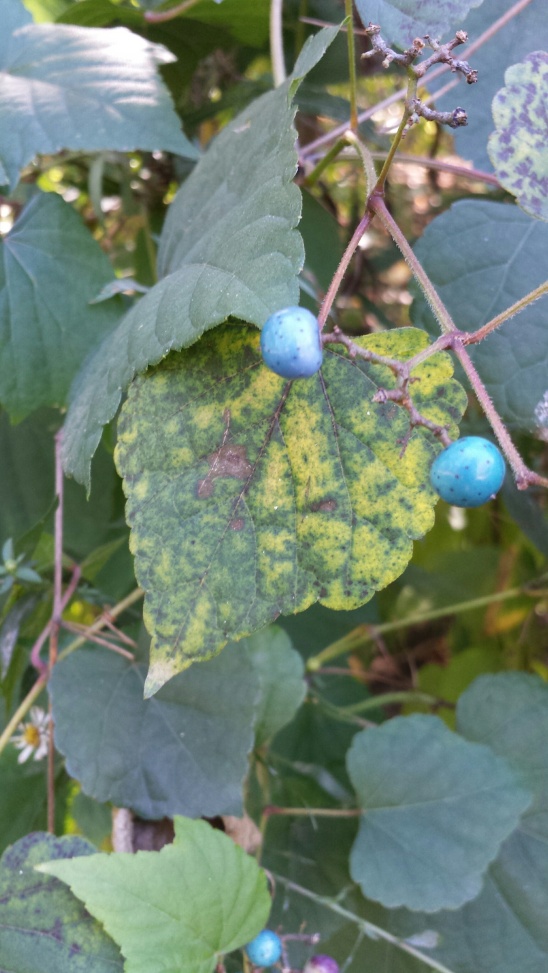
Not Blueberries NaamaYehuda

Photo: Na’ama Yehuda


“Look, Mama,” the child called, a soft fist held aloft as she ran, delighted, toward her mother. “I found some polka-dot blueberries!”

“Wait, where? Let me see? Those aren’t … Did you eat any?”

The child shrugged and twirled away, fingers closing protectively over a grimy palm that still held some blue orbs of what-mama-said-are-not-really-blueberries.

“Wait! Get back here. I need to see those again … Are you sure you didn’t eat any? They could make you very sick! And …” the woman looked around their deserted picnic blanket. “Where is your brother..? Where’s Eric!?”

“Oh,” the little girl pranced out of reach, and gestured vaguely in the direction of the trees beyond the forest clearing. “There. He found polka-dot strawberry mushrooms!”


Note: Inspired by a true story of a family I know, whose summer picnic ended up with a call to Poison Control, an ambulance, and two children in the Emergency Department. One child was fine. The second child eventually got better. Mama still can’t touch berries or mushrooms. Teach your children about the dangers of foraging and instruct them to not pick or eat (!!) any plant they don’t show you FIRST. …

For Terri’s Sunday Stills: Danger