Outside The Box

“Color inside the lines.”

“Re-write these letters.”

“Sit on your circle.”

“This is not playtime.”

“Keep to the right.”

“Climb the ladder, not the slide.”

There is a good reason why we direct children. We want them to learn to follow rules and obey instructions. We want them to listen. We need them to pay heed. After all, laws and guidelines are part of an orderly society and are important for maturation, regulation, and delaying gratification. Rules help maintain safety. They help define the difference between free play and guided study, between teamwork and individual projects, between creative writing and a summary of a given book or essay.

Rules and guidelines are good. It is healthy for them to be challenged and okay to keep rules even if a child thinks they are stupid or unnecessary (as long as we truly know why). Boundaries clarify what is and isn’t acceptable, where and when and how. There’s nothing wrong with structure. Or with following directions. Or with consequences when one chooses to do otherwise.

Structure is a good thing. So is knowing what’s expected. At least as long as those do not become a means to an end. As long a they are not ways to exact conformity and control, paths to making our adult life easier, roadblocks to creative thought, plugs for personality.

When we extend guidelines into demanding unified and unjustified conformity, we risk snuffing out individuality. It is then that we may end up raising robots, not children. It is then that we gag magic and bind wonder, imagination, awe.

When we say things such as:

“Elephants aren’t purple, color it gray.”

“You can’t draw two suns in the sky. There is only one.”

“Stripes do not go with polka dots. You’ll look funny. Go change.”

“This doesn’t look like Mommy–she has long hair, not short.”

“Don’t mix the Lego with the blocks.”

“You can’t just make up rules–this game has an instruction sheet.”

“People don’t eat olives with cookies.”

“Stop making things up.”

There is nothing wrong with purple (or rainbow) elephants, with three suns, pattern mix-and-match, people who look like aliens and aliens who look like mice, Legos with blocks and carton boxes and a Barbi perched on for a knight, with new rules for old games, and with plenty of made-up imagining.

Order has a place, as does chaos and unpredictability. We ask our children to tolerate our rules and limitations … it is only reasonable that we train ourselves to tolerate (even encourage!) theirs, wild as they may seem to be.

Let your child out of the box. You’d be amazed what children can achieve. How much they can create, plan, build, conjure, put together. How far their brilliant, fresh thinking, free mind can go!

Think Outside the Box!


Think Outside the Box!

Superhero Story

superhero

The little boy loves chocolate. He adores candy, cookies, florescent sour sticks. His idea of a balanced meal is french fries and ketchup with some chicken fingers on the side. He cringes at anything that grows on trees and runs away from any shorter plant life, especially those grown on farms with salads in mind.

He thinks brownies are a food group and can name all the junk food in the aisle of a mega-mart. He’s a keen critic of the varieties of cheese doodles, pasta shapes (no sauce), donuts, and icing from a can.

He perfected pouts and frowns to span the whole range of disgust, denial, and gradients of ‘no-way-Jose’ with which to respond to any and all attempts at offering healthy nutrition. You can dress vegetables however you like, try to hide fruit in a smoothie or an ice pop, claim that dried fruit are “as sweet as candy”–he sees right through the sneakiest disguise. The only way a vitamin will pass his lips is in a gummy.

His world revolves around sweets, snacks, and superheros.

Of the latter, he owns every size, shape, and denomination; in clothes, sheets, watches, slap-on-bracelets, stickers, backpack, cup, cap, hat, and mittens. He is genially inclusive of all superheros, identifiable by characteristic puffy chests, disproportionate arms, odd skin color (tending toward green), and various kinds of billowing plastic capes and armament. There are of course the Spiderman, Batman, and Superman, Green Lantern man, and Darth Vader, but also many others that adults keep confusing and, more’s the pity, cannot even name … 

The boy lives, breathes, sleeps, plays, narrates, and animates his superheros. He is rarely found without one–they are constant companions–at home, in the car, in the tub. He takes one with him to the toilet, for some friendly company and conversation.

He keeps a place at the table for his superheros. He lugs a carry-on packed with them onto the plane. He delights in having them, ecstatically anticipates upcoming birthdays and holidays as opportunities for enlarging his beloved collection.

Some may think his ‘fixation’ willful or limiting. They may frown upon his adulation of plastic figurines with overstuffed musculature and unrealistic proportions and stereotype. Others see him walk along the street in full superhero regalia, grinning, prancing, proud as rain … and they cannot hold back a smile. He is absorbed, enchanted and enchanting. At almost-four, he bobs easily in and out of the bubble of delight in mystery and magic-thinking.

His parents tolerate sheets and towels becoming capes, draping furniture, and sweeping fragile items off of shelves and coffee tables. They have learned to live with constant sound effects as Spiderman climbs walls and Superman flies atop buildings and other superhero this-or-that saves all manner of fallen toy-victims. His parents accept that going anyplace takes longer when there’s a world to rescue with each move, a hero to swoop wide from every stair, a never ending battle between good and bad to wage and master.

Speaking of battles … there is the matter of his aversion to tooth brushing. Sugary and colored yellow with sticky cheese powder, he refuses to allow any mention of teeth cleaning. He clenches jaws against attempts at probing. He flees, superheros in each hand, at the sight of toothpaste or mouthwash.

Oh, he has some valid reason to–medical professionals have spliced his little mouth all too many times in efforts to reshape what a birth defect distorted. They came from care, but his experience left him wary and refusing further vulnerability. He controls access to his mouth with iron will that puts maximum security detention centers to shame.

His parents despair — they loathe to force him when so much was forced already and yet they know that to neglect his mouth is to invite issues in the future and invasive dental work besides. They admit helpless caving in to his refusal. Embarrassed, they are torn between their worry for his pain and the need to work beyond it.

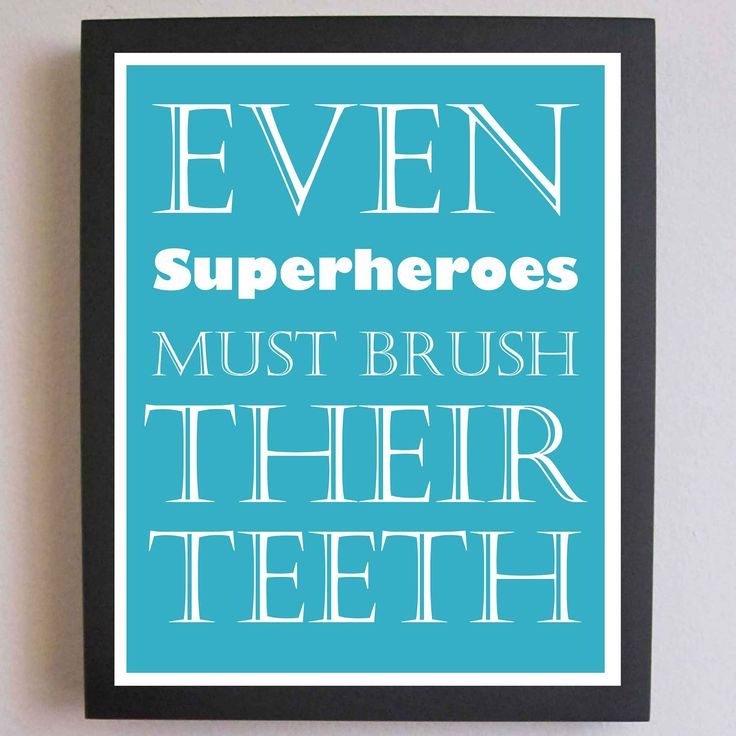
So we had a hubbub, he and I, and we’ve come to an agreement. An understanding. A plan of action. Superheros brush teeth, too, you see. They floss regularly with gusto. They gargle mightily. They epitomize mouth-care and a fighting spirit against germs a-hiding. The proof is seen in any superhero movie, cartoon, or poster; where one is certain to be dazzled by the light reflecting from their pearly white perfection ….

Now, superheros line the sink, the toothbrush is adorned with muscled plastic. Towel cape on shoulders, feet in puffy superhero slippers, he seeks to destroy all hidey-holey bugs that wish to burrow cavities.

Superheros brush teeth, too. Whew. Next, they will be eating vegetables…

superheros

Imagination is Everything

Albert Einstein said: “Imagination is everything. It is the preview of life’s coming attractions.”

How apt and true and whole encompassing. How delicious. How perfectly fun!

If you’ve seen a child submerged in play, you know that imagination is their dress rehearsal for all matters living. If you’ve seen an artist bubbled in their creative space, you know that imagination is the spring that feeds it. If you’ve heard a fairy-tale or folk story, fable, tall-tale, or a Bard imparting lore; you know that imagination is the fertile ground they grow on, what sustains them, where their seeds remain asleep, awaiting a creative dawn.

All that has ever been done, invented, manufactured, built, sewed, woven, Jerry-rigged, cobbled together; it had to pass through an imagination portal first.

We cannot create what we don’t see–if not with eyes or ears or hands or senses, then with our mind and heart and soul. Most true creations call on several of those to form the tapestry of thought to form.

Imagination creates. It is the foundation, the first step before the step is even taken. It is the heartbeat of all progress, in one’s own life as well as in the world galore. It is what makes impossible, possible; what makes the unimaginable, done. Humans are made to imagine. We are made to visit unseen shores within our mind and see vistas unfurl endless wavelets, seashells, cliffs and boulders, shores within a shore. We are made to dream upon an image, find a thread to follow and breathe imagination through it till a light-bulb sputters on.

Imagination “is the preview of life’s coming attractions”, Einstein said. It is the show before the show, the act before the acting, the plan before the blueprint, the background of a story before it knows the words. And it is limitless. The mind’s eye is unencumbered by space or time or speed; it is unfettered by procedures, flow charts, feasibility, or expectations. It is the infinite universe where old-soul-magic and deep-shared knowledge parent images till we find the courage to have them be born.

“Imagination is everything.”

Indeed it is, and in it lays its magic. In it strums the harmony that leaves us breathless, resonates our very soul, and holds us in the mesmerizing imaginary space where we are partially tethered to reality and partially swimming in the spheres of all-be-known.

Imagine, and you will forever be transformed.

The Wonder of Wondering

A mom of a client tried to find a day to reschedule a session that they were going to miss next week. She could not find ‘an opening’ in her five-year-old’s schedule in the next SEVERAL weeks.
“We may have more time in March,” she murmured, peering at her iPhone screen. “No, actually, that’s when his sports club changes, so I don’t know if he’ll have time then.”

Aside from speech-therapy, which he needed because of a small deformity in his mouth which affected the clarity of his speech; this five-year-old had baseball, soccer, drama, piano, chess, guitar lessons, and tutoring (for kindergarten preparation–the latest hit in urban upper class–this mom is actually behind the curve because she ‘only’ started him at age three, and not earlier…). He also had two playdates scheduled–in the several weeks ahead, there was no time for more–one to take place at a museum and the other at a movie theater followed by a pizza place.
Al of those were activities to fit after his preschool was done at 2pm each day or on weekends. Sunday was especially busy, apparently, with double tutoring, so he “not fall behind on no school days.”

“When does he play?” I wondered aloud.

The mom looked mildly surprised at the question. “Oh, he plays a lot. He plays soccer, baseball, chess…”

I smiled. “I meant when does he have time for unstructured play, to just be in his room with his toys and use his imagination and daydream and make up stories for himself?”

The mom nodded dismissively, “Oh, yeah, I know that’s good for his development, but he’s just too busy right now. He does read, though. He’s up to level 2 now. Every night he has to read his words before he goes to sleep.”

UGH.

The wonderful power of wondering was completely lost on the mother, swept up as she was in the rush of demands an requirements, competition, check-marks, and achievement.

It made me wonder, too, about whether she herself knew how to just be, if she still remembered how to play.

Do you?

Do you set aside time for musing and refilling your tank of creativity and playfulness?

How much time does your child have for play? Does he lose himself in fantasy, imagination, and the wonder of wondering?

It is the job of childhood to be at play. To invent, experiment, inquire, speculate, dream with eyes wide open, animate toys, get slightly bored and think of nothing and everything, walk slowly outside and collect pieces of leaves, paper, dirt. It is the job of childhood to socialize, assign roles in joined mimicking of adult-roles and fantastic stories, negotiate with peers and make your own rules, unencumbered by adults who demand you follow the ‘rules-of-the-game’ instead.

Surely there is time a child should spend in listening, following directions, and learning. There is room for rules and consequences, routines and chores. However, losing the balance between adult-led and child-inspired, tilts childhood off its axis. How can a child who does not have the time to breathe and get a little bored, learn how to entertain himself, day-dream, imagine, be truly creative, be a child, play?

When is the last time you deeply reconnected with wonder? If you cannot say, then it is time to stop, watch a child getting lost in a bubble, let them be, and find your own path to some play.

Photo Credit to S.E.

Photo Credit to S.E.