What PTSD teaches us about human frailty and resilience

The link below will lead you to one of the best interviews about PTSD I have ever seen, hands down.

The fact that Rachel Yehuda is my cousin is an added bonus–I am ever so proud of her: for the person she is, for the work she does, for the wisdom and empathy she imparts, for how she has literally changed the field of PTSD in the last 25 years.

(I recommend reading the transcript, not just viewing the snippet of video on the site)

Take a look. Take a read. You will be glad to have taken the time:

Ingenius: Rachel Yehuda

http://nautil.us/issue/31/stress/ingenious-rachel-Yehuda


experience

A New Year Blessing

2015 2016

May it be a year of peace

A year of calm

A year of heart

Of reason.

May it be a year of kindness

Of compassion

Of humanity and understanding.

May it be a year of healing

For this Mother Earth

And all who are together on it.

May it be a year of wisdom

Of light over darkness

Love over hate

Acceptance over ignorance

Courage over fear.

May it be the year where violence recedes

Where patience and respect for one another

Become more valued

Than greed

And need for power.

May it be a year of history remembered

Not repeated.

A year of repair

Not more destruction

Of healing

Not added wounding.

May it be a year where we truly do

Value the future

Of our children

Of humanity

This planet home.

May it be

A happy new year.

A year of joy

Where we could know

Each day by blessed day

That we the people

Are finally

Together

Finding our way.

Keep a light on

May you always keep a light on

In your heart

Your place of better knowing.

May you always keep a light on

Even when it may well seem

The only one

For miles around.

May you always keep a light on

To turn cold

Into warmth inviting

And isolation

Into welcome home.

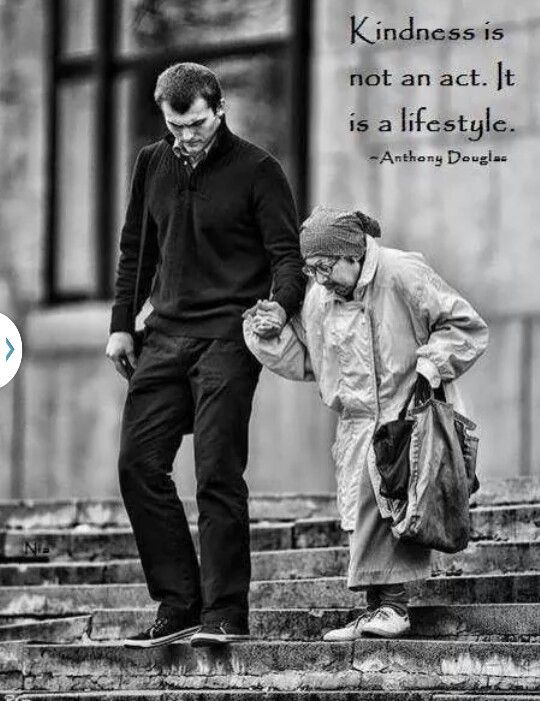
A lifestyle of Kindness

kindness1

A lifestyle of kindness.

I love that.

If more of us take it on; just imagine the world we would be living in,

the ripples of compassion we will be creating.

A lifestyle of kindness.

Can you see it growing?

Can you feel the depth of healing it can cultivate.

A lifestyle of kindness.

Oh let’s.

Let’s!

On Summer Solstice and the balance of dark and light

summer solstics stone Ireland

As summer solstice arrives, I find myself wondering about the metaphoric increase of light and the ongoing balance of light and dark, the constant shifting from more of one to more of the other and the very brief points of apex on either. We are not meant to be static. Not the planet, not even within the same season–there is constant change. Even as summer formally begins, it begins the long path to the opposite.

Dark to me does not necessarily have the connotation of evil–though it can indeed also mean the absence of light on heart and soul levels–rather it often represents for me all that is hibernating, what is nascent and unborn, the things that await clarifying, the times of preparation, incubation, anticipation, hibernation, rest …

Dark carries in it the potential of enlightenment, the tender differentiation of color in pre-dawn, the realization of upcoming sunshine and the end of opaque unknown.

In the summer solstice, dark is at its shortest, but it is not eliminated, nor should it be. Without dark, there is no contrast. Without dark, it is difficult to find rest or space for incubating thought and creativity, for wonder and imagination, for small things needing sheltering still until they grow enough to face the light.

I am reminded of this as even in the longest day arrives, the path to increasing dark is already beginning–slow and steady from now to the winter solstice, a drop-by-drop addition to the night and its many potentials.

Don’t get me wrong, for all the sheltering potential of sapphire skies and starlit hours, I love long days. I adore the long twilight of summer evenings, the seemingly endless time to be outside in the sun. So much so that I remember wondering–as a child reading about another child’s life in Lapland–what it had to be like to live above the Arctic Circle in a summer of continuous light (only in the summer, please … the freezing cold is not something I am enamored with even considering …).

Someone I know swears by the healing properties of experiencing these dark-less days. She finds that it calibrates her body’s internal needs: she eats when hungry, sleeps when tired, works until the work is done. To her, a fortnight in the Arctic summer is a remedy for most that ails her.

Another friend who spent some of her childhood in Sweden told me that she loved it for the first two days then found it suffocating. “I’d hide under the bed and drape a blanket over the sides to get a place of darkness. I needed time to breathe some night. My brain wanted to rest.”

I can understand both the freedom that a time of continuous light allows, and the need for respite from it. For all the adoration of light–and I indeed adore it–there is the inherent balance of all things. Even my friend who prescribes Arctic summers makes time for breaks from productivity.

A sage woman once told me: “We all seek the light at the end of the tunnel, but the tunnel itself has value in leading you to it.”

May this Summer Solstice become a day of balance for you. May it support your outward creativity and your inward incubation of new being and new doing. May it hold the hint of winter in the making–the cooling and the slower pace already forming.

Happy Summer Solstice to you.

And for all who celebrate it–also a Happy Father’s Day!

summer solstice mandala

From Pintrest: thisenchantedpixie.org


Nadine Burke Harris on: How Childhood Trauma Affects Health Across a Lifetime

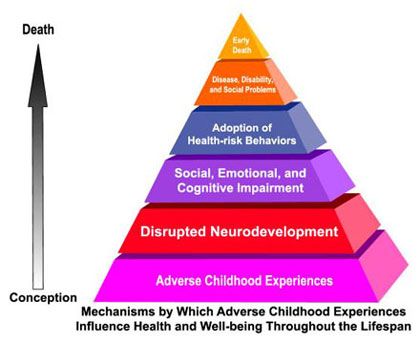
What if there is an exposure that affects health and development dramatically and is more prevalent than HIV, cancer, and Hepatitis combined and yet most doctors do not screen for it? What if you knew of an exposure that increases the risk for heart disease, diabetes, early death, inflammatory diseases, premature birth, metabolic syndrome, depression, anxiety, suicide, and more? What if that exposure was at the base of many learning disabilities, attention issues, and behavior issues and if there was a lot to do to help reduce this risk?

Wouldn’t you want to know about it?

Wouldn’t you want it to be treated as a priority in healthcare and public interest? I know I would, and do. Nadine Burke Harris is sure, too. Listen to her amazing Ted Talk–this is a brief talk that you’ll want to pass along!

Mother’s Day–A History of Seeking Peace

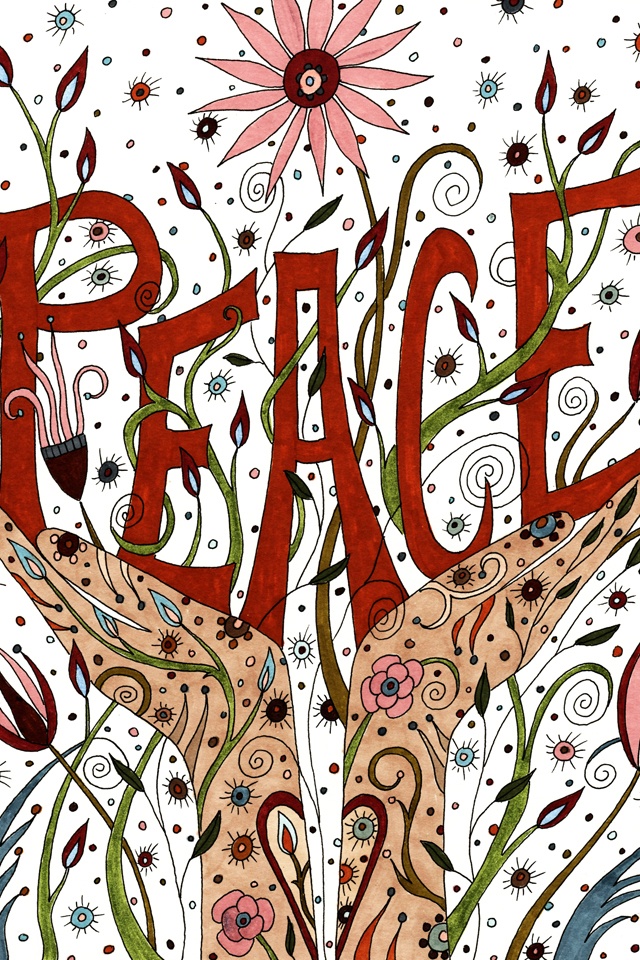
Peace is in our hands ~ artist Valerie Lorimer

Peace is in our hands ~ artist Valerie Lorimer

As we celebrate mothers of all forms and being, those carrying and bearing life, laboring to nourish and to nurture, guiding, teaching, holding, comforting, soothing, showing, listening, singing to and being with … Let us also remember where Mother’s Day originally came from and its purpose–a purpose that in its own way represents the yearning and dedication, hope and tenacity of mothering:

“let them then solemnly take counsel with each other as to the means whereby the great human family can live in peace…” (from the proclamation below)

Here is to peace. To no more carnage. To love. To hope. To no more lost children. To counsel of heart and reason. To no more war.

Mothers’ Day Proclamation / Julia Ward Howe (1870)

Arise, all women who have hearts, whether your baptism be that of water or of tears! Say firmly: “We will not have great questions decided by irrelevant agencies, our husbands shall not come to us, reeking with carnage, for caresses and applause.

“Our sons shall not be taken from us to unlearn all that we have been able to teach them of charity, mercy and patience. We women of one country will be too tender of those of another country to allow our sons to be trained to injure theirs.”

From the bosom of the devastated earth a voice goes up with our own. It says, “Disarm, disarm! The sword is not the balance of justice.” Blood does not wipe out dishonor nor violence indicate possession.

As men have often forsaken the plow and the anvil at the summons of war, let women now leave all that may be left of home for a great and earnest day of counsel. Let them meet first, as women, to bewail and commemorate the dead. Let them then solemnly take counsel with each other as to the means whereby the great human family can live in peace, each learning after his own time, the sacred impress, not of Caesar, but of God.

In the name of womanhood and of humanity, I earnestly ask that a general congress of women without limit of nationality may be appointed and held at some place deemed most convenient and at the earliest period consistent with its objects, to promote the alliance of the different nationalities, the amicable settlement of international questions, the great and general interests of peace.

(Julia Ward Howe, Abolitionist–she also wrote “Battle Hymn of the Republic”)

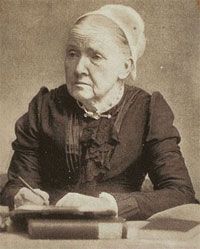
Julia Ward Howe

Julia Ward Howe

The Childhood Adversity Narratives: Learn. Share. Educate.

ACES

How do childhood adverse events affect development? How do they impact health? How much does it cost society to have children exposed to adverse events? What are the social ramifications? How does childhood adversity reflect in mental-health? In illness? Can we prevent childhood adverse events? Why is it worth it for society to invest in prevention and treatment of childhood trauma?

And other questions: What is more harmful: second hand smoke or childhood maltreatment? How is that reflected in funds or investment in prevention or treatment? Where does asthma come in? What can we do about any of this, anyway?

To find the answers to these questions and more, check out this amazing presentation (also available in PDF and PPT on the site–see links below).

This free resource is available due to the generosity of Frank and Karen Putnam along with their colleagues, who created this presentation in the hope that it will be widely disseminated and that it be used as an education resource for the public as well as for researchers and clinicians. The presentation details the prevalence, impact, treatment, and importance (it is highly possible!) of prevention of child abuse and neglect. The authors encourage everyone to use the presentation and share it.

The slides are available on the website http://www.canarratives.org/

To view the Power Point Show: CAN_Narrative_4-26-15-v2L4

To download the pdf: http://static1.squarespace.com/static/552ec6c7e4b0b098cbafba75/t/553e3673e4b09e094f914b8f/1430140531869/CAN_Narrative_4-26-15-v2L4.pdf

Trauma’s Memory Problems : A good article

child trauma

Trauma all too often brings up the detective in people, prods them to question, pin point, dissect accounts, weigh relative credibility. It is an odd thing, given the reality that trauma–by its very essence of overwhelm and shutting down of language centers, processing, and memory integration–affects how one may be able to remember, recount, and narrate it. Trauma is difficult to articulate and often too difficult to comprehend, even to know. And yet, it is often demanded to be phrased in exact details that go beyond every-day memory. As if trauma memory should be, somehow, more stellar, subject to higher standard, to bigger scrutiny.

Granted, there may be a motive in it: people would rather believe trauma is less frequent and not as severe. If there are holes in a story, maybe it is ‘proof’ that it did not take place, or not as badly, or not deliberately … At the same time, there is an inherent lack of understanding about how memory and overwhelm conflict and contradict each other. In some ways, a misremembered, disjointed, incoherent event fraught with numbness and confusion may well BE one of a trauma … rather than be proof of something not happening …

Trauma is a problematic thing for memory.

People remember trauma differently. Some remember constantly, vividly, intrusively. Some remember oddly. Some remember snippets, or sensations, or disjointed unease that seems disconnected from anything that seems to make sense. Some remember sometimes. Some remember not at all.

Children, especially, may find not remembering safer than to try and manage the overwhelming reality of what to let reality in may mean. They may have to keep things in the ‘not knowing’ folder to go on and push away reminders that make no sense, they recant, reverse, deny, ignore.

In the article below, the author explores memory and trauma, denial and dismissal, inaccuracies and interpretations, shame and judgment, burden and prejudice, reality and myth.

It is a worthy read for anyone who has been touched by or knows someone who has been touched by trauma (that should include the lot of us, really …). It is an even worthier read if one keeps in mind how it would be all the more difficult for children to conceptualize and remember trauma cohesively, when they have less tools with which to manage what they had endured, and are more vulnerable to misconceptions about what it says to them, about them, about those who hurt them, about the world, about who they may be or have become.

​I Was Sexually Assaulted As A Child. Here’s Why I Didn’t Remember For Years.

http://thinkprogress.org/health/2014/12/23/3606576/memory-and-sexual-trauma/

On Nov.7–Making Peace with Suicide–a recommended new and powerful book!

Launching November 7, 2014!

Making Peace with Suicide: A Book of Hope, Understanding, and Comfort

By: Adele Ryan McDowell, PhD

Sometimes a new book comes along that deserves a special shout out–this is one !

I am delighted to help spread the word about Adele McDowell’s new, powerful, and heart opening book.

I’ve known Adele for almost 18 years now, and she is the real deal: knowledgeable, compassionate, deeply empathetic, super-sensitive, and down-to-earth. She understands human suffering and human potential, the depths of pain and the triumphs of spirit, the reality of trauma and the tangible hold of hope.

The combination of her skill and personality make her the best person to approach and manage such a tender topic, and she does so with much heart and practical advice.

The book is filled with information and much needed explanations to one of the most heart-wrenching realities of human connection and loss. It is also filled with anecdotes, candid testimonies, and personal paths through grief and healing.


Read it!

Join the launching celebration on November 7 and be one of the first to own a copy!

Get it on November 7, 2014!

Making Peace with Suicide: A Book of Hope, Understanding, and Comfort

By: Adele Ryan McDowell, PhD

Get it on Amazon November 7! http://www.amazon.com/dp/0982117620/ref=pe_385040_121528360_TE_dp_1

About the book:

Insightful, compelling, and compassionate, Making Peace with Suicide: A Book of Hope, Understanding, and Comfort takes a good hard look at the world-wide phenomena of suicide.

This book is designed for anyone who has lost a loved one to suicide and felt that sucker punch of grief; for anyone who is in pain, walking unsteadily, and considering suicide as an option; and for anyone who works with, guides, or counsels those feeling suicidal and/or suffering the profound grief from a suicidal loss.

Making Peace with Suicide includes stories of courage, vulnerability, and steadfastness from both the survivors of suicidal loss as well as the unique perspective of the formerly suicidal. It offers shared wisdom and coping strategies from those who have walked before you. It explores the factors leading to suicide and the reasons why some do and some don’t leave suicide notes.

Making Peace with Suicide sheds light on the phenomena of suicide vis-à-vis our teens, the military, new mothers, as an end-of-life choice, and asks if addiction is a form of slow suicide. It provides a seven-step healing process and opens the door to consider suicide and the soul, the heart lesson of suicide, and the energies of suicide.

If suicidality has impacted your life, Making Peace with Suicide is a must-read! You will be guided through the unknown territory, given insights to allow understanding, stories to help you heal, and ways to make peace with a heart wide-open. Making Peace with Suicide is good medicine for the body, mind, and soul.

Praise for Making Peace with Suicide

“Suicide is one of our most painful, difficult, confusing and wounding of human experiences. Dr. Adele McDowell addresses this topic with love and beauty. She non-judgmentally restores empathy, compassion and understanding.  She courageously offers deep tending in a “place of primal pain.” And she is comprehensive, sharing the history, complexity, universality, and even positive dimensions of this mysterious act. Whether you are contemplating or have survived the attempt, lost someone to suicide, or counsel and help these populations, Adele McDowell’s Making Peace with Suicide will bring you hope, healing, compassion and understanding.”

–Edward Tick, PhD; Director, Soldier’s Heart; Author, War and the Soul and Warrior’s Return

“With sensitivity and compassion, Making Peace with Suicide explores the depth and breadth of suicide and offers insights and healing. This book is essential reading.”

–C. Norman Shealy, MD, PhD

“No topic could be more timely than suicide. This remarkable book addresses people who have contemplated ending their lives as well as those who have to deal with the aftermath of those who succeeded. But it will also be invaluable to mental health workers and military chaplains, especially those who deal with young people who have been bullied and veterans with PTSD. For such a complex topic, Dr. McDowell’s writing style is reader-friendly and the stories she presents may well evoke tears. Her wise recommendations include teaching self-mastery techniques to help people cope with the stress of a success-oriented society. I have read many books on this sensitive topic, but none with the breadth and scope of Making Peace with Suicide.”

–Stanley Krippner, PhD; Co-author, Personal Mythology: The Psychology of Your Evolving Self and Haunted by Combat: Understanding PTSD in War Veterans

“Finally. A book that explains—in the simplest of terms, in a non-sensational, non-academic manner—the phenomenal, worldwide epidemic we call suicide. If you read one book on mental illness and how it affects our world, READ THIS ONE!”

–Ginny Sparrow, Editor, American Association of Suicidology

“Adele bravely and compassionately tackles a topic that many people avoid discussing—suicide. Yet in the understanding of it, the confusion and sense of loss is greatly eased. Making Peace with Suicide is rich with insight and healing methods all intended to help heal the void we feel when we lose a loved one to suicide. It’s also written for those who are suicidal to help them understand their pain and despair, and to let them know there is always help and there is always hope. I wish I had this book to read when my best friend took her life.”

–Carol Ritberger, PhD, author of Healing Happens with Your Help: Understanding the Hidden Meaning behind Illness

“This powerful book, written by a psychologist and former suicide-hotline responder, speaks to us all, about a present epidemic, surrounded by shame, taboo and secrets. Offering many personal stories, Adele helps the reader to find peace speaking to both those who believe they’re the only person who has ever felt this desperate and to the survivors whose lives are thrown into turmoil. This excellent book, full of useful resources, is essential for everybody who feels alone with their issues of life or death, bringing greater understanding, acceptance and comfort.

–Christine Page, MD, seminar leader & author of The Healing Power of the Sacred Woman

“As a minister/therapist for more than thirty years as well as a wife who lost her military husband to suicide, I have never found a more compassionate, effective book on suicide and its aftermath. This book serves many needs and highlights the myriad ways in which suicide changes one’s life direction. I cannot say strongly enough how powerful and helpful this book is.”

–Rev. Colleen E. Brown, Unity minister

“The loss of a loved one by any means is traumatic. When the loss is by suicide, in addition to the grief of the loss itself, survivors are often left riddled with guilt, anger, shame, and endless questioning, by both themselves and by others. In Making Peace with Suicide, Dr. McDowell gently and brilliantly weaves vital suicide survivor education with comforting and inspirational thoughts and quotes, all designed to direct the reader on a path of healing, resolution and peace.  A must-read for anyone who has been touched by the tragedy of suicide and left to answer the question, ‘Why?’ ”

—Carole Brody Fleet, award-winning and bestselling author of Widows Wear Stilettos…; Happily Even After…; and When Bad Things Happen to Good Women

“A subject such as this is never easy to digest. However, with Adele’s wisdom and guidance through her experience, this is a must read. We are in a new world now. Let Adele’s wisdom guide you with her insights for a new perspective on suicide.”

–Mona Delfino, author of The Sacred Language of the Human Body


Get Making Peace with Suicide on Amazon, November 7!