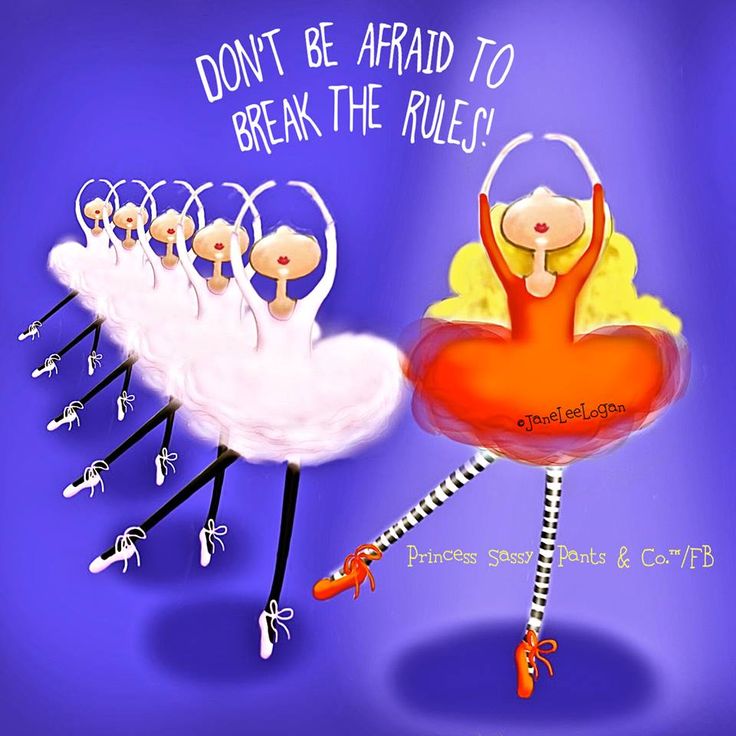
Beautiful Like Me!

She came dancing up the stairs, ecstatic, barely able to contain her smile. And she was a sight to behold:

Pastel rainbow tutu skirt over purple denim and red t-shirt with a sparkly princess on it (and a few star stickers), pink tennis shoes (with rainbow laces), green and yellow polka-dot socks (with frilly tops), rainbow-loom bracelets on both wrists, three plastic beads necklaces (one with 1/2 inch hearts interspersed), five hair pins (with various glittery bits and in various states of sliding off), shimmery hair ties holding two droopy pigtails of dark brown corkscrew curls. A smile as wide as the ocean. And a periwinkle clutch, princess stamped and glitter splattered.

Joy incarnated.

She went directly to the long mirror, struck a pose. Her mother chuckled–the last thing her daughter looked at before leaving home was their mirror. The girl stops to admire her reflection in store windows, too.

“I’m so beautiful!” the little one noted in delight.

She was not referring to her features or her body–chubby cheeked, dimpled, lisping, and lovable all over. The beauty was in the gestalt effect of her composition. Hers is aesthetic enjoyment rather than self-adoration.

Her ensemble changes week to week, varied shades of glorious. Never her elation. The wells of her joy are bottomless, oh, the endless possibilities of pleasing presentations!

She’s a walking fashion statement. She’s as happy in oversize overalls and chunky boots (with sparkly necklaces and mismatched socks). No one would be surprised if she ends up an artist, designer, or otherwise eclectic. She’s her own being already. Absolutely comfortable in her skin. Contagiously delighting in her creations.

Yesterday, she twirled around before of my mirror. Swung her arms, touched her necklaces, straightened an errant rainbow lace, wrapped a ringlet around a finger. She grinned throughout.

“I’m so beautiful,” she sighed, satisfied, “I am beautiful like me!”

beautiful1


Happy Flying!

tooth fairy
This is the sweetest story of an eight year old with a lost tooth and an obliging tooth fairy, but most of all, it is the story of a principal who understood, and did what he could.

And that, as we know, is a lovely whole lot!

Here is the story from Vancouver:

Principal Writes Letter to Tooth Fairy

A letter from a B.C. principal to the Tooth Fairy on behalf of an eight-year-old girl has gone viral after it was posted on the school’s Facebook page.

Avery Patchett is in Grade 3 at James Hill Elementary School in Langley and last week she lost her third tooth during class. Her teacher gave her a necklace to help her keep the tooth safe, but when she went outside at recess to play she tripped and fell, knocking the tooth into the dirt.

“When I was running up the stairs, maybe my tooth necklace was loose,” said Avery. She was upset that she had lost her tooth as she wanted to give it to the Tooth Fairy that night.

“When I tripped and lost it, I lost it forever,” she said. “I looked a couple of times and I still haven’t found it because the tooth looks like rocks.”

That is when her principal, Chris Wejr, stepped in to help.

Avery came to him crying about what had happened. “She was upset because she had lost her lost tooth and she was worried the Tooth Fairy wasn’t going to come,” said Wejr.

“I said ‘well, I’ve sent a letter to the Tooth Fairy before and it worked’ and I said ‘what do you think about us sitting down and writing up a formal letter with our logo on it and everything and giving that to the tooth fairy?’”

So they wrote a letter together and Avery took it home to give to the Tooth Fairy.

“She gave me five dollars,” she said.

tooth-fairy-letter

Wejr had previously helped a student at his former school through a similar experience and said it is important to help kids in this way and to share these stories. When he posted the letter on the school’s Facebook page, it immediately generated a huge response.

“It shows that people want to hear the positives,” he said. “There’s so many incredible caring moments that happen in schools every day and they don’t get shared, so we try to share the positive moments that happen at school once in a while.”

Avery’s mom Debbie said she did not expect this at all from her child’s principal. “I just thought, ‘wow, it’s a really nice gesture’,” she said.

“He took something really small and made this a memory for her that will last forever, and it is a small gesture, but it means everything,” she added. “We hear so many horrible stories every day, it’s nice to hear this story, this small little story, this little gesture.”

Wejr said the lesson here is that sometimes adults need to stop and make sure they show kids they care and help them in moments of distress.

“Sometimes the small things can really have a large impact if we just take the time,” he said.

© Shaw Media, 2014

 To see a video clip of the story, click here.

Kids’ Logic

Kids have been known to say the most amazing things. They can come up with stuff that leaves jaws hanging. Make connections we did not see coming. Expose language ambiguities that we no longer hear, and make expressions a never ending study in explaining why we did not mean the words we said even though we very much did mean what we said …

Kids can also give the most hilariously brilliant unexpected answers.

Here is a compilation of answers from 25 kids whose responses on tests, quizzes, assignments and schoolwork prove that they are awfully literal, completely out to lunch on what’s inquired about, totally impish, wholesale Smart-Alec’ish, or a combination of the above …

whatended

Read more and enjoyhttp://www.viralnova.com/awesome-kid-answers/#VGpIS22CscTiyxSg.99

Thank you ViralNova.com for this delightful collection!

What box?!

Think outside the box!

Life’s too short to be too serious.

Be playful. Find a point of laughter. Create smiles.

Even the most functional place can tolerate some spunk, a bit of daring, a little imaginary pun.

Forget the ‘way it has to be done’–there are all manners of possibilities to explore, to reach the goal, to make it work–the journey’s just began!

Have fun!

outside box1

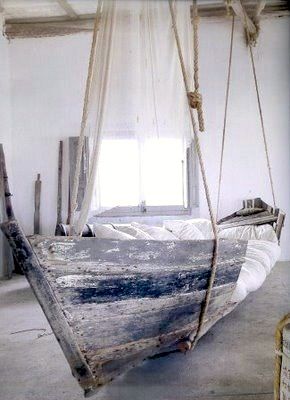
Ship-shape?


outside box3

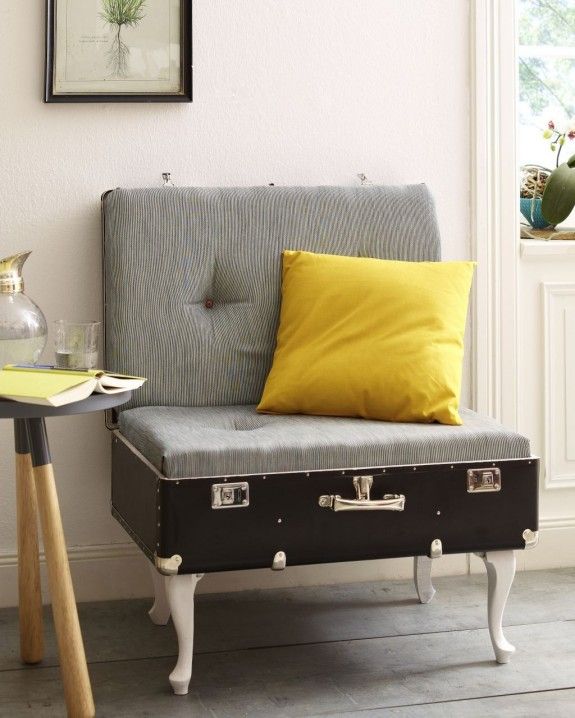
Be a lady in a shoe!


outside box5

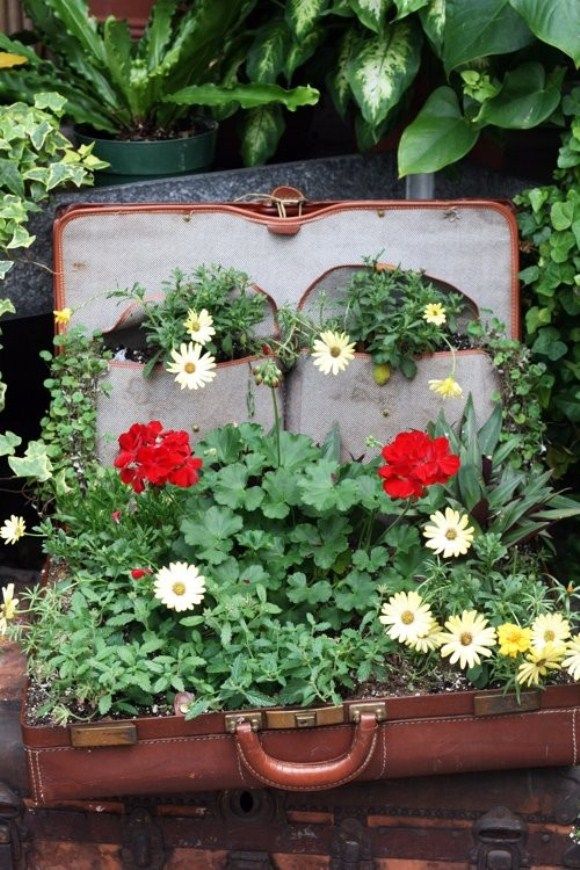
Potted house! (Korea)


outside box2

Chim-che-roo!


outside box4

Toasty fun!


Make Life Easier!

creativity

Practical fun! Two for one!

Life is complicated. Stuff gets in the way, falls off, gets tangled, goes missing, takes time and space and energy to organize. Thankfully, there are some very clever people who come up with supremely genius solutions to problems you maybe did not realize you even had, or that give you an ‘aha’ moment when the solution is presented.

Think you need to get a specialized gadget for every situation? Think again. Apparently you probably already have all you need, and some of it may be in your recycling bin even as you are reading, just waiting for salvation and a second chance…

Small ideas can make big sense once you see them.

Here are some simple, everyday things that can make you life simpler. Or at the very least, provide you with a smile (and smiles, as we all know, are super-efficient ways to make life instantly better!)

Simple solutions with everyday objects–click on the links below each photo to get even more ideas!

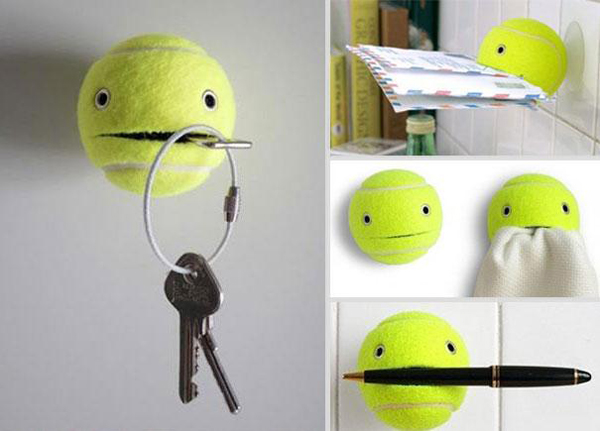
Let little Tennis serve you with a holding hand!

tennissolution

Want more ideas? Click here!


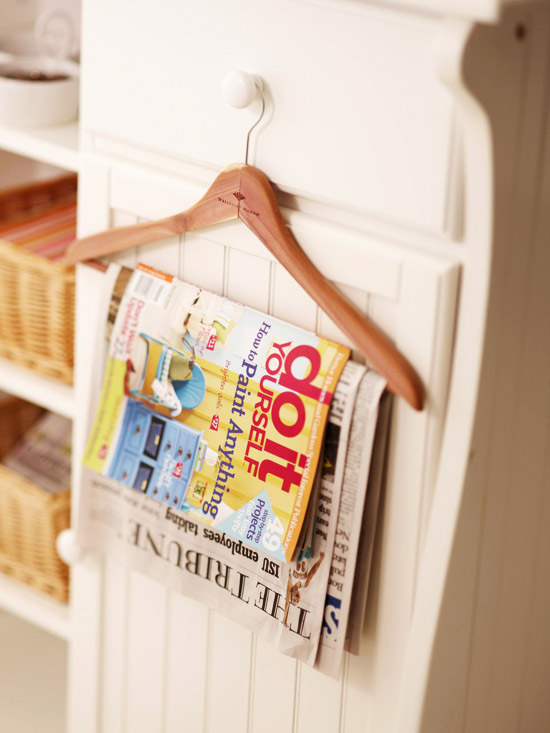
Hang on to your chosen reading material …

hangerholder

More where this came from? Click here!


Catch drill spills!

drill spill

Want more easy solutions to pesky problems? Click here!


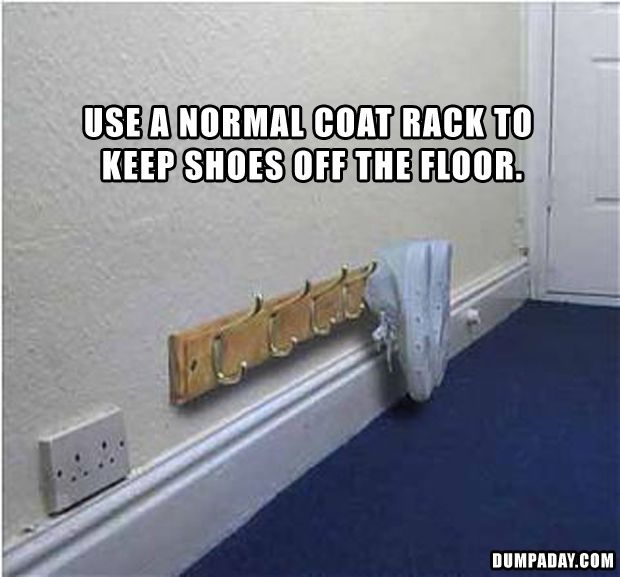
Give shoes a step up (and your floor a dirt-break)

shoes off

More fun solutions? Click here!

May your day be easy and your solutions multiply!

Outside The Box

“Color inside the lines.”

“Re-write these letters.”

“Sit on your circle.”

“This is not playtime.”

“Keep to the right.”

“Climb the ladder, not the slide.”

There is a good reason why we direct children. We want them to learn to follow rules and obey instructions. We want them to listen. We need them to pay heed. After all, laws and guidelines are part of an orderly society and are important for maturation, regulation, and delaying gratification. Rules help maintain safety. They help define the difference between free play and guided study, between teamwork and individual projects, between creative writing and a summary of a given book or essay.

Rules and guidelines are good. It is healthy for them to be challenged and okay to keep rules even if a child thinks they are stupid or unnecessary (as long as we truly know why). Boundaries clarify what is and isn’t acceptable, where and when and how. There’s nothing wrong with structure. Or with following directions. Or with consequences when one chooses to do otherwise.

Structure is a good thing. So is knowing what’s expected. At least as long as those do not become a means to an end. As long a they are not ways to exact conformity and control, paths to making our adult life easier, roadblocks to creative thought, plugs for personality.

When we extend guidelines into demanding unified and unjustified conformity, we risk snuffing out individuality. It is then that we may end up raising robots, not children. It is then that we gag magic and bind wonder, imagination, awe.

When we say things such as:

“Elephants aren’t purple, color it gray.”

“You can’t draw two suns in the sky. There is only one.”

“Stripes do not go with polka dots. You’ll look funny. Go change.”

“This doesn’t look like Mommy–she has long hair, not short.”

“Don’t mix the Lego with the blocks.”

“You can’t just make up rules–this game has an instruction sheet.”

“People don’t eat olives with cookies.”

“Stop making things up.”

There is nothing wrong with purple (or rainbow) elephants, with three suns, pattern mix-and-match, people who look like aliens and aliens who look like mice, Legos with blocks and carton boxes and a Barbi perched on for a knight, with new rules for old games, and with plenty of made-up imagining.

Order has a place, as does chaos and unpredictability. We ask our children to tolerate our rules and limitations … it is only reasonable that we train ourselves to tolerate (even encourage!) theirs, wild as they may seem to be.

Let your child out of the box. You’d be amazed what children can achieve. How much they can create, plan, build, conjure, put together. How far their brilliant, fresh thinking, free mind can go!

Think Outside the Box!

Think Outside the Box!

Write the breathing of your heart

writebreathe

People ask me how I find the time to write. Though I know they often come from a true query, it never fails to puzzle me … For I don’t see how I could not find the time, when to me writing is like breathing. Writing is my heartbeat.

“How do you find the time to breathe?” I want to ask them back. “How do you make time to see, or hear, or learn, or live, or laugh?”

My heart beats in words. It strings them into sentences and puts them forth into the keyboard or the page. There is magic in writing, certainly. It is not something to claim to own but to allow the flow of. It has in it old life and lives that never happened or might or have not yet been found. It embroiders the fine threads of reality and mystery, interwoven as they are through the uncountable miles of words already written by those who came before: their words that I’ve read, their books that scratched their essence into my soul and changed me, the writers who forged manuscripts out of molten core, the teachers who chiseled rawness into finery, the poets who strung words into daisy chains of soul.

It is a force of nature, writing is. A cumulative tide. A mirror of what is and what could be and what still is hoped for. It is a pool of stillness and a roiling sea.

Writing does gather light from the eyes that read it. Through them it reflects the recognition of what unites all spirits, amplifies the rhythm of all hearts, connects the pace of tides, anchors the pull of moons into the hopes and dreams and grime and steepest climbs. Reading eyes infuses writing with continued life. It strengthens words that last into tomorrow. It is as it should be. Writing is meant to be read.

In its nascent state; however, writing unfurls shoots of new breath into pages for the pure joy of its birthing. It evolves for the very marvel of the stem unbending and the leaves uncurling and the buds of something that could never be imagined until it came through, come true.

“Where do you find the time to write?” I’m asked. “I wish I had the time to write, as you do,” some say. “It must be wonderful to be able to make time for writing,” they comment.

And I don’t know the answer for the ‘where’ or ‘how’ or ‘when’ questions. Nor do I have the key for finding more time (though I wish I did, with writing a vast ocean and only splattered drops finding their way into the daily grind). I do not know where one finds more time for living, when life happens to move through already, interlocking stories as we go. The wonder of the writing I do get, however. The deep gratitude for being allowed the magic in the heartbeat, in life’s pace.

“Writing is like breathing,” I want to tell them. “I can no more cease to do it than I can hold my breath. Oh, for a moment, surely, but not much more. For the words fight back and breathe me and sneak out … as they should. They are my heartbeat. The pulse that crosses time and space to hold together human thought, invention, wonder; life.”

I write because I breathe.

Why do you write?

dandelion

Will she calm down when she grows up?

She always comes in style. 

Her own, that is: purple tutu over jeans and boots, flowered shirt under star-splattered sweater and deliberately mismatched socks, frilly short-sleeve shirts over chunky turtlenecks, her satiny pajamas with princesses on them, or a sheer dress under a sweatshirt along with leggings with holes in the knee.

Added to her ensembles are usually clues to the day she’d had: color splatter from finger painting at school, well placed smudges from lunch (shirts are so much more convenient than napkins!), crusted bits around her mouth that she refuses to wash off, unidentified grime, tears in filmy clothes that were not sewn with monkey-bars in mind.

It drives her mama nuts. Always impeccably put together herself, the mother is forever trying to wipe this or straighten that or offer alternate dressing solutions (that are summarily declined), and cannot contain her sighs and growing despair at her daughter’s flighty attitude toward cleanliness and matched-everything.

The girl? She could not care less. Or rather, she cares plenty, in her own way. Her language delay does not allow much expression of verbal subtlety (yet), but she certainly shows affinity to collating varied fabrics and textures and to weaving together combinations that feel artistically deliberate in an offhanded sort of way. She likes the way she looks. To me, this is more than good enough.

“Let her be,” I tell the mom one day when the little gal excuses herself to the bathroom and the mother follows her daughter’s mismatched wear with agonized eyes. I am admittedly somewhat amused at the perceived gulf between them, which in fact says a lot more about their similarities than differences. They are both acutely interested in how they look. It is just the “how” that may seem different … One immaculately coordinated harmoniously to appease the eye; the other explosively expressive in riotous combinations that cannot go unnoticed for their mishmash.

“It may not be how you’d choose to dress her,” I press, knowing that this little gal’s fashion-sense is pushing her mother well outside her comfort zone, “but there’s beauty in her freedom. She’s four, and she’s got a keen sense of her own being. I think it’s brilliant.”

The mother looks pained but nods in resignation. She understands, even if she does not quite love knowing it. After all, she does let her only daughter leave the house “all messy” and “in awful combinations,” and she generally suffers the seemingly incongruous pairing of the pretty clothes she buys for her not-so-cooperative princess. Ever hopeful, she fills the child’s closet with beautifully matching outfits that the girl turns into wild-combos in a blink of an eye: chunky socks with her patent leather or frilly tights under short jeans.

“I want her to be her own little person,” the mom whispers. “I just wish she was a bit less … how shall I say it … visible about it …”  She blushes then, fussing with the satin hem of her tailored dress with carefully manicured fingers. “Do you think she’ll calm down when she grows up?” she adds, hesitating, vulnerable.

I smile. “I don’t know,” I answer gently. “What would ‘calming down’ mean to you? Or for her? Who would she ‘calm down’ for?”

The water flushes in the bathroom and the little girl can be heard singing “fly me to the moon” at the top of her lungs as she washes her hands (splashing all around the sink, I am quite sure–she finds special pleasure in the way water droplets spatter and in how soap foam squirts between fingers). The mother looks up and we both grin. Such effervescent joy is contagious.

“She’s a free spirit,” she sighs. “I think I was a bit like her, at her age. Then I got too concerned with what others thought … and maybe lost the spark.”

As the little girl prances back to us, she swirls the edges of the tutu peeking under the shirttails of her button-down flannel over holey jeans. She has one brown sock, one purple with blue polka dots. Her tennis shoes have stickers and possibly some grape jelly on them. She’s radiating ease and unfettered delight.

“Maybe there’s nothing to calm down,” I offer. The girl’s a sight, for sure. A balm for sore eyes and achy hearts, too.

Mom takes a deep breath. Nods. She’s working on it. It is all one can truly ask …
beyou