Be You!

beyourself

“My life is over!” the child’s tone says it all. It has been an especially rough day. He failed a test he’d studied for, got passed over for the team he wanted to play in, and just found out he needed glasses. Oh, and that he’s allergic to dairy. The food he loves most in the world is pizza. Figures.

I could see something was wrong when he came up the stairs with shoulders slumped and legs dragging.  He’s usually content enough to come here, but today the last thing he wanted was to have to spend time after school doing ‘after-school’ learning. He likes me well enough, but in the competition between play-date, video game, movie, or seeing me, I don’t stand a chance. It’s as it should be. I get worried if children prefer coming to me to having spare time or play time or get-home-and-relax time. He’s unusually unhappy to come this time. Or rather, he’s unusually unhappy, and it shows. Make sense that it would. Am glad it can.

“And I’m never ever going to be like everyone else,” he adds, having listed the tally of difficulty, bummers and unfairness.

“Why is it good to be like everyone else?” I ask.

He returns the look I probably deserved–the one reserved for adults who ask stupid questions when they should know better and when the query is not even worthy of the effort of forming a reply.

“Okay, okay …” I chuckle, hands up in trounce. “I didn’t mean it that way. I do, however, truly think that everyone is different and that it fine and often even better that way.”

Eye roll. At least he regained enough energy for sarcasm. “Yeah, sure. But you get to be really different and you end up being weird.

Fair enough.

“And anyway,” he sighs. “I don’t have a choice. Everyone has to do the same stuff at school, and everyone is supposed to get good grades, and be popular and that kind of stuff.”

“Hmm …” (when I say less, the kids tend to say more … I wait).

“School is too hard and it is too boring. And my dad thinks I’m not trying but I am working hard. I’m not a genius or a nerd or something. I’m not good at reading and I suck at math. And science … I failed science … my dad is going to hate me when he finds out.”

I wish I could rush to reassure this boy–barely 11 and already so jaded–that he is not expected to be like everyone else, that he is not expected to excel in everything regardless of his relative strengths, that his perception of needing to be popular is not correct … or that his father would not have a reaction that would crush him. Oh, I know that the father would not hate him, but he can be critical, and he tends to view grades as the only reflection of effort. He would likely see a failed test as an immediate proof of his son not trying hard enough. Even if he does not ‘punish’ him by taking away computer time or confiscating his phone for a weekend, the disappointment alone will devastate this child.

“He doesn’t understand,” the boy adds. His voice catches and he looks away, old enough to have internalized the (mis)conception that tears are somehow yet a marker of weakness. He doesn’t want to show me how much this matters. “I studied really hard and I knew all the notes but then the teacher changed the questions. How was I supposed to know the answers to those?” the color rises in his cheeks, wetness in his eyes. He looks away again.

“I’m sorry,” I say. I mean it. “I know how hard you work and I can see how having different questions–even if it was about the same material–can make it much more difficult. It is hard to figure out what the teacher meant and what the questions are about.” He nods. This boy is not making excuses. He comes to see me because he has difficulty with retrieving information–the access to what he knows is hit-and-miss, his brain behaves more like one big dump of knowledge than a filing cabinet. Information comes in haphazardly and is later hard to recognize or organize. He is smart, and he understands the material. However, change it around and he gets lost.

The teachers only marginally understand it. His father thinks that there’s nothing wrong with his son that a bit more ‘motivation’ won’t fix. It is curious, you might think, that he is that harsh when he admitted to having had learning issues himself. Or maybe not curious at all: people can pass judgement like a hot potato–what they cannot stand to hold, they put onto another. It can be especially so between mother and daughter, between father and son. Mirrors are a painful thing for what one did not accept in oneself and sees reincarnated in their progeny.

“Would you like me to speak with your father?” I offer. I’ve done it before, and it helps some, if temporarily. The father is of the opinion that I am far too soft and that kids wrap me around their little finger and I think they can do no wrong. He is not all that far from the truth, actually. I do believe that softness and kindness get farther and build better than harsh critic and demand. To his credit, the father also respects my opinion, and he does–quite touchingly–love his son. He told me once, in a moment of vulnerability, “I don’t want him to go through what I did. I want him to fit in better. To be a better student than I was. To be like everyone else.” (Yes, the boy now worries about same. Children will take on our fears and worries–they are acutely tuned in to what we think, even if we do not say it. They will know, and take it on)

The boy nods. He looks up at me then, hopefully slightly relieved–if not with the possibility of his father’s understanding, than by being believed. “If it is so good to be different,” he challenges, “what am I good in?”

“What do you think?” (my standard answer-query. I figure, if a child is asking, they already have a hypothesis in mind)

Moment of thought, pursed lips, raised eyebrow. “I’m good at drawing,” he states.

I energetically agree. The cartoons this boy can doodle put my best attempts at stick figures to shame. He smiles. He knows–as I often emphasize to the kids–drawing is not one of my strengths (five-year-olds come to my aid on a regular basis. “Let me do it for you,” the munchkins offer, “you are not very good at that…”). He smiles.

“And at snowboarding,” he adds. I nod. He began snowboarding only the winter before last, and reportedly advanced super fast from level to level. He snowboards with children several years older now. “I want to be a professional snowboarder when I grow up,” he says, the spark back in his eyes, “and wouldn’t it be cool if I drew, like, cartoons of snowboarding stuff, you know, for newspapers and maybe comics and such? I bet I could do that. Would that be awesome stuff?!”

I smile. “That is pretty cool stuff! You have got to do school work because that’s just how it is, and you have to do your best with that. But I am thinking, there are a lot of kids who would love to know to draw as well as you do, and most can’t snowboard half as well as you can.”

He grins. Proud.

“So …,” I note gently, “maybe life is not quite over … and maybe it is not such a bad thing to have some stuff where you are not exactly like everyone.”
hopeis

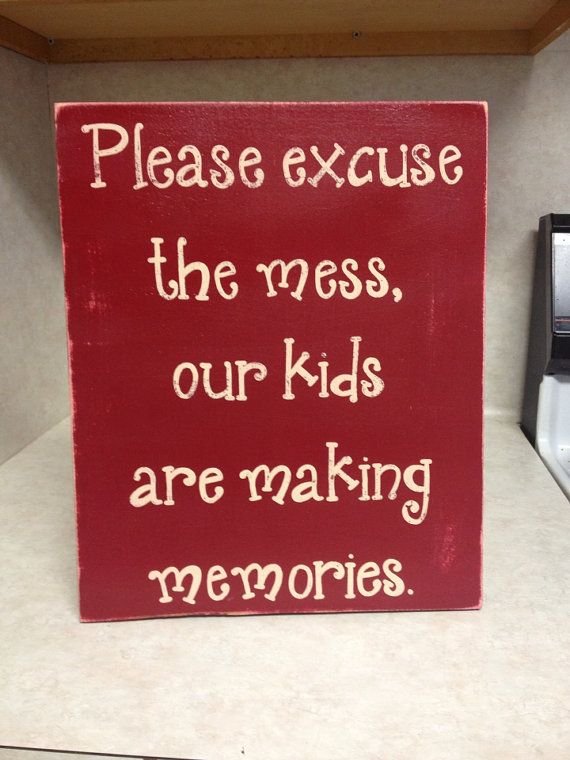
Make Memories Together

by etsy

by etsy

One of the best things you can do with children is … well … to DO with children. Children–like all of us–learn through experiencing. Even more than us adults, they are wonderfully open to new learning. Their brains are literally forming as they grow. They are shaped and influenced by what they see, do, hear, feel, perceive, experience, understand, sense, have opportunity for.

Doing with children is not measured by how many classes you sign them up for, how many play-dates you arrange, the kinds of electronic gadgets or software or toys you have, how many flashcards your child can recognize by age one or how early they can recognize letters or write their names. Academics are important (though maybe not as early as some seem to push for), but they should not come instead of making memories. Of taking time to do together.

It is not about school or homework, either. It is about playing with them, spending time with them, reading to them, acting out the stories, building with blocks or constructing castles from cardboard boxes together, making forts from couch cushions and blankets, being silly, going on backyard adventures, telling jokes.

Feeling too short on time? Incorporate doing into household chores. Yes, the children may slow you down, and there may be more messes to clean up or some doing over to complete after their eyes close at night. However, your children will learn, and they will learn from you, and with you: spending time doing things together can be some of the best memories you can give. Children of all ages can benefit from ‘coming along’ or ‘doing with’ (oh, sure, preteens may make a face, but secretly they crave more time with parents, especially if that time is not for formal instruction or ‘grilling’ about school … and you’d be surprised how many conversations happen when hands are busy with a task together).

Every task can be adapted to a child’s age and ability. Baking cookies or making dinner? Depending on your child’s level, you can measure ingredients (cup, ounce, pound, liter, gallon, teaspoon, pinch, dollop …), list items, sizes and order, read or write down a recipe, watch the clock together to learn time, plan a meal, research unusual cuisines. Going for a walk? Pick leaves of different colors, count cars of various colors of identify specific vehicles and the occupations they serve, stare at a pigeon pecking on the sidewalk and compare birds to bugs to mammals to reptiles, compare views and favorites, discuss endangered animals. Folding laundry together? Sort by color, size, material, season, types of fastener, talk of fashion and media, of fitting in and being fit. Empty the dishwasher (silverware, dishes, saucers, bowls, serving platters, large-medium-small, glass, plastic, ceramic, good china, the best meal and the worst experience, school lunch, social tensions in the cafeteria …). Grocery shopping? A bonanza of options: food groups, colors, shapes, containers, ingredients, numbers, top-middle-bottom, left-right shelves. Write down list, read it aloud, check off what you put in the cart, learn about coins’ value and paper money, budget, making choices, sticking to a plan.

Make memories. Your child may not remember how many flashcards you read to them or the name of all the tutors you got for them or even all the places that you took them to … but they may well remember the time you spent teaching them how to sew a button or built a tent in the living-room, helped them bake their first ‘from scratch cookies’ or let them make a mess in the kitchen while you listened to the conundrum they had about a friend and did not judge. Want to reinforce a memory? Take a photo, write a caption, make a book together: “Michel’s First Cookies”–document the process, print the photos, tape them onto paper, write the story of them underneath. Read and have the child ‘read’ it to someone else who was not there with you (grandparents make excellent captive audiences …). Enlist older kids to make photo books or edit images into a video together.

Find wonder in small things. See and seize opportunity. Snowing? Research the unique shapes of flakes, make cutouts, hang them from the ceiling for some ‘indoor snow’ (extra memories credit for glitter …). Raining? Re-create the water cycle, demonstrate gravity, check out about steam and condensation. Grow avocado plants, sprout potatoes (learn of more than one meaning for ‘eye’ and get curious about other multiple meaning words–spring, trunk, bark, nail, key, slip, pen …). Learn together. Try new things. Fail and err and laugh and try again.

Make time for making memories. It’s hard, I know, but find the time. You don’t have to take off from work or travel to a different country. You can pluck time from the tasks you are already doing and turn them into time spent in building your child’s connection with you. You’ll also enrich their brain, skills, confidence, know-how, and sense of worthiness.

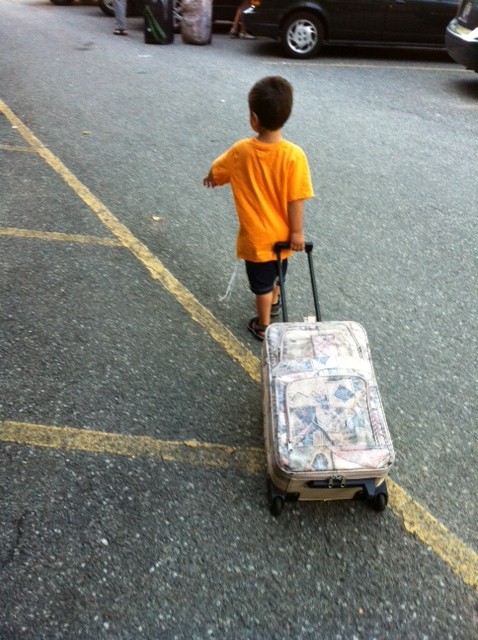
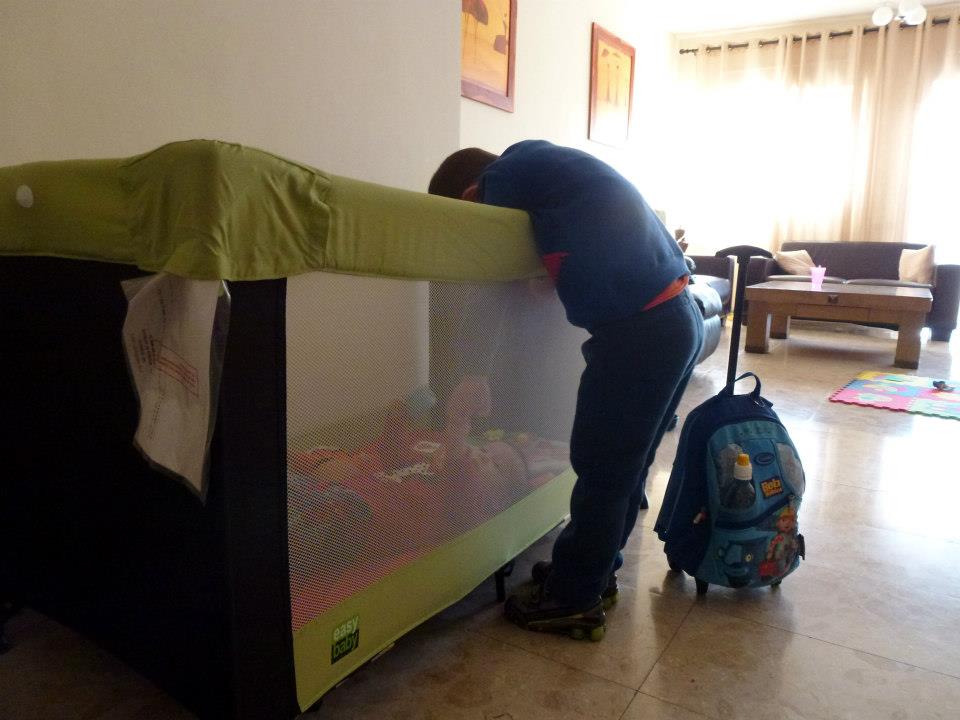
Time flies. Kids grow. Before you know the mess is gone and they are flying solo. Give the gift of sensitive, involved attention. These memories will be what they can pack along ‘to go’.

Photo Credit: S.L.

Photo Credit: S.L.

“I just let it go”–Bullying, undoing Taboo?

Photo Credit: A.M

I see children. As an integral part of what I do, I talk to them. They talk to me. We discuss stuff. Words, events, stories, happenings, expressions. Language, communication. School. Life.

Oftentimes it becomes an opportunity for all manner of learning. Sometimes I even teach them something (I think that more often than not, I am the one who learns more!)

A girl came in the other day, a preteen with all the loveliness, precocity, and gangly limbs that time of life implies, complete with early social angst over boys, hierarchies and wanting to fit in. She’s a precious girl. Relatively sheltered, only child and doted on. Popular, I know. Loved by teachers. Not the best learner, but she’s gracious about what others do better and tenacious about trying to improve her own results. She had made amazing leaps in the few months I’ve known her.

She has also opened up some more. About what is not often spoken of. The real problems of childhood that are frequently hidden under layers of “fine”, “okay”, and “nothing much.”

Yesterday, she spoke about something that is both a numbing non-stop conversation and taboo: Bullying.

Non-stop in the almost weekly pedagogic instruction for “awareness” and “Zero Tolerance,” the speakers that the school brought in to talk to the students about the wrongs of bullying, the memos to the parents, the signup sheets for pledges, and the warning for absolute intolerance of it in the school. Taboo because it still happens, mostly underground and sneakily, and because in some ways it’s become even harder to bring it up.

She is not the first one to tell me of that snailing-in of bully-tactics. I’ve been hearing it. A lot. The children tell it like it is.

“No one wants to be the kid who gets another kid suspended or worse, thrown out of school!” the children tell me. “What do I need someone’s parents calling mine to find out why I’m making trouble for their kid?” These are schools parents line up to get a child into, and pay plenty for tuition and name recognition. Nothing can be allowed to blot a child’s resume. If there’s a problem, it is best handled quietly. The children feel the pressure, too. They know.

“We’re supposed to take care of it on our own, anyway” they tell me. “The teachers are like: ‘you have got the skills, use them’ or ‘sign the pledge, don’t bully, don’t become a witness, step away.’ It’s words, not action. They don’t really want to get involved. Anyway, half the time you can’t even prove it is bullying, and then you’re like, the bully.”

The kids tell it like it is. It’s tough. It’s complicated. Still, talking helps. Many of them are sick of bullying and are indeed taking action–from within. Like the girl.

She’s not the one in the cross-hairs of verbal torment (bullying in her school is the subtly demolishing kind–no heads in the toilet or smashed glasses or bruises–but eroding stings and code words of soft spoken wounding. Lethal still. We know). It is another girl. Two, actually, and creatively isolated from each other by the bullying company so that they cannot seek counsel with each other. The bullies? Four girls. All popular, great students, teachers’ pets, parents on committees, philanthropy going back to bedrock.

“They don’t say anything really mean,” she tells me quietly, anguished, “kind of. But they still do. It is hard to explain.”

“You are explaining,” I encourage. “Sometimes it is in the how you say things that the intended meaning comes through.”

She nods. “They KNOW things,” she whispers. “Stuff that’s private, what they don’t want others to know, small things, embarrassing stuff … I don’t know how they even find out, but they do, and then they say it, kind of in a joke but I can see it is not funny. Some kids laugh because they want to be popular and some really don’t see that it meant to be sneaky. They’re not all mean girls, those who laugh … some of them are my friends and all, but they laugh, and it makes it worse.”

I nod. I understand.

“The girls being bullied,” she continues, “they’re not really my friends. Not because they are being bullied … I mean, they weren’t my friends before, either. I don’t know why. I don’t really like them much. Do you think that makes me bad?”

I smile. “The very fact that you are wondering about it, tells me that you are not bad. Let alone that I already know you to have a very caring heart.”

She looks at me searchingly, but she knows I mean what I say. “Okay,” she says. I’m glad she doesn’t blush.

“I was thinking about it, about what to do,” she starts.

“Tell me.”

“My other friend said that we could find out bad things about the mean girls and we can tell them that if they kept on being mean we’ll tell everyone … but,” she pauses, “that’ll kind’a make me be a bully, too. I don’t want to.”

I smile. She knows what my smile means–another proof that she is farthest from bad.

“… so I told my friend, that we’ll just hang out more with B and C and be their friends more. Invite them over. Sit with them at lunch kind of stuff. They are a little weird sometimes, though,” she sighs. “One of them kind of gets annoying, you know, grabs your stuff, holds on to you, sticky. You know?”

She pauses. Ponders.

“But maybe it’s because she’s kind’a lonely. Or maybe she’s lonely because she’s weird. I don’t know. I don’t want to be mad at her. I don’t want to be mad at the bully girls, either. They are kind of my friends, too, sometimes. It gets me feeling stuck.”

I nod. Sometimes there’s nothing I can say that the child is not already saying, nothing that I need to add. Just listen. I hear her. She wants to think it out.

“It’s a little better, though,” she brightens. “I think. Today, at lunch, the mean girls wanted to sit with us and I was sure it was because they wanted to be mean to B and C–they were sitting with my friend and me, you know, like I said–and I got all like, mad inside, but then I decided that I didn’t want to be mad in advance. So … I just let it go. And you know what? …”

“What?” (smile)

“They were not mean. They were alright.”

1398931_10201570268751331_1255509604_o

Photo Credit: A.M.

Write on!

Today we had: No more snow. No new ice. Partial blue skies. Nice weather bluff and freezing sun. New York City a la Alaska.

Like quite a few of my townspeople, I am learning to appreciate what true northerners deal with every winter, throughout winter, September to late March. They may be chuckling at our overreaction to minus twenty in the sun, but when the Arctic visits this part of my world I am all the more grateful for how most days in this latitude are usually more temperate ones … 

Still, its cold outside. Educational opportunities abound. A child came with a school assignment to write about the “Cold Snap.”

The writing product of the chewed-off-pencil munchkin so far: “It is a cold like snapping peas because when you walk outside the snow snaps and the air snaps at your face and your fingers feel like they are going to snap off.”

Pretty snap on, don’t you think? 😉

“Making my baby-sister smile!”

Photo Credit: S.E.

Photo Credit: S.E.

One of the children I work with recently became a big sister. A fortuitous event, for sure. A healthy baby, healthy mother, family growing as wished for and planned. At four-years-old, however, it is an adjustment for the girl who was everyone’s princess till this new arrival emerged to share the spotlight and potentially grab attention as “Most Doted On.”

My young client is a well-loved child. She has parents who are sensitive to the adjustment she is making, and though they may not always be perfect in their expectations, are nonetheless quite more than “Good Enough”–to loosely refer to the Winnicottian term. Her parents understand that their (still young) eldest’s reactions to the baby are complicated: adoration, annoyance, jealousy, wonder, confusion, irritation, worry, happiness, love, rage, loss, delight. They are trying to make her transition into Sister gentle, rewarding, and mild.

This does not mean that she is not also faced with adults (such as the older family member who brought her to sessions in the first few weeks after the birth), who insensitively may say things like: “So how is it to no longer be the little one in the family?” or “So are you going to give your baby sister all your toys?” or “Now that you are a big sister you can’t whine like a baby anymore” or “The baby needs your mommy more than you now, that’s why mommy stays home with the baby every day.” Such adults may be well meaning but clueless. Some I suspect are a bit less clueless and (sadly) possibly aiming to check the child’s reaction to their words. Wishing to assess by her recoil or wide-eyes or frowning whether she is “adjusting” or “reacting,” and to use the little girl’s responses as measure of their own assumptions to how she should feeling. A sort of “Yep, I saw that expression! I KNEW she was actually jealous of the baby!” or “Ah! She may say she’s happy now but wait until she realizes that she is never going to be the baby anymore!”

To them it is as if the child cannot be both happy and envious, loving and irritated, confused and understanding. As if there is not in all adjustments–through any growth and change in life–both loss of one thing and the acquiring of another. As if the presence of sorrow or jealousy invalidates the truth of joy or the honesty of empathetic care.

It makes me wonder, when I hear such sayings, what is being reawakened for these grownups when they see a toddler ‘dethroned’ from baby-status, and what perceptions they have accepted to be facts and so try to make into reality. Sure, siblings may experience many forms of competition and rivalry, but does that mean they have to be either at each other’s throats or ever loving? Does irritation make their care less genuine? Is a toddler’s query of “when is mama taking the baby back to the hospital?” confirmation that the child does not want the sibling, or an expression of momentary (and understandable) exasperation with the change that is difficult to let in fully without friction? Can’t it be both love and envy, both annoyance and deep care?

Thankfully, this little big-sister is proving bigger than the careless comments of some grownups. When I asked her–three months following the addition to her family–how things are at home, now that she is a big sister and all, the four-year-old narrated, tone a’somber: “My baby sister cries a lot and she gives me a headache …” (complete with hand to forehead gesture–this gal’s got some stage life coming up). “She makes a lot of poopy diapers. VERY yucky … and she making mommy tired all the time …” (pause, dramatic sigh …) “daddy reading to me but daddy skips pages!” (enter righteous indignation about here). Then she paused and beamed. “I love my baby sister,” she gushed, beaming at me, eyes all twinkling delight: “I am making her smile! Every time she seeing me she smiles! I am the bestest at it in my WHOLE family in how I make her smile!”

Yep, little one. Big-hearted, wide-souled big sister (and the many such big-brothers!) that you are, you sure know how to make a person smile!

Failing successfully!

Photo Credit: S.E.

Photo Credit: S.E.

I saw a family the other week, two boys stuffing bags in the trunk of a black car while the father–in suit, briefcase, two phones, and tie–bid them goodbye.

“Did you remember everything?” the mom called from the driver’s seat, “we can’t come back for it all the way from the rink.” The boys nodded in unison. “Then get in the car and let’s get moving,” the mother urged. “I don’t want to hit traffic!”

The dad patted the older boy on the shoulder and the fleece-hatted head of the younger one. “Remember boys …” he paused to look at his children–one about 12, the other a bit younger, maybe 10–“Don’t be failures!”

“We won’t dad!” the boys chanted back and clambered into the backseat.

It startled me, that last exchange. What kind of a thing to say is that? How can these kids be “Be Failures” anyway? Does having a bad practice, missing a puck, doing badly on a test, even being chosen last for a team–equate with being “A Thing That Fails?” How much failure does one have to accumulate to acquire the definition of “A Failure”? Can it even be attributed to a child, who is by definition still learning how to succeed and as part of that process, must sometimes–in fact, very often–fail? Do we not all of us fail, repeatedly, through life, as we try new things, reach too far too soon, make bad choices, fall into cracks in life’s pavement, trip over our own egos, forget to listen to our instincts, or even just need to hone a skill that’s rusty or nascent and needs more failure to become a Thing That Thrives?

That father seemed kind, even affectionate. I believe he meant to motivate his son. He was upbeat, casual, every-day’ish, and likely unaware that his choice of words made an event–the result of many factors where at least some may be outside of one’s control–into a definition of self-worth.

How can losing, even failing–become BEING the failure? Learning is impossible without experiencing failure. If we define failure as something that is an attribute of WHO we are, how can we expect to move ahead, to try again, to think anew, to hold a hope, to find a path, to dissect a result we did not wish for so we can find what we may do differently the second, third or hundredth’s time around?

Theodore Roosevelt said: ““It is hard to fail, but it is worse never to have tried to succeed.”

The operative word here, in my view, is “to have tried.” Success is not guaranteed. At least not what some may see as success, for is not small progress–a lesson learned, an understanding achieved–also success? Philosophy aside, while success may not be guaranteed, failure, of course is. We all fail. We have to. We don’t know what we don’t know. We are not good at what we did not practice yet. We cannot solve problems we have not found the cause or weak spot of. We cannot change course without an obstacle, a shift, a fault line, a blocked path. Experiencing failure is inevitable. It is a crucial part of growing up and it is an ongoing part of life throughout.

To “Be A Failure”, however,  is not inevitable. Not even with much failure. A Failure is something one is made to become. It is a belief, rather than a result. It is a cementing of a view of oneself as “The One Who Fails” and as such by definition not “The One Who Succeeds.”

That dad said: “Don’t be Failures.” Maybe he meant: “Win the game.” I would like to believe he meant: “Learn well. Practice hard. Be focused. Play well. Do your best, every time. Have fun.”

People fail. Often. Children fail. All the time. None of it makes them Failures. Words matter. Words have power. How we use them gives them power. Unlike success, which is ever possible, being a Failure is doomed to fail.

What defines success? A gold medal, surely. We all know that. But does a Silver count? Does it have to be the Olympics? What about coming in fifth after giving it your all or getting in last on a task you trained hard to even complete? How about finally learning to tie your shoelaces so they stay tied more times than not, or getting a 70 on a test in a subject where you previous only managed 62, or reading a book with less help or doing your homework with less mistakes or doing your homework, period, when it feels too hard?

Success does not mean being first, or strongest, richest, smartest, tallest, least-caught-in-bending-the-rules, or most-able-to-get-away-with-what-others-can’t. Success is every time we fail a little less. Every time we meet a challenge and hold determination that we can attempt it one more time and have it be different if only for the fact that it is the fiftieth attempt and not the forty-ninth and we’re still working at it. Success also means changing course, letting go, realizing that one’s passion may not be where one thought success was to be defined. Success means being honest about our abilities, being happy with others’ about theirs, enjoying or at least finding meaning in the process, managing our failures without guilt or shame. To succeed is to look at failure and learn from it. It is to try again, or differently, or figure out what and who we need to help us where we may require aid.

As Winston Churchill’s said: “Success is stumbling from failure to failure with no loss of enthusiasm.”

May there be–for you and for the children in your life, especially–no lack of enthusiasm as you stumble, joyfully, into cumulative success.

Your child hates books. Now what?

Photo Credit: S.L.

Photo Credit: S.L.

Many of the kids I see do not like reading. They find reading hard. They find it challenging. The words are too new or too many or too complicated. The letters transpose and the spelling’s tricky. They don’t like answering questions. Summaries give them stomach aches and rashes. They choose books not by topic but by least page number, thinnest spine, biggest font, and most page-gobbling illustrations. They become experts as word-counting and can pick the shortest paragraph in a glance. They often complain that they hate all books. That no genre speaks to them. For them, reading equals schoolwork, books are naught but tedious demand, and stories are equated with comprehension tests and loathsome reading responses.

Granted, the children who require Speech Therapy are often predisposed to some difficulty. They struggle with language/learning issues, they may have dyslexia, dysgraphia, learning disorders, language delay, word retrieval issues, auditory processing problems, hearing loss, attention deficit, difficulties with identifying, understanding and responding to social demands.

It would make sense that they would not like reading, concentrating as it often does all of those needed skills into a neatly typed package of condensed language. It would make sense that books would feel intimidating, crowded with small-font letters, complicated words and confusing expressions and metaphors.

All true. Yet truth remains that many children who are not language/learning disabled hate books. Maybe your child does, too. Maybe you have tried cajoling, bribing, promising, charting, stars, stickers, brownie points … and they still prefer cod liver oil to reading. Don’t despair–it does not have to be this way.

We can change that. You can change that. Here’s how:

All too often we confuse books and stories with reading. Teachers and parents clump together the child’s reading level with their interest level and language level, though those are not always compatible. Also, we stop reading TO the children and ask them to read aloud to us instead. It is good practice, we are told, we believe. It “counts” toward the 20-minutes-a-day requirement from school and catches two birds with one stone–story time and reading homework. Done. In addition, it makes us feel good to “keep tabs” on the child’s progress, and unwittingly, we make every page a test of skill, every story a piece of work. When the child resists, some parents are told to strike a compromise: “take turns reading,” they are told. It makes the book move faster, yes. It also pulls the child out of whatever listening and imagining the story they might otherwise manage, and thrusts them into the arduous task of deciphering and vocalizing. No wonder they become masters of paragraph word counting.

Children’s reading level may be far below that of the language they should and can enjoy listening to. This is true not only in First Grade, but through the elementary and middle school years. Focus on reading at the child’s reading level only, and the child is bored. Focus on reading age-appropriate books only, and the child is constantly failing to keep up as she struggles to decipher, loses track, loses interest, sees books as “too hard!”

Reading is a world onto itself. It is a skill, but also a place for wandering in a dream and conjuring up pictures from a story. It is where the association between book and pleasure can come in.

Have a child who is reading reluctant? First and foremost, divorce the reading task from the world of stories. Take upon yourself to read TO the child. Find a childhood book you loved or a story that is of interest for the child (and no, you don’t have to start with David Copperfield, the Iliad, or Huckleberry Finn…). Read it to them. This is for pleasure. Not for tallying pages for a log or counting down the minutes for homework. Not for testing, either. No demands from the child but to relax and listen. No turn taking. No asking questions to reassure yourself how much the child understood. No queries about vocabulary words you “think the child should know” unless the child stops you to ask. Let the child absorb whatever their heart lets in, even if they daydreamed half-way into the story–there is no test at the end of this one, no requirement to keep on track. You, too, relax into the book with them and read awhile. You are not wasting time but investing in the child’s internal imagery and listening. You are building book-love.

Stop before the child tires of listening. Even better, leave the reading at a cliff-hanger till the next evening. It works for TV episodes and a good mystery. It works for children, too. It gives a taste of ‘more’.

For the child’s own reading–offer books that are almost too easy but not quite. Don’t over-reach. Don’t urge them to “try something harder for a change”–one or two words that are difficult to read in every page are more than enough. Don’t push them to read “this book because I have read this and loved it when I was your age.” Don’t urge on them the book another child in class “already read a year ago.” Reading is not about just getting through the page. It is not about struggling so much to read each sentence that you must re-read it to know what it meant. Reading is about success and flow, words that string together into sentences with little effort and almost no breaks. More than the story itself, you want the child to have a sense of mastery over reading. A sense that they can read and are not exhausted by it. Make it fun. Be enthusiastic but not cloying (children have a super sensitive bull-detector for such stuff, as you know).

Keep at it. Especially keep at reading TO the child. Children who are read to through 8th Grade have bigger and more flexible vocabularies than children who are not being read to. Reading to children fosters richer imaginations and creativity. It helps with predicting and inferences, at understanding nuance, satire, metaphor, and humor. All that said–remember–the stories you read TO the child are not a platform for testing them for knowledge or comprehension. After all, when you pick up a bestseller or a favorite novel, you don’t have to write a narrative about it later … you are not made to answer formal questions about vocabulary, who did what to whom when why or where, or to find examples of simile and metaphor …

Keep at it. Soon enough you’d find yourself leaving the book (cliff hanger dangling) someplace within the child’s reach, and catch a little nose stuck in it when you aren’t looking. An insider’s hint: this works even better with a flashlight within reach and a off-handed story about how your aunt or uncle or second-cousin got into trouble reading under the covers after lights were officially to be out …

Have fun, and may the reading fairies smile.

Maybe Baby

A preschooler today, arriving with his mom. He already bargaining as they walk up the stairs:
“Mommy, can we have ice-cream after?”
“Maybe, Baby.”
“Mommy, can have a play date with Yanny?”
“Maybe, Baby.”
“Tomorrow?”
“Maybe, Baby.”
“Can I watch TV?”
“Maybe, Baby.”

The duo arrives, bags down, coats shed, sticky hands washed (there had to have been one ‘yes’ among the ‘maybe’s!).

The boy takes his seat. Eyes still on Mom.
“Can I have pizza for dinner?”
Mom, distracted with the phone, as she had to have been coming up the stairs–the tone remained unchanged:
“Maybe, Baby.”

The little man is miffed by then, but he’s a clever chap. He ponders, brightens, looks at me. I smile benignly back–I want to see what he’s got planned.
“Mommy, do you love Marie more than me?”
“Maybe, Baby.”
“MOMMY!!!!”

He got her. And I think he got the ice-cream and the play-date, too.

You said, what?!

You said, what?!

No way Mammal!

A girl, learning about Mongolia, coming across a fact about the “Horse People” drinking horse milk.
Girl: “No way! Horses don’t have milk!”
Me: “Actually, they do. They are mammals, and all mammals have milk for their young.”
Girl (eyeing me suspiciously): “Na-ah, only cows and goats have milk.”
Me: “The milk that we drink and use indeed comes from cows and goats and sheep, but all mammals have milk for their babies. Including horses.”
The girl, incredulous and rather alarmed. “No way! You are just saying this to trick me”
Me: “Nope. Not tricking you.”
Girl:”Yes you are, only cows have milk. And goats and stuff. Not horses. What are you going to say next, that zebras have milk, too?”
Me (smiling): “Yep, they do. And lions, and hippos, and giraffes, and mice…”
Girl (adamant): “Stop it! Mice are way to small to be mammals…”

And so it went. On whales, and elephants, bats and rabbits, gorillas and dogs (“No way!”)
She demanded an internet search to prove I was not pulling her leg but then refused to believe that, either.

We went back to animal groupings. Bird, Reptiles, Mammals…

After a while of this, glee rose in her eyes. She was sure she finally found the loophole to absolutely prove me wrong.
“So,” she said, victorious, “if you say that mammals have hair or fur and have teeth and have live babies and all that, then I KNOW you are wrong because then you’d have to tell me that we’re mammals, too!”

(imagination point for my reply and her resulting exclamation…)
🙂

Photo credit to I.A.

Photo credit to I.A.