Truth Be Told–From the Mouths of Babes

“What does it mean, to tell the truth?”

A child asked me that. As usual, they are my greatest teachers. “What do you think?” I returned the question, wondering at the child’s working hypothesis (and chickening out just a little bit–let the munchkin do the hard work …).

I got the look I deserved, and: “To not be a liar.”

“Hmm,” I non-committed. “What does it mean to lie?”

“To say you didn’t do it but you did?” he tried. “And to be mean.”

I raised an eyebrow. This kid was good at reading body language.

“Yeah, because someone else get in trouble.”

“Oh, I can see how that would not be very nice, to get someone else in trouble. Anything else lying means?”

A moment of scrunched forehead. “Is it still lying even if you pretend you didn’t do it but you don’t say?”

“What do you think?”

A sage nod. A sigh. “Yeah, it still mean. Someone still get in trouble, right? Because the teacher think its them.”

“So…” I prompted (he was doing so well on his own, I felt like my words would be interfering).

“So … telling the truth is being not mean?” he ventured. His little face was quite serious, thinking this through.

“Hmm.”

“But truth is hard,” he sighed, a six-year-old summing up centuries of philosophy. “It can get you in trouble. … you know, if you did bad things.”

He paused. “But … then you can say sorry, maybe. Maybe you won’t be in trouble. … if you’re lucky.”

“Yeah, being honest can help.”

Big brown eyes hung onto mine. “What do you think is worser, being mean or being in trouble?”

Tough one. I’m returning it to him. “What do you think?”

“Being mean.” He did not hesitate. “Being mean is worser.”

“How come?” I pushed. Curious. Enchanted by this child.

“Oh … because … being mean makes me more in trouble,” he stated. Pointed to his midriff. “With my heart.”

Old soul, big spirit, that.

gandhi

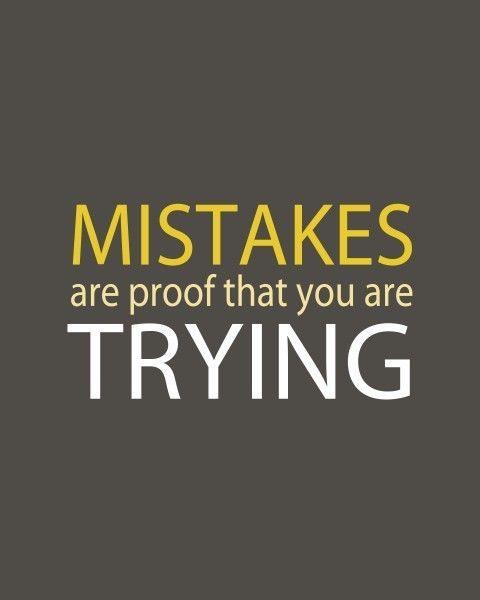
Proof of Trying

proof

She came to session in a huff.

“I am SO bad at history,” she stated bitterly. “I hate history.”

After letting in a bit of sympathy and a bit of gentle urging, she pulled out a stapled test striped broad with red–remarks, circled words and crossed out answers–the teacher’s mutilation. A large C dominated the top of the page. She threw the paper on the table, her face a salad of emotions: regret, embarrassment, disgust, disappointment, sadness, frustration, despair, shame.

“I’m not taking this home,” she said. “Can you keep it in my file here instead?”

“How about we look at the test together,” I offered, skirting the question.

She frowned (kids always pick on adult evasive maneuvers …) but nodded grudgingly. We went over the questions and her answers. She was actually almost correct on most, just not quite as the teacher wanted. The girl misinterpreted directions on a couple but wrote accurate facts; misplaced a number on a date; confused an ambiguous passive tense and so got the answer wrong (trick question, that one was); wrote the wrong sequence of correctly memorized events …

The teacher gave no quarter for mistakes of any kind, no leeway. The red marks slashed through the test in an assured hand of criticism. To add insult to injury, the bottom of the second page read “Try harder next time” … harshly assuming that the effort was what lacked, rather than skill or speed of processing.

In effect, the mistakes were very good proof of trying. They were signposts of the effort put in by a child who finds memorizing difficult and worked hard to understand the unfurling of what happened to whom where and when and why. She knew the material, even if the test plumbed all her weak spots and completely ignored the many things she studied.

Comforted some by the validation of her work, she calmed, vindicated that she wasn’t “bad at history” and bolstered by understanding that while the teacher had the right to take off points for errors, there were many places where knowledge came through, if imperfectly.

For the rest of the session we worked on attending to test questions: identifying exactly what was asked, highlighting important words in questions and directions, re-wording it if necessary, reading all the answers before settling on the best one, writing down key-words. Strategies for testing.

In the end she left with the offending graded test in her backpack, ready to take it home and armed with the understanding of what she did right, not only what came out wrong. Still disappointed, she was at least no longer ashamed.

“I think Ms. J sure does loves red,” she noted, a bit of snark in her voice but humor finally restored. “Maybe someone should get her a green marker …”

Rules? What Rules?

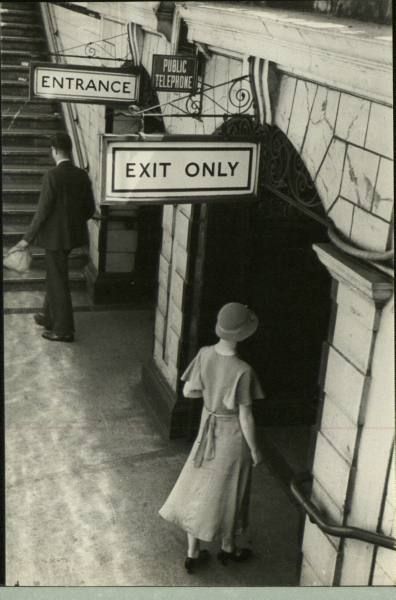
A friend sent me this photo, taken 1910 … and I thought, it was the best BEST example ever, of bending the rules … (or at least those rules that make no sense beyond to those who made them … )


livefree

I was reminded of it today, after speaking with a young boy who complained that he got into trouble–yet again–for breaking “another of the teacher’s stupid rules.”

The boy’s mother had her mouth already open to reprimand him for using a word one ‘should not say’ in the context of one’s educators … but I gave her one of my ‘please don’t’ looks … and she took a deep breath and nodded.

“What kind of rules?” I asked.

“Stupid ones,” he grumbled. Then seeing that I was actually waiting to hear an example, he sighed. “Like not being allowed to hold our pencils while we’re reading. She keeps taking points off when I break the rule.”

“Did she tell you why she doesn’t want you to do that?”

“I don’t know,” he shrugged, “because she said so?”

I chuckled. “Fair enough … sometimes grownups say that you should not do things just because they say so … but I was wondering if she ever actually told you why. Sounds to me she maybe has a reason–maybe kids play with their pencils? Drop them a lot and it is distracting? Doodle in the books?”

The boy peered at me with a look that let me know that I have just lost about 200 points of coolness in his view along with several dozen in the IQ department. “Sometimes we’re supposed to write in our books,” he stated, “… anyway, if she said it was for that it would make sense, sort of” he added. “I don’t drop mine. I just hold it. She doesn’t want us to hold the pencils just because.”

I raised an eyebrow. “Just because?”

“Yeah,” he stressed. “She said that we don’t need a pencil in our hands for our brain to read…” the boy pouted. “How does she know what my brain needs for reading? What if the pencil reminds my brain what the letters are?”

Point made.

I actually could see how it could do that.

I told the little guy that if it helps him to hold the pencil when he’s reading, to go ahead and do so.

He looked at me, suspicious. “It’ll get me in trouble.”

“Not if you tell her that I told you it’s okay for you to keep holding it if it helps your brain.” I smiled, more than a tad conspiring.

His eyes grew large, and the grin that followed had enough wattage to light up Manhattan’s night sky.


A Small Bewitching

She came up the stairs dragging a very sorry looking mop.

To my raised eyebrow, she smiled, “it’s a secret,” and said no more. She placed the mop in a corner (head double tied in a plastic bag per my insistence), and sat down to work. Once in a while she lifted her face to look at the mop’s handle with a little “I know something that you don’t but this is working really well so far” grin.

I was of course dying of curiosity but had to admire her resoluteness to not spill the beans. This was no easy feat for a girl who would usually share just about any tiny detail she could think of.

Not this time.

This cat, I could see, was not being let out of the bag. How apt, when we have been working on symbolic language, and how she adored the image of that specific idiom. Thought it was the funniest thing after being “all ears.”

When the mother came to pick her up at end of session, a storm paced near.

“What’s this?” The parent curled a lip.

“From outside,” the child replied regally and more than a little challenging.

The mother shook her head at the mop. (My thoughts exactly … from OUTSIDE? Who knew what peed on this, or worse, and why someone decided to toss out the scraggly mess! She brought this in here from OUTSIDE?!)

The child remain stoic. “I told you I’d figure it out,” she said cryptically.

“But …”

“And you said that if I found a way then I could AND that this can be a secret until Halloween! So you can’t say anything or you’ll tell!” the girl jumped in rapidly before the mother said something that would reveal what was to be kept hidden (and … I think, to prevent any conversation from putting her at a disadvantage …).

The mother looked at me helplessly but all that I could do was shrug slightly and observe. This was better than TV, definitely. I did not have a clue what was going on, but the child’s delight was fun to see. I did have to hand it to the gal: she clearly made a point and seemed to be driving it home (hopefully not literally … I could not see any cab driver happy to see this in the taxi … and was already thinking how there’d be some disinfecting on my end once this thing left my floor, plastic bag or not …).

A long moment ticked. Another.

“Okay!” the mother sighed. The girl’s grin was humongous.

“Okay?!” I could not help it. The girl picked this up from the garbage and it was okay?? This was not a woman who collected toss-out stuff from pavements, and I could not see her letting this into her house. I could barely believe I let it into mine …

“Oh, she means she’ll get me one!” the girl explained. Victorious. “She didn’t want to but I told her that I will find one myself … though,” she turned to her mother, all nectar and loving sweetness, “it WILL be so much nicer to have a new clean one to use …”

The girl grinned at my bewilderment and left hopping down the stairs. Her mother–I am not sure quite as relieved–carried the offensive mop between two careful fingers (“So it does not smear who knows on each of your steps,” the parent shuddered, keeping the bagged mop head well above the ground.)

Neither mother nor child offered explanation for the girl’s newly found interest in housekeeping. It remained a mystery to me.

Until today.

(Picture of an unrelated child in a similar costume …)

Little Witch via Karen Perry

The Shame Game

Last year, a preteen I worked with told me about a child in her class who began cutting herself. The classmate showed this child the  scars but swore her to secrecy.

We discussed the kinds of secrets that one should not keep (the ones that feel ‘too big’ to keep, or are about someone being hurt, or feel wrong to keep, or come from shame or guilt), who to tell (a parent, a teacher, a trusted adult, even the school nurse), and how. The girl was relieved to know that she did not have to keep this scary secret (“I get worried that maybe she’ll like, bleed to death or something and then she’ll die and it will be my fault for not telling anyone …”).

In our conversation, the reasons children self-harm also came up: to deal with difficult feelings, to express pain they don’t know how to verbalize, to feel alive, to feel numb, to ‘try and see how it feels’, to be noticed … And what to do if she ever felt the urge to hurt herself (thankfully, she said she never did feel that way, but it never hurts to give some options just in case …).

Relieved though this girl was to know she could share this secret with someone, the preteen was also worried that it will somehow become known to the other children and how it will make things worse. “Kids are already like, making fun of her for everything …” she fretted, “so, if they found out she’s like, cutting … they’d be all like, joking about it and texting and stuff ….”

Apparently the self-harming classmate–not the most attractive by other students’ standards (directly derived from society’s harsh shaming of anyone who does not adhere to a very narrow range of ‘acceptable’) was found to have confessed a crush on a boy in a higher grade … Someone found the note where it had fallen from the girl’s pocket, ‘kindly’ photographed it, and circulated it in among the students, along with some choice words about the girl’s morality (you can insert your own words here, copied from the shaming terminology of grownups toward women and girls: ugly hurtful words that are meant to cut to the core). A cascade of comments and ugliness ensued, along with catcalls, leering, and whispered words.

“Some kids even say that she’s like, you know … the ‘c’ word …”, the girl blushed in embarrassment and indignation. “She didn’t even kiss him or anything …” she said, then added urgently, “not that it would even be okay if she did let him kiss her … or, you know, stuff …”

The “if she did let him” did not escape me … nor did the outright meanness of exposing vulnerability and turning it onto some way to cause harm. The backbone of bullying.

Bullying is a very real issue, and not only in children and teens. The culture of putting down others for real or perceived differences and flaws is disturbing, and for those caught in it, it is often shattering. Bullying thrives on shaming, and shaming reflects a void of compassion and empathy. It is especially apparent on websites, news media, twitter, Facebook, and many online blogs: people behaves in ways that are purposely hurtful, narrow minded, and outright cruel; and it is somehow seen as witty and cool.

It is not cool.

It is not witty.

It is cowardly and it is heartless.

It is, really, a form of terror. Insidious and sneaky, but no less meant to cause helplessness and pain.

The truth is that bullying is not ‘fun’ or ‘funny.’ Cruelty of words is especially cowardly, and cyber-bullying is uniquely hurtful in that it can easily seem like the whole world is (and indeed can be) laughing at one’s misery. Many would cringe at the sight of someone literally cutting another person or kicking them in the groin, yet somehow cyber-bullying has become a culturally accepted means of expressing disdain and showcasing ignorance. Meanness is not frowned upon, but adopted and propagated. It should not be so. It can and must be stopped.

Some of the things people (children, but not only children) write:

“Why don’t you just kill yourself so we can be rid of you?”

“You are so ugly that you shouldn’t have been born.”

“Everyone hates you. Just go jump from a bridge or something.”

How have we let it come to that?

The conversation I had with the preteen was not unique–bullying often occupies children’s conversations. However, I was reminded of the one I had with this particular preteen as I watched Monica Lewinsky break her silence and deliver an outstandingly candid and important speech–her first public talk in 16 years. Lewinsky calls out the shame culture that allowed (and cultivated) the ugliness toward her in the late 90s, and which is all too alive and well today and still takes lives–figuratively or literally.

Monica Lewinsky survived it, but not without immense cost, and she would not have survived it had it not been for the compassion and empathy of family and friends who held her close through the awfulness.

Not everyone has people to hold them through bullying, and not everyone survives it. Even in those who do, the price is often very high.

Watch this video, and pass it along. It is important. It is worth the time.

Because the Shame Game can only be played if we perpetuate and feed it, and it will cease if enough of us practice compassion and empathy. Like the preteen who turned to me, and would not be a silent witness to pain or bullying, let us all become ambassadors for compassion and ending shaming.

Let there be no more casualties of shame, no more shattering of souls. Let us not be instruments of despair–directly or by our silence.

Making Friends

schoolmates

“I have a best friend!” he announced.

The little boy was a tad breathless from climbing up the stairs, but also from the excitement of the news he had to share and what it meant to him.

“You do!” I grinned. This was the first time I saw him since the summer break, and evidently this was the highlight of the boy’s current experience.

“Yes! His name is Andy and he is in my class and he has a sister and he is my best friend … my BEST-friend!” Breath, breath, grin, “we’re even the same tallness!” (delighted sigh)

“You are best friends and you are the same height?” I smiled. His joy was absolutely infectious. “This is super cool!”

I am yet to meet a child who is not delighted in friendship though it is harder to come by for some than for others. This little one had it the more challenging way. Always the smallest in his class in stature, always a tad behind in understanding, two seconds slower to get to an answer, a bit clumsy, a little late to catch a joke or ball … Remnants of the difficult beginning of his life and the deprivation that his brain endured to oxygen and possibly nutrition even before he was born; remainders of the excess of chemicals that no developing neurology should have to be exposed to. Alcohol. Narcotics. Who knows what more.

A heart the size of the Pacific, and a soul to light the universe and yet … friends did not come easy to this boy. Somehow groups formed to his exclusion. Somehow best-friends paired up without him. Most children were not unkind, just egocentric, and he was just odd enough, slow enough, different enough, to fail first-choice.

“Andy’s a total doll,” the boy’s adoptive mother confirmed. “They have been inseparable all summer. They are exactly the same height, by the way … They met at summer camp,” she paused, letting me understand. The summer day camp my little client went to was geared especially to include those who had some challenges: children whose difficulties may be invisible to most and yet no less compelling; children with sensory integration issues, with language and attention and learning and a-little-slower-on-the-uptake issues; children who often found it a little harder to keep up … or to make and keep friends.

“Yea!” the little boy jumped in, “and then he came to my class and he was new but I already know him so we are each other best-friends!”

How perfect. For once this boy–so often the follower and tag-along–was let to lead … even if he was to be a shepherd for one (for now …). For once he knew more about something or someone than others or was at the very least aware enough of it. For once he did not have to compete because the connection was already made during the summer and seamlessly continued from day-campers to schoolmates.

“Other kids can be his friends,” he noted sagely, “I have other friends, too, and some of them want to be his friends also. That’s okay. But Andy and me … we are best-friends anyway.”

Heart the size of the Pacific. Soul that lights the Universe. Eyes that twinkle to the Gods.

This little Andy, he got lucky. He got himself the best best-friend there was.

Small Angels

beach

I was on the beach the other day, breathing in the surf and listening to the chortling of playing children, the call of gulls, the whistle of the lifeguard at too-deep-straying-swimmers, the sound of air flapping through flags and sun-umbrellas. All was calm. The late afternoon sun played hide-and-seek behind the clouds, the light strung rhythms with the shadows and made the water dance.

A woman sat nearby me. I saw her when I arrived. There was a halo of space around her, a sort of boundary that others somehow did not cross even on a fairly populated stretch of sand. She had her beach gear all in line: the chair, the sun-umbrella, the cover-up, the towel, the hat, the shades, the bottle of water in its designated armrest hollow, the requisite paperback. There should have been nothing about her to stand out from the many others on the beach, and yet there was that halo … and something amiss about it. A gloom of sort, a yearning, even. A separation that hung above her, overshadowing the light and sun. The energy of it drew my eyes to her, and I felt pulled in by her need yet uncertain how to assuage it when her posture and avoiding of eye-contact also said “leave me alone” and “don’t ask me anything.”

How does one offer support to another about whom one knows nothing and yet perceives wishes no intrusion? I’m a talkative one, and usually make easy conversation with people around me (family teens have repeatedly rolled their eyes at me for that, asking “do you have to talk to everyone …?”), but sometimes chatting feels like an intrusion and the wrong connection. So I fell back on the good thoughts alternative, sending wishes for ease. In Therapeutic Touch this is a way of using intentional compassion to gently direct some of the universal flow of life and kindness to another, with the intent of healing and restoring equilibrium in whatever way that person needs and can do at the time. It is an offering of compassion for the sake of offering it, without intrusion or attachment to the outcome of how or if it would be used.

Regardless of healing intentions and their acceptance, I hoped that whatever her heartache or process or sorrow,  that she be provided with whatever she needs for relief. If anything I offered did help, it would not be anything I was doing, anyway. Healing never is done onto another. All healing, by its very definition, is an act of making whole, of self-repair.

The surf flowed. Waves licked the sand, retreated, returned. The shadows elongated, lingered. An hour passed, dusk was arriving, some families were readying to leave, others–mostly with small ones that need to keep out of direct sun–were just arriving.

A movement caught my eye. A little guy in swim trunks to his ankles and a full head of (literally) sandy curls was traipsing purposefully on the sand. I looked up, automatically scanning for the caregiver. Protectiveness toward children is hard-wired in me and I have returned my share of wandering tykes to their minders over time. It is rarely a critic of care, really. It is not difficult to lose sight of a small person in the thick of people. Short of leashing the small ones to one’s wrist for safekeeping, all it takes is one second of head turned to tend to another child, to have a little one slip by.

No worries. This one had a watchful mama five steps behind.

I caught her eye, and we smiled at each other, connected over the shared attention to this determined little one, who not once turned to look behind him. He might have been oblivious to being followed or knew with total clarity that there were those who had his back … Maybe both. Sandy-Curls trudged on, little feet sinking in the sand with every sturdy step. He glimpsed at me as he got closer, but his eyes roamed away–I was not his source of interest, just a section of the scenery. His concentration made me smile.

It was the woman, I suddenly realized. He walked right into her ‘halo’, the several feet of space around her chair where no one–no child or adult or stray ball or gull–had yet trespassed. She looked up, surprised and not smiling but maybe curious or wondering whether he was lost, somehow, to come her way.

Oh, but he was not.

The little guy walked right up to her chair, lifted a dimpled arm, and unfurled a sandy fist. There was a shell in it. He moved his palm toward her, offering. A gift. She took it, too startled to smile. Sandy Curls nodded solemnly, then turned and walked away, toward the water and his mom. The mother and I exchanged looks, her eyebrow lifted in amusement. “He does that all the time,” she said. “Finds a shell and designates it for someone …”

He reached her and hugged her thigh and she patted his head lovingly. He looked at me then and I smiled and he grinned back, sunshine dancing in his honey-colored eyes. One hand he gave to his mother, the other he waved “Bye” at me, then turned and waved “Bye” at the woman, who still stunned waved back, now smiling–at him, at me, and his mother. Her ‘halo’ gone.

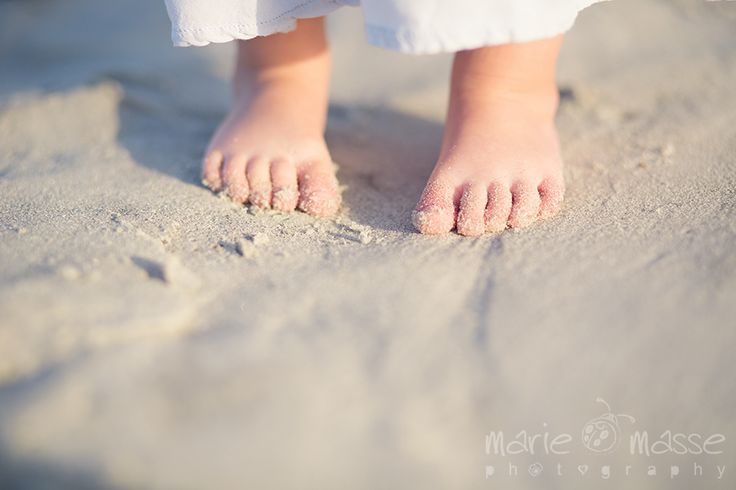
A little angel in the sand.


beach toes

Mean Math …


math

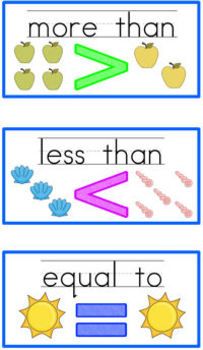
“If I have four and you give me more than I have more.”

This axiomatic truth came from the mouth of a bright preschooler. His speech is difficult to understand, but his ideas are crystal.

He asked me, the other day, about math. More like, told me. Checked to see I understand …

Math, but also some other things.

“If I get angry and then my mommy gets angry than we have a lot more angry.”

Yes. That’s true.

“I don’t like it when we have more angry.”

I totally understood that, and told him that I didn’t like ‘having more angry’ either.

“It is lots more better when we have giggles. I love giggles.”

So do I.

He was quiet a moment, then asked me about the news he’d heard. Children often pick up more than you give them credit for, and understand more than you would like to think they have internalized.

“A lot of people are angry and crying on TV,” he said. He was referring to the news of three teens who were kidnapped and murdered by Hamas terrorists in Israel. The teenagers’ bodies were found that day, and his parents were aghast and upset with the realities in the Palestinian territories, terror, hate, and rage. They discussed the news among themselves, along with their reactions and thoughts. He saw and heard reactions of others, perceived the agony of desperate angst, the fumes of hate. I’ve seen it, too. It is difficult, difficult stuff.

“Yes,” I responded. “They are.”

“Are more people going to be mean?” he worried. “I don’t like it when more people want to be mean.”

Oh, how I agree, dear boy, neither do I.

He wasn’t quite done. How could he be? These are big issues, even for grownups, let alone little ones. He pressed on: “If more people are going to be mean then it is going to be even more mean and more mean.”

“I understand.”

I think I sighed. He looked at me a bit quizzically, adorable in his earnestness. I smiled at him and asked, “do you have suggestions about what people can do?”

“I don’t know,” he said after a thought. “Maybe a ‘safe tantrum’?” (in his house, this is the term used for when someone–usually him…–gets very angry. They can’t hurt themselves o others but they can punch a boxing bag and shout a little and jump and jump …).

I nodded. Safe tantrums would be a good, in fact a very good alternative.

“But,” he interjected, “even if they still feel mean I think maybe they need to learn to use their words.”


From the mouth of babes, Little Teacher. Simplified reality yet no less wise. In all war, terror, conflict, violence–may all find room for less hatred, more reason, some space, more safety, less meanness … more peace … in their hearts.


the problem with hate


What Would You Do If …? Children’s Safety Plans.

safety

The mother of one of the children I work with called to let me know they’d would have to cancel their session for the week. There were some unexpected problems and she had no arrangement for the older child. Her youngest, whom I see in Speech Therapy, has several developmental issues, and the mother–a single parent–shuttles him for several remedial therapies every week. She sounded anxious and wrung out, so I asked her if she wanted to tell me more about what was going on.

“My older son had a bad experience with someone,” she sighed.

“What kind?”

“He usually stays with my mom when I take Mick* to therapies, but my mom’s away for a couple of months to take care of her sister who is having heart surgery. I found a sitter for him, but the sitter can’t come to my house, so I take him there and pick him up on the way home. Everything has been fine the first two weeks and Dan loved going …”

“But?”

“He was really upset when I picked him up yesterday. Said he never wanted to go back …” The mom sounded quite upset herself.

“Did he tell you why?”

“He said he didn’t like being there anymore. You know where my mind went … I was thinking the worst … but I didn’t want to put words in his mouth, so I tried to breathe and told him I respected his feelings and that we’ll figure out what to do, but it would help me to know what about being there he didn’t like … At first he just shrugged and looked down and such. Then he told me someone had come to visit the babysitter and brought a ‘really big scary dog who jumped.’ He got scared but the babysitter laughed it off and called him a baby and kept egging him on to pet the dog, ‘not be so yellow’ and not ’embarrass himself’ … and kept sending the dog toward him. Dan wanted to go home but he ‘knew I wasn’t there’ because I was in PT with Mick and he didn’t know what to do … I’m relieved nothing worse happened … but I feel awful he was scared and I wasn’t there. When I called the sitter, he was dismissive and said ‘it was just a dog and it wouldn’t hurt for the dude to toughen up some’. I won’t send him there again!”

We rescheduled for when she could bring both children, at least until she found another option.

“It was good you listened and took him seriously,” I tried to reassure her. “You can’t always protect kids from having an uncomfortable experience, but you can give them the power to reach out and have you help make sure it doesn’t go on. He told you something changed, and you’re taking steps to keep him safe. He did well for telling you, and you did well by not pooh-poohing his worries. In fact,” I added, “this is probably a good opportunity to speak with both kids about things they CAN do if they ever feel uncomfortable or need help. Just like adults, kids feel more secure if they know there’s a plan.”

red phone

Many adults have some form of emergency plan. We know what we’ll do if there’s a fire. We know what to do if someone ails. We have an idea of who can help if we’re feeling scared or intruded upon. We have phones and know how to use them. We have friends and family we can call on, we understand ‘gut-feelings’ and know that danger requires a response.

While children don’t need to figure out their own safety plans, it can be very helpful for them to have some tools and to have rehearsed certain scenarios during times of calm.

It is why schools have fire drills. It is why you should have one in your house–in day time as well as during dark. Make it fun, but keep it serious: it can save lives to know what way one is expected to go, what the alarms sound like, who to look for, where to convene, what exit to use, how to make it to the door with your eyes closed (think: dark and smoke and a blaring alarm …).

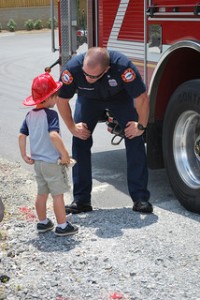
It is why children need to know to call 911 (and that it’s not a toy or something to ‘experiment on’). Why it helps to teach children to ask for help from people in uniform and/or from mothers with children (while most strangers are probably safe, uniformed people are often ‘in official capacity to help’ and mothers with children can often feel less intimidating and know how to respond age-appropriately to a child in distress).

Children as young as three can memorize their first and last name, as well as their parents’ names, what they do, and where they work. They can memorize their address (make it into a song …). Four-year-old can memorize a phone number. At five they can practice writing it from memory.

In addition to immediate safety, children should also be taught what to do ‘in case’: what if they find themselves separated from you in a mall or public gathering? What if they’re someplace else (with a baby-sitter, school, a birthday party or sleepover) and feel something is wrong? What can they do if they don’t feel safe?

Children should know they can always reach out to you, and need not worry about hurting the feelings of the adult they are with (you’d be surprised how often children don’t call a parent because they worry they might upset the adult they’re with). They need to know you will not be angry with them if they tell you they’re uncomfortable or scared. They need to know you’ll find a way to make it better–it may not be possible for you to fly in from another State in the middle of the night, but you might be able to speak with someone where the child is, or to otherwise assess whether more extreme measures are required–children shouldn’t feel they have to figure it out on their own if things feel too much to manage.

Teach children what to do if they need help and cannot reach you. Who else can they call? A good friend of the family? Another family member? A classmate’s parent?

Teach them when it is a good idea to call 911: If there’s a fire (even if they’d caused it), if they think something really bad is happening; if they or someone else is being hurt or might get hurt real soon if someone doesn’t come to help; if someone (especially an adult, but also if the adult in charge seems unable to manage the situation) is out of control or inappropriate; if the person in charge ‘acts weird or scary’ (children may not know to identify drunk or drugged, but often do pick up on something that’s not as it should be).
fireman with boy

Reassure children they shouldn’t get in the car with anyone they don’t feel safe riding with, who breaks the rules or is being tricky or secretive. It doesn’t have to be a stranger. You don’t have to explain drunk or drugged to very young children (though it might not be a bad idea to bring up the issue with older elementary school children), but you can give the child a sense of control for when they feel unsafe and ill at ease. I know a child (age 9) who refused to get in the carpool because the adult had texted while driving and had her eyes off the road for what felt like very long. That child’s mother had discussed safety with her, so she was able to say to the driver: “My mom doesn’t let me ride in cars where someone is texting. Please put the phone away until we get there.” When the driver refused, the child asked to call her mom.

Many parents are afraid to discuss problematic situations with their children. They think about sexual offenders, they worry about making their child feel unsafe in the world.

In reality, discussing safety skills is just as important as teaching children how to cross the street, how to wait for the light to change, how to use (and not use) tools and sharp objects, what to touch (and not). Preparing your children to manage unexpected situations is just as important. It gives them skills to be less helpless. Role play and practice these at home. Let them know it is okay to reach out and that you’ll figure out how to help … Reassure them they should tell you if they think they’d done something wrong … even if they worry you’d be mad: That you’d like to know and would help and love them anyhow.

As for the little boy: his mother had a good discussion with him (and his younger brother), and together they’d made some plans.

They talked about ‘listening to tummy messages’ (intuition) which let them know something was not okay. They talked about things they could do: Call mommy or grandma, call Auntie Nell (who lived nearby and was willing to be standby help), call 911 if they were really afraid or needed someone to come right away.  They talked about how it was okay to tell about things that didn’t feel right, and that they didn’t need to keep secrets they didn’t want to keep. That their bodies were theirs, and so were their feelings. That being scared is not bring a crybaby and they didn’t need to touch, go, see, try, say things they felt weren’t okay, went against the rules in their house, or felt ‘not right.’

And the little guy?

He learned his mother was there for him. That it was okay to let her know how he felt and he didn’t have to protect her or worry or figure out things on his own. That he was just as important to take care of as his younger brother. That he could listen to his gut. That it wasn’t okay for anyone to put him down or make him feel ashamed to tell. And … that the world can at times be uncomfortable but he did not have to manage it alone and knew what to do if he felt he needed help.

Do your children know what to do if something happens? If a caregiver doesn’t show up to pick them up? If they find themselves alone someplace? If they feel intruded upon? If they are told confusing things? If they are asked to break rules they don’t think should be broken? Do they know who they can call on if you’re not around?

Make a plan. Today is a good time!

action plan

*names changed to protect confidentiality

“It’s not a gift, it’s a mirror!”

Sharing this You Tube video for cuteness sake … and for the amazing little people kids are, and their language abilities, intonation, explanation, and social skills, even at that age.

She has it all figured out (though I do wonder if that mirror really did change hands come Mother’s Day …).

As for the title of the video–I disagree. I think you CAN very much trust a two-year-old! You can trust them to tell it like it is! Enjoy!