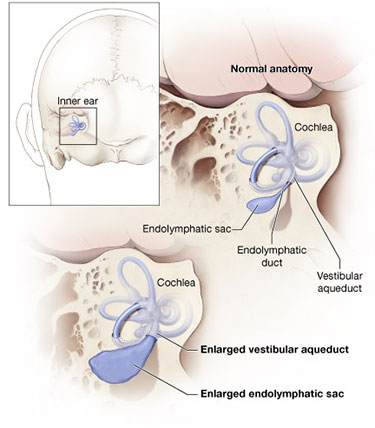
Name Protection, Preschool Style

“My mommy said not to write my name.”

“She did?”

I am easy pickings for leg pulling and the kids know it, but somehow this little tyke looks dead serious. None of the tell-tell signs of lip corners dying to lift in merriment. None of the twinkly eyes that let me know I have been had. Again.

I’ve been through all manner of stories that led to hilarity-about-my-gullibility: Believing that a child had gone to the circus instead of school, or that their grandma allowed ice-cream for dinner, that they went to the zoo on a rainy day and everyone got wet (in actuality, this one was wishful thinking, as the trip got cancelled…), or that their dad said they would get another iPad all their own (scratch that, this one ended up being true … the earlier version having lost its sheen, in the eyes of the child or father, I’m not sure …).

This no-writing-name business; however, that was new. No hidden grins, either.

“Your mommy said not to write your name?” Maybe I misheard. Happens.

Little-Tyke nods serenely.

“How come?”

“Because.”

Fair enough. We grownups should get a taste of our own medicine at times. Not that I do a lot of the “because” why-chain-question-closer, but I probably have said it once in a while when it became too clear that questions served to avoid work, and not for real curiosity or learning.

“Hmm. I’m curious, though …”

Little-Tyke gazes at me.

“Is it you who should not write your name, or is everyone not allowed?”

Frown. Tiny creases appear in the five-year-old’s forehead. Cute as a button, this one. Even perplexed. Maybe especially when perplexed.

“I think only me. Me not write it. You can because it is your job already.”

“Ah, okay. That’s good to know.”

Sage nod.

“Why do you think you can’t write your name?” I really want to know. This rings  of misunderstanding of adult-talk.

Throughout this all the nanny, her head buried in her cell phone, ear-buds plugged in, sits motionless by the far table she often chooses to wait by, rather than on the couch near us, where most caregivers sit. I have come to believe that the sessions are a time of rest for her, a calm refuge from having to constantly watch an active munchkin, and I know she has very long days.

“Because you’re not suppose to,” the kid brings me back to the topic. “You not suppose to write your name.”

Now I’m not supposed to, either? Is this a repeat of something he heard said, a glimpse into the bigger context of this misunderstanding?

“Why, though.”

“The bad people will steal it.” The boy’s expression is certainty reincarnate.

“Oh?”

“Yeah, if you write your name then the bad people take it and steal it and take all your numbers and even all your money and then you don’t have a name anymore.”

Identity theft. Preschool style.

A few moments of discussion of private information and how one can still have a name even if they write it … and Little-Tyke is reassured that he ‘probably’ could add his name on the drawing he had made to take home. I leave it as an open option. No pressure … For extra measure of reassurance–and because I don’t want to put him in a bind of doing something I say is okay but that be believes his mom said was not–I send a text to his mom in his presence and following his approval of the query wording: “can LT write his name on the work he does here?”

The mom’s response is “??? of course he can! Is everything okay?”

“All fine.” I respond. “I’ll explain on phone. TTYL,”

The little boy’s eyes have been glued to the phone’s little screen. He sits up suddenly, part-admonishing, part-suspicious, part-gratified. “Aha! You see? You didn’t write your name, either!”


info use

Mamma’s mistake

bubble happy

A six-year-old adopted child:

“My first Mamma said I was a mistake, but you see, she made a mistake. I’m not a mistake. Her mistake was that she didn’t know how to love me. I feel sad that she wasn’t very good with love.”


I am humbled.

be kind to unkind people


“A” is for Average?

tired child

The woman on my answering machine sounded anxious: “I got your name from a friend of mine. You come highly recommended and you really helped her kids. I know you are really busy but can you please call me back about my child? I have a 5th grader who really needs your help.”

I called her back. Based on her wording–and her urgency–I fully expected to hear details about a child who is falling behind academically. A child with teachers worrying about difficulty with vocabulary, comprehension, attention, expressive writing, memory, fluency, or a combination. Possibly a referral from an orthodontist about tongue thrust issues, or about stuttering. Or hearing remediation.

The mother’s pleading was real enough, but the cause for it surprised me (though it ought not to–this is not the first time!): Her son, entering 6th grade in the fall, was receiving “only B+ and A-” on his reports and tests. She wanted “to give him some extra help so he can do better at school.”

Being a clinician, I don’t see children unless there is cause to see them. Normally developing children don’t usually need speech-language-therapy. Still, sometimes parents don’t know how to exactly explain the difficulties their children are experiencing, so to be sure there is no issue needing remediation, I probed some more: was there a particular reason she thought he should be better than he was already doing? What were her son’s strengths and weaknesses, did he receive assistance in the past? Though the child’s grades were very respectable, especially for a highly competitive private school, grades don’t tell the whole story about a child’s abilities. Also, some children can be good students and still perform below their actual potential because their actual ability is excellent, not average. It is important then to find out what holds them back. Was that the issue here? Why would a mother worry about a child’s basically good–if not exceptional–academics?

From the information the mother provided, it seemed that the child’s ERBs were average and that his IQ test (which had been required for his school admission at the time), showed average abilities in both verbal and performance measures. His vocabulary scores have always been age-appropriate. He conversed well in two languages, and read voraciously. The child was solidly within the 60th percentile or so in all measures. Moreover, the mother reported that he is a happy, social, kind young man with many interests, who enjoys sports and likes most his teachers. Even by the mother’s own account, the child was doing well.

And yet, as she was seeking ‘help’, apparently not well enough.

There are several issues in why this is a problem. One is that grades can be inflated so that they do not actually reflect a child’s abilities in a race to showcase a higher class/school average than may otherwise be warranted. It doesn’t have to happen in all schools to be a problem. Paradoxically ‘partial inflation’ would even make it worse: if some schools inflate grades and push “B”s to look like “A”s, then a “B” in a school that does not inflate grades can appear a failure in comparison even though the measured ability is the same.

Another problem is that in today’s competitive education and unrealistic expectation for ‘above average’ performance from everyone (a statistical impossibility), even good is no longer good enough. Even a ‘real’ B, is not seen as adequate for a student who may well be a B-student. Average is unacceptable. Excellence is required. B and A- are not sufficient. Especially not when there are the of A+ and even A++ or A+++

In a timely article in CounselingResource, Gordon Shippey, a Licensed Professional Counselor from Atlanta, touches on this very topic, as well as the realities of grade inflation. His article, “A is for “Acceptable”, is a must read.

Among many other things, Shippey notes: “If A was acceptable, there would need to be A+, A++ and A+++. In fact we’d need as many different gradations as could reasonably be detected. This would give exceptional students something to aim for beyond “A.”

Actually there ARE already the A+ and A++ and A+++ as realities in some schools. Students now no longer aim for 100 on a test (that became ‘merely acceptable’) but feel the pressure need to get ’105 or 110 or more for ‘bonus’ or a ‘truly well done job.’ It may give excellent students some margin of distinction, but it does not release the squeeze on others, for whom even an “A” no longer seems okay.

grade explanation

When I went to school, 100 was as high as you could get. It meant perfection. It meant no errors, best performance. Full stop. Now 100 is ‘almost best’ and ‘almost excellent’; and an A paper or even an A+ paper does not equate with remarkable.

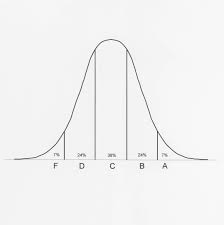
The bell curve did not shift, but the names we call each place on the curve did. A no longer depicts a small portion of children with superior performance (7% or so, of students). Now A is for Average.

grade

Normal Grade Distribution Curve

There is something seriously wrong when average performance for an average student is looked at as failure. Average children are not stupid. Average means “as expected.” Average means “okay.” Children with average school performance are presenting skills equivalent to what is expected of the majority of children their age. Expecting all children to be ‘above average’ is not realistic. Pushing a good-effort B student to get only “A”s (and above) is a recipe for stress and worry, for frustration, disillusion, anxiety.

I certainly understood the mother’s plea. She was being carried along in the currents of requirements and expectations Shippey speaks about, and she believed–and her belief was strongly reinforced by teachers’ notes, societal pressure and the higher-education reality–that it was required of her child to be remarkable. Remarkable is the new ‘expected.’

Grades used to be a measure of a child’s ability and effort. We rightfully demanded that children to do their best and put an honest effort, but it was pretty clear that not everyone could be at the top of the class. By definition, this cannot be.

Nowadays, grades are not so much a measure of a child’s ability and effort as they are an artificial soup made of an (often unfair) measurement of a teacher’s skills, a school’s ranking and a district’s relative superiority. Grades are measured for political gain and their manufacture sustains a multimillion industry of ever reinvented ‘teaching programs’ (and recently, ‘common-core’ goals), which are rarely developed by educators. Grades are big business. Less so about the kids.

The saddest part is, that children know it.

Children always sense unfairness or hypocrisy, they may not know to explain it but they feel when they are in a halls of mirrors. They realize that they are cogs in a machine. They perceive that they are being measured by academic yardsticks that do not really measure them and yet they are to be judged solely by.

The system needs to change. It is unhealthy, and children are reflecting it–in anxiety, depression, disillusion, burn-out, anger, attitude, apathy, a sense of invisibility and impossible demands.

In the meanwhile, the dilemma of this mother (and many other parents)–and in a way mine as a clinician who can hone a child’s ability or give them a leg up–is whether to feed into the system and push that child forward. Whether to put him into intense tutoring and ask him to perform beyond his skills and at the price of other areas of development; or leave him to learn at his normal (if average) rate and enjoy his childhood at the price of his potential future.

If it were your child, your potential client, what would you have done?


Fair Share …


flower girl

A little girl of preschool age sits with her mom in session. She substitutes some sounds and tends to delete the ends of words, saying things like: “pe” instead of ‘pen’, “la” instead of ‘laugh’, “ha” instead of ‘hat’, “may” instead of “make”, “wabee” instead of ‘rabbit.’ Her speech can be difficult to understand, which is why she sees me for speech therapy.

Articulation aside, this girl’s language and expressive skills are up to par, and her infectiously delicious personality keeps us in stitches half the time.

We’re practicing saying word-endings by “discovering” (uncovering) and naming picture cards: “pig”, “hug”, “map”, “cat”, “man” … She pauses on the picture of the man. He is dressed in a suit and tie.

She’s been to a wedding recently as a flower girl to the bride–her mom’s cousin–and has been fascinated with weddings since. White dresses, tutus, flowing gowns, flowers, princess-wear… It enchants her to no end and she ‘plays bride’ with her dolls, marches with imaginary flowers down makeshift aisles.

“Mommy,” she pipes, pointing at the picture of the suit-clad man. “Is he getting married?” (“ee he geti mawee?”… it helps to know what she is referring to, if one is to understand …).

“Maybe,” The mother smiles.

“I want to get married, too,” the child demands.

“When you grow up you can. Who will you marry?” Mom can’t resist.

“Daddy.”

“Oh, but I already married Daddy, Sweetie. You’ll have to marry someone else.”

Storm clouds gather on the little girl’s face. “That’s not fair!” She states, hands on hips for emphasis. “You already had your turn. You have to share! It’s my turn to marry Daddy now!”

share chairhere comes the bride

Spilling the Beans …

idiom

I heard them arguing all the way up the stairs. The mom sounded consoling but confused. The little boy sounded angry, hurt.

“Why you lie?” he demanded.

“I don’t know what you’re talking about!” she countered, frustrated.

“You not suppose to lie!”

“I didn’t … oh, just drop it, will you?”

“Drop what?”

“Nothing, okay. Just climb up, we’re late already …”

Two frowning faces, one a smaller version of the other showed up at my door. The little guy took one look at his mother, letting her know that he was not done with this discussion, and announced to me: “My mommy lied!”

She shook her head, sighed.

“Let’s go in and sit down and you’ll tell me about it,” I suggested.

The story unfolded: there was a party planned. A surprise birthday party for the dad, and both the boy and his older sister were in on the plans. All very exciting.

“Actually, initially I didn’t want David to know,” the mother interjected, “I worried that he would not be able to keep it secret … but he found out, and of course he went right ahead and told my husband …”

Little David gave her a withering look. “I didn’t mean to, it slip out,” he noted, vindicated by fate. He then turned to me, righteously riled, “and anyway, my mommy lied!”

“What did I lie about? What did I say?” the mother was clearly tired of this back and forth. She looked at me, “he’s been at it since we left the house. I didn’t lie to him about anything. It’s been really ridiculous.”

“You say I spilling things and I didn’t! I was careful!”

“What did your mom say you spilled, David?” I asked, slightly amused by the exchange and the boy’s insistence, and by a suspicion that was already forming in my mind …

“Beads. She say I spill the beads. I didn’t!”

“The BEANS,” the mother corrected.

“I don’t even LIKE beans,” he snapped and rolled his eyes, and I struggled to keep a straight face.

“It’s an expression, David. To spill the beans, means to tell a secret … maybe your mom was saying that about you telling your dad about the birthday party?”

The little boy glared at me suspiciously–one never knows when adults gang up to take another adult’s side–then looked back and forth from his mom’s vigorous nodding to me. I smiled.

“But why she lie?” his voice was hesitant now. He knew that there was something he had missed.

“She didn’t lie. She used an expression. Remember when we were talking about it ‘raining cats and dogs’ when it actually meant that it was raining really hard? How it was a silly way to say that it was raining hard but it did not mean that dogs and cats were REALLY raining on us? How ‘raining cats and dogs’ is an expression for strong rain?”

A nod.

“Or when we talked about ‘giving a hand’ meaning helping someone, and how a ‘couch potato’ is someone who sits around too much watching TV and doesn’t go outside and play and move around?”

Another nod then an eyebrow started going up. A dawning. “Like ‘heart of gold’ thing being nice?”

“Exactly!”

“Oh,” he pondered. Then his lip curled up in distaste. “But why spill beans? Can’t I spill something else? I HATE beans!”

spilled the beans


A Leap of Faith

leap of faith1

“I want my parents to see Billy Elliot.” The boy and I were discussing Marco Polo and history of Europe in the 1200s, looking at sources from his textbook and encyclopedias. The remark seemed out of context, but whatever the connection or association, I was curious to know more. The boy’s eyes rested on me. Serious. This was no fly-by thought.

“Oh?” I commented, “I heard good things about it. What about it do you want them to see?”

He paused. Fiddled with his pen, checked the time. “I’m not sure,” he mumbled, fiddled more. “Actually …” he looked up, “I want to play the cello.”

The boy has been taking guitar lessons this past year. An athletic guy, his parents thought he was better suited for sports, which he is indeed very good at and loves doing. They were not against the guitar lessons, though they admitted hoping that those were only a passing internet music-video inspired fad.

I just listened. There was more there. I was sure.

“I like playing guitar, but I really love cello. Only thing is .., it’s for like, classic music …” his eyes met mine and then he looked away, stared at his lap. “For orchestra and stuff, you know … nerd stuff.”

“Hmm,” I mused. “People use cellos in other kinds of music, but I get what you’re saying, even though I never thought of cello players as nerds.”

He blushed. “I don’t think they are. I think its beautiful music …” his blush deepened. “I don’t want my dad to think I’m a nerd or like … soft.”

My impression of the father was of a caring, all American, be-my-boy’s-best-buddy kind of dad. They often went to sports events together, traveled to see their favorite teams, bonded over tailgate parties. The boy loved it. And had other interests now, too …

“So … Billy Elliot …” I noted gently.

“Yeah … so they understand I want this, even if it’s kind of different. Is it kind of different?” he looked up, hopeful for denial.

“Personally, I don’t think so. I think music is a lot like a sport–you have to practice, you have to keep at it, you have to love it to do it, and it can also be very satisfying. It is even often kind of a team sport, with players needing to coordinate and work together …”

He gave me the almost-teenage lopsided grin that tells adults that they were doing an okay job in cheering up but their game was up and the comparison was barely passing. “Try telling that to my dad …” he chuckled, not quite mirthfully. He sighed. “My guitar teacher said I have good finger skills,” his voice was hesitant but a warble of pride was evident. “He let me try a cello that he plays sometimes. It felt so right …”

His whole face lit up when he said that.

“So … I want my parents to see Billy Elliot. I told my grandmother. She said she’d get them tickets … for next week.” He pushed on then, his speech suddenly urgent, rapid, “you see, there’s this summer camp, and it is for music … and I can do cello there. Not all summer, just three weeks … I can still go to the other camp, because that one’s only through July … and the music camp is in August … so I could still do both …”

I smiled.

“… they still have openings–my grandma checked–but we have to register, like, now … so … I want them to see Billy Elliot.” He chuckled, a bit tensely, “I’m thinking, it is a lot less nerdy than dancing … so maybe my dad will be, like, relieved that it’s ‘only’ the cello … My grandma said she’ll back me up …”

“I will, too,” I grinned. “Take the leap. Go for it. Try it out. If this is what you really love, then it is wonderful to find it. And if not, then you will still have tried something new that felt worth exploring.”

“Exploring … right,” he grinned. “Back to Marco Polo, huh?”

take risks

ADHD or Trauma?–The Likelihood for Mistaken Diagnosis

trauma brain

A new study shows that a child with an ADHD diagnosis is more likely to have also experienced stress and trauma early in life.

Clinicians working with traumatized children and adolescents have long noticed–and noted–that it was not unusual for children with trauma histories to be diagnosed (and possibly all too often misdiagnosed) with ADHD. 

What complicates the clinical picture is that a child can have ADHD and trauma history (or Autism and trauma history). In fact, children with ADHD and children with communication disorders are more likely to be maltreated than children without these issues.

As the article below states, and what is very important to take into account, is the need to rule out trauma as the cause–or contributor–to the child’s clinical presentation, rather than simply assume that a distracted, inattentive child has ADHD. Assessment needs to address the possibility of trauma, and intervention approaches must be adjusted accordingly. For example, medication for ADHD may not be appropriate for a child whose inattentiveness is due to hypervigilance. It is crucial to ensure that past trauma be treated and ongoing trauma be addressed, so that the child can let go of the coping skills adopted to manage overwhelm.


The article is copied below. You can also read it on the original webpage by clicking on the title below. For more information about trauma and development, click here.


News Analysis: Are We Misdiagnosing Childhood Traumas as ADHD?

Children with attention deficit hyperactivity disorder (ADHD) receive a diagnosis based on their behavior: age-inappropriate fidgeting, inattentiveness, hyperactivity, and trouble sitting still and concentrating. However, according to new research presented today at the Pediatric Academic Societies annual meeting in Vancouver, Canada, these behaviors may also be linked to childhood trauma.

A research team analyzed data about 65,680 children ages 6 to 17. (The data was taken from the 2011-2o12 National Survey of Children’s Health.) The children’s parents answered questions about whether their kids had been diagnosed with ADHD, how severe their symptoms were, and whether they were taking any ADHD medications. The parents also reported on whether the children had had any of nine adverse childhood experiences (ACEs): poverty, divorce, the death of a parent or guardian, domestic violence, neighborhood violence, substance abuse, incarceration, familial mental illness, or discrimination.

“Diagnoses of ADHD have increased over the last decade, and there has been a concomitant rise in stimulant medication use,” said Nicole Brown, an assistant professor of pediatrics at the Children’s Hospital at Montefiore and lead author of the study, in an interview with Healthline. “Many of my patients also experience trauma during childhood, which often exacerbates ADHD symptoms and poses diagnostic challenges with respect to teasing out whether their symptoms directly result from the trauma they experience.”

About 12 percent of the children who participated in the survey had been diagnosed with ADHD. Parents reported that these children had also experienced higher rates of all of types of ACEs than children without ADHD.

The children with ADHD were also more likely to have experienced a greater number of adverse events. Seventeen percent of children with ADHD had experienced four or more ACEs, as opposed to 6 percent of children without ADHD. The children who had dealt with four or more ACEs were almost three times are likely to be using an ADHD medication as children with three or fewer ACEs, and their parents rated their ADHD as being more severe.

ADHD and Trauma: The Chicken and the Egg

How is ADHD connected to stress and trauma? There could be a number of explanations.

First, it’s possible that doctors are simply mistaking the signs of trauma in children for ADHD. “What we find is that there is often an overlap in the symptoms of children who have ADHD and children who have experienced trauma, particularly small children,” said Alicia Lieberman, professor and vice chair for academic affairs at the University of California, San Francisco, Department of Psychiatry and the director of the Child Trauma Research Program at San Francisco General Hospital, in an interview with Healthline. “The inability to concentrate, the fidgetiness, the inability to pay attention, the distractibility, the restlessness, and the irritability are often behaviors that trigger a diagnosis of ADHD. And often, the people making the diagnosis do not ask what happened to the child, what kind of experiences the child has had.”

Brown agrees that this may explain her findings. “Studies have also shown that symptoms of post-traumatic stress disorder (PTSD) or acute stress disorder resulting from adverse life events closely resemble ADHD symptoms, so there is a high likelihood for clinicians to diagnose ADHD and overlook a possible trauma history,” she said.

Another explanation is that children with ADHD may be more likely to get into trouble and to experience traumatic events as a result. “Children with ADHD can become more impulsive, can be more annoying to parents that might be depleted, so children with ADHD might be at greater risk for being maltreated or getting into accidents, which might in turn trigger PTSD,” explained Lieberman.

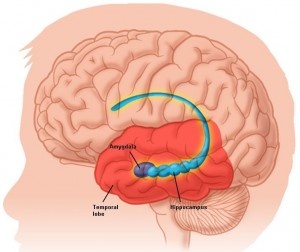
Finally, researchers know that stress in the early life environment might affect the development of the brain. “It’s also possible that being exposed to a traumatic event increases the likelihood of developing psychiatric disorders that have a range of manifestations, including anxiety, post-traumatic stress disorder, and ADHD,” Lieberman said.

“When a child is presenting difficult behavior, the first thing to ask is ‘What happened to the child?’ rather than ‘What is wrong with the child?’”

Under this lens, ADHD is only one of many possible outcomes that can result from early-life trauma. And even then, ADHD might just be a sign of what’s to come. “We know that early life adversity produces developmental changes consistent with ADHD, but it produces many other effects as well,” explained Regina Sullivan, a professor of child and adolescent psychiatry at the New York University School of Medicine. “As a child is developing, and there’s a neurobehavioral deficit, how that is expressed changes during development. ADHD can sometimes be symptoms of neurobehavioral problems that will emerge later in development.”

Sullivan added, “Early life trauma and stress can interact with genetics to produce different disorders based on the age the trauma was experienced and the particular type of stress or trauma. Different-aged children, and children with different genetics, and children with different personalities, will respond differently to a given stress.”

Are We Medicalizing Stress?

Rising rates of ADHD diagnosis and medication use raise the question: are we turning normal levels of life stress into a medical condition? Lieberman points out that more than 60 percent of children report that they have been exposed to some kind of victimization in the previous year, and more than 10 percent have had five or more exposures. For many children, ACEs aren’t rare, they’re the norm.

And when kids are under stress, they’re more likely to act out. “When a child is presenting difficult behavior, the first thing to ask is ‘What happened to the child?’ rather than ‘What is wrong with the child?’” said Lieberman. “The recommendation that the authors of the study make about the importance of screening for trauma exposure in every child that is showing symptoms that can be associated with ADHD is extraordinarily important and timely.”

In these circumstances, medications probably aren’t the answer. “While stimulant medications may prove beneficial for some children, they may not be the most effective management strategy for all children,” said Brown. “Children with ADHD diagnoses who have experienced trauma may additionally benefit from specific behavioral interventions that are tailored to addressing their underlying trauma histories.”

However, Sullivan cautions against drawing too many conclusions about a child’s past from his or her diagnosis of ADHD. “Not all children with ADHD have had early life adversity,” she said. ADHD also isn’t necessarily a sign of other disorders to come. “Sometimes, when someone has ADHD, they maintain those ADHD symptoms throughout life, changing somewhat, but they still have the diagnosis of ADHD.”

It will be many years before the root causes of ADHD are fully understood. Until then, doctors must try to figure out which symptoms are caused by trauma, while also ensuring that children with ADHD get proper treatment for the disorder itself.

adhd

Pendred Syndrome–a Query

A query from a parent:

“My son was just diagnosed with Pendred syndrome. He already has hearing aids from when we discovered he has hearing loss when he was 8 months old, but he needs stronger ones now because his hearing got much worse. The doctor said that he may end up deaf and that we need to check his thyroid, too. My son is already getting PT with early intervention because he is not walking yet at 18 months but we’re going to put him in speech therapy, too. What is Pendred syndrome and is it true my husband and I gave it to him? Will the therapy help with his hearing? There’s so much technical stuff and I’m really worried.”

Dear Worried Mom,

Of course you are worried. It would be overwhelming for any parent to have their child diagnosed with a problem, let alone one that can continue to affect them and that may change with time. A good step is to seek more information–as you are doing now, and hopefully will continue to do.

I’m glad that your son is already getting amplification (i.e. hearing aids) and that they are going to be adjusted/changed to reflect the change in his hearing–this is very important, and is a big step of helping him develop the best way possible. Am glad that he’s getting PT, too, if his motor skills can use some help; and that you are going to begin Speech-Language-Therapy with him, to ensure he makes the most out of his hearing and that his speech and language can develop as well as possible.

I hope that your pediatrician and the clinicians you’ll be working with (in Early Intervention, the ENT, the Audiologist, etc) will refer you to more information about Pendred syndrome, hearing loss, and rehabilitation of hearing loss in young children. Do let them know you are concerned and discuss your worries with them–I am quite confident that they will have resources, support, and more specific answers for you.

In the meanwhile, here’s a summary of some of the main features and issues in Pendred syndrome. This is not in any way a comprehensive review of Pendred or what the course of it would be in your son’s case. Nor is it a specific recommendation as to what to do in your son’s case, but I hope this overview will nonetheless give you some information to start with.

Pendred syndrome is a genetic disorder that causes early hearing loss in children. The syndrome is named after Vaughan Pendred, the physician who first described people with the disorder. It is actually the most common syndromal form of deafness in children–it is estimated that Pendred syndrome accounts for 5-10% of hereditary deafness cases! It is an autosomal recessive disorder (which basically means that both parents need to be carriers of the recessive gene–but the parents often have no symptoms and often don’t know that they carry the gene), and is associated with abnormalities of the cochlea, sensory-neural hearing loss, and diffuse thyroid enlargement (goiter). It can also sometimes create problems with balance.

Children who are born with Pendred syndrome may begin to lose their hearing at birth or soon after birth (like in your son’s case), and often lose hearing by the time they are three years old. The hearing loss is sensory-neural in type. When hearing is present at birth, it will usually worsen over time, with some children with Pendred syndrome becoming totally deaf (but not all, some children do have residual hearing or a lesser hearing loss). The hearing loss in Pendred syndrome is usually bilateral (in both ears), although one ear may have more hearing loss than the other.

Childhood hearing loss has many causes. Researchers believe that 50 to 60 percent of cases are due to genetic causes, and 40 to 50 percent of cases are from environmental causes (e.g. substances that damage the inner ear, such as certain antibiotics or chemotherapy medications).

The first part of a diagnosis of Pendred syndrome often includes the discovery of a hearing loss via a child failing a screening test or the presence of a hearing loss being found. Not all hearing loss in childhood is related to Pendred Syndrome, so the clinicians evaluate many things before considering the diagnosis and it can indeed take a bit of time before things are known for sure. Things like the kind, timing, amount, and pattern of hearing loss; the anatomy of the inner ear structures; the child’s balance and thyroid, etc. All these can help the health care professional determine whether to seek genetic testing and imaging tests for the inner ear, and to conclude whether a child has Pendred syndrome or some other type of progressive deafness.

Pendred syndrome can make the thyroid gland grow larger (when a thyroid gland grows too large and can visually bulge on the lower neck, it is called a goiter). The thyroid is a small, butterfly-shaped gland in the front of the neck, just under the ‘Adam’s apple’ and just above the collarbones. It plays an important role in the way the body uses energy from food, as well as in normal growth and development. Some thyroid issues in childhood (e.g. Grave’s Disease) can cause growth problems. However, in Pendred syndrome children often develop properly even if their thyroid is affected and their levels of thyroid hormones are usually normal. Not everyone with Pendred syndrome gets a goiter, and it typically develops in adolescence or early adulthood. Not all goiters are problematic, but if a goiter becomes large, it can impact breathing and swallowing and then treatment may be necessary. So an endocrinologist (doctor trained with diseases and disorders that involve the hormonal/endocrine system) is probably a good person to get involved even if only for followup.

By the way, it is still not clear to scientists why some people with Pendred have more issues than others (e.g. some have goiter and others don’t).

Alongside hearing loss, Pendred syndrome also can affect the vestibular system, which is the system which controls balance. The good news is that most children and adults with Pendred learn to adapt to whatever vestibular dysfunction they have and can manage routine tasks and daily balance requirements well. That said, because of the vestibular issues, some babies with Pendred syndrome may start walking later than other babies.

To get a bit technical: It is believed that Pendred syndrome is caused by mutations (i.e. changes) in a gene called SLC26A4(formerly known as the PDS gene) on chromosome 7. To be born with Pendred syndrome, a child would need to inherit two mutated SLC26A4 genes—one from each parent. Because it is a recessive gene, the parents are only carriers of the mutation (i.e. they don’t have the syndrome themselves). In a family where both parents are carriers, a child has a chance of 1:4 to be born with Pendred, and a 1:2 chance to be born a carrier. It is often recommended that if people are concerned about the possibility of Pendred (e.g. in a child or future children) that they seek genetic testing and counseling.

The anatomy of the inner ear is often viewed through imaging techniques such as magnetic resonance imaging (MRI) or computed tomography (CT), which allows viewing the cochlea and the vestibular system. The cochlea is the spiral-shaped part of the inner ear that converts sound into electrical signals that are then sent along to the brain through the auditory nerve. A healthy cochlea has two-and-a-half turns, but some persons with Pendred syndrome may have a cochlea with only one-and-a-half turns. The vestibular system includes a part called vestibular aqueduct. It is a kind of a bony canal that runs from the vestibule (the part of the inner ear between the cochlea and the semicircular canals) and the inside of the skull. Inside the vestibular aqueduct there is a fluid-filled tube called the endolymphatic duct, which ends with a balloon-shaped sac. People with Pendred syndrome may have an enlarged vestibular aqueduct, and the endolympatic duct and sack may also be enlarged.

Below is an image of the inner ear in some people with Pendred syndrome, taken from: http://www.nidcd.nih.gov/health/hearing/pages/pendred.aspx
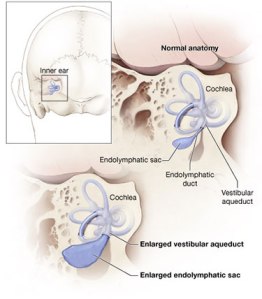
http://www.nidcd.nih.gov/staticresources/images/PendredFS-enlarged-vast.jpg

When it comes to helping children with Pendred: First of all, to minimize the risk of worsening hearing loss, children with Pendred syndrome may be advised to wear head protection when engaged in activities such as bicycle riding and skiing (to avoid trauma to their head). They may be advised to avoid contact sports or situations that can lead to extreme, rapid changes in pressure such as scuba diving or hyperbaric oxygen treatment.

Like with your son, the treatment of children with Pendred syndrome indeed often involves a team of specialists. These could include an audiologist, speech-language-pathologist, otolaryngologist, endocrinologist, geneticist, physical therapist, and primary care physician. Not all need to see the child all the time, and not necessarily throughout childhood, but it is always good to have those who are working with the child communicate with each other as need be so that they can coordinate goals and needs and work as a team. Don’t be shy about asking professionals to collaborate–they can’t and won’t do so without your consent.

Hearing amplification (hearing aids, and for those who need them: cochlear implants) can greatly minimize the impact of hearing loss on language and development. Children with Pendred syndrome should start early treatment with a speech-language-pathologist, to help gain communication skills and learn how to maximize their use of their hearing aids or cochlear implant. So I think it is probably an excellent thing for your son to begin with an SLP now, when any gaps or difficulties, if there are any, hadn’t had a chance to grow wide. In addition to hearing rehabilitation through working on discriminating, identifying, understanding, and processing sounds and language better, speech-language-pathologists can also help children with Pendred syndrome with speech, voice, and language development. The hearing itself may not be made better, but how the child used the hearing they have can be get a lot better with treatment. Treatment can help minimize the impacts of hearing loss on development, language, communication, and learning. Physical therapy can help with balance issues, and help aid with motor-goals (such as walking, and later running, climbing, and so on).

It seems that your son is already up to a good start, by having a parent who is interested in getting more informed about his condition and who is seeking to follow through on the best treatment plan for him. I wish you and your son all the best, and a lovely, joyful, satisfying healthy childhood.

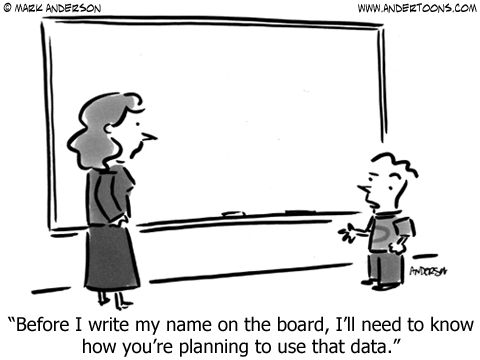
Beautiful Like Me!

She came dancing up the stairs, ecstatic, barely able to contain her smile. And she was a sight to behold:

Pastel rainbow tutu skirt over purple denim and red t-shirt with a sparkly princess on it (and a few star stickers), pink tennis shoes (with rainbow laces), green and yellow polka-dot socks (with frilly tops), rainbow-loom bracelets on both wrists, three plastic beads necklaces (one with 1/2 inch hearts interspersed), five hair pins (with various glittery bits and in various states of sliding off), shimmery hair ties holding two droopy pigtails of dark brown corkscrew curls. A smile as wide as the ocean. And a periwinkle clutch, princess stamped and glitter splattered.

Joy incarnated.

She went directly to the long mirror, struck a pose. Her mother chuckled–the last thing her daughter looked at before leaving home was their mirror. The girl stops to admire her reflection in store windows, too.

“I’m so beautiful!” the little one noted in delight.

She was not referring to her features or her body–chubby cheeked, dimpled, lisping, and lovable all over. The beauty was in the gestalt effect of her composition. Hers is aesthetic enjoyment rather than self-adoration.

Her ensemble changes week to week, varied shades of glorious. Never her elation. The wells of her joy are bottomless, oh, the endless possibilities of pleasing presentations!

She’s a walking fashion statement. She’s as happy in oversize overalls and chunky boots (with sparkly necklaces and mismatched socks). No one would be surprised if she ends up an artist, designer, or otherwise eclectic. She’s her own being already. Absolutely comfortable in her skin. Contagiously delighting in her creations.

Yesterday, she twirled around before of my mirror. Swung her arms, touched her necklaces, straightened an errant rainbow lace, wrapped a ringlet around a finger. She grinned throughout.

“I’m so beautiful,” she sighed, satisfied, “I am beautiful like me!”

beautiful1


King of the Red Train

A small boy today shared last night’s dream:

“I was the king of the red train. Red is the best. It was even more longer (sic) than the subway and another subway and another subway and it was going very fast like a cheetah and I wasn’t scared because I was the king of the red train.” (slowing to explain) “The king is the boss of the train and the whole country.” (picking up speed again) “And all the people were happy because the train was going so much fast (sic) and that’s very good. You know why?” (pausing, waiting for my query before continuing elatedly) … because they were going to get home before their ice cream melted!” 

train