Make Memories Together

by etsy

by etsy

One of the best things you can do with children is … well … to DO with children. Children–like all of us–learn through experiencing. Even more than us adults, they are wonderfully open to new learning. Their brains are literally forming as they grow. They are shaped and influenced by what they see, do, hear, feel, perceive, experience, understand, sense, have opportunity for.

Doing with children is not measured by how many classes you sign them up for, how many play-dates you arrange, the kinds of electronic gadgets or software or toys you have, how many flashcards your child can recognize by age one or how early they can recognize letters or write their names. Academics are important (though maybe not as early as some seem to push for), but they should not come instead of making memories. Of taking time to do together.

It is not about school or homework, either. It is about playing with them, spending time with them, reading to them, acting out the stories, building with blocks or constructing castles from cardboard boxes together, making forts from couch cushions and blankets, being silly, going on backyard adventures, telling jokes.

Feeling too short on time? Incorporate doing into household chores. Yes, the children may slow you down, and there may be more messes to clean up or some doing over to complete after their eyes close at night. However, your children will learn, and they will learn from you, and with you: spending time doing things together can be some of the best memories you can give. Children of all ages can benefit from ‘coming along’ or ‘doing with’ (oh, sure, preteens may make a face, but secretly they crave more time with parents, especially if that time is not for formal instruction or ‘grilling’ about school … and you’d be surprised how many conversations happen when hands are busy with a task together).

Every task can be adapted to a child’s age and ability. Baking cookies or making dinner? Depending on your child’s level, you can measure ingredients (cup, ounce, pound, liter, gallon, teaspoon, pinch, dollop …), list items, sizes and order, read or write down a recipe, watch the clock together to learn time, plan a meal, research unusual cuisines. Going for a walk? Pick leaves of different colors, count cars of various colors of identify specific vehicles and the occupations they serve, stare at a pigeon pecking on the sidewalk and compare birds to bugs to mammals to reptiles, compare views and favorites, discuss endangered animals. Folding laundry together? Sort by color, size, material, season, types of fastener, talk of fashion and media, of fitting in and being fit. Empty the dishwasher (silverware, dishes, saucers, bowls, serving platters, large-medium-small, glass, plastic, ceramic, good china, the best meal and the worst experience, school lunch, social tensions in the cafeteria …). Grocery shopping? A bonanza of options: food groups, colors, shapes, containers, ingredients, numbers, top-middle-bottom, left-right shelves. Write down list, read it aloud, check off what you put in the cart, learn about coins’ value and paper money, budget, making choices, sticking to a plan.

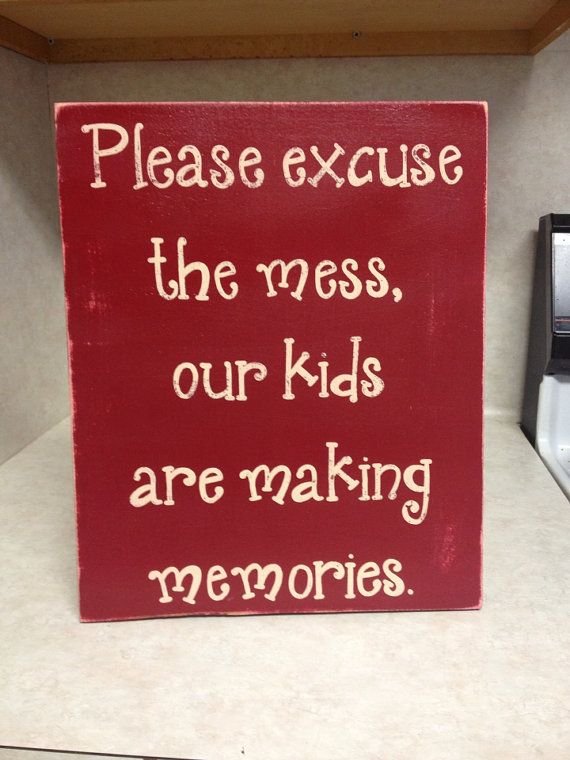
Make memories. Your child may not remember how many flashcards you read to them or the name of all the tutors you got for them or even all the places that you took them to … but they may well remember the time you spent teaching them how to sew a button or built a tent in the living-room, helped them bake their first ‘from scratch cookies’ or let them make a mess in the kitchen while you listened to the conundrum they had about a friend and did not judge. Want to reinforce a memory? Take a photo, write a caption, make a book together: “Michel’s First Cookies”–document the process, print the photos, tape them onto paper, write the story of them underneath. Read and have the child ‘read’ it to someone else who was not there with you (grandparents make excellent captive audiences …). Enlist older kids to make photo books or edit images into a video together.

Find wonder in small things. See and seize opportunity. Snowing? Research the unique shapes of flakes, make cutouts, hang them from the ceiling for some ‘indoor snow’ (extra memories credit for glitter …). Raining? Re-create the water cycle, demonstrate gravity, check out about steam and condensation. Grow avocado plants, sprout potatoes (learn of more than one meaning for ‘eye’ and get curious about other multiple meaning words–spring, trunk, bark, nail, key, slip, pen …). Learn together. Try new things. Fail and err and laugh and try again.

Make time for making memories. It’s hard, I know, but find the time. You don’t have to take off from work or travel to a different country. You can pluck time from the tasks you are already doing and turn them into time spent in building your child’s connection with you. You’ll also enrich their brain, skills, confidence, know-how, and sense of worthiness.

Time flies. Kids grow. Before you know the mess is gone and they are flying solo. Give the gift of sensitive, involved attention. These memories will be what they can pack along ‘to go’.
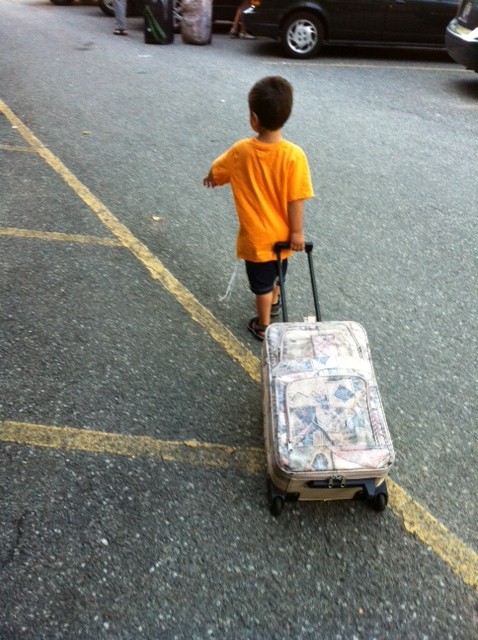
Photo Credit: S.L.

Photo Credit: S.L.

“I just let it go”–Bullying, undoing Taboo?

Photo Credit: A.M

I see children. As an integral part of what I do, I talk to them. They talk to me. We discuss stuff. Words, events, stories, happenings, expressions. Language, communication. School. Life.

Oftentimes it becomes an opportunity for all manner of learning. Sometimes I even teach them something (I think that more often than not, I am the one who learns more!)

A girl came in the other day, a preteen with all the loveliness, precocity, and gangly limbs that time of life implies, complete with early social angst over boys, hierarchies and wanting to fit in. She’s a precious girl. Relatively sheltered, only child and doted on. Popular, I know. Loved by teachers. Not the best learner, but she’s gracious about what others do better and tenacious about trying to improve her own results. She had made amazing leaps in the few months I’ve known her.

She has also opened up some more. About what is not often spoken of. The real problems of childhood that are frequently hidden under layers of “fine”, “okay”, and “nothing much.”

Yesterday, she spoke about something that is both a numbing non-stop conversation and taboo: Bullying.

Non-stop in the almost weekly pedagogic instruction for “awareness” and “Zero Tolerance,” the speakers that the school brought in to talk to the students about the wrongs of bullying, the memos to the parents, the signup sheets for pledges, and the warning for absolute intolerance of it in the school. Taboo because it still happens, mostly underground and sneakily, and because in some ways it’s become even harder to bring it up.

She is not the first one to tell me of that snailing-in of bully-tactics. I’ve been hearing it. A lot. The children tell it like it is.

“No one wants to be the kid who gets another kid suspended or worse, thrown out of school!” the children tell me. “What do I need someone’s parents calling mine to find out why I’m making trouble for their kid?” These are schools parents line up to get a child into, and pay plenty for tuition and name recognition. Nothing can be allowed to blot a child’s resume. If there’s a problem, it is best handled quietly. The children feel the pressure, too. They know.

“We’re supposed to take care of it on our own, anyway” they tell me. “The teachers are like: ‘you have got the skills, use them’ or ‘sign the pledge, don’t bully, don’t become a witness, step away.’ It’s words, not action. They don’t really want to get involved. Anyway, half the time you can’t even prove it is bullying, and then you’re like, the bully.”

The kids tell it like it is. It’s tough. It’s complicated. Still, talking helps. Many of them are sick of bullying and are indeed taking action–from within. Like the girl.

She’s not the one in the cross-hairs of verbal torment (bullying in her school is the subtly demolishing kind–no heads in the toilet or smashed glasses or bruises–but eroding stings and code words of soft spoken wounding. Lethal still. We know). It is another girl. Two, actually, and creatively isolated from each other by the bullying company so that they cannot seek counsel with each other. The bullies? Four girls. All popular, great students, teachers’ pets, parents on committees, philanthropy going back to bedrock.

“They don’t say anything really mean,” she tells me quietly, anguished, “kind of. But they still do. It is hard to explain.”

“You are explaining,” I encourage. “Sometimes it is in the how you say things that the intended meaning comes through.”

She nods. “They KNOW things,” she whispers. “Stuff that’s private, what they don’t want others to know, small things, embarrassing stuff … I don’t know how they even find out, but they do, and then they say it, kind of in a joke but I can see it is not funny. Some kids laugh because they want to be popular and some really don’t see that it meant to be sneaky. They’re not all mean girls, those who laugh … some of them are my friends and all, but they laugh, and it makes it worse.”

I nod. I understand.

“The girls being bullied,” she continues, “they’re not really my friends. Not because they are being bullied … I mean, they weren’t my friends before, either. I don’t know why. I don’t really like them much. Do you think that makes me bad?”

I smile. “The very fact that you are wondering about it, tells me that you are not bad. Let alone that I already know you to have a very caring heart.”

She looks at me searchingly, but she knows I mean what I say. “Okay,” she says. I’m glad she doesn’t blush.

“I was thinking about it, about what to do,” she starts.

“Tell me.”

“My other friend said that we could find out bad things about the mean girls and we can tell them that if they kept on being mean we’ll tell everyone … but,” she pauses, “that’ll kind’a make me be a bully, too. I don’t want to.”

I smile. She knows what my smile means–another proof that she is farthest from bad.

“… so I told my friend, that we’ll just hang out more with B and C and be their friends more. Invite them over. Sit with them at lunch kind of stuff. They are a little weird sometimes, though,” she sighs. “One of them kind of gets annoying, you know, grabs your stuff, holds on to you, sticky. You know?”

She pauses. Ponders.

“But maybe it’s because she’s kind’a lonely. Or maybe she’s lonely because she’s weird. I don’t know. I don’t want to be mad at her. I don’t want to be mad at the bully girls, either. They are kind of my friends, too, sometimes. It gets me feeling stuck.”

I nod. Sometimes there’s nothing I can say that the child is not already saying, nothing that I need to add. Just listen. I hear her. She wants to think it out.

“It’s a little better, though,” she brightens. “I think. Today, at lunch, the mean girls wanted to sit with us and I was sure it was because they wanted to be mean to B and C–they were sitting with my friend and me, you know, like I said–and I got all like, mad inside, but then I decided that I didn’t want to be mad in advance. So … I just let it go. And you know what? …”

“What?” (smile)

“They were not mean. They were alright.”

1398931_10201570268751331_1255509604_o

Photo Credit: A.M.

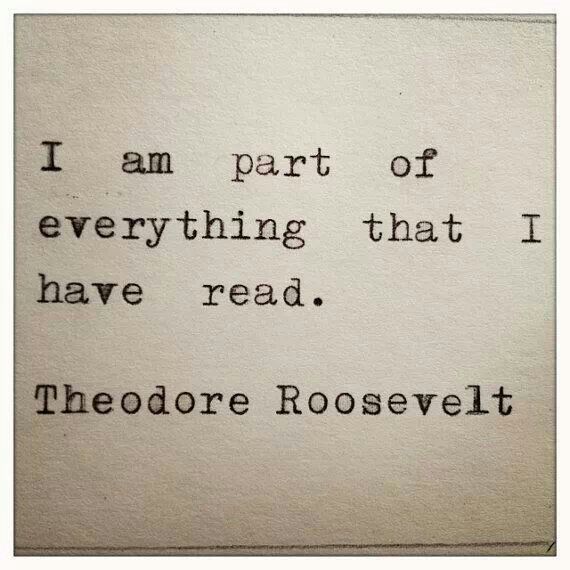
Why do YOU read?

How do you use reading? How does reading handle, challenge, comfort, startle, change, use … you?

Do you read for pleasure? Do you read when you are sad? Do you read for inspiration?

Just for school, research, work-stuff, projects? (if so then that is quite a bit depressing, really, I am sorry it is that bad …) 

Do you read for passing time? Do you read for friendship? Do you read to seek ideas? Do you read to make good use of waiting, lines, your travel? Do you read to undo boredom? Do you read because you can? Do you read to keep on current or to discover what had happened during times before your time? Do you read for imagination? Do you read to reconnect? Do you read for knowledge, wisdom, thought provoking, prayer, fate? Do you read for all these reasons and read some more for just in case?

Do you read books, magazines, publications, journals, newspapers, memos, menus, t-shirt logos, signs? Do you re-read old notebooks, older letters? Do you read your children’s homework, the funnies of another, bits of stickies left in library books by mysterious someones?

Do you read for comfort?
Do you read for hope?
Do you read to understand?

Do you read because it matters? Do you read because you must? Do you read for words you’re learning? Do you read to learn to live or to prepare better how to die? Do you read for things you did not know and need to? Do you read for what you wish you did not need to know yet should not be look away from or deny? Do you read for group discussion? Do you read to share a page? Do you read to walk along the ones who placed the letters onto page and screen and paced into your life?

Do you read a child to sleep? Do you read to calm an elder, to apologize, to woo a loved one? Do you read to spark an interest? Do you read for laughter, for redemption, a good cry? Do you read as prayer or as meditation? Do you read to find a path to bigger pictures, wider seeing, deeper meaning, brighter skies?

Do you read to find your own voice? Do you read for vision?

Or like me, do you read for all of those reasons … as well as for the simple fact that you are addicted to the human language and cannot, would not, do not want to, ever stop …?

ihaveread

No learning is ever wasted

No learning is ever wasted.

No experience is ever for naught.

It is what meaning we find which makes the difference

Between what we believe was useless

And what can in fact be used, quite a lot.

Hardship breaks the heart open

It splinters the spirit

But in the spaces then made there is room more to grow.

There is pause for refocus, for remeasuring hope

For finding compassion, for opening of doors

For a new understanding,

Improving the focus on all of life’s scopes.

No learning is ever wasted.

No true lesson is ever for naught.

experience