Will she calm down when she grows up?

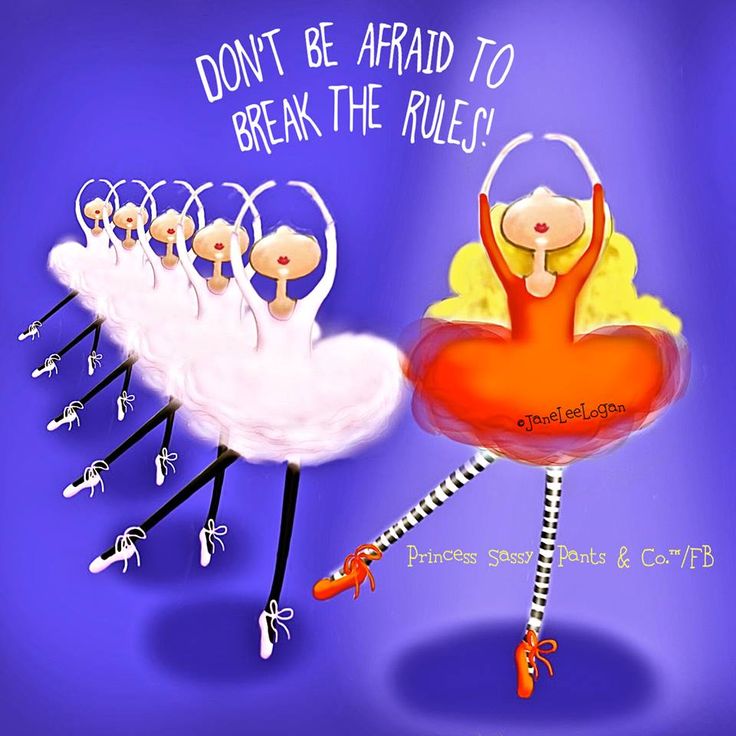
She always comes in style. 

Her own, that is: purple tutu over jeans and boots, flowered shirt under star-splattered sweater and deliberately mismatched socks, frilly short-sleeve shirts over chunky turtlenecks, her satiny pajamas with princesses on them, or a sheer dress under a sweatshirt along with leggings with holes in the knee.

Added to her ensembles are usually clues to the day she’d had: color splatter from finger painting at school, well placed smudges from lunch (shirts are so much more convenient than napkins!), crusted bits around her mouth that she refuses to wash off, unidentified grime, tears in filmy clothes that were not sewn with monkey-bars in mind.

It drives her mama nuts. Always impeccably put together herself, the mother is forever trying to wipe this or straighten that or offer alternate dressing solutions (that are summarily declined), and cannot contain her sighs and growing despair at her daughter’s flighty attitude toward cleanliness and matched-everything.

The girl? She could not care less. Or rather, she cares plenty, in her own way. Her language delay does not allow much expression of verbal subtlety (yet), but she certainly shows affinity to collating varied fabrics and textures and to weaving together combinations that feel artistically deliberate in an offhanded sort of way. She likes the way she looks. To me, this is more than good enough.

“Let her be,” I tell the mom one day when the little gal excuses herself to the bathroom and the mother follows her daughter’s mismatched wear with agonized eyes. I am admittedly somewhat amused at the perceived gulf between them, which in fact says a lot more about their similarities than differences. They are both acutely interested in how they look. It is just the “how” that may seem different … One immaculately coordinated harmoniously to appease the eye; the other explosively expressive in riotous combinations that cannot go unnoticed for their mishmash.

“It may not be how you’d choose to dress her,” I press, knowing that this little gal’s fashion-sense is pushing her mother well outside her comfort zone, “but there’s beauty in her freedom. She’s four, and she’s got a keen sense of her own being. I think it’s brilliant.”

The mother looks pained but nods in resignation. She understands, even if she does not quite love knowing it. After all, she does let her only daughter leave the house “all messy” and “in awful combinations,” and she generally suffers the seemingly incongruous pairing of the pretty clothes she buys for her not-so-cooperative princess. Ever hopeful, she fills the child’s closet with beautifully matching outfits that the girl turns into wild-combos in a blink of an eye: chunky socks with her patent leather or frilly tights under short jeans.

“I want her to be her own little person,” the mom whispers. “I just wish she was a bit less … how shall I say it … visible about it …”  She blushes then, fussing with the satin hem of her tailored dress with carefully manicured fingers. “Do you think she’ll calm down when she grows up?” she adds, hesitating, vulnerable.

I smile. “I don’t know,” I answer gently. “What would ‘calming down’ mean to you? Or for her? Who would she ‘calm down’ for?”

The water flushes in the bathroom and the little girl can be heard singing “fly me to the moon” at the top of her lungs as she washes her hands (splashing all around the sink, I am quite sure–she finds special pleasure in the way water droplets spatter and in how soap foam squirts between fingers). The mother looks up and we both grin. Such effervescent joy is contagious.

“She’s a free spirit,” she sighs. “I think I was a bit like her, at her age. Then I got too concerned with what others thought … and maybe lost the spark.”

As the little girl prances back to us, she swirls the edges of the tutu peeking under the shirttails of her button-down flannel over holey jeans. She has one brown sock, one purple with blue polka dots. Her tennis shoes have stickers and possibly some grape jelly on them. She’s radiating ease and unfettered delight.

“Maybe there’s nothing to calm down,” I offer. The girl’s a sight, for sure. A balm for sore eyes and achy hearts, too.

Mom takes a deep breath. Nods. She’s working on it. It is all one can truly ask …
beyou

The Best Things in Life

thebest


We have likely all been told that “the best things in life aren’t things.” It rings true enough, and it feels nice to say it–to know that someplace it is Truth–and yet the knowing gets askance too often. Not because we don’t believe the veracity of the declaration, but because it is difficult not to value “stuff” or to ignore the very tangible importance of “things.”

It is not about possessiveness or being greedy, even: “stuff” does very much keep us alive. We all need food, shelter, clothing, blankets to keep us warm, diapers for the baby, books and school supplies, dishes, pots, good shoes. We may need–in varying necessities–phones and computers, cars or bikes or Metro-cards, refrigerators, a place and way to cook, wash our bodies and our clothing. We certainly all require clean water, healthy air, protection from the elements, from violence and harm. We need care in time of illness.

(For more about helping provide clean water, check: Charity:Water)

In our Westernized, motorized, modernized, accessorized life, we may indeed require quite a few “things” to allow us to get to, do, and keep our job. We need to put aside resources for a rainy day (and may need gutters and galoshes for a similarly more literal day, too). We better save for retirement, consider life insurance to protect dependents if we have them, ask for a raise if we had earned it, quote fair payment for our services.

It is easy to look at sayings about “the best things in life aren’t things” as overall smile-worthy but not terribly practical realities. Something to say when one wants to comfort another who lost their life’s saving in a market crash, their house to a fire, or their designer boots to slushy sidewalks. It is something to tsk-tsk about when a “thing” awakens the small green nibbling worm of jealousy, or when we witness outright excessive greed.

And yet, even with the “things” we need and the “stuff” we want and the possessions we accumulate, require, and acquire–the Truth remains: The best things in life indeed are not things. No matter how much we need things, items, technology, materials and goods and measurable contents; these items are not what a best life make.

Connection does. The togetherness of happy moments. The contentment of a job-well-done or of creative engagement. The giggle of a baby, the eye-contact that brings on an attack of silly belly-laugh. The exhalation of waves upon the sea, the whisper of leaves in the forest or the big-sky of the prairie. These are the makers of best lives.

As is Love, as is Beauty. The warm breath of a sleeping toddler in your arms. The mere presence of a loved one. A memory of fondness. A swell of gratefulness. The depth of prayer. Awe. Hope. Faith. More love.

Those are the things that are not things and yet make the “stuff” we need, worth having. They give meaning to keeping our bodies and our souls connected, help us get through the times when “things” turn scarce and worries many. They make life thrive. They are how tapestries of hearts are woven.

The running feet of little ones, the concentration on their earnest faces. The solving of a pesky problem. An ‘aha’ of understanding. A common bond. The wonder of belonging, rather than belongings. The sweetness of a ripe fruit. The saltiness of tears overflowing a full heart. The blessing of knowing.

May the things that are not things keep a full presence in your soul’s pantry, may your mind be rich, and may you never go bereft of wonderment and heart-ship.

Photo Credit: S.E.

Photo Credit: S.E.

Heart Friend

oldfriends


Let the sun rise on mornings

After nights of the soul

Long and dark

Cold with fury and worry

Seeking hold on

Tangled walls.


Let the sun rise on mornings

My heart friend

Worry naught.

Our hearts know

There are quarries

Earth alone

Leaves unsought.


Let the sun shine

On mornings

Bright as dawn on the sea

Fast to shed

All the fretting

Laughing, bursting to be.


Let the sun rise on mornings

One more time

Or few more

There are tides still awaiting

To curl foam

On your shore.


Let the sun rise

Within you

Have no fear

Time goes on.

It’s the soul deep within you

Knows the way

As it may

Not alone

Journey home.

sunrise

Heartbeat of love

heartbeat

The little boy had a difficult beginning. Born unwelcome, left at an orphanage in a rural area overseas, raised in a crib in a room full of other babies in cribs–bereft of stimulation or affection or even much in the way of nourishment, when funds at the orphanage were low.

He was among the fortunate ones who survived infancy, and was adopted at age two, to parents who showered all the love they had on him and then found that they had even more to give when that threatened to run out. He was not easy to care for, you see. Unresponsive, non-communicative, alternately rubbing himself against their legs like a kitten, squirming to get off, or slumping like a lump of potatoes in their arms. He either cried inconsolably or stared stoically. He would eat things that should not be eaten and hide foods that should. He could not fall asleep unless he was in an empty bed, never a quiet room, and only after a long while of rhythmic head banging. He barely spoke. Only sometimes responded to his name. It was not looking good.

Fortunately, these parents had excellent instincts, stout souls, and good guidance. They sought help to know how to best assist a child so traumatized that he had learned to take himself away to cope. How to support a child who did not know others could be relied on. How to guide into love a child who did not recognize affection as markers for attachment or caring. They did not believe those who said that their son was autistic. “Maybe he is,” they argued, “but how could we know if he’s autistic, if he never had a chance to truly communicate?”

They sought other opinions and took him to speech language therapy and sensory therapy. They went to counseling themselves–there was much heartbreak to deal with in finally having a child and finding him unwelcoming of love. They looked for help with someone who understood developmental trauma and the adjoining dissociation that often follows–they wanted to know more how to best support him. They knew just loving him more was not enough: they had to find a way to help him process what he’d lived before he could find hope to live differently. Together with professionals, they worked to help give voice to what had none, they walked with him along the story of his lost beginning and his suffering and his strength and masterful coping and his current safety. He needed to know it in all of his being before he could trust it. Gently, they helped him heal.

Persistent gentle kindness integrated with knowledgeable attention and direction helped. The child bloomed. He is no longer checked out from his world, or words, or feelings. He’s in first grade now. Still closing gaps in language and communication, and he may always carry scars from his early years and a plausible exposure to substances before birth that make it difficult for him to regulate his body’s reactions and excitement. However, a more affectionate little boy you would be pressed hard to find. He’s happy. He knows he’s loved.

Not too long ago we were busy with a task where we listed things one does in the morning, or after school, or on weekends, or in a mall, or a park, or before going to sleep at night. To the last he said: “take a bath, brush my teeth, read a book, put my head on mama or papa’s chest.”

I smiled at that–the mom told me that they had a nightly routine where they’d cuddle, making up for the many lonely nights of empty cribs and no arms to rock him. They would snuggle together for a while, let him use them as a pillow, then kiss him goodnight. The parents had held him most the night when he was younger, once he let them.

The boy nodded at me, maybe taking my quiet smile as a sign that he needed to convince me of the veracity of what he was saying, or its importance. “Mama is softer, …” he continued, “and papa’s chest boo-booms louder. I like it. It makes me feel nice inside and it helps me not feel like I have to bang my head.”

Enough said.

Let your heart break if it must

compassion


Be loving, be compassionate.

Let your heart break if it must–for it will, possibly often–it softens the edges as the heart expands along the broken places to make room to hold more love alongside an improved understanding of tenderness. Heartbreak is the process of growing.

Let your heart smile whenever it can–there is much joy to find, even in the midst of hardship–it warms the spirit and fills the tender places with the bubbly gentleness of connection. It makes the insurmountable, possible. It makes aches be shared. It lightens the burden others carry.

Be kind. Be patient. Understand hardship. Accept pain. Offer comfort. Withhold judgement: there is no weakness in need.

We all need one another, at one time or another. The cycle of life turns so that where you might have needed to be held, you are now called to do the holding. And it is as it should be. It is as it was meant to be all along even if we could not know before.

This is how we all are–all connected, interwoven through lifetimes of experiences and shared moments together. Moments pass, shift, change; the connection lasts forever. No matter where life takes you–or the other–heart care does not become undone. It becomes a foundation, a tapestry of souls and knowing, a universe of kindness intertwined.

Hold tenderly to those close to your soul, deepen the love you have for them even as you open your heart to include more and more people. You can do this. You will find the room: hearts stretch. Your heartstrings will grow long and many, and you’ll be richer for it. Worry not. Hearts that practice holding more compassion can contain more love than you ever thought possible … and can grow more loving still.

Kindness matures the heart and raises it. Love heals. Cultivate kindness. Fund love. It is the currency of human nature in its best. It is what makes us who we truly are.

Be a Light

be a light

“Can people be like light?” The question comes from a bright-eyed five-year-old (who in my view lights the room wherever she goes …).

“What do you think?” (my almost standard response to children’s questions–lets me know what they already have in mind …)

“I don’t know,” frown, scowl, “that’s why I’m asking YOU!”

(Oops, strategy backfired. Okay, I guess I deserved that)

“Why are you asking?” I am treading carefully here, asking again in a different way, but I am really interested in knowing what the question is about.

“My Nana told me I’m her light,” the girl’s young forehead creases in concentration. “She said, ‘you the light of my life!'”

“Aw … it’s a great expression! And a very sweet thing for her to say. I can totally see why.” Children of her age group often begin to notice that there are some things people say that do not quite make sense: the words don’t add up, and they realize that there has to be another meaning, something else that’s being conveyed by the words but is not the words themselves (e.g. “she has a sharp tongue” or “he has no heart” or “raining cats and dogs” …). Sometimes they can infer the meaning, sometimes they are lost or have some sense they are not sure about. I love it when they ask. “What do you think she meant?”

Girl shoots me a “there she goes again with her Speech Pathologist questions again” look, but she relents. She’s patient with me. “That she loves me?”

“Yep … and what else do you think it can mean that you are the light of her life?” I wait.

Eyebrows up, lips scrunched in thought, “… and … that she’s really happy to have me or happy to see me maybe?”

“Yes! Both. Very much so. Also that you are important to her, and that you bring her joy, and that you make her feel better by simply being you. All of that.”

The child smiles. Beams, more like.

We go on with the session. Suddenly she stops again and asks (it is very often that things percolate a while before another level of query bubbles up to the surface): “Can someone be a light for other people?”

“Do you mean for more than one person?” I want to make sure I understand.

A nod.

“Absolutely. I think you can be a light in many people’s lives.”

Pause, thought, creased forehead. Smile. “Oh, like, if you turn the light on then it is light for everyone?”

My turn to nod. My turn to smile. Super smart cookie, that one.

“Cool!” Eyes wide.  Now that she’s got it, she runs with it. “I wish … I wish I could be a light for every every EVERY ONE in the whole wide world!  A big light that goes all over around! You think I can?”

She may not know it, but I think she already is one …


Make Rain, Not Thunder

rainnotthunder

“ENOUGH!”

How many times have you heard this spoken loudly (word interchangeable, same intention) from a fed-up parent, caregiver or teacher to a child? How many times have you yourself said this or something similar in anger, to a child?

Frustration happens when dealing with little ones with strong opinionated minds and limited awareness for time, urgency, consequences or your priorities; it is inevitable. Children can be persistent, stubborn, wild, loud, aggravating, aggressive, irritating, exhausting. Caregivers get fed up, tired, annoyed, irritated, overwrought. They can have bad days with too much to do, too little sleep, too many children to care for, too many demands with too few hands to do them with, too many worries. Crises, emergencies, a clogged sink, a car that would not start, yet another ‘accident’ right after cleaning is finally done … Children, especially young ones, rarely know to take adult burdens and juggling into account. On the contrary, it is as though they are uncannily aware of any lag or energy slump … and if anything, are more likely to be needy, clingy, whiny, and doubly argumentative exactly when you have the least time or energy to spread around … (FYI, it is mostly not done to drive you nuts, but because children may need to reassure themselves even more when you are stressed, that you are there for them: a difficult cycle, when you have to be extra-patient when there is least patience to be found …).

Parents and caregivers are human. They make errors. They get upset. They may raise their voice, match their child one to one in volume, heel-digging, and demand. It happens, and as long as it does not happen too often, it can be repaired with comfort and apology, time to reconnect, some soothing, an opportunity to explain and understand.

In general, however, children listen better when the volume is set lower. Calm allows the brain to form connections that make meaning, while anxiety and overwhelm awaken circuits of survival while shutting higher learning down. Experienced teachers will tell you that they keep their voice low to keep the children listening: it may seem paradoxical, but in effect it works like a charm. Gentle speaking allows the intonation and cadence of your thoughts to pass through better. It allows the listener to let it in without alarm. It differentiates emotions and helps regulate a child’s understanding of nuance and intention.

A raised voice is a good tool for calling an alarm, to keep the child away from danger, to make clear what should not be done to prevent harm. For instruction, though, the raised voice spins way off the target, and misses by a long shot: the meaning of the words you wanted to convey gets lost in the tone and loudness of the sound.

We cannot force flowers to grow faster by pulling on the stalks, nor would it help if we stalked constantly, demanding them to hasten. We cannot make a plant drink more by spewing a stronger stream of water–it will only exposes roots and hit raw nerves. With children, too, we cannot force growth by raising our voice or hardening our words. We’d get a reaction, maybe, but not learning, and we’d shut down tendrils of potential besides.

“Raise your words, not your voice” Rumi said. Yes. Whenever possible, use good words, taken from and guided by the better part of yourself or the best part of yourself that you can find at that moment. Explain more, demand less: “it is rain that grows flowers, not thunder.”

Children, too, grow best in gentle sprinkles, rather than thunderstorms.

How do you teach integrity?

integrity

We all want the children in our lives to have integrity and a moral compass. We want them to not only know right from wrong, but to apply it. We wish for them to have empathy toward others and to choose the better path not just to avoid punishment, but because it is the right thing to do.

That’s all well and good, but how do you teach integrity? How is it related to empathy and is it even something that is learned, or something one has to be born with? Something some of us ‘have’ and others ‘not’?

Though individual sensitivity and empathy-capacity varies, and some children are born with more empathy-capacity than others, empathy is still something almost all children can learn and have develop. Children vary in the age they begin to show clear empathy, but babies and young children are naturally self-centered and egoistical. It is normal for them to view others’ feelings through their own and to judge situations according to whether they’d get a reward or keep from getting punished, rather than the inherent morality. Fairness may be easier to detect, but true morality is learned, as is the reasons for it.

A child may not eat another’s cookie not because they persuade themselves they do not want it, but because the praise for not doing so may be worth more, or the disappointment of another in them if they not abstain may feel worse than the immediate gratification of eating the cookie. Children learn to share–maybe at first not so much because they truly want to share, but because of the positive feedback and praise that they get when they do so. With good modeling and opportunities, they can be taught how others may have feelings just like their own, and that other people’s feelings matter, too (e.g. if someone ate their candy, they’d be sad, so they can understand how if they took another’s treat the other child may feel sad about it). While some toddlers show well developed empathy, oftentimes it is through the preschool and then kindergarten years, that children learn to appreciate another persons’ pain, and to understand that another person may hold a different opinion or agenda and to accept that as okay. They learn to follow rules (all the better when rules are clear, consistent, and kind), and they practice enforcing rules in their peer and imaginary play.

How do they learn that? Well, empathy and integrity are best taught through empathy and integrity. It may sound simplistic, but there are all too many examples of attempts to teach integrity through fear of punishment (“If you take candy without paying, the police will take you to jail”), or empathy through guilt-inducing and shame (“look what you did–now she’s crying! I told you to not take her teddy bear from her!”) Fear can certainly be a deterrent, but fear is not integrity, nor is guilt the same as empathy.

Teach empathy through modeling your own. Children who have sensitive caregivers who show them care, who reflect their feelings back to them, and help them put experiences into words, are more likely to develop empathy themselves and to do so sooner. Be kind, demonstrate sympathy and empathy toward others–let your child see how you help a neighbor, or feed a stray, or hold a door for someone whose arms are full. Explain to your children about disabilities and differences, and make sure that you do not display disgust or ambivalence about the same. Apologize if you hurt someone–the child, too–even if by mistake, and acknowledge the feelings that your error caused and the need (and possibility) for repair. Be respectful of others’ feelings. Be kind.

Similarly, children whose parents and caregivers live by the same rules that they demand, learn integrity as a cohesive, non-confusing concept. Confusing rules result in confused and inconsistent learning. It is rather simple (if not easy): If you don’t want your child to lie, don’t tell them to answer the phone call you don’t want to take and say “Mommy’s not home,” or “Mommy is in the shower” (when you are not). If you don’t want your child to steal, don’t bring home pens from the office … If you don’t want them to cheat, don’t justify not following the rules at other times (lying about a child’s age to get out of fare or parking at a handicap space also counts …). Don’t promise what you do not intend to keep or just to get peace and quiet for the moment (“If you give your toy to your baby sister I will buy you a toy tomorrow”). Promises that are not kept, teach a child that words are empty and that it is okay to use untruth to defer discomfort. Be honest. Even when it is difficult. ‘fess up if you lied and explain how it happened and why you’d work hard to not have it happen again. You don’t have to be perfect, but you have to be a good enough role model … and to have the same patience with your child if they miss a step. Be curious rather than accusatory: a child who said an untruth to escape punishment is not “a liar”–though they may have lied. Don’t label, and let them explain what they feared would happen if they did tell the truth. You may find out something you need to learn, too: are your consequences fair? Would you have indeed flown off the handle or blamed them anyway?

Integrity begins with you. As does empathy. That includes empathy for yourself, as well. Be kind to yourself, let your child see a gentle way of relating to oneself as well as toward others. Be aware of phrases such as “I’m so fat” or “I’m such a loser” or “UGH, I’m such a moron!”–they get copied, they get internalized. Also, not only are you giving a less than kind model, but you are also bad mouthing your child’s parent … it is their mom or dad you are talking about …

Give children consistent fair rules, a good model, kind reflection, sensitive explanation, and they will learn that it feels good to be kind, and feels good to make a choice that is the right one. Even little ones can.

“I saw something amazing” a mom of a kid I work with called to tell me. “I gave Dave (age 5) a treat that he earned for cleaning up his room all week without whining, and he went to play outside on the deck. It is a two-family home and the neighbors’ children often come down to play, too. Tommy,  the neighbor’s kid, came downstairs to play. I saw Dave look at Tommy, then at his fruit-roll-up. He didn’t see me, but you could see his little brain working–clearly Tommy would want some … Dave then pulled out the whole roll-up, tore it in two, and gave half to Tommy. It was so sweet, I wanted to run out and hug him, but I also didn’t want to interfere–he was being kind because he chose to, and that was his moment, not mine. I am so proud!”

So was I.

Believe in Magic!

magic

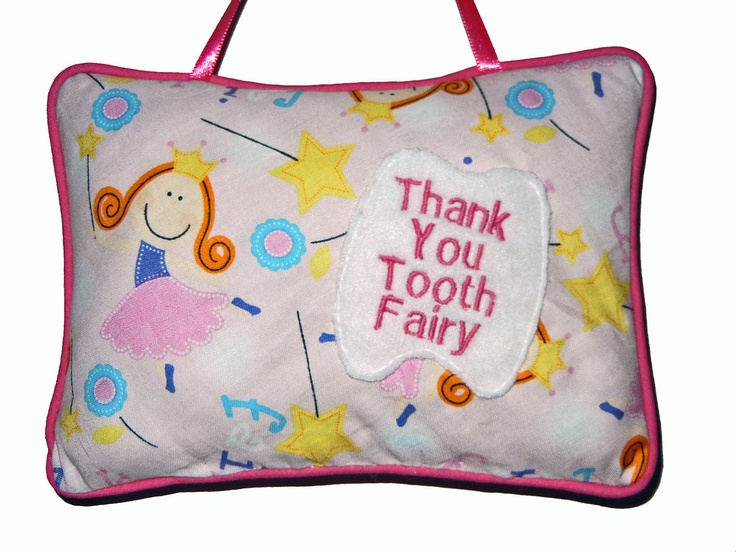
“Is the tooth-fairy real?”

The six-year-old shows me a new hole in her mouth. First wobbly baby tooth fell out over the past week, welcoming this Kindergartener to a new world, as well as placing her face to face with the frail veil between reality and fantasy, logic and magic.

“What do you think?” (again, my standard reply: she must have some hypothesis about this if she’s asking. I’m more interested in knowing what she’s thinking than telling her about mine)

Frown. Pause. A searching look–am I doing the ‘adult avoidance of answers dance’ or am I really interested? She decides I’m worth the effort.

“I think she’s not real,” the little girl curls one side of her mouth with the bitterness of the words.

“Wow, really? Why??” The surprise in my voice is real enough, even if the extra oomph to it is intentional as a way to mirror the depth of the child’s emotion about this.

“Because it is really not her. It is mommies and daddies. The tooth-fairy is just pretend. I saw my mommy put the dollar under my pillow,” she is trying to sound very matter of fact about it, but she is disappointed. Crushed, more like. A little miffed, too, for the charades, and for having noticed it. Certain kinds of knowing exact a high price.

“Oh, well, maybe the tooth-fairy just needed their help,” I note. Sometimes such announcements about magic-loss are actually challenges, fragile requests for help in restoring the possibility of wonder, Santa-Clause, and fairies.

Eyebrows raised–am I trying to trick her?–but there’s also a smallish rounding of wonder in her eyes. She’s curious now. Hopeful. “What do you mean?”

“Well, I’m thinking, all those children losing teeth. I bet sometimes there are just too many in one night for the tooth-fairy to get to, so maybe she asks the parents to help.”

“Oh.” A moment of silent thinking. She’s letting this in, perched on the fence between accepting what she wants to believe, and what would put doubts to rest but also put out magic.

I wait. There’s no rushing works of hearts.

“So …” she pipes up, “Maybe my mommy helped because there’s only one tooth-fairy and she was too busy?”

“Maybe, huh?”

“YEAH!” her face transforms. It is lit now. “Because the tooth-fairy, she only has little wings, and maybe she had to be very far, like in California … so she couldn’t have time to come everywhere at night!” Pause. Smile. Wonder in her eyes. “You think maybe next time … when my other tooth falls, see? (she demonstrates a minor-wiggle in the other top incisor), you think the tooth-fairy will maybe be in New York?”

Magic restored.

thanktoothfairy

Be You!

beyourself

“My life is over!” the child’s tone says it all. It has been an especially rough day. He failed a test he’d studied for, got passed over for the team he wanted to play in, and just found out he needed glasses. Oh, and that he’s allergic to dairy. The food he loves most in the world is pizza. Figures.

I could see something was wrong when he came up the stairs with shoulders slumped and legs dragging.  He’s usually content enough to come here, but today the last thing he wanted was to have to spend time after school doing ‘after-school’ learning. He likes me well enough, but in the competition between play-date, video game, movie, or seeing me, I don’t stand a chance. It’s as it should be. I get worried if children prefer coming to me to having spare time or play time or get-home-and-relax time. He’s unusually unhappy to come this time. Or rather, he’s unusually unhappy, and it shows. Make sense that it would. Am glad it can.

“And I’m never ever going to be like everyone else,” he adds, having listed the tally of difficulty, bummers and unfairness.

“Why is it good to be like everyone else?” I ask.

He returns the look I probably deserved–the one reserved for adults who ask stupid questions when they should know better and when the query is not even worthy of the effort of forming a reply.

“Okay, okay …” I chuckle, hands up in trounce. “I didn’t mean it that way. I do, however, truly think that everyone is different and that it fine and often even better that way.”

Eye roll. At least he regained enough energy for sarcasm. “Yeah, sure. But you get to be really different and you end up being weird.

Fair enough.

“And anyway,” he sighs. “I don’t have a choice. Everyone has to do the same stuff at school, and everyone is supposed to get good grades, and be popular and that kind of stuff.”

“Hmm …” (when I say less, the kids tend to say more … I wait).

“School is too hard and it is too boring. And my dad thinks I’m not trying but I am working hard. I’m not a genius or a nerd or something. I’m not good at reading and I suck at math. And science … I failed science … my dad is going to hate me when he finds out.”

I wish I could rush to reassure this boy–barely 11 and already so jaded–that he is not expected to be like everyone else, that he is not expected to excel in everything regardless of his relative strengths, that his perception of needing to be popular is not correct … or that his father would not have a reaction that would crush him. Oh, I know that the father would not hate him, but he can be critical, and he tends to view grades as the only reflection of effort. He would likely see a failed test as an immediate proof of his son not trying hard enough. Even if he does not ‘punish’ him by taking away computer time or confiscating his phone for a weekend, the disappointment alone will devastate this child.

“He doesn’t understand,” the boy adds. His voice catches and he looks away, old enough to have internalized the (mis)conception that tears are somehow yet a marker of weakness. He doesn’t want to show me how much this matters. “I studied really hard and I knew all the notes but then the teacher changed the questions. How was I supposed to know the answers to those?” the color rises in his cheeks, wetness in his eyes. He looks away again.

“I’m sorry,” I say. I mean it. “I know how hard you work and I can see how having different questions–even if it was about the same material–can make it much more difficult. It is hard to figure out what the teacher meant and what the questions are about.” He nods. This boy is not making excuses. He comes to see me because he has difficulty with retrieving information–the access to what he knows is hit-and-miss, his brain behaves more like one big dump of knowledge than a filing cabinet. Information comes in haphazardly and is later hard to recognize or organize. He is smart, and he understands the material. However, change it around and he gets lost.

The teachers only marginally understand it. His father thinks that there’s nothing wrong with his son that a bit more ‘motivation’ won’t fix. It is curious, you might think, that he is that harsh when he admitted to having had learning issues himself. Or maybe not curious at all: people can pass judgement like a hot potato–what they cannot stand to hold, they put onto another. It can be especially so between mother and daughter, between father and son. Mirrors are a painful thing for what one did not accept in oneself and sees reincarnated in their progeny.

“Would you like me to speak with your father?” I offer. I’ve done it before, and it helps some, if temporarily. The father is of the opinion that I am far too soft and that kids wrap me around their little finger and I think they can do no wrong. He is not all that far from the truth, actually. I do believe that softness and kindness get farther and build better than harsh critic and demand. To his credit, the father also respects my opinion, and he does–quite touchingly–love his son. He told me once, in a moment of vulnerability, “I don’t want him to go through what I did. I want him to fit in better. To be a better student than I was. To be like everyone else.” (Yes, the boy now worries about same. Children will take on our fears and worries–they are acutely tuned in to what we think, even if we do not say it. They will know, and take it on)

The boy nods. He looks up at me then, hopefully slightly relieved–if not with the possibility of his father’s understanding, than by being believed. “If it is so good to be different,” he challenges, “what am I good in?”

“What do you think?” (my standard answer-query. I figure, if a child is asking, they already have a hypothesis in mind)

Moment of thought, pursed lips, raised eyebrow. “I’m good at drawing,” he states.

I energetically agree. The cartoons this boy can doodle put my best attempts at stick figures to shame. He smiles. He knows–as I often emphasize to the kids–drawing is not one of my strengths (five-year-olds come to my aid on a regular basis. “Let me do it for you,” the munchkins offer, “you are not very good at that…”). He smiles.

“And at snowboarding,” he adds. I nod. He began snowboarding only the winter before last, and reportedly advanced super fast from level to level. He snowboards with children several years older now. “I want to be a professional snowboarder when I grow up,” he says, the spark back in his eyes, “and wouldn’t it be cool if I drew, like, cartoons of snowboarding stuff, you know, for newspapers and maybe comics and such? I bet I could do that. Would that be awesome stuff?!”

I smile. “That is pretty cool stuff! You have got to do school work because that’s just how it is, and you have to do your best with that. But I am thinking, there are a lot of kids who would love to know to draw as well as you do, and most can’t snowboard half as well as you can.”

He grins. Proud.

“So …,” I note gently, “maybe life is not quite over … and maybe it is not such a bad thing to have some stuff where you are not exactly like everyone.”

hopeis