Mystery Mom

church pew AMDB7 on Flickr

Photo: AMDB7 on Flickr


She doesn’t know who her mom is. She was left as a newborn, wrapped in a piece of old bedsheet, under a pew in the church. Or so the story goes.

She spent her first year in the orphanage. Many mewling mouths and too few holding arms. She found a way to survive.

Halfway into her second year she got picked up, fussed over with odd sounds, carried out of the room that had been her world. It was confusing. It was good. It was a lot.

She has a family now. They love her. They are patient. Most of the time. They try.

She’s a big girl. Almost ten. She understands. Sometimes.

She still can’t help but wonder who she is. What made her undesirable. Why she was left, naked not only of clothes but of clues.

She still can’t help but wonder about the woman who’d had her, then left without a sound. The woman who isn’t even mist and fog of memory and yet she still is tethered to in heart and mind. Her Mystery Mom.


For The Daily Post

Trademarked Children

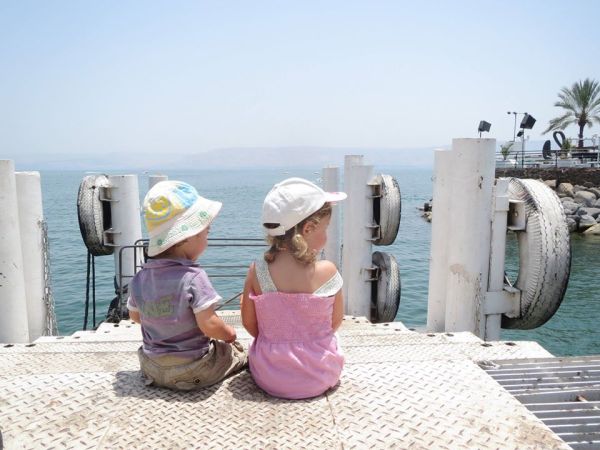
kids on dock OsnatHalperinBarlev

Photo: Osnat Halperin Barlev


“She is a stubborn one,” her mother claims. “Screams bloody murder when she doesn’t get her way.”

“He is our difficult child,” the father sighs. “I guess every family has one.”

“This one is the lovey-dovey twin,” the grandma declares. “Her sister? She’s the total opposite. Wriggly worm, that one.”

“He’s Mister Independent,” the foster mother says, “Won’t let anyone help him with anything.”

“He’s the lazy one,” the teacher complains. “If he can get away with not doing something, I bet you he won’t do it.”

“She’s the fighter,” the nanny imparts, “bossy as they come.”

Surely she is more than stubborn. Surely he’s not always difficult. Surely there are times she does not want to cuddle and when her twin sister relaxes into hugs. Surely sometimes he wishes to be helped. Surely he is not just lazy. Surely there are situations where she does not want to fight.

Children listen to our words, and the tone we say them. They internalize our attitudes of them and all too often identify with the boxes we sort them into. Let us take heed, for what we stamp children as, they might live up to without knowing there are many more hues in the palette of what they are and can become.


For The Daily Post

A Pun Discovery

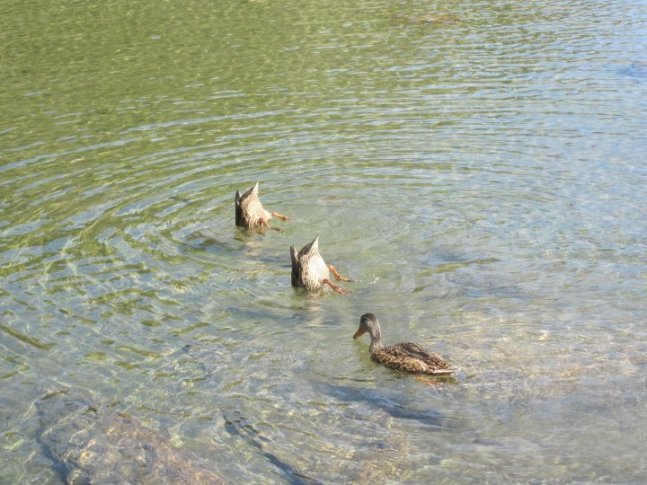
duck duck duck OfirAsif

Photo: Ofir Asif


The five-year-old bounded up the stairs. I could hear him giggling. He stopped two steps below the landing and tilted his head at me. A brown curl flopped over one eye and he blew at it.

“When does a duck duck?” he challenged.

I grinned at his giddiness. Language for this child had just began to turn more fun than frustration, and his emerging fascination was delicious. “When?”

He chortled. “When you throw something at it! Because …” he demonstrated, bobbing so deeply that I reached over to grab his shoulder to ensure he didn’t lose his balance on the steep stairs, “duck … like this … is same as … quack quack duck!”


For The Daily Post

Brushosaurus!


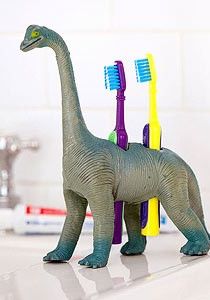
toothbrush holder

Photo: Pinterest


Quite a few of the children who come to see me have sensory issues that make teeth brushing a daily struggle. Princess and superhero themed toothbrushes are one way to make a necessary routine child-friendly and help with carryover and healthy oral-care. Another is to add a ‘toothbrush guardian’ (added bonus: this allows an inexpensive way to keep up with the recommended frequent change of toothbrushes).

To make Brushosaurus, drill a pair of holes into a plastic toy to make a handy dandy toothbrush organizer. Has been known to work just as well with magic ponies, sheep, unicorns, giraffes, and even the occasional Brushoturtle.

Brush on!


For The Daily Post

“A Case of Constant Disastering”

Geiger Counter

What upsets your cart? What throws you off? What drains your battery of oomph and energy? Do you get riled up in a flash but calm down glacially? Do you struggle to maintain the smallest bit of equilibrium while others seem to swim in zen-like Flow? Have you been told off for “over-reacting” and being “overly sensitive”? Does it, indeed, seem to be that e-v-e-r-y-t-h-i-n-g is just too much to process, let alone appreciate and thrive in?

That is how life is for a teenager I know.

She calls herself “a case of constant disastering.”

Her days are spent in never ending rush to keep up with assignments that don’t get done because she is too stressed to focus on them because she already worries she won’t manage and then doesn’t. She feels mired in conflict with her parents who she says don’t understand why “every little thing” throws her off. She struggles to attend to all the balls she perceives are in the air and thinks are hers to juggle (only to find out later some were not, and that she’d dropped the very ones she shouldn’t have) …

Her body swings from all out anxious to shutdown and molasses-like, weighed down by overwhelm. She blames herself for both, which only feeds the shame that feeds the stress that feeds more “constant disaster.”

She hates this about herself. She wishes to be someone different.

“I wish I could be stoic,” she says. “Strong, you know.”

“But you are strong,” I respond.

She shrugs. She knows. Some days more than others.

She understand how her body’s calibrations had gotten to be quite so delicate: born very prematurely and with serious medical issues that required many painful interventions, her nervous system (and psyche) could not really process the overwhelming stimuli she was exposed to. Her reactions still mirror some of the pathways that became the foundation of her default. Of her survival formation. Her parents, too, were terrified and anxious. Oh, they did their best in love and caring, but they, too, were scared. For her. For her future. Of hurting her. Of disconnecting something. Of something worse than disastrous.

Panic was real and tangible. Babies in that NICU die. She almost did. Twice.

They were all of them scared. Much of the time.

Is it a wonder, then, that life wobbles precariously tentative, at the smallest reminder?

“But I’m not a baby anymore,” she points at lanky limbs that have long ago outgrown any crib or incubator.

“I know,” I smile.

“Now I’m just a Geiger meter,” she complains, “and my body beeps ballistic at the smallest variation.”

“Tricky,” I nod. “Also … kind of skillful.”

She pouts, but then a smile pushes a small corner of her mouth and the other corner joins in and she grins, eyes atwinkle. “Yeah, like a full-on skill at constant disastering.”


For The Daily Post

Grit of Will

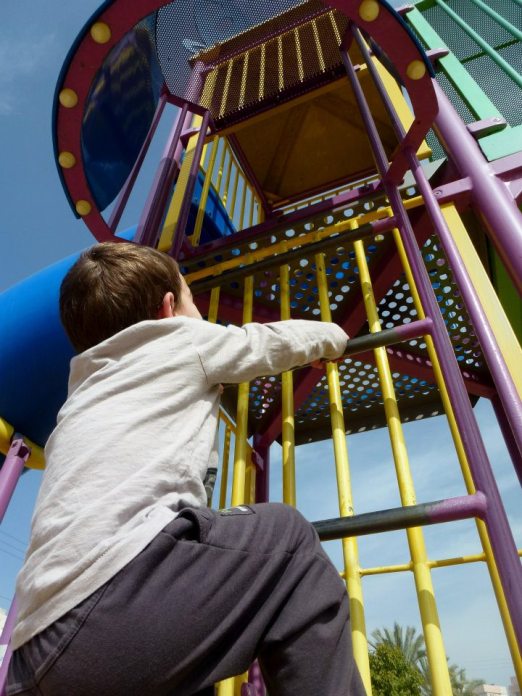
up up and away

Photo: Smadar Halperin-Epshtein


They don’t give up.

They push on, they keep trying.

For the plainest of skills.

Simple tasks need endurance:

Every sentence’s a summit

Every speech sound’s a triumph of will.

Such tenacious young children

Built of grit and forbearance

Marathoners of life’s endless sprints

All uphill.

Oh, how deeply they teach me

The depth of true mettle

In courage, in hope to succeed.

Their indomitable spirit

Forms a marvel:

Pure resolve wrought from steel.


For The Daily Post

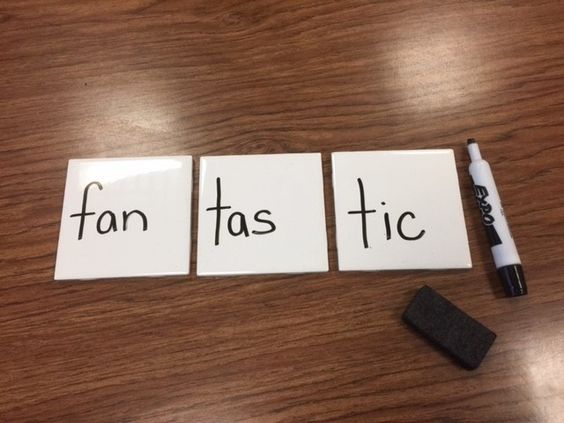
Tintinnabulation

multisyllabic

“I found some words with lotta syllables!” she announced and pulled a crumpled list out of her back pocket.

She and I have been working together for some time. Born very prematurely and with various – if not always visible – neurological challenges, she has had to work hard for every milestone, every skill, each speech-sound. At nine years old, she had good intelligibility in short words and brief phrases, but her clarity was still vulnerable in longer words or sentences.

“Hi-ppo-po-ta-mus,” she read, tapping syllables on the table. “Five!”

I smiled. This girl never needed prodding. Her internal motivation put most people to shame. If she put her mind to something, you better believe it that she’d go the distance for it, and then some. She wanted to be an actress and actresses needed good diction. She was going to make sure hers measured up.

“Ca-li-for-ni-ya and Phi-la-del-phi-a … both five! I-ma-gi-na-ry … five!”

She read several more words, repeating any one that lost a sound or two in the process. When she got it right, she repeated it again, insistent on perfection.

“My dad helped me find them,” she pointed to the list. “We had fun thinking them up in the car. We found lots of words with four … like ‘as-pa-ra-gus’ and ‘par-ti-cu-lar’, but not so many with five. Are there any words with even more, like … with six syllables?”

“Quite a few,” I smiled again. “Some you probably know.”

“Like what?”

“Responsibility.”

“Oh!” She whispered to herself and counted the syllables on her fingers, “yeah, six!”

“Capitalization”

“Like in writing?”

“Exactly like in writing. Then there’s: identification, autobiography, veterinarian, personification, generalization …”

She wrote each word down. Practiced saying it. “Do you know any weird ones with six syllables?”

“Hmm,” I nodded. “How about ‘discombobulated'”?

She laughed. “My grandma says that one.”

“How’s ‘extemporaneous'”?

She twisted her lips. “That’s not weird, just boring.”

It was my turn to laugh. “Fair enough.” I thought a moment. “Infinitesimal?”

“Not weird.”

She was going to make me work for it. “How about …” I winked, “mispronunciation?”

“Ha-ha, very funny,” she rolled her eyes. “Try again.”

She raised her eyebrows and waited. A moment ticked by as words trickled into my brain, six-syllabled but certainly not weird enough to qualify: visualization, spirituality, irregularity, disorganization, availability, cardiovascular. …

The room darkened as clouds passed over the sun and the wind picked up. The forecast promised thunderstorms. I was about to give up to a google search when a chime jangled in my window and with it came inspiration.

“I have it!” I exclaimed. “Tintinnabulation!”


For The Daily Post

Dish Dash

greek handbroom

She walked into the house to a flurry of activity: broom in one set of hands, brush in the other. Guilty faces. Unidentifiable smell.

“What…?”

“He started.”

“She told me!”

The woman narrowed her eyes and scanned the room. The counter looked okay. No scorch marks. No splatter on the stovetop and walls like the last time when they had experimented with tomato lava. A foot in pink sock moved in the periphery of her vision and she lowered her gaze to the floor: the toes had attempted to nudge away a white bit of something. Paper?

She sniffed. What was that smell. She knew it from someplace … reminded her of dusty flea markets. Like old ceramics. Ceramics? Ceramics!

The distance to the garbage pail was covered in one giant step, arm already extended to reveal … a heap of shards, jagged shiny white, all sizes.

To the cabinet, still unbelieving: Bowls, mugs, cups. A suspiciously bare corner.

Little feet shuffled, oh so guilty.

There were no plates in the sink. None in the dishwasher.

“What have you done?”

They spoke over each other. “He did it She told me to We had a Greek wedding …”

“…so we had to break the plates,” the younger one emphasized with more hope than conviction. Even at not-quite-four-years-old he knew he was in trouble.

As for the seven-year-old? No added confirmation was required beyond how this child who disappears whenever there’s anything resembling cleaning up, had gotten herself voluntarily busy with the broom.

She shook her head, too stunned to truly feel angry. Yet.

“Where’s your big sister?” The fifteen-year-old was supposed to be watching the younger ones. She better have an explanation!

Chins tilted in the direction of the basement. Eager to shift blame. Muffled sounds filtered through the closed door. She listened. The tune was eerily befitting.

“Doing what?”  … even though she already knew the answer.

The little one piped up. “She watching big fat Greek one wedding!”


For The Daily Post