
Magnolia in bloom
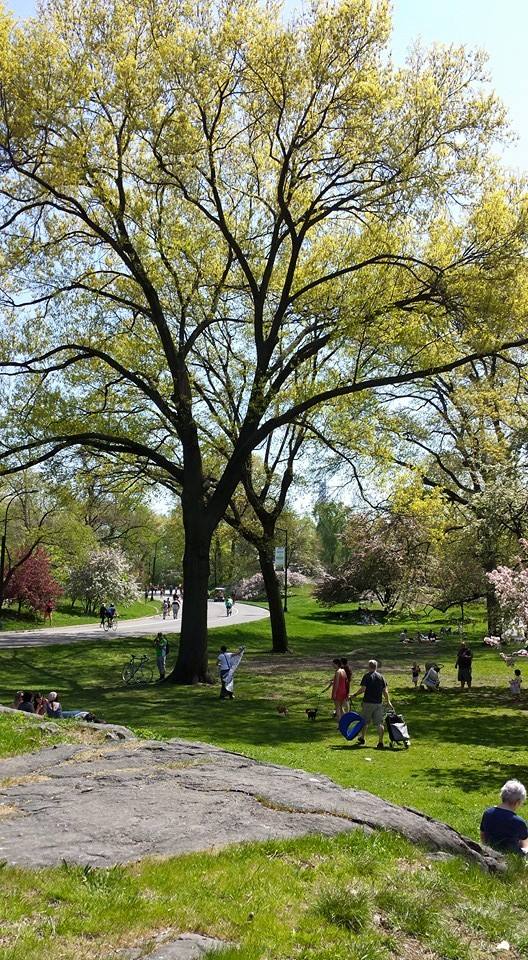
NYC in the Spring

Magnolia in bloom
NYC in the Spring

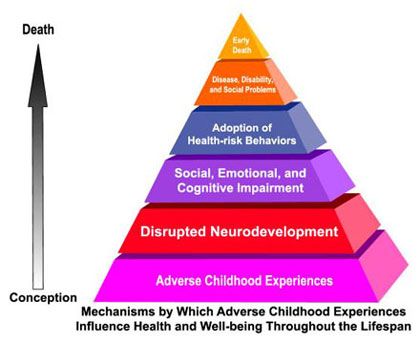
How do childhood adverse events affect development? How do they impact health? How much does it cost society to have children exposed to adverse events? What are the social ramifications? How does childhood adversity reflect in mental-health? In illness? Can we prevent childhood adverse events? Why is it worth it for society to invest in prevention and treatment of childhood trauma?
And other questions: What is more harmful: second hand smoke or childhood maltreatment? How is that reflected in funds or investment in prevention or treatment? Where does asthma come in? What can we do about any of this, anyway?
To find the answers to these questions and more, check out this amazing presentation (also available in PDF and PPT on the site–see links below).
This free resource is available due to the generosity of Frank and Karen Putnam along with their colleagues, who created this presentation in the hope that it will be widely disseminated and that it be used as an education resource for the public as well as for researchers and clinicians. The presentation details the prevalence, impact, treatment, and importance (it is highly possible!) of prevention of child abuse and neglect. The authors encourage everyone to use the presentation and share it.
The slides are available on the website http://www.canarratives.org/
To view the Power Point Show: CAN_Narrative_4-26-15-v2L4
To download the pdf: http://static1.squarespace.com/static/552ec6c7e4b0b098cbafba75/t/553e3673e4b09e094f914b8f/1430140531869/CAN_Narrative_4-26-15-v2L4.pdf

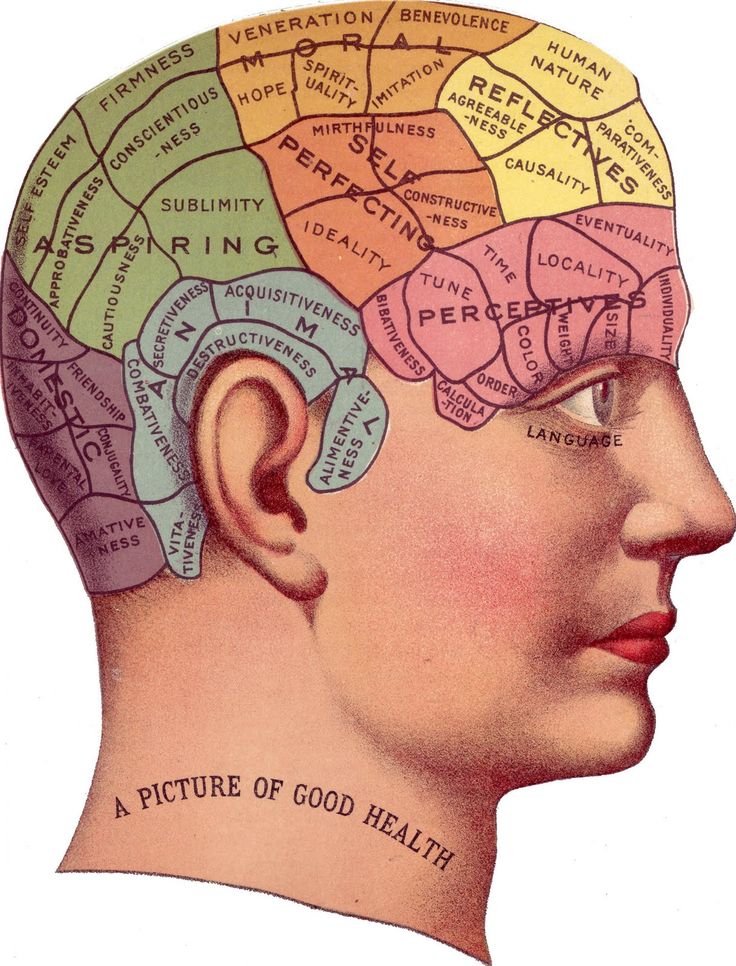
Vintage Phrenology: thegraphicsfairy.com
There are over 1,000,000 substantiated reports of child maltreatment annually in the US alone (US Department of Health 2013). The impact of maltreatment on development and health is indisputable. The last two decades showed brisk research in the area of trauma and dissociation all over the world. It is therefore quite surprising to find psychology textbooks to be so behind the times (and behind the data) on covering child maltreatment. This leaves hundreds of thousands of students a year with less-than-accurate information that may impact their ability to identify or understand the aftermath of child maltreatment.
In an important article (also see full link below), Brand and McEwen review the three leading introductory psychology textbooks and how they address (or not address) childhood maltreatment and its aftermath. The results are distressing in lack of citing of current data (as in many textbooks on psychopathology).
One can hypothesize why prominent textbooks will not sufficiently cover such an important topic (one would think they would find it essential to cover well if only for the known health effects of childhood maltreatment across the lifespan, in both physical and psychological health, costs, and healthcare utilization). Maybe it is as simple as using outdated resources or not keeping up with research and known data. Maybe it speaks to more widespread issues of denial and minimization of childhood maltreatment. Maybe other reasons. Regardless of why the textbooks are lacking, the reality remains that the textbooks leave students un-informed on the topic.
The good news is that this can be changed! The data is available–it just needs to be included and reviewed better!
Hopefully having more awareness to this will allow students and faculty to challenge the choice of textbooks and to demand better coverage of such a relevant issue. Students are shortchanged when they are under-informed and when data is slanted or may appear to be biased or outdated.
What can you do?
Let your faculty, librarian, and fellow clinicians and students know that our college students deserve a more cohesive review of childhood maltreatment. Share the article below. Talk to professors who teach these courses and support them in seeking better balanced textbooks. The research is available, it simply needs to be included rather than avoided. Let us work together for improving information in education!

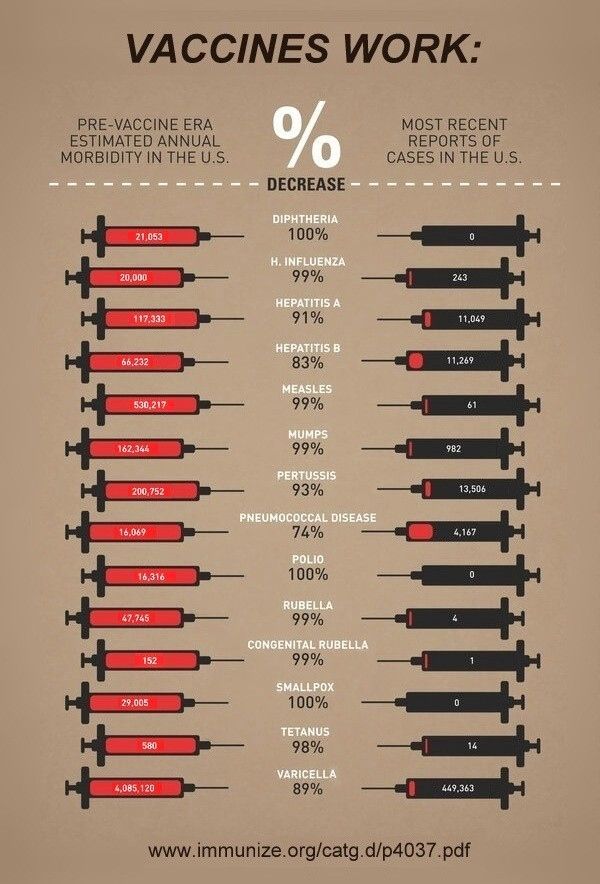
Am sharing the article below because there is benefit to reducing the worry and panic and misconceptions among those who still hear things about the supposed connection between autism and vaccination, and don’t know or never had good access to the facts.
This recent article in JAMA is one more study that shows NO CONNECTION between the MMR Vaccine and Autism. In fact, there never WAS a connection. In fact, no peer reviewed studies ever did show a connection. The study that caused the original panic was — by the admission of the researcher himself — made up and the results were falsified. The article was withdrawn a long time ago from reputable journals, and the scientist has been discredited for the results he falsified. Furthermore, his claims were never replicated (not surprisingly, given that they were false from the get go), and there has never been any support for the connection.
Some children may have adverse effects to vaccines–or to any medication or substance for that matter. Children can react to cotton, wool, milk, wheat, sugar, natural vegetable dyes, sweet potato, eggplant, broccoli, eggs–just about anything. This does not make the rare reactions mean that these substances should be avoided generally, or that they ’cause’ diseases. Vaccinations do not cause autism. There has never been any support for that, and many people did try to find it. They did not.
I hope this current publication in one of the most prestigious and rigorous journals in the world will help straighten out some of the facts for those who are still worried.
Vaccines save lives. They do not cause Autism. Never had.
http://jama.jamanetwork.com/article.aspx?articleid=2275444#

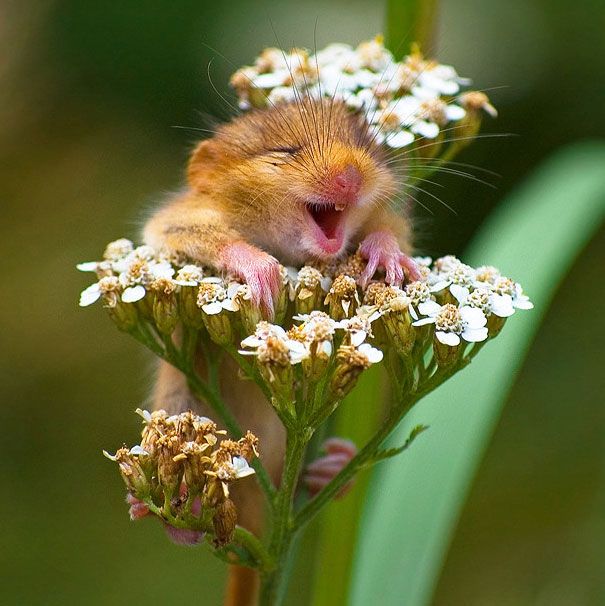
“I had the best weekend ever!” the preschooler’s eyes sparkled.
“Oh, wow, that’s so great!” I responded, grinning. It is contagious, you know, this kind of zest for life. And the enthusiasm of this little one was particularly catching. He literally beamed delight.
“We had the best ever dinner and the best ever pizza!” he bounced on his heels, the words not coming nearly fast enough. “And I saw the best movie ever on the Netflix. And my grandpa makes the best popcorn and it like magic in the microwave and I have the best pajamas ever!”
“You have new pajamas?!” My monkey brain had to assume.
He paused and regarded me with some confusion. “I already HAVE the best pajamas ever! It’s superman pajamas!”
Silly me.
He kicked off his shoes and glided on the wood floor with his socks, balancing with his arms. “Wheee! Best floor ever!”
“Did you have the best weekend ever, too?” he added, not quite waiting for a response before sighing contentedly. “You did, right? Because it was the best weekend ever!”
The details change a bit; there’s not always popcorn, sometimes its just TV and not Netflix, sometimes it is the park, or playing ball, or baking cookies, or his dad reading him story. Doesn’t matter. The weekend is always–always–the best one ever.
And it makes for Happy Mondays; every one.


As all life renewed is celebrated
in birth, rebirth, and freedom,
May your life be filled with flourish
and may color glad your heart.
May the wheels of time spin softly
taking you on sun-warmed rides,
And may you know that love, completely,
Blooms and overflows inside.

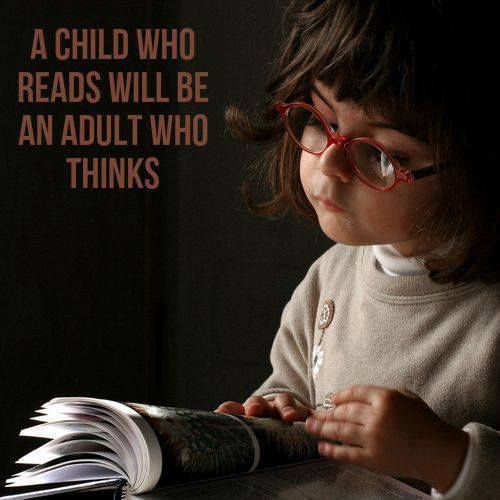
From Pintrest
Oh so true … that a child who reads will be an adult who thinks. Reading opens doors, windows, paths, and secret passages to all manner of worlds and imaginations, language and vocabulary, expression and understanding.
Reading matters.
A reading child is also preceded by a child who is being read to and is spoken to and with, and who experiences being part of conversations and experiences, narrative and the day to day stories of life lived and happenings that happen …
Because:
A child who is read to will be a child who listens, imagines, thinks, wonders, comprehends and symbolizes… A child more likely to read and enjoy reading …
A child who is talked to, who participates in conversation and discussion, is a child who knows to ask questions and answer queries, offer opinion and listen to that of others, be curious about others’ experience and tolerant of differences, ideas, and views… A child more likely to read and enjoy variety in what they read …
A child who is listened to–and is shown how to reciprocate and take one’s turn in listening–is a child who can relate and remember, reminisce and realize, teach and learn, listen, comprehend and think… A child more likely to read and find books a place for expanding understanding and relating …
So …
Did you open a book today? Did you tell a story? Make a story together? The story of going to the store, of cleaning up the room together, of salad making and laundry folding, of visiting the park and counting dogs with spots and kids in strollers, of the rainbow of colors in the produce aisle and the funny thing that silly dances do to your feet and heart and smile …
Go tell some stories. We’re never too old or too young!


Trauma all too often brings up the detective in people, prods them to question, pin point, dissect accounts, weigh relative credibility. It is an odd thing, given the reality that trauma–by its very essence of overwhelm and shutting down of language centers, processing, and memory integration–affects how one may be able to remember, recount, and narrate it. Trauma is difficult to articulate and often too difficult to comprehend, even to know. And yet, it is often demanded to be phrased in exact details that go beyond every-day memory. As if trauma memory should be, somehow, more stellar, subject to higher standard, to bigger scrutiny.
Granted, there may be a motive in it: people would rather believe trauma is less frequent and not as severe. If there are holes in a story, maybe it is ‘proof’ that it did not take place, or not as badly, or not deliberately … At the same time, there is an inherent lack of understanding about how memory and overwhelm conflict and contradict each other. In some ways, a misremembered, disjointed, incoherent event fraught with numbness and confusion may well BE one of a trauma … rather than be proof of something not happening …
Trauma is a problematic thing for memory.
People remember trauma differently. Some remember constantly, vividly, intrusively. Some remember oddly. Some remember snippets, or sensations, or disjointed unease that seems disconnected from anything that seems to make sense. Some remember sometimes. Some remember not at all.
Children, especially, may find not remembering safer than to try and manage the overwhelming reality of what to let reality in may mean. They may have to keep things in the ‘not knowing’ folder to go on and push away reminders that make no sense, they recant, reverse, deny, ignore.
In the article below, the author explores memory and trauma, denial and dismissal, inaccuracies and interpretations, shame and judgment, burden and prejudice, reality and myth.
It is a worthy read for anyone who has been touched by or knows someone who has been touched by trauma (that should include the lot of us, really …). It is an even worthier read if one keeps in mind how it would be all the more difficult for children to conceptualize and remember trauma cohesively, when they have less tools with which to manage what they had endured, and are more vulnerable to misconceptions about what it says to them, about them, about those who hurt them, about the world, about who they may be or have become.
I Was Sexually Assaulted As A Child. Here’s Why I Didn’t Remember For Years.
http://thinkprogress.org/health/2014/12/23/3606576/memory-and-sexual-trauma/

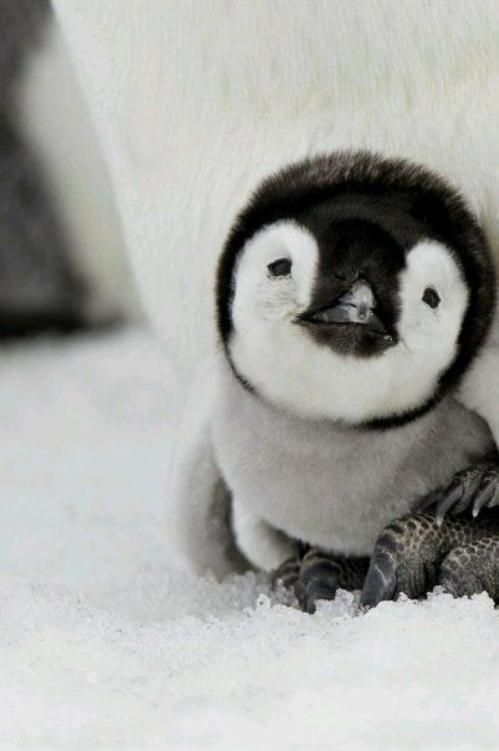
If the winter weather’s getting you shivery around the edges
and strikes a bit of waddle in your walk,
think cute …
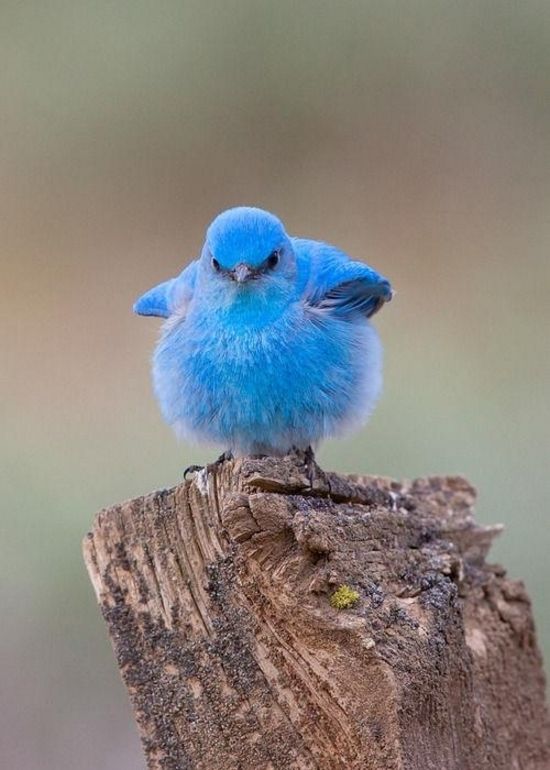
If the chill gives you the blues,
puff it out
with color and
with attitude …
If the cold brings out the grump,
Forget the chill,
go at it
with a friend …

The chill … will end …

“What does it mean, to tell the truth?”
A child asked me that. As usual, they are my greatest teachers. “What do you think?” I returned the question, wondering at the child’s working hypothesis (and chickening out just a little bit–let the munchkin do the hard work …).
I got the look I deserved, and: “To not be a liar.”
“Hmm,” I non-committed. “What does it mean to lie?”
“To say you didn’t do it but you did?” he tried. “And to be mean.”
I raised an eyebrow. This kid was good at reading body language.
“Yeah, because someone else get in trouble.”
“Oh, I can see how that would not be very nice, to get someone else in trouble. Anything else lying means?”
A moment of scrunched forehead. “Is it still lying even if you pretend you didn’t do it but you don’t say?”
“What do you think?”
A sage nod. A sigh. “Yeah, it still mean. Someone still get in trouble, right? Because the teacher think its them.”
“So…” I prompted (he was doing so well on his own, I felt like my words would be interfering).
“So … telling the truth is being not mean?” he ventured. His little face was quite serious, thinking this through.
“Hmm.”
“But truth is hard,” he sighed, a six-year-old summing up centuries of philosophy. “It can get you in trouble. … you know, if you did bad things.”
He paused. “But … then you can say sorry, maybe. Maybe you won’t be in trouble. … if you’re lucky.”
“Yeah, being honest can help.”
Big brown eyes hung onto mine. “What do you think is worser, being mean or being in trouble?”
Tough one. I’m returning it to him. “What do you think?”
“Being mean.” He did not hesitate. “Being mean is worser.”
“How come?” I pushed. Curious. Enchanted by this child.
“Oh … because … being mean makes me more in trouble,” he stated. Pointed to his midriff. “With my heart.”
Old soul, big spirit, that.

A place to improve my writing skills, and that's all.
We're not thriving, we're creatively photosynthesizing under duress.
History of the Bloomingdale area on Manhattan's Upper West Side
A creative miscellany of mythic fantasies
a weekly flash fiction prompt inspired by google maps
A community for writers to learn, grow, and connect.
To participate in the Ragtag Daily Prompt, create a Pingback to your post, or copy and paste the link to your post into the comments. And while you’re there, why not check out some of the other posts too!
I can't sleep...
Alternative haven for the Daily Post's mourners!
never judge a girl by her weight
original fiction and rhyme
You have reached a quiet bamboo grove, where you will find an eclectic mix of nature, music, writing, and other creative arts. Tao-Talk is curated by a philosophical daoist who has thrown the net away.
A photographer's view of the world - words and images to inspire your travels and your dreams
Life in progress
Straight up with a twist– Because life is too short to be subtle!
WordPress & Blogging tips, flash fiction, photography and lots more!
Light Words


You must be logged in to post a comment.