Name Protection, Preschool Style

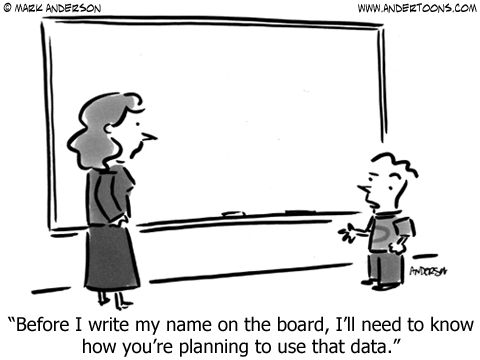
“My mommy said not to write my name.”

“She did?”

I am easy pickings for leg pulling and the kids know it, but somehow this little tyke looks dead serious. None of the tell-tell signs of lip corners dying to lift in merriment. None of the twinkly eyes that let me know I have been had. Again.

I’ve been through all manner of stories that led to hilarity-about-my-gullibility: Believing that a child had gone to the circus instead of school, or that their grandma allowed ice-cream for dinner, that they went to the zoo on a rainy day and everyone got wet (in actuality, this one was wishful thinking, as the trip got cancelled…), or that their dad said they would get another iPad all their own (scratch that, this one ended up being true … the earlier version having lost its sheen, in the eyes of the child or father, I’m not sure …).

This no-writing-name business; however, that was new. No hidden grins, either.

“Your mommy said not to write your name?” Maybe I misheard. Happens.

Little-Tyke nods serenely.

“How come?”

“Because.”

Fair enough. We grownups should get a taste of our own medicine at times. Not that I do a lot of the “because” why-chain-question-closer, but I probably have said it once in a while when it became too clear that questions served to avoid work, and not for real curiosity or learning.

“Hmm. I’m curious, though …”

Little-Tyke gazes at me.

“Is it you who should not write your name, or is everyone not allowed?”

Frown. Tiny creases appear in the five-year-old’s forehead. Cute as a button, this one. Even perplexed. Maybe especially when perplexed.

“I think only me. Me not write it. You can because it is your job already.”

“Ah, okay. That’s good to know.”

Sage nod.

“Why do you think you can’t write your name?” I really want to know. This rings  of misunderstanding of adult-talk.

Throughout this all the nanny, her head buried in her cell phone, ear-buds plugged in, sits motionless by the far table she often chooses to wait by, rather than on the couch near us, where most caregivers sit. I have come to believe that the sessions are a time of rest for her, a calm refuge from having to constantly watch an active munchkin, and I know she has very long days.

“Because you’re not suppose to,” the kid brings me back to the topic. “You not suppose to write your name.”

Now I’m not supposed to, either? Is this a repeat of something he heard said, a glimpse into the bigger context of this misunderstanding?

“Why, though.”

“The bad people will steal it.” The boy’s expression is certainty reincarnate.

“Oh?”

“Yeah, if you write your name then the bad people take it and steal it and take all your numbers and even all your money and then you don’t have a name anymore.”

Identity theft. Preschool style.

A few moments of discussion of private information and how one can still have a name even if they write it … and Little-Tyke is reassured that he ‘probably’ could add his name on the drawing he had made to take home. I leave it as an open option. No pressure … For extra measure of reassurance–and because I don’t want to put him in a bind of doing something I say is okay but that be believes his mom said was not–I send a text to his mom in his presence and following his approval of the query wording: “can LT write his name on the work he does here?”

The mom’s response is “??? of course he can! Is everything okay?”

“All fine.” I respond. “I’ll explain on phone. TTYL,”

The little boy’s eyes have been glued to the phone’s little screen. He sits up suddenly, part-admonishing, part-suspicious, part-gratified. “Aha! You see? You didn’t write your name, either!”
 

info use

Fair Share …


flower girl

A little girl of preschool age sits with her mom in session. She substitutes some sounds and tends to delete the ends of words, saying things like: “pe” instead of ‘pen’, “la” instead of ‘laugh’, “ha” instead of ‘hat’, “may” instead of “make”, “wabee” instead of ‘rabbit.’ Her speech can be difficult to understand, which is why she sees me for speech therapy.

Articulation aside, this girl’s language and expressive skills are up to par, and her infectiously delicious personality keeps us in stitches half the time.

We’re practicing saying word-endings by “discovering” (uncovering) and naming picture cards: “pig”, “hug”, “map”, “cat”, “man” … She pauses on the picture of the man. He is dressed in a suit and tie.

She’s been to a wedding recently as a flower girl to the bride–her mom’s cousin–and has been fascinated with weddings since. White dresses, tutus, flowing gowns, flowers, princess-wear… It enchants her to no end and she ‘plays bride’ with her dolls, marches with imaginary flowers down makeshift aisles.

“Mommy,” she pipes, pointing at the picture of the suit-clad man. “Is he getting married?” (“ee he geti mawee?”… it helps to know what she is referring to, if one is to understand …).

“Maybe,” The mother smiles.

“I want to get married, too,” the child demands.

“When you grow up you can. Who will you marry?” Mom can’t resist.

“Daddy.”

“Oh, but I already married Daddy, Sweetie. You’ll have to marry someone else.”

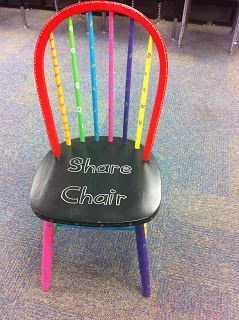
Storm clouds gather on the little girl’s face. “That’s not fair!” She states, hands on hips for emphasis. “You already had your turn. You have to share! It’s my turn to marry Daddy now!”

share chairhere comes the bride

Spilling the Beans …

idiom

I heard them arguing all the way up the stairs. The mom sounded consoling but confused. The little boy sounded angry, hurt.

“Why you lie?” he demanded.

“I don’t know what you’re talking about!” she countered, frustrated.

“You not suppose to lie!”

“I didn’t … oh, just drop it, will you?”

“Drop what?”

“Nothing, okay. Just climb up, we’re late already …”

Two frowning faces, one a smaller version of the other showed up at my door. The little guy took one look at his mother, letting her know that he was not done with this discussion, and announced to me: “My mommy lied!”

She shook her head, sighed.

“Let’s go in and sit down and you’ll tell me about it,” I suggested.

The story unfolded: there was a party planned. A surprise birthday party for the dad, and both the boy and his older sister were in on the plans. All very exciting.

“Actually, initially I didn’t want David to know,” the mother interjected, “I worried that he would not be able to keep it secret … but he found out, and of course he went right ahead and told my husband …”

Little David gave her a withering look. “I didn’t mean to, it slip out,” he noted, vindicated by fate. He then turned to me, righteously riled, “and anyway, my mommy lied!”

“What did I lie about? What did I say?” the mother was clearly tired of this back and forth. She looked at me, “he’s been at it since we left the house. I didn’t lie to him about anything. It’s been really ridiculous.”

“You say I spilling things and I didn’t! I was careful!”

“What did your mom say you spilled, David?” I asked, slightly amused by the exchange and the boy’s insistence, and by a suspicion that was already forming in my mind …

“Beads. She say I spill the beads. I didn’t!”

“The BEANS,” the mother corrected.

“I don’t even LIKE beans,” he snapped and rolled his eyes, and I struggled to keep a straight face.

“It’s an expression, David. To spill the beans, means to tell a secret … maybe your mom was saying that about you telling your dad about the birthday party?”

The little boy glared at me suspiciously–one never knows when adults gang up to take another adult’s side–then looked back and forth from his mom’s vigorous nodding to me. I smiled.

“But why she lie?” his voice was hesitant now. He knew that there was something he had missed.

“She didn’t lie. She used an expression. Remember when we were talking about it ‘raining cats and dogs’ when it actually meant that it was raining really hard? How it was a silly way to say that it was raining hard but it did not mean that dogs and cats were REALLY raining on us? How ‘raining cats and dogs’ is an expression for strong rain?”

A nod.

“Or when we talked about ‘giving a hand’ meaning helping someone, and how a ‘couch potato’ is someone who sits around too much watching TV and doesn’t go outside and play and move around?”

Another nod then an eyebrow started going up. A dawning. “Like ‘heart of gold’ thing being nice?”

“Exactly!”

“Oh,” he pondered. Then his lip curled up in distaste. “But why spill beans? Can’t I spill something else? I HATE beans!”

spilled the beans


A Leap of Faith

leap of faith1

“I want my parents to see Billy Elliot.” The boy and I were discussing Marco Polo and history of Europe in the 1200s, looking at sources from his textbook and encyclopedias. The remark seemed out of context, but whatever the connection or association, I was curious to know more. The boy’s eyes rested on me. Serious. This was no fly-by thought.

“Oh?” I commented, “I heard good things about it. What about it do you want them to see?”

He paused. Fiddled with his pen, checked the time. “I’m not sure,” he mumbled, fiddled more. “Actually …” he looked up, “I want to play the cello.”

The boy has been taking guitar lessons this past year. An athletic guy, his parents thought he was better suited for sports, which he is indeed very good at and loves doing. They were not against the guitar lessons, though they admitted hoping that those were only a passing internet music-video inspired fad.

I just listened. There was more there. I was sure.

“I like playing guitar, but I really love cello. Only thing is .., it’s for like, classic music …” his eyes met mine and then he looked away, stared at his lap. “For orchestra and stuff, you know … nerd stuff.”

“Hmm,” I mused. “People use cellos in other kinds of music, but I get what you’re saying, even though I never thought of cello players as nerds.”

He blushed. “I don’t think they are. I think its beautiful music …” his blush deepened. “I don’t want my dad to think I’m a nerd or like … soft.”

My impression of the father was of a caring, all American, be-my-boy’s-best-buddy kind of dad. They often went to sports events together, traveled to see their favorite teams, bonded over tailgate parties. The boy loved it. And had other interests now, too …

“So … Billy Elliot …” I noted gently.

“Yeah … so they understand I want this, even if it’s kind of different. Is it kind of different?” he looked up, hopeful for denial.

“Personally, I don’t think so. I think music is a lot like a sport–you have to practice, you have to keep at it, you have to love it to do it, and it can also be very satisfying. It is even often kind of a team sport, with players needing to coordinate and work together …”

He gave me the almost-teenage lopsided grin that tells adults that they were doing an okay job in cheering up but their game was up and the comparison was barely passing. “Try telling that to my dad …” he chuckled, not quite mirthfully. He sighed. “My guitar teacher said I have good finger skills,” his voice was hesitant but a warble of pride was evident. “He let me try a cello that he plays sometimes. It felt so right …”

His whole face lit up when he said that.

“So … I want my parents to see Billy Elliot. I told my grandmother. She said she’d get them tickets … for next week.” He pushed on then, his speech suddenly urgent, rapid, “you see, there’s this summer camp, and it is for music … and I can do cello there. Not all summer, just three weeks … I can still go to the other camp, because that one’s only through July … and the music camp is in August … so I could still do both …”

I smiled.

“… they still have openings–my grandma checked–but we have to register, like, now … so … I want them to see Billy Elliot.” He chuckled, a bit tensely, “I’m thinking, it is a lot less nerdy than dancing … so maybe my dad will be, like, relieved that it’s ‘only’ the cello … My grandma said she’ll back me up …”

“I will, too,” I grinned. “Take the leap. Go for it. Try it out. If this is what you really love, then it is wonderful to find it. And if not, then you will still have tried something new that felt worth exploring.”

“Exploring … right,” he grinned. “Back to Marco Polo, huh?”

take risks

Beautiful Like Me!

She came dancing up the stairs, ecstatic, barely able to contain her smile. And she was a sight to behold:

Pastel rainbow tutu skirt over purple denim and red t-shirt with a sparkly princess on it (and a few star stickers), pink tennis shoes (with rainbow laces), green and yellow polka-dot socks (with frilly tops), rainbow-loom bracelets on both wrists, three plastic beads necklaces (one with 1/2 inch hearts interspersed), five hair pins (with various glittery bits and in various states of sliding off), shimmery hair ties holding two droopy pigtails of dark brown corkscrew curls. A smile as wide as the ocean. And a periwinkle clutch, princess stamped and glitter splattered.

Joy incarnated.

She went directly to the long mirror, struck a pose. Her mother chuckled–the last thing her daughter looked at before leaving home was their mirror. The girl stops to admire her reflection in store windows, too.

“I’m so beautiful!” the little one noted in delight.

She was not referring to her features or her body–chubby cheeked, dimpled, lisping, and lovable all over. The beauty was in the gestalt effect of her composition. Hers is aesthetic enjoyment rather than self-adoration.

Her ensemble changes week to week, varied shades of glorious. Never her elation. The wells of her joy are bottomless, oh, the endless possibilities of pleasing presentations!

She’s a walking fashion statement. She’s as happy in oversize overalls and chunky boots (with sparkly necklaces and mismatched socks). No one would be surprised if she ends up an artist, designer, or otherwise eclectic. She’s her own being already. Absolutely comfortable in her skin. Contagiously delighting in her creations.

Yesterday, she twirled around before of my mirror. Swung her arms, touched her necklaces, straightened an errant rainbow lace, wrapped a ringlet around a finger. She grinned throughout.

“I’m so beautiful,” she sighed, satisfied, “I am beautiful like me!”

beautiful1


Inside Your Hug

by robert wagt

by robert wagt

She’s a dark-haired gal with doe eyes and willowy body. All arms and legs that find corners and bump into tables and spill things and break stuff and mess up what appear to be the most child-proof settings. She doesn’t want to be clumsy. It is just that her body is full of angles that don’t quite plan their movements and her brain does not quite catch up to what’s happening until it is a moment too late and the damage done.

She wants to be an acrobat or a ballerina. The graceful movement, the delicate balance, the painstaking patience–they are to her the incarnation of what she would want to be and all that she finds terribly difficult. She would do better at hip-hop, her caregiver thought at some point, only to find out that a child who cannot quite catch a ball or toss it without hitting someone or breaking a window, cannot quite coordinate her movements in an elaborately sequenced dance. The teacher all but fired her after one class. Literally too many toes stepped on.

Still, the girl dreams.

She adores delicate, filmy, whispery clothing. Her caregiver thinks it would be more practical to put her in iron-knees pants and canvas but had resigned herself to letting this elephant-in-china-shop gal wear tights and lace-edged shirts. It is an act of faith, as they last about five minutes before they don a massive stain or spring a hole (which, perhaps thankfully, the child rarely seems to notice).

This little girl is a life on steroids. A roller coaster of emotions–she is either elated or devastated, overawed or broken-hearted, eager or despairing. She tries so hard. She keeps failing, falling, disappointing. Adults frown. Teachers scold. Caregivers sigh and try to keep a restraining hand nearby.

It is difficult to make friends, or rather, to keep them. Oh, she’s never mean; in fact, she is quite sensitive at reading others’ emotions and wants to take care of their needs, real or perceived. It is just that she pulls too hard when she holds hands, she pushes when she only wants to touch lightly to call someone’s attention, she messes stuff up and breaks things, she barges into conversations, she speaks too loud.

Her official diagnoses are all kinds. Some of you who recognize the symptoms may have an idea what those could be. Some of you would know why in my work with her, we tackle symbolic language, idioms and stories, auditory memory and following directions. Why we talk about social situations and solutions, practice narrative and inferences, work with predictions, and rephrasing, identifying context clues and finding the main idea in what to her is a soup of details. Why we make charts, write bullets, jot lists, follow steps, check items one by one.

She’s a bundle of everything–stories, anecdotes, questions, observations, feelings spilling over, hands tapping, legs wagging, hair twisting, lip biting, noise making.

I love working with her.

Oh, she’s a handful–in more way than one–but that’s okay. I work with many kids who struggle with managing incoming information, who need help regulating what their body senses and require direction to make sense. Fidgety bodies don’t faze me. Nor do spilled water cups, sticky fingers, rocking on chairs or crumpled papers full of holes from erasing too hard.

What fazes me more is how some of those kids who have an alphabet soup of diagnoses and a history of testing enough to fill a filing cabinet, have internalized that something in them is somehow eternally broken or ill-fitting. How all too often adults around them have come to believe this, too. I absolutely see the places needing tending, but along with the fizzy energy, there is all too often an untapped possibility, just waiting to be helped along through less correction and more connection and an ample dose of calm.

This one? She fiddles with a top while we’re working. When she’s thirsty, I offer her a water bottle (I’m super fast at twisting on a cap …). I corral pencils, crayons, papers, tape, bits of this or that. She hums and makes popping noises while she’s writing–I don’t mind. There is enough control to manage while at school, where it can bother others. With me she can just be and is exactly and perfectly good enough. Indeed she is. She’s working hard. She’s trying even harder. She’s making small but certain steps to a less chaotic path.

And she gives great hugs. They go straight to the heart.

She asks to give one, at the start and end of every session. She wraps her arms around me and leans her head against me as we stand side-by-side. She breathes. Through my hand resting lightly on her shoulder, I can feel her body slow down some.

The other day before she left, arms still around me, she said: “You make my head feel more quiet. You don’t get mad or yell and I can think.” Then she looked up at me sideways, doe eyes filled with wisdom of those whose knowledge is hard-earned and dog-eared with practice. Her arms tightened around my midriff and she sighed: “My quiet place is right here, inside your hug. Sometimes I think about it when other people look at me mad and it helps me not feel I am bad.”

inside hug

When I Grow Up

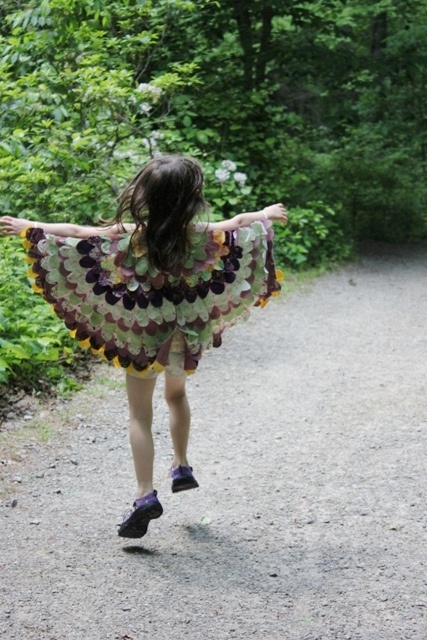
wings

“When I grow up, I will be a bird.”

The little girl is adamant. She has made up her mind. It is final. This is what she’ll be. She’s even wearing training-wings.

It lasts about a day.

“I’ll be a batgirl fire-fightress (sic),” she announces.

“Not a bird?”

A look that shows just how impossibly slow adults can get is followed by: “No, I won’t be a bird anymore. I will be a fire-fightress.”

She is deeply disappointed with me that I did not notice the colors of her clothing all in red and yellow or the swirly bracelet around her wrist that’s meant to be the hose. She’s completely done with birds and fully involved in counting fire-hydrants, yellow helmets at the dinner-table, and nighttime fire-drills.

The next time she comes she is in a tutu. I feel confident for all of five seconds that I know what she is now going to be when she grows. I should have known better. She sets me straight.

“Not a ballet dancer!” she intones dismissively, noting my apparent limitations in assessing the meaning of her chosen dress. “I’m going to be a fairy. Can’t you see this is a fairy skirt?”

She’s a skier the following week. A princess the one after. A “limpic” skateboarder (a la TV competitions she watched over the weekend). A zoo-keeper. A dentist (her mother crosses fingers for that one!).

For one moment she even considers being a speech-pathologist. Then she decides that she can do better and just use stickers and markers as the president, too. “I need them for signs so they will see me,” she lisps decidedly. “And for presents. Presidents need lots of presents because it is in their name.”

She considers a plumbing career (after their bathtub floods). Becomes a pianist when she spots a broken piano on the sidewalk and bangs a (thankfully) brief concert. She’s going to be an astronaut. A doctor, too (“to fix the aliens if they get sick and to give me medicine from tummy ache”).

There is a passing mention of a police officer or maybe a model, undecided who.

She’s a whirlwind of professions. One day she’s “for sure” one thing, and the next day for sure “not THAT!” but surely just the same another.

Her parents hold on tight and let her fly. Oh, yeah, there is a pilot era, too, complete with airplanes spinning in the park and an insistence on perching on the monkey-bars’ “top top one where pilots are.”

The jury’s out on what she’ll be when she grows up. What we know in almost certainty is that it could well be what she declared today, or yesterday, or in three different periods during the past week, or will introduce in full high drama sometime tomorrow or next month.

For now, she’s a rolodex of pure anticipation. Dress-up, here she comes!

dressup

Heartbeat of love

heartbeat

The little boy had a difficult beginning. Born unwelcome, left at an orphanage in a rural area overseas, raised in a crib in a room full of other babies in cribs–bereft of stimulation or affection or even much in the way of nourishment, when funds at the orphanage were low.

He was among the fortunate ones who survived infancy, and was adopted at age two, to parents who showered all the love they had on him and then found that they had even more to give when that threatened to run out. He was not easy to care for, you see. Unresponsive, non-communicative, alternately rubbing himself against their legs like a kitten, squirming to get off, or slumping like a lump of potatoes in their arms. He either cried inconsolably or stared stoically. He would eat things that should not be eaten and hide foods that should. He could not fall asleep unless he was in an empty bed, never a quiet room, and only after a long while of rhythmic head banging. He barely spoke. Only sometimes responded to his name. It was not looking good.

Fortunately, these parents had excellent instincts, stout souls, and good guidance. They sought help to know how to best assist a child so traumatized that he had learned to take himself away to cope. How to support a child who did not know others could be relied on. How to guide into love a child who did not recognize affection as markers for attachment or caring. They did not believe those who said that their son was autistic. “Maybe he is,” they argued, “but how could we know if he’s autistic, if he never had a chance to truly communicate?”

They sought other opinions and took him to speech language therapy and sensory therapy. They went to counseling themselves–there was much heartbreak to deal with in finally having a child and finding him unwelcoming of love. They looked for help with someone who understood developmental trauma and the adjoining dissociation that often follows–they wanted to know more how to best support him. They knew just loving him more was not enough: they had to find a way to help him process what he’d lived before he could find hope to live differently. Together with professionals, they worked to help give voice to what had none, they walked with him along the story of his lost beginning and his suffering and his strength and masterful coping and his current safety. He needed to know it in all of his being before he could trust it. Gently, they helped him heal.

Persistent gentle kindness integrated with knowledgeable attention and direction helped. The child bloomed. He is no longer checked out from his world, or words, or feelings. He’s in first grade now. Still closing gaps in language and communication, and he may always carry scars from his early years and a plausible exposure to substances before birth that make it difficult for him to regulate his body’s reactions and excitement. However, a more affectionate little boy you would be pressed hard to find. He’s happy. He knows he’s loved.

Not too long ago we were busy with a task where we listed things one does in the morning, or after school, or on weekends, or in a mall, or a park, or before going to sleep at night. To the last he said: “take a bath, brush my teeth, read a book, put my head on mama or papa’s chest.”

I smiled at that–the mom told me that they had a nightly routine where they’d cuddle, making up for the many lonely nights of empty cribs and no arms to rock him. They would snuggle together for a while, let him use them as a pillow, then kiss him goodnight. The parents had held him most the night when he was younger, once he let them.

The boy nodded at me, maybe taking my quiet smile as a sign that he needed to convince me of the veracity of what he was saying, or its importance. “Mama is softer, …” he continued, “and papa’s chest boo-booms louder. I like it. It makes me feel nice inside and it helps me not feel like I have to bang my head.”

Enough said.

Finding the Ability in Disability

This is a wonderful talk. Inspiring, and well worth the time. Rachel Kolb does a brave, important thing in this talk. Watch it, and let your children watch it, too. Tell your colleagues. If you are a teacher–it is a must. If you work with children–watch it. You will be happy that you had.

Navigating deafness in a hearing world

It is a talk about deafness, but it is not only about deafness. It is about abilities and what we can do and what we worry we cannot and how this in of itself can limit us. It is also about the realities of difference and the many challenges that children (and families) face. It is about the barriers for communication and interaction and how they manifest throughout the domain. It is about the scope of issues that cascade from deafness (and can from other disabilities, as well).

It is about a lot of what still needs to change, and can. In 90% of families of deaf children born to hearing parents, the parents do not learn to communicate effectively (i.e. sign) with their child. Deaf children born to hearing parents are less likely to develop fluent writing skills than those born to deaf parents. It is the result of a fundamental misunderstanding. Where communication suffers, attachment suffers, and abilities suffer. Communication MATTERS.

“Never put limitations on that child,” the Speech Therapist of a then 18 months old Rachel Kolb told her mother. I like that clinician without ever having met her! Because she was right, and because she said Truth: we never do know how far a child would go, and we must give them the tools and support to get there. Not every child will reach the same goals, but we owe it to them to not impose our own limited view onto them.

As for that Speech Therapist–Oh Boy, was she right about Rachel Kolb! This young woman soars! She chooses how to use the abilities she does have, and she uses them spectacularly. This is one wonderfully unlimited woman! You’d be happy to have made the time to listen.

Listen to this talk. It may reassure you that you are on the right path if you are struggling or helping someone else who is. It may help you truly realize how not all differences in perceived ability mean differences in actual ability. It may improve your understanding of the challenges that hearing impaired persons face, and through them, the realities of other limitations. It may help your children understand the difference between accommodating and ‘indulging’, and how someone’s need for help does not mean they cannot think for themselves or should be seen as lesser than.

It is an amazing talk. Instructive, intelligent, impressive.

It WILL inspire you.

For those wondering: eighteen years of Speech Therapy is a long time. It is also not that unusual for people with severe and profound hearing loss to require that amount of time in therapy. This is not because they are slow to learn, but the act of communication is multifaceted and complex and what we take for granted is difficult to do with much reduced and distorted sound. Hearing impaired persons need help not just learn to speak and improve the clarity of their speaking, but also to speech-read (understand what a person is saying from the movement of their lips and face), to discriminate close-sounding words, to learn to rely on context, to identify new words and learn the difference between how they are written and how they are said (and heard/speech-read). They need to keep up with the realities of underlying information in language (e.g. expressions, ambiguous language, discrimination between words that sound the same to them). They work hard in Speech Therapy and they can do exceedingly well, if given the chance.

Rachel Kolb is deaf. But she is not limited. She’s been given the chance and she’s grabbed hold with two hands and then some. There were those she met in who were limited, however. Not deaf, but limited in their vision and understanding. Like the riding instructor who told her that she would never learn to ride. Or others who judge her for her voice without listening to what she has to say. It is them who have a sort of deafness, I suppose. It is them who were limiting, and in that they were limited.

Lets us not be limited. Let children grow limitless in their ability to work hard, master skills, and achieve the best they can do, not the best we think they should be able to.

Find the ability, and the sky is the limit.