The Intertwined

Photo: Sue Vincent


“Meet me by The Intertwined tonight,” the note said.

Nate trembled. He fingered the rough edge of the faded construction paper and the sensation lifted him into memories filled with the scent of glue and the sounds of children.

It’s been how many years since? Thirty. At least.

He inspected the note again, as if expecting more words to appear among the scrawled letters on the hand-torn bit of yellowed-green. None did.

It was not signed, but even after all this time there would be no mistaking it. Not by him.

Elinor.

Kindergarten sweetheart and schoolyard tormentor, both.

What did she want? Where had she been? Why write him now? Why him? Why this way?

Tears pressed behind his eyes and he was surprised by their intensity. The last time he’d felt that way (well, the last time he consciously admitted to it being so), was when he’d seen that ad, twelve years ago. The image of it unfurled behind his mind’s eye, never really forgotten: “Missing. Elinor Bricks. Age 23. Long dark curly hair. Blue eyes. Medium height and built. Last seen walking into the woods south of Sparrow Street, wearing blue pants, gray jacket, sneakers, and a brown messenger bag.”

Two weeks of searching before the police had folded their tents and left the flyers for the wind and squirrels.

Three months before he could sleep.

Four years before he let himself date anyone. Two more before he married. Five before he lost Marianne and little Morris as the baby tried and could not be born.

Could that have been only last year?

His heart had been hollow. Since.

Now this.

“Meet me by The Intertwined tonight,” the note said.

Their ancestors had planted those trees over a century ago. Hers and his. Far apart enough to stand alone. Close enough to weave together roots and canopy. They were a symbol of connection. The place where marriage took place and funerals left from. Where roots spread fingers to hold on even as they reached to grip new spaces. It was the very place where past and present, love and life and loss and longing intertwined.

His fingers spread over the bit of paper, reaching to embrace it, and interlacing words with the unknown.

He trembled.

His heart thundered.

“I’m sorry, Marianne.”


For Sue Vincent’s WritePhoto Prompt: Rooted


Not For The Amenities

Photo prompt © Jean L. Hays


“Lush, ain’t it?” The sixteen-year-old shivered in her short jacket.

Frosty patches dotted the monochrome shrubbery. She nudged one with her sneaker. “So, why exactly did you choose this godforsaken nothingness for your midlife crisis? Couldn’t have been the view, or the amenities.”

It’s fixable, Branden thought but said nothing. He’d worry more if Lizzie didn’t quip. And anyway, he knew she knew why they’d had to move.

Lizzie sniffed. He offered a tissue but she leaned into him, seeking a rare hug.

“Mama would’ve loved it here,” she whispered. “Even if we hadn’t lost everything to the medical bills.”


For Rochelle’s Friday Fictioneers Challenge


Life Abridged

willie-fineberg-unsplash 10th st bridge Pittsburgh PA

Photo: Willie Fineberg via Upsplash, 10th St. Bridge, Pittsburgh, PA


She waited.

One more step and she’d have gone more than half-way across, but she found herself unable to move further. She sat on the asphalt, frozen by cemented legs.

So she waited. It was early, but sooner or later something will come by and she’d find out the price of her betrayal.

All her life she’s been bordered by this bridge, the yellow metal rising like a sun in her horizon: untouchable, unapproachable, dangerous.

They were raised to never cross it.

“Evil lives beyond this bridge,” her father had preached in daily sermons in their basement, the family huddled on aching knees and wreathed by incense, fear, and smoking wicks. “Leave here and your soul will be eternally forsaken. Abandon my teachings and you will not be saved.”

Well, she’d had enough. She could tolerate no more of his invasive ‘instruction.’

And she was ready.

To not be saved.


For What Pegman Saw: Pittsburgh, PA


Elves’ Dew

Basalt Fog KarenForte

Photo: Karen Forte


He was a Shrouder, ordained from birth to emerge in mist and fog to collect Elves’ Dew from basalt rocks. Ordinary persons could not discern the quality of water imbued by the Fair Folk. Detecting the elusive shimmer took innate talent and a good amount of training to trust what one saw right on the edge between the real and imagined.

Elves’ Dew. The world’s very spin depended on it, and yet most people did not know or believe it existed.

Thornsten used to think it odd. “Do they really not see or do they refuse to?” he’d asked Boulder. He must have been no taller than the large man’s knee at the time. Four or five summers old at most, and a wee one at height even for that.

Most of them were. Smaller.

Early born. Sickly. Odd in growing. The ones already half-way here and half-way in the other worlds.

Boulder was in that sense an anomaly for a Shrouder. Six-feet-tall and barrel-chested, he could lift rocks the size of a small man and break little sweat for it. He towered over most of common men, let alone the Shrouders he was training. And yet he was a Shrouder, and perhaps the better of them. Or was, some said, till Thornsten.

“They see only in parts,” Boulder had responded. “Like black and white instead of color.”

“But you do not see color,” Thornsten argued. Boulder’s eyes had been milky gray with whitish film from birth. “And anyway, the shimmer has no hue.”

But Boulder had only nodded and said no more and left the boy to wallow in a prolonged pouting and to wrestle whatever meaning he could out of the answer.

It was the way of Shrouders to do so.

A moody tendency that some saw as obstinacy and some excused as a product of having seen the afterlife and been sent back on delayed entry.

Thornsten thought that was odd, too. How else was one to ruminate an understanding without time spent submerged in one’s own moroseness?

In any event, by the time he reached eight summers, he came to think of others’ lack of belief in Elves’ Dew as more of a matter of need for adequate technology for visualizing the mythical. Perhaps a bit like how people hadn’t believed that germs were real only because they could not see them, and so had refused to wash their hands from the effluvia of death before they tended to laboring women. It had been a costly — and for some, a lingering — ignorance. Same could be said for the stubborn denial of the reality of Elves’ Dew, when the essence was mandatory for life’s survival. Would there ever be lenses that could translate Elves’ Dew into what ordinary people saw?

He asked Boulder about it the next time the mountain breathed in their souls and let them know it was time to go collecting.

The cool air pooled around their feet as they climbed. It filled their lungs with memories of moisture. In the midst of resting clouds there shimmered pearls of Elves’ Dew. It boggled Thornsten’s mind that some could not see them when they were clear as morning.

“Perhaps a way would be found,” Boulder answered. “But we best ensure life remains viable until people evolve sufficiently to manage it.”

He bent his bulk and siphoned a few drops into a cask, careful to leave some behind for the Fairies.

“But evolution itself depends on Elves’ Dew,” Thornsten countered.

The large man shrugged in reply and Thornsten knew he’d get no more out of him at the moment.

They worked in silence for a while. Behind him Thornsten felt more than heard the other Shrouders. The small troop had been listening to his conversation as well as to the mountain’s breath.

He pouted, but in spite of him the calm of the misty fog filled his inside eye and guided his hands from rocky dent to basalt shelf to precious drops to cask.

Long moments past.

“It may be you, if anyone,” Boulder added so quietly that Thornsten wasn’t sure he’d actually heard words. Recently he found that thoughts had their own voice, sometimes.

He looked up to see Boulder’s milky eyes resting on him.

“You will lead the Shrouders, Thor, and much sooner than I had imagined.” The man’s mouth did not move but the words formed, crystalline, in Thornsten’s mind. “And it won’t surprise me if you’ll somehow lead the ordinary folk to the marvels for which they had till now been blind.”


For the Friday Fun Foto challenge: Mythical


Waterproof

Girl on Bank CCC25


“How come she’s not wet?” Ricky whispered.

Tim shrugged, but his own eyes were round.

The two were lying on the bluff above the pond on damp bellies, and passing a pair of miniature binoculars between them. Tim’s Nan would have his hide if she found out he’d ‘borrowed’ them, but Nan was dosing after an early toddy … And anyway, they needed the binoculars to spy on Gertrude, their new neighbor, who they suspected was a covert operator, or a witch, or both.

“She’s been sitting there forever,” Ricky groaned. Spying was a lot more glamorous in movies. And less muddy. “I’m soaked. How come she’s not wet?”

Tim fiddled with the binoculars. The dials didn’t work much but it made him feel important, if only because he forbade Ricky to touch them. “Must be she used spells. To make her waterproof.”


For Crimson’s Creative Challenge: #25


Cake To Go

three line tales, week 170: an unhappy birthday party

Photo via Unsplash


She spaced the candles as her grandmother had instructed. Not equally, but with one candle lording over a bigger chunk. “You’ll remember me by it,” Gran had said, “and by the sour faces of the ladies when they see you’d saved me some cake to go.”


For Three Line Tales #170


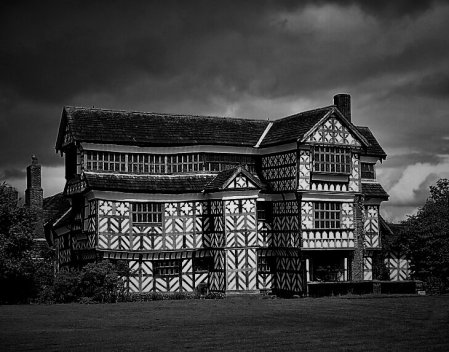
Warp and Heft

Photo: Sue Vincent


“All houses bow with time,” Agnes fanned herself. The heat lay on the garden like a leaded blanket. Even the shade of the great oak offered only small respite, though their stifling rooms would be far worse.

“Yet not all houses must endure an Edmund,” Joan giggled behind her fan before frowning at her serving-woman for daring a grin. That girl ought to learn her place! Mockery of Edmund’s evident over-fondness for sweets and mutton was for his equals only to indulge in. It would not do to have the servants ridicule their superiors, or who knows who they would dare disrespect next!

At least the obstinate girl had manners enough to blush crimson and lower her eyes.

Agnes tilted her head mildly. “The estate out-dates our dear cousin by two centuries.”

“And may or may not last this one if he does not move his quarters,” Joan deadpanned but only with half-a-heart. Her wit was wilting. She wriggled two fingers and a woman stepped forward with a glass of mead and a linen square to dab the sweat off of her mistress’ forehead. Her own coif and underarms were dark with moisture. Joan sniffed the sachet at her wrist.

Insects buzzed. The minutes lingered. The house brooded heavy against the colorless sky.

“I wish the air would move,” Joan sighed. Her embroidery lay disused in her lap.

“I wish same.” Agnes’s ivory skin bloomed pink patches in the heat. Her needle, too, lay indolent. She gestured with her fan toward the horizon past the house. “Perhaps these clouds would soon shift the wind before them.”

A distant thunder rumbled as if in answer.

Behind the ladies, one of the serving-women squeaked.

Joan frowned.

“What is it, Marianne?” Agnes inquired, not unkindly.

“The house, My Lady,” the young woman’s curtsy was tense and her finger shook as she pointed it at the lattice work on the third story.

“What about the house?” Joan hissed. She found Agnes far too tolerant of serving girls’ dramatics.

A loud groan answered and the air itself seemed to shimmer. Or warp. Or weave.

A silence fell.

Joan felt the hairs at the back of her neck stand on end.

The insects. They’d stopped buzzing.

Even before her thought completed, lightening split the sky and sliced the roof, the latticework, the heavy beam, the second story window, and the chevrons on the wall, knifing deep into the ground.

Another bolt seared her eyes as it hit the oak.

Sudden wind rose and the air fled, taking with it any memory of the burning house against the raging sky.


For Sue Vincent’s Thursday Photo Prompt: Monochrome WritePhoto


Will The Baby Cry?

Photo prompt: © Roger Bultot


“Be there in a moment, Aaron,” Miriam herded her family toward the synagogue across the street.

“Mom!” Ben protested. She drags him outta’ bed, then stays outside herself?

“It’s urgent,” Miriam apologized, eyes already on her phone.

Seven-year-old Jacob glanced at his dad. “Will the baby cry?”

“You screamed like a stuck pig at your Bris,” Ben offered.

Jacob froze. “I’ll stay with Mom.”

“Ben!” their dad scolded.

Staccato bangs echoed. Loud screams.

“The baby?!” Jacob clung to his father’s hand.

“Down! All of you!” Aaron shoved Jacob behind a car and raced to the synagogue. “Shots fired! Call 911!”


For Rochelle’s Friday Fictioneers


Tea For One

Reena Saxena

Photo Credit: Reena Saxena


It will be tea for one. Again.

She boiled the water in the pot they’d gotten on their honeymoon in Venice, and she spread the tablecloth he’d always said reminded him of his grandma’s parlor (and had always added “in the best way possible” when she’d frown).

She rearranged the mismatched chairs left from the two sets they’d combined when they moved in together, but then returned the plaid one so it rested half-turned to the table and half-facing the radio. Like old times. Like the many evenings when she’d mend some this or that or mark her students’ lessons, while he’d lean forward onto one palm and watch her from the corner of his eye even as his attention was on his favorite broadcast.

“I have eight favorites,” he’d often chuckle. “One for each day of the week and two on Sunday.”

“But none as favorite as you,” he’d always add, just because he knew it pleased her to be reminded that she mattered more …


She turned the burner off when the kettle wailed, a lone wolf in the night. She spooned some of the good tea into the teapot, and poured the water on the leaves to let it steep, then capped the pot and dressed it with the cozy she’d made from his favorite sweater when it had too many holes to patch and too much love to throw away.

“You don’t toss away much,” he’d tease her, and they both knew it was both compliment and understanding. They’d grown with little and later had even less, so she had learned to not let go of things too easily.

“I do keep you around, don’t I?” she’d tease back … some days only half in jest for how he’d manage to so exasperate her. Muddy shoes inside the house and socks that never quite made it into the hamper, and an infuriating tendency to not recall the milk or pay the mortgage. Never mind remembering her birthday or their anniversary.

Or the time he’d strayed from vows … and bore a hole into her heart that never fully mended.

She’d forgiven him for that. Of sort. Or as much as anyone can a betrayal. For she’d come to understand it was based less on his disrespect of her as it was on his embedded insecurities. He’d cried in shame when he’d confessed his indiscretion and she’d ended up comforting him, feeling both tender and resentful.

He’d bought her the tea caddie after that. The hand-carved thing of beauty had cost a ridiculous amount and did little to improve upon the one they’d had already … other than in how it served as a reminder for the cost of pain and of his commitment to penance.


She passed a finger over the caddie’s rounded top and felt each curve like a canyon of memories in her heart. When she’d fallen ill after their failed attempt at parenting, and the bills kept mounting, he’d almost sold his beloved radio to make payments. Yet he’d refused to discuss letting go of the caddie.

“It is worth a small fortune,” she had tried.

“And that is exactly why it is befitting of you that it stay,” he had replied.


She sighed and sat and poured the tea into her cup and watched the steam cloud the glass as the fluid rose like unabated sorrow.

It was their anniversary. The third since he’d left her, this time to where no tea caddie and no amount of tears could remedy.

“Do not hasten to follow,” he’d begged her promise when they both knew it was time. “Go on and live for me.”

Perhaps she wouldn’t have promised had she known quite how bereft she would be without him. Yet she had given him her word, and she was not about to introduce betrayal into the fabric they had so labored to repair.

It will be tea for one, again. Today.


For the Sunday Photo Fiction Challenge


Tut’s Trough

Photo prompt: Sue Vincent


“It’s been here since time before time,” Marty’s voice rose in self-importance.

“I don’t think Mammoths would agree,” Donna deadpanned. She was tired and the tour-de-woods was becoming tedious. It wasn’t that she didn’t like Marty. She did. Or at least, she had … before he’d unleashed his inner Know-it-all in what he appeared to consider some form of seductive foreplay. It did the opposite for her.

To be fair, she’d always claimed men’s minds could be just as attractive as their bodies.

The key being ‘as important’ she sighed to herself, not the sole importance.

Marty, oblivious, nodded. “Mammoths didn’t need troughs,” he added pedagogically. “They weren’t domesticated.”

Donna slapped at some buzzing insect on her arm. The noise ceased. She’d slap away Marty’s patronizing tone, too, if she didn’t so abhor violence. These days.

The very thought stirred guilt. It wasn’t his fault she was there. It wasn’t his fault she was broken and that time hadn’t ever been kind to her kin.

She forced herself to breathe and glanced at the moss-covered structure in an attempt at interest, only to be mortified when the first thought through her mind was how much it resembled a sarcophagus and how peaceful it would be to lie in one for all eternity.

Or until some form of grave-robbers came.

She shuddered.

“You okay?” Marty’s voice filtered through her distress. “You look as though you’d seen a ghost!”

How little you know, Donna thought. “I’m fine,” she said.

The line between his eyebrows smoothed and he gestured grandly toward the vessel. “Some say it is haunted,” he leaned close to her and whispered a mockery of suspense, “for how this simple trough tricks the vulnerable into thinking it resembles King Tut’s tomb.”


For Sue Vincent’s Thursday Photo Prompt