Do It Anyway

He has stage fright. The real deal.

Social phobia with all the trimmings.

Speaking in front of anyone renders him paralyzed with irrational but no less numbing terror.

Talking to a store clerk makes him sweat.

Let alone giving a speech in front of assembly.

The whole school. Faculty, too.

He trembles at the thought.

“You don’t have to do this.” His mother. She is distressed by his distress. Protective.

“But I do,” he says.

He’s scared.

Determined, too.

He asks me to teach him how “to speak even when my throat gets stuck.”

We work on it. On breath, on visualizing, on rhythm and on parsing and on tone and pitch and breath again. He practices. With me, at the mirror, with family, with a good friend.

He knows the words by heart. He wrote them. A speech about things that oh-so-matter and are so very needing-to-be-said.

“The words come into my dreams,” he tells me. “Is that weird?”

I shrug. I don’t think so. “What do you think?”

He smiles shyly. “I think they want me not to be afraid. The words. Like we are friends now, words and me.”


The day comes.

He calls me in the evening.

“I threw up twice and I trembled like crazy,” he says, but his voice is giddy. “Then I thought about the words. My words … like friends. The beads on the necklace like we practiced … and I could breathe … I was still scared but I did it anyway!”


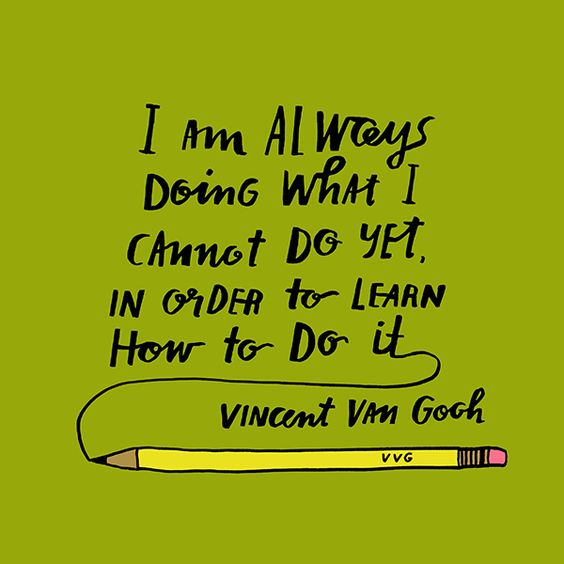
learn-how-vvg

Un-Hide

1383383_10153397531145302_1591529434_n

Photo Credit: O.A.


You do not need to hide

Your pain

Your worry.

You do not need to stash away

The dreams

The stories.

You do not need to hold your tongue

Pretend away your feelings

Ignore what you already know,

Just to be

Someone you are not

For me

For show

For others.

You do not need to wrap parts of yourself

In secrecy

Or silence.

It is okay.

Un-hide.

I understand.

Even if some do not know, and

May need more time,

To see

How you’re the light

Within the deepest darkness.


For The Daily Post

What is Kindness?

kindness

“What is kindness?” she asked.

“Is it being naïve?

Is it seeing no wrong in a person?

Is it looking away from the dark

Is it stepping around any shadows?”

“Not so,” said the Wise,

“Kindness is to know wrong exists and yet

also see goodness that lives right beside it.

Kindness is to call dark by name without being righteous,

to look into the voids and offer them light;

To acknowledge the shadow

and hold a hand to those in it,

compassion to those who forgot what light was.

Kindness is the courage to speak truth

and make good on promises.

It is the strength to keep one’s heart soft

when it might be easier to harden.

It is being gentle with all

without martyrdom

and without losing sight of one’s own imperfection.

It is knowing one’s own needs

and the soul’s True North.”

“It sounds like hard work,” she sighed, “this whole kindness business.”

“It is,” the Wise smiled, “as it is also

the work of all life, love, and heart;

of laughter and joy

of likeminded spirits

of light multiplied;

the gift of play

and children’s delight;

the work of Spirit,

the air of all life.

Be kind, and you would have fulfilled

all that is enough.”

Lesser day?

When instead of this day

good morning gorgeous

 you had something more like this day …

wet kitty

don’t despair …

and remember

some days

after all, there’s you …

and anyway

on any day

all you can do

so don’t forget

to hang in there, to

Hold On Print by Kelly Rae Roberts

because today may have been

less than glorious

but

tomorrow

Encourage!

encourage

How many times have you been tempted to point out what needs fixing? Wanted to highlight what is wrong, what “can use a tune-up”, what one should be doing differently, or more of, or with less drama, or with more oomph, more boldness, better self-image, assertion, courage, ease?

We have all been there, prodding someone along with good intentions (and other times with a bit of righteous indignation of “I told you so” and “no wonder you are as you are, if only …”). We see someone stuck, repeating old mistakes, mired in old pattern and fogged-up insight recognition … and we point it out–not to hurt, oh, no–only as an intended kindness. We hope a kick in the right region will do the trick this time.

We mean well, but we forget the price of shaming. We underestimate or look away from the price of boring holes in someone for the sake of our sense of having done something ‘for them’ (when we did it for our own need maybe just as much if not more). Shame stilts. It burrows. It slips whatever good intentions into the cracks between what already feels broken and has it ooze away into the void. It makes the distance from targets loom larger and comparisons ache harder.

Almost no one gets criticized as much as children do. Children bear the brunt of much correction. Often. And in what should be counter-intuitive, the very kids who struggle most with getting something right, are the ones to get the most critic for once again doing it imperfectly, for again being wrong. For not following the directions. Again. For missing something. For not listening well enough, not trying hard enough, not having the right attitude.

When criticizing them, we certainly do teach the children something: we show them we are focused on their errors, not their strengths; on the target, not the path; on the final product, no matter the effort or progress. Critic chips another bit of self-esteem and makes exuberance too pricey to risk finding. It does not build. It hollows out.

Showing the way works better. Breaking down a task to smaller steps aids faster. Pointing out what worked as a path to follow gets farther. Encouragement helps more.

Encouragement does not equal the blind empty phrasing for a mediocre effort with: “this is a masterpiece and you are always the most amazing child ever born and all you do is perfect”–kids smell the shallowness of that a mile away. Praising indiscriminately is as irrelevant as constant criticism. It is white noise. It does not help the child see where her effort mattered not lets her trust that you see a difference and even care to note the true wheat effort from off-handed chaff.

Encouraging means giving balanced credit for an honest effort. It means a fair praise that matches the magnitude of accomplishment for that child at that moment, while still providing firm support when efforts fail. It means letting the child know that you notice. That you see THEM and not only their ability relative to others, even as you help them find a better way to measure up.

Children meet plenty of critic without what we might think we ‘owe’ them as a way of caregiving. They don’t need more people holding mirrors to their flaws. The world will quite surely provide enough of that. Encourage. I’ve never met a child who cannot use a little more.

Some equate critic with being honest. With “saying like it is” and “facing reality” and “toughening up.” This is not honesty. It is boot-camp. Actual honest critic is only one that comes when the words one says (one’s tone, one’s posture–critic is communicated in much more than words), flow from a well of true encouraging. It is so only if the message is imparted with sensitivity and care that ensures it builds, rather than tears down, puts down, whittles, or compares. Only if on the heels of pointing out a place for improvement, there is the vista of all the effort put forth already, a detailing of the next step–and a helping hand.

A rule of thumb: critics abound out there already. Least of them being the inner critic that you’ll instill within a child with alarming speed. Be an encourager. An honest buddy offering support along the roughest patches and a ‘that-a-girl’ when each are overcome.

Encourage. It is nourishment for growing. It is like water on parched land.

Baby Steps

Goals drive us forward. They also hold us back.

Goals often seem too big to get to. The great idea you had the other night feels suddenly less sparkly in the morning: there are far too many steps, it will require more time than you realized, need more attention than you believe you have, more energy than you find within you.

You feel overwhelmed. Discouraged. You get stuck.

Goals are posts along a journey. It truly is not the destination that matters, but the path you take to get there, what you learn along the way about yourself, about your possibilities, abilities, the things that limit you from stretching up and over into the incredible, the fears that keep you from reaching out.

Parents ask me about their children’s therapy: “Will he ever not need help?” they want to know. “Will people ever understand her when she speaks?” They worry how long it will take, how much effort, whether they can make it; can the child.

Children, too, talk about their process. “I am not good at this,” they say. “I don’t know how to write this reading response/this essay”, “I don’t know how to understand the story or how to have the words ready in my mouth when I raise my hand.” “Will I still have to see you next year?” they ask. “Do kids sometimes see you even when they are in high-school?” they inquire, wondering in part-worry, part-hope that I will answer in the affirmative: they worry that they can still be ‘different’ by then, and hope that if so, they will not be left on their own.

“We’ll get there,” I say. “One step at a time.” It is something most of us hear plenty, and not always helpfully, and I know it is often not what parents and children want to hear from me. However, it is Truth still … even if it stirs the place inside each one of us that wants to ‘get to’ where we’re going faster, that does not want to have to do the work, that wants destinations to arrive without the journey.

“Baby steps,” I recommend, knowing that this, too, is often hard to listen to. Who wants to take even smaller steps when the target seems so far away already? BIG steps will get me there oh so much faster! But baby-steps, too, are Truth. Careful, one-foot-then-the-other passage gets us there more surely than a hop-skip-pray-you’re-still-on-the-path would.

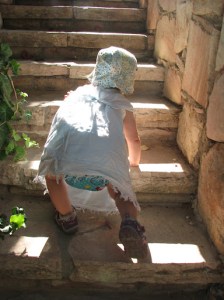
Baby-steps aren’t slow, really. They aren’t less-than other ways of making progress. Think of it: Babies take brave steps when they begin to walk. They walk and wobble, toddle and fall and rise and try again … and when they get their footing they walk almost constantly. They put little feet on every surface, tackle stairs, grass, sand, uneven ground. They hold on to hands, grab onto what is available. They crawl when there’s no balance to be found in standing. They climb on all fours. They find a way around. They stop and look for a path behind an obstacle and then surge forward in delight when they find it. Their steps get longer, surer, less a-wobble. They accelerate. They run.

“Baby steps,” I say. Remind. Consider.

It does not mean to do go slowly. It does not mean to take too long. It means to be determined, brave, consistently in focus and yet open to an opportunity to rest and play. It means looking ahead. It means seeing the immediate requiring some climbing over and assessing whether there’s someone tall to carry you awhile if you need a break or wish for a moment of better view …

It means getting there, and finding much to do along the pathway. It makes the journey part of what it takes, and worthy in of itself.

You start with baby-steps, yes. But along the way, you learn to walk. You find your pace. You learn to hop and skip and turn and twirl and run.

You’ll get there.

All you need to do is take step one.
off i go