The Moon

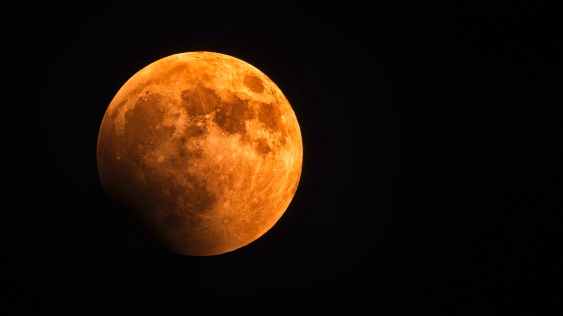
blood moon

Photo by George Desipris on Pexels.com


“What’s wrong?” I burst into her room with uncombed hair dripping from the bath and my bathrobe hanging half-opened.

She was sitting in her bed, sheets all tangled, the pillow clutched against her chest.

When she said not a word, I felt the terror rise inside me, too.

She’d had good cause for nightmares in the past, but it’s been years since any of those had woken her in such a state. Why now?

“What is it?” I crossed the distance from the door in three steps but dared not touch her lest my hands make her remember other ones, a lot less loving. “Can you tell me?”

She shuddered as if coming back from a great distance.

“I dreamt I was the moon,” she whispered. “Vast and cold and deathly airless.

“and,” her breath caught, “I dreamt that he found his way there.”


For the dVerse prosery challenge


Ladies In Waiting

Photo by Arun Sharma on Unsplash


“It is time yet?”

Prissy frowned. Alia always never had an ounce of patience. “Look around. Does it look like it is time?”

Edna glared at Prissy. That girl would not recognize patience if it sat right in front of her and introduced itself by name.

“Anyone want a snack?” Deena reached into her bag and pulled out an assortment of wrinkled potato chip bags, a crumbling granola bar in a zipped bag, and apple slices that had seen brighter days.

Alia’s look of horror was so comical that even Prissy smiled.

Count on Deena to diffuse the tension, Edna thought.

They all had their roles in every little drama life presented. Whether like players on a stage or play-pieces on a chess board, she wasn’t sure. Only that they slid into their respective places with predictability that was both comfortable and disconcerting.

Perhaps not so surprising they would do so now, when it might be the last opportunity for it. Their dynamics were about to change forever.

As soon as it was time.

A door opened at the end of the hall and they all jumped.

“Alia Marquette?” a uniformed woman appeared. “Your shuttle to Mars is about to depart.”


For the Sunday Photo Fiction prompt


Be The Judge

BlueWhite DvoraFreedman

Photo: Dvora Freedman


“You’ll be the judge of it,” he said.

He held the door for her and she hesitated a moment before slipping into the passenger seat. She buckled in part out of habit and part as security against the anticipated whiplash of yet another disappointment.

He drove in silence and she was grateful for it. They were beyond words by now, anyhow.

Roadside scenery shimmered by through a sudden squall.

“We’re here,” he said.

She must’ve fallen asleep.

“Say yes, and I’ll sign the papers,” he breathed.

She blinked. How did he find her dream house?


For Sammi’s Weekend Writing Prompt: Judge in 95 words


A Bit Of Clarity

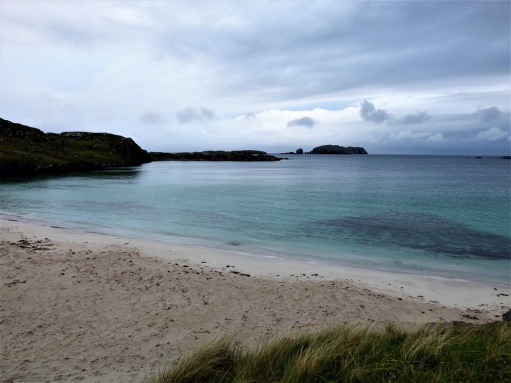
Photo: Sue Vincent

She always went to the beach for a bit of clarity.

The movement of the water on the sand brought her back into her own breath. The rush of energy reminded her of the push of arteries, the pull of veins. The predictably irregular rhythm of the surf reminded her how ebb and flow do not mean that things will be uniform. They’ll come and go. Each unique. Each set its own and inseparable from what flowed forth before and what is following.

She could count on a wave and then another and another, on the rise and fall, the crash and wash, the small detritus that each leaves and yet is part of what had been and what will be and what just is.

Like life.

Like the muddy, murky, uncertainties of everything.

Where the one thing she could trust was that another wave will come, and that even the biggest wave retreats, at some point, in wavelets of resignation. As another one rolls in.


For Sue Vincent’s WritePhoto challenge


Do Not Engage

Photo Prompt © Roger Bultot


“It’s covering its eyes.”

“Say what?” Sergeant Frank was always gruff but Leon knew a warning when he heard it. He could (almost) visualize his superior in his boxer-shorts, remote in one hand and beer in the other. One did not get between the Sergeant and his beer.

“The new statue, Sir. In Rockefeller. It’s covering its eyes.”

“Leon, are you drunk?!”

“No, Sir. The hotdog man saw it, too. And a bystander.”

“Statues don’t move, Leon. That’s why they’re called statues.”

“This one did, Sir.”

Silence.

“Sir?”

Sigh. “I’m sending Marco. Meanwhile, Leon … sit tight and … do not engage …”


For Rochelle’s Friday Fictioneers


The Instructions

luma-pimentel-1vnB2l7j3bY-unsplash

Photo: Luma Pimentel via Unsplash


“I’ve written it all down,” she’d said.

“Anything you need to know is there,” she’d promised.

“It’ll a breeze,” she assured me, one hand already on the door handle. “I won’t be too long. It’s just a short gig. A few hours at most. He’ll likely sleep right through to my return anyway.”

But the baby slept through about five minutes and then would not stop crying and I had no idea what half of the terminology for baby-brand stuff meant or what “up to the spoon line” was supposed to be when I couldn’t find any spoons with lines, and no clue how to “keep a hand on the baby at all times” while also needing two of them just to untangle the tabs on the darn diaper and another two to keep the baby’s feet from kicking it away … And the clean bottles came separated from nipples, which had multiple unrelated parts that needed assembly like an Ikea cabinet from hell … And what on earth is a spit-up cloth and how is it different than a towel or a blanket?

Speaking of, how does one swaddle a baby without dislocating something in the process of making it into a mummified burrito?

And did I mention the baby would not stop crying?


“You’re a saint, Rick!” she’d said. Even kissed me on the cheek like I was some long lost brother and not the neighbor who happened to live next door and perhaps smiled a few times at the baby on the elevator.

“I know it is last minute but I’ve been waiting months for the opportunity … I’ll make you dinner,” she’d promised, and her relief at having a solution for the baby was so palpable that I felt guilty extricating myself from what she’d misunderstood as “yes” when at the very most I’d meant “maybe, but not really.”


“It was a breeze,” I said.

“He woke up but is now sleeping like an angel,” I assured her, ignoring the baby’s heft on my desperate bladder. I hadn’t dared to move, lest the baby woke again.

She looked tired and worried and sad and a little worse for wear, and I wondered how the gig went but didn’t want to ask after she appeared to hold back tears when I’d asked if she had a good time.

“Did the instructions help?” she asked instead.

I nodded. “Perfectly.”


For the SoCS Prompt: Instructions


The Proposal

Photo prompt: Sue Vincent


“You might as well open your eyes now.”

His gravely voice was somewhat amused but carried in it the edge of impatience she’d recognized from her own father. A dismissive tone that simultaneously mocked and tolerated females’ flair for the emotional while also warning said females to not mistake momentary patience for leniency.

Muriel swallowed any sign of sigh. Her body ached from three days rattling on wooden wheels over rocks and gravel and muddy ruts and unexpected pits. To make matters worse, the girl-servant who’d been her companion since childhood, hadn’t been allowed to accompany her, and the rough hands of service women who did not know her, had tied her stays too tight and left the knots digging at her ribs and the small of her back.

She’d closed her eyes in part to manage the ever present nausea of travel forced on her at the opposite direction of movement. However, a goodly bit of it was in order to allow herself at least a semblance of private space in the confines of the carriage. His eyes undressed her either way, but at least she could pretend to not see it.

Her time for privacy was up.

She forced her eyes open and nodded the politest smile she could manage at the man who would be her lord and father-in-law (and if his leering told her anything, also the master of her body, son or no son).

He scared her and his eyes were cruel, but she’d learned at a young age to hide revulsion under a lowering of lashes and to nod compliance as means to reduce inevitable harm.

“You are a girl-child, Muriel,” her mother would soothe and scold her as she gently rubbed salve onto what new welts and bruises another lashing had left on the child. “No matter what they do or ask of you, you must not disobey.”

And yet even her mother, the mistress of the manor, who embodied the balance of stately conduct and humility before her betters, sported the occasional split lip from her husband, Muriel’s father, along with other wounds in areas best left unmentioned. All a female could do was walk the tightrope in attempt to limit scope and frequency of pain.

Muriel raised her eyes to meet the heavy brow of the man who occupied the seat across from her. She calmed her voice so it not reflect her fretting mind.

“Have we almost arrived, My Lord?”

His eyes flicked to the window and she leaned to look through the opening, acutely aware that this brought her body perilously close to his lap.

The lake sprawled at the side of their conveyance, the water undulating lightly in the breeze as afternoon clouds gathered. Into it grew a spit of rock and on top it a castle, stout in stone and strong in somber presence. It was far larger than the house she’d left behind. Gloomier and more glorious, too.

She wondered how long it would be before she could once again see it from this or any vantage point. Some lords did not allow their women to leave their rooms, let alone the courtyard. Especially not the newly arrived, who might attempt to steal a path out of marriage by seeking the luring company of nymphs at the bottom of lakes.

She let her gaze linger on the castle before straightening.

“It is beautiful, My Lord,” she said.

His eyes narrowed then relaxed and she was glad she didn’t need to lie about it. He’d probably know if she had.

“Your new home,” he noted, almost kindly.

Her stomach lurched. Home or jail, there may not really be a difference. Still, as the carriage continued toward the future that this man had proposed and her father had accepted, she felt she may have passed some test that if she managed to maintain the credit of, could bring her — if not safety or protection — then perhaps a lesser measure of misery.


For Sue Vincent’s WritePhoto challenge


Keepsake

Photo prompt: http://mrg.bz/n22FGA 


He kept it all these years.

A memento of sorts. Something to remember things by. A penance, perhaps. Or a tribute. Sometimes he wasn’t sure which one it was. Or both.

Some nights he’d leave their bed, her light breath highlighting the heaviness that had kept him from sleeping, and walk to the garage just to look at it. To remind himself of what is real and what was possible and what should never once again take place.

Even if it could.

It was the only lie he’d ever told her, though in truth it had led to many more lies — of omission, of deflection, of withholding aspects of himself he could not let her know about. Not ever.

Or did he someplace hope to one day let her know?

For why else would he keep it?

Sometimes he thought that his refusal to do away with it was his way of warning. Himself. To not allow himself to fall into an illusion of what he was not. Perhaps a warning to her, too, to read between the lines of what he couldn’t tell her.

Of the damage he could do. Even in accident. To the ones he’d loved.


For the Sunday Photo Fiction challenge


Chew On This

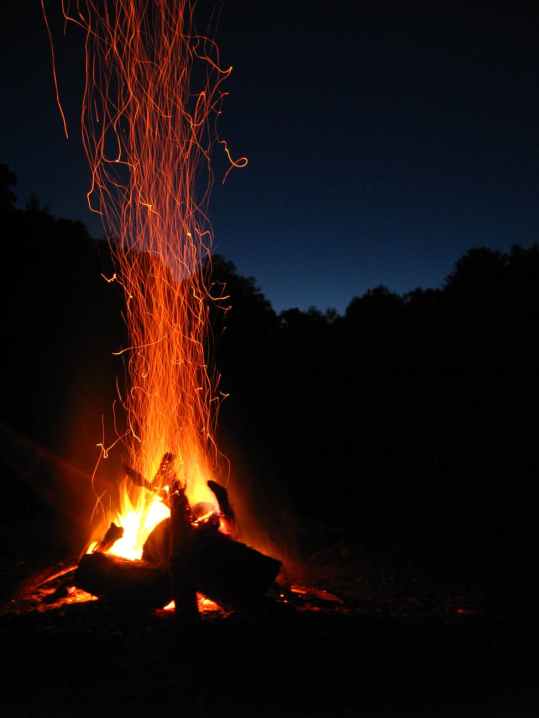
blaze bonfire campfire dark

Photo by Pixabay on Pexels.com


He had never been so hungry.

Not even when he’d gone without food for three days to win a dare. Perhaps because at least then the food was there, available to him had he gotten too weak or ravenous enough to render the challenge unappetizing.

He’d won that bet. And the mountain bike his friend was cocky enough to suggest as the prize.

The same bike — and all his gear atop it — that now lay twisted at the end of some ravine he had no hope of reaching. The bike that would have dragged him down to the same end had he not, in some unknown reflex of survival, thrown himself off the seat and against the rocky walls of what he’d thought was a sort-of-trail.

It first it was the abrasions that caused him the most suffering. The skinless arms and cheek. The raw wound on his shoulder where his shirt had ripped.

Then night came and it was the cold.

And the next day, the hunger.

He had nothing on him. No knife. No phone. Not even a lighter. He’d been so proud to dress the bike with a complicated harness to carry everything he needed for his week-long trek. Now he was naked of supplies. Bare of any protection or wherewithal, alone in the wilderness, and ignorant of how to make do without the gadgets he’d never given a thought to the possibility of not having.

Ignorant, too, of the consequences of veering off the path “to test the bike’s capabilities.” He had told a couple of friends he was planning to go for a bike ride, but he had planned to surprise them with his accomplishment post-trek, and in his hubris did not notify them when, where to, or how long for.

Off the trail and into the “uncharted.” He’d felt strong. He’d felt courageous. He’d felt the braggadocio reverberating underneath his ribs.

Now no one knew where he was.

Or when to expect him.

Or that he deseprately needed aid.

He’d never been so hungry. Or so tired. Or so hurting. Or so scared.

He couldn’t help thinking of how someone would one day find what was left of him. That is if some animal did not find him first.

He stopped to rest when the new blisters on his feet had burst and the pain of another raw place was too much to manage.

His shoulder throbbed. His head. His hand where it had slammed against the rock and left two of his fingers black and unbending. He checked the sky and realized a third day was about to end and he was just as lost as he had been the ones before. And hungrier.

He cried a bit. There was no one in front of whom to be ashamed.

Or so he thought.

He woke to warmth and thought he’d died already. The weight of something on his torso must have been the earth, though he couldn’t bother to try and consider who’d have dug a grave.

Then a smell wafted to him and his stomach clenched in painful hunger. Surely not even hell would torment so in death!

He cracked open an eyelid to the view of a lively fire and a shadowed figure stirring something over a corner of coals. He blinked. The figure was still there. He swallowed, and his mouth was not as dry as it should have been. There was a taste of sweetness on his tongue, as well. He coughed just to hear his own voice.

The head swiveled toward him and he could not discern any of its features against the brightness of the flames. A hand reached back into a pack and rummaged, then the legs straightened and the person unfurled and stepped toward him. He squinted but still could not see the face. He wasn’t even sure it was a man.

“Here,” the voice confirmed. A woman, and not a young one. Not warm but by her actions so far, not unkind. “Jerky. Chew on this until the stew is done.”


For Linda’s SoCS challenge: Chew/Choo