A Forever Family

The little boy was beaming yesterday.

“You know what?” he said, having barely parked himself on the little chair in my office.

“What?” I pretended.

“I’m SO happy.”

“You are!” I exclaimed, smiling. Even a boulder would see that the little guy was delighted. Delighted and relieved, actually.

“Now my parents can be my REAL parents!” he gushed. He sobered then–this boy does not take family for granted. Abandoned at birth with visible deformities, trundled through foster care homes and more losses, and finally finding an adoptive home with parents who were dedicated to him and where he was cherished. “If something happens to Daddy …” he paused, “then Papa will still be my father.”

He reached for my hand, excited and a little scared at what he just stated, momentarily overwhelmed by the proximity of both loss and hope. It took a lot of love to get this boy trusting that his home was a ‘forever home’ and that he was really wanted; and sometimes worry still snuck in, triggered by the destabilizing challenges of very real uncertainty.

Such as when he needed surgery and only one of his adoptive parents was allowed to escort him to the operating room, because only ‘legal guardians’ could, and the law did not allow both his parents to adopt him, only one. Daddy was recognized as his parent. Papa was not. It scared him that people could say that Papa was somehow not his real father, that other people could — again — decide about his life.

Or when his legal parent was away on business and the new school guard gave the boy’s papa trouble picking him up because there was no official note on file indicating that he was among the ‘approved caregivers.’ It took a tense while to locate the classroom teacher to confirm that this man that the boy called “Papa” was indeed one of his parents and had collected the boy from school before. For several days later this little boy refused to go to school. He insisted on waiting for Daddy to return. He was scared that school people won’t let Papa take him home.

Now in my office, this little boy fiddled with my bracelet, as children often do when they are feeling a little tender but need to be the ones establishing how much connection to allow. “Sometimes at nighttime I have bad dreams … about having to go back to foster care.” He looked up at me, dark eyes like deer in headlights, hair framing his little face in a frizzy halo.

I squeezed his hand gently. He looked at his papa, who was sitting quietly with us, his own eyes bright, and allowing his son–son in all ways but legally until now that the Supreme Court declared the constitutional right for equality in marriage and family–the space for these complicated feelings.

The boy reached out for his father and received a hug. “It is  going to be more safer now, right?” the boy asked, face buried in his father’s shirt.

“Sure is,” the father planted a kiss on his son’s head, who at not yet six years old was already a veteran of too many worries. “Your home is with me and Daddy. We are a family, you and Daddy and I.”

“And Priscilla!” the boy added in reassured indignation. “You forgot Priscilla!”

His father chuckled. There was no forgetting Priscilla the ever-into-something dog. “Of course, Priscilla is part of our family, too!”

The boy snuggled into his father’s hug another moment. Sighed contentedly. Peeked at me and smiled. “The judges said that my Papa can also be my father now. Like my Daddy. Forever and ever and ever and ever.”

family

Nadine Burke Harris on: How Childhood Trauma Affects Health Across a Lifetime

What if there is an exposure that affects health and development dramatically and is more prevalent than HIV, cancer, and Hepatitis combined and yet most doctors do not screen for it? What if you knew of an exposure that increases the risk for heart disease, diabetes, early death, inflammatory diseases, premature birth, metabolic syndrome, depression, anxiety, suicide, and more? What if that exposure was at the base of many learning disabilities, attention issues, and behavior issues and if there was a lot to do to help reduce this risk?

Wouldn’t you want to know about it?

Wouldn’t you want it to be treated as a priority in healthcare and public interest? I know I would, and do. Nadine Burke Harris is sure, too. Listen to her amazing Ted Talk–this is a brief talk that you’ll want to pass along!

How childhood trauma could be mistaken for ADHD

child brain

This is an immensely important article. Not because traumatized children cannot have ADHD–they can, and many do–but because children with ADHD must also be screened for trauma. They are already at a higher risk for maltreatment and overwhelm, and trauma may also lower their ability to manage stimuli and process information, exacerbating inattention.
Trauma and attention for learning are at cross purposes–this alone is a good enough reason to assess what part trauma may play in a child’s clinical presentation.
And of course–if there is trauma that is ongoing, we are all of us entrusted with doing all we can to identify it and stop it, so that children can be safe.
Until we ensure they are safe and FEELING safe, we cannot truly expect them to lower their hypervigilance or attend to what the teacher is saying in class. We cannot expect their brains to respond well to medications that are meant to treat inattention when their survival may feel as it hinges on remaining in hyper-vigilance mode and constantly scanning for danger.
I highly recommend reading this article.

Rebecca Ruiz's avatarACEs Too High

Acry

[Photo credit: woodleywonderworks, Flickr]

Dr. Nicole Brown’s quest to understand her misbehaving pediatric patients began with a hunch.

Brown was completing her residency at Johns Hopkins Hospital in Baltimore, when she realized that many of her low-income patients had been diagnosed with attention deficit/hyperactivity disorder (ADHD).

These children lived in households and neighborhoods where violence and relentless stress prevailed. Their parents found them hard to manage and teachers described them as disruptive or inattentive. Brown knew these behaviors as classic symptoms of ADHD, a brain disorder characterized by impulsivity, hyperactivity, and an inability to focus.

When Brown looked closely, though, she saw something else: trauma. Hyper-vigilance and dissociation, for example, could be mistaken for inattention. Impulsivity might be brought on by a stress response in overdrive.

“Despite our best efforts in referring them to behavioral therapy and starting them on stimulants, it was hard to get the symptoms under control,”…

View original post 1,765 more words

The Childhood Adversity Narratives: Learn. Share. Educate.

ACES

How do childhood adverse events affect development? How do they impact health? How much does it cost society to have children exposed to adverse events? What are the social ramifications? How does childhood adversity reflect in mental-health? In illness? Can we prevent childhood adverse events? Why is it worth it for society to invest in prevention and treatment of childhood trauma?

And other questions: What is more harmful: second hand smoke or childhood maltreatment? How is that reflected in funds or investment in prevention or treatment? Where does asthma come in? What can we do about any of this, anyway?

To find the answers to these questions and more, check out this amazing presentation (also available in PDF and PPT on the site–see links below).

This free resource is available due to the generosity of Frank and Karen Putnam along with their colleagues, who created this presentation in the hope that it will be widely disseminated and that it be used as an education resource for the public as well as for researchers and clinicians. The presentation details the prevalence, impact, treatment, and importance (it is highly possible!) of prevention of child abuse and neglect. The authors encourage everyone to use the presentation and share it.

The slides are available on the website http://www.canarratives.org/

To view the Power Point Show: CAN_Narrative_4-26-15-v2L4

To download the pdf: http://static1.squarespace.com/static/552ec6c7e4b0b098cbafba75/t/553e3673e4b09e094f914b8f/1430140531869/CAN_Narrative_4-26-15-v2L4.pdf

Outdated or Misinformed? Childhood Maltreatment in college textbooks

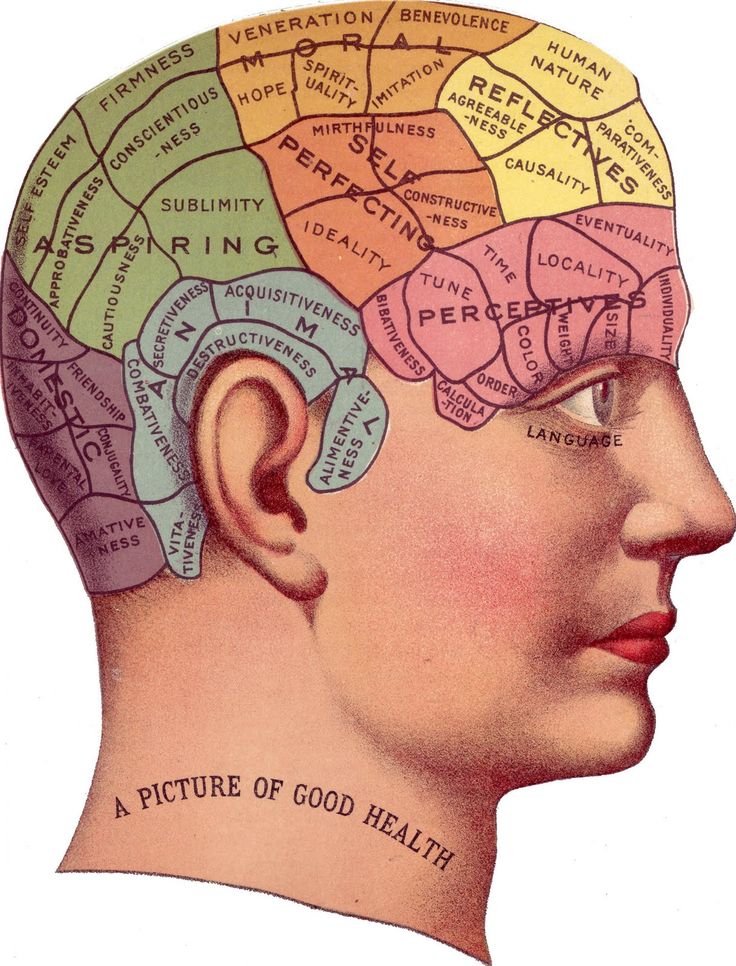
Vintage Phrenology: thegraphicsfairy.com

Vintage Phrenology: thegraphicsfairy.com

There are over 1,000,000 substantiated reports of child maltreatment annually in the US alone (US Department of Health 2013). The impact of maltreatment on development and health is indisputable. The last two decades showed brisk research in the area of trauma and dissociation all over the world. It is therefore quite surprising to find psychology textbooks to be so behind the times (and behind the data) on covering child maltreatment. This leaves hundreds of thousands of students a year with less-than-accurate information that may impact their ability to identify or understand the aftermath of child maltreatment.

In an important article (also see full link below), Brand and McEwen review the three leading introductory psychology textbooks and how they address (or not address) childhood maltreatment and its aftermath. The results are distressing in lack of citing of current data (as in  many textbooks on psychopathology).

One can hypothesize why prominent textbooks will not sufficiently cover such an important topic (one would think they would find it essential to cover well if only for the known health effects of childhood maltreatment across the lifespan, in both physical and psychological health, costs, and healthcare utilization). Maybe it is as simple as using outdated resources or not keeping up with research and known data. Maybe it speaks to more widespread issues of denial and minimization of childhood maltreatment. Maybe other reasons. Regardless of why the textbooks are lacking, the reality remains that the textbooks leave students un-informed on the topic.

The good news is that this can be changed! The data is available–it just needs to be included and reviewed better!

Hopefully having more awareness to this will allow students and faculty to challenge the choice of textbooks and to demand better coverage of such a relevant issue. Students are shortchanged when they are under-informed and when data is slanted or may appear to be biased or outdated.

What can you do?

Let your faculty, librarian, and fellow clinicians and students know that our college students deserve a more cohesive review of childhood maltreatment. Share the article below. Talk to professors who teach these courses and support them in seeking better balanced textbooks. The research is available, it simply needs to be included rather than avoided. Let us work together for improving information in education!

Coverage of Child Maltreatment and Its Effects in Three Introductory Psychology Textbooks / Bethany L. Brand, PhD, and Linda E. McEwen, MA

http://traumapsychnews.com/2015/01/coverage-of-child-maltreatment-and-its-effects-in-three-introductory-psychology-textbooks/

Trauma’s Memory Problems : A good article

child trauma

Trauma all too often brings up the detective in people, prods them to question, pin point, dissect accounts, weigh relative credibility. It is an odd thing, given the reality that trauma–by its very essence of overwhelm and shutting down of language centers, processing, and memory integration–affects how one may be able to remember, recount, and narrate it. Trauma is difficult to articulate and often too difficult to comprehend, even to know. And yet, it is often demanded to be phrased in exact details that go beyond every-day memory. As if trauma memory should be, somehow, more stellar, subject to higher standard, to bigger scrutiny.

Granted, there may be a motive in it: people would rather believe trauma is less frequent and not as severe. If there are holes in a story, maybe it is ‘proof’ that it did not take place, or not as badly, or not deliberately … At the same time, there is an inherent lack of understanding about how memory and overwhelm conflict and contradict each other. In some ways, a misremembered, disjointed, incoherent event fraught with numbness and confusion may well BE one of a trauma … rather than be proof of something not happening …

Trauma is a problematic thing for memory.

People remember trauma differently. Some remember constantly, vividly, intrusively. Some remember oddly. Some remember snippets, or sensations, or disjointed unease that seems disconnected from anything that seems to make sense. Some remember sometimes. Some remember not at all.

Children, especially, may find not remembering safer than to try and manage the overwhelming reality of what to let reality in may mean. They may have to keep things in the ‘not knowing’ folder to go on and push away reminders that make no sense, they recant, reverse, deny, ignore.

In the article below, the author explores memory and trauma, denial and dismissal, inaccuracies and interpretations, shame and judgment, burden and prejudice, reality and myth.

It is a worthy read for anyone who has been touched by or knows someone who has been touched by trauma (that should include the lot of us, really …). It is an even worthier read if one keeps in mind how it would be all the more difficult for children to conceptualize and remember trauma cohesively, when they have less tools with which to manage what they had endured, and are more vulnerable to misconceptions about what it says to them, about them, about those who hurt them, about the world, about who they may be or have become.

​I Was Sexually Assaulted As A Child. Here’s Why I Didn’t Remember For Years.

http://thinkprogress.org/health/2014/12/23/3606576/memory-and-sexual-trauma/

On Nov.7–Making Peace with Suicide–a recommended new and powerful book!

Launching November 7, 2014!

Making Peace with Suicide: A Book of Hope, Understanding, and Comfort

By: Adele Ryan McDowell, PhD

Sometimes a new book comes along that deserves a special shout out–this is one !

I am delighted to help spread the word about Adele McDowell’s new, powerful, and heart opening book.

I’ve known Adele for almost 18 years now, and she is the real deal: knowledgeable, compassionate, deeply empathetic, super-sensitive, and down-to-earth. She understands human suffering and human potential, the depths of pain and the triumphs of spirit, the reality of trauma and the tangible hold of hope.

The combination of her skill and personality make her the best person to approach and manage such a tender topic, and she does so with much heart and practical advice.

The book is filled with information and much needed explanations to one of the most heart-wrenching realities of human connection and loss. It is also filled with anecdotes, candid testimonies, and personal paths through grief and healing.


Read it!

Join the launching celebration on November 7 and be one of the first to own a copy!

Get it on November 7, 2014!

Making Peace with Suicide: A Book of Hope, Understanding, and Comfort

By: Adele Ryan McDowell, PhD

Get it on Amazon November 7! http://www.amazon.com/dp/0982117620/ref=pe_385040_121528360_TE_dp_1

About the book:

Insightful, compelling, and compassionate, Making Peace with Suicide: A Book of Hope, Understanding, and Comfort takes a good hard look at the world-wide phenomena of suicide.

This book is designed for anyone who has lost a loved one to suicide and felt that sucker punch of grief; for anyone who is in pain, walking unsteadily, and considering suicide as an option; and for anyone who works with, guides, or counsels those feeling suicidal and/or suffering the profound grief from a suicidal loss.

Making Peace with Suicide includes stories of courage, vulnerability, and steadfastness from both the survivors of suicidal loss as well as the unique perspective of the formerly suicidal. It offers shared wisdom and coping strategies from those who have walked before you. It explores the factors leading to suicide and the reasons why some do and some don’t leave suicide notes.

Making Peace with Suicide sheds light on the phenomena of suicide vis-à-vis our teens, the military, new mothers, as an end-of-life choice, and asks if addiction is a form of slow suicide. It provides a seven-step healing process and opens the door to consider suicide and the soul, the heart lesson of suicide, and the energies of suicide.

If suicidality has impacted your life, Making Peace with Suicide is a must-read! You will be guided through the unknown territory, given insights to allow understanding, stories to help you heal, and ways to make peace with a heart wide-open. Making Peace with Suicide is good medicine for the body, mind, and soul.

Praise for Making Peace with Suicide

“Suicide is one of our most painful, difficult, confusing and wounding of human experiences. Dr. Adele McDowell addresses this topic with love and beauty. She non-judgmentally restores empathy, compassion and understanding.  She courageously offers deep tending in a “place of primal pain.” And she is comprehensive, sharing the history, complexity, universality, and even positive dimensions of this mysterious act. Whether you are contemplating or have survived the attempt, lost someone to suicide, or counsel and help these populations, Adele McDowell’s Making Peace with Suicide will bring you hope, healing, compassion and understanding.”

–Edward Tick, PhD; Director, Soldier’s Heart; Author, War and the Soul and Warrior’s Return

“With sensitivity and compassion, Making Peace with Suicide explores the depth and breadth of suicide and offers insights and healing. This book is essential reading.”

–C. Norman Shealy, MD, PhD

“No topic could be more timely than suicide. This remarkable book addresses people who have contemplated ending their lives as well as those who have to deal with the aftermath of those who succeeded. But it will also be invaluable to mental health workers and military chaplains, especially those who deal with young people who have been bullied and veterans with PTSD. For such a complex topic, Dr. McDowell’s writing style is reader-friendly and the stories she presents may well evoke tears. Her wise recommendations include teaching self-mastery techniques to help people cope with the stress of a success-oriented society. I have read many books on this sensitive topic, but none with the breadth and scope of Making Peace with Suicide.”

–Stanley Krippner, PhD; Co-author, Personal Mythology: The Psychology of Your Evolving Self and Haunted by Combat: Understanding PTSD in War Veterans

“Finally. A book that explains—in the simplest of terms, in a non-sensational, non-academic manner—the phenomenal, worldwide epidemic we call suicide. If you read one book on mental illness and how it affects our world, READ THIS ONE!”

–Ginny Sparrow, Editor, American Association of Suicidology

“Adele bravely and compassionately tackles a topic that many people avoid discussing—suicide. Yet in the understanding of it, the confusion and sense of loss is greatly eased. Making Peace with Suicide is rich with insight and healing methods all intended to help heal the void we feel when we lose a loved one to suicide. It’s also written for those who are suicidal to help them understand their pain and despair, and to let them know there is always help and there is always hope. I wish I had this book to read when my best friend took her life.”

–Carol Ritberger, PhD, author of Healing Happens with Your Help: Understanding the Hidden Meaning behind Illness

“This powerful book, written by a psychologist and former suicide-hotline responder, speaks to us all, about a present epidemic, surrounded by shame, taboo and secrets. Offering many personal stories, Adele helps the reader to find peace speaking to both those who believe they’re the only person who has ever felt this desperate and to the survivors whose lives are thrown into turmoil. This excellent book, full of useful resources, is essential for everybody who feels alone with their issues of life or death, bringing greater understanding, acceptance and comfort.

–Christine Page, MD, seminar leader & author of The Healing Power of the Sacred Woman

“As a minister/therapist for more than thirty years as well as a wife who lost her military husband to suicide, I have never found a more compassionate, effective book on suicide and its aftermath. This book serves many needs and highlights the myriad ways in which suicide changes one’s life direction. I cannot say strongly enough how powerful and helpful this book is.”

–Rev. Colleen E. Brown, Unity minister

“The loss of a loved one by any means is traumatic. When the loss is by suicide, in addition to the grief of the loss itself, survivors are often left riddled with guilt, anger, shame, and endless questioning, by both themselves and by others. In Making Peace with Suicide, Dr. McDowell gently and brilliantly weaves vital suicide survivor education with comforting and inspirational thoughts and quotes, all designed to direct the reader on a path of healing, resolution and peace.  A must-read for anyone who has been touched by the tragedy of suicide and left to answer the question, ‘Why?’ ”

—Carole Brody Fleet, award-winning and bestselling author of Widows Wear Stilettos…; Happily Even After…; and When Bad Things Happen to Good Women

“A subject such as this is never easy to digest. However, with Adele’s wisdom and guidance through her experience, this is a must read. We are in a new world now. Let Adele’s wisdom guide you with her insights for a new perspective on suicide.”

–Mona Delfino, author of The Sacred Language of the Human Body


Get Making Peace with Suicide on Amazon, November 7!

The Shame Game

Last year, a preteen I worked with told me about a child in her class who began cutting herself. The classmate showed this child the  scars but swore her to secrecy.

We discussed the kinds of secrets that one should not keep (the ones that feel ‘too big’ to keep, or are about someone being hurt, or feel wrong to keep, or come from shame or guilt), who to tell (a parent, a teacher, a trusted adult, even the school nurse), and how. The girl was relieved to know that she did not have to keep this scary secret (“I get worried that maybe she’ll like, bleed to death or something and then she’ll die and it will be my fault for not telling anyone …”).

In our conversation, the reasons children self-harm also came up: to deal with difficult feelings, to express pain they don’t know how to verbalize, to feel alive, to feel numb, to ‘try and see how it feels’, to be noticed … And what to do if she ever felt the urge to hurt herself (thankfully, she said she never did feel that way, but it never hurts to give some options just in case …).

Relieved though this girl was to know she could share this secret with someone, the preteen was also worried that it will somehow become known to the other children and how it will make things worse. “Kids are already like, making fun of her for everything …” she fretted, “so, if they found out she’s like, cutting … they’d be all like, joking about it and texting and stuff ….”

Apparently the self-harming classmate–not the most attractive by other students’ standards (directly derived from society’s harsh shaming of anyone who does not adhere to a very narrow range of ‘acceptable’) was found to have confessed a crush on a boy in a higher grade … Someone found the note where it had fallen from the girl’s pocket, ‘kindly’ photographed it, and circulated it in among the students, along with some choice words about the girl’s morality (you can insert your own words here, copied from the shaming terminology of grownups toward women and girls: ugly hurtful words that are meant to cut to the core). A cascade of comments and ugliness ensued, along with catcalls, leering, and whispered words.

“Some kids even say that she’s like, you know … the ‘c’ word …”, the girl blushed in embarrassment and indignation. “She didn’t even kiss him or anything …” she said, then added urgently, “not that it would even be okay if she did let him kiss her … or, you know, stuff …”

The “if she did let him” did not escape me … nor did the outright meanness of exposing vulnerability and turning it onto some way to cause harm. The backbone of bullying.

Bullying is a very real issue, and not only in children and teens. The culture of putting down others for real or perceived differences and flaws is disturbing, and for those caught in it, it is often shattering. Bullying thrives on shaming, and shaming reflects a void of compassion and empathy. It is especially apparent on websites, news media, twitter, Facebook, and many online blogs: people behaves in ways that are purposely hurtful, narrow minded, and outright cruel; and it is somehow seen as witty and cool.

It is not cool.

It is not witty.

It is cowardly and it is heartless.

It is, really, a form of terror. Insidious and sneaky, but no less meant to cause helplessness and pain.

The truth is that bullying is not ‘fun’ or ‘funny.’ Cruelty of words is especially cowardly, and cyber-bullying is uniquely hurtful in that it can easily seem like the whole world is (and indeed can be) laughing at one’s misery. Many would cringe at the sight of someone literally cutting another person or kicking them in the groin, yet somehow cyber-bullying has become a culturally accepted means of expressing disdain and showcasing ignorance. Meanness is not frowned upon, but adopted and propagated. It should not be so. It can and must be stopped.

Some of the things people (children, but not only children) write:

“Why don’t you just kill yourself so we can be rid of you?”

“You are so ugly that you shouldn’t have been born.”

“Everyone hates you. Just go jump from a bridge or something.”

How have we let it come to that?

The conversation I had with the preteen was not unique–bullying often occupies children’s conversations. However, I was reminded of the one I had with this particular preteen as I watched Monica Lewinsky break her silence and deliver an outstandingly candid and important speech–her first public talk in 16 years. Lewinsky calls out the shame culture that allowed (and cultivated) the ugliness toward her in the late 90s, and which is all too alive and well today and still takes lives–figuratively or literally.

Monica Lewinsky survived it, but not without immense cost, and she would not have survived it had it not been for the compassion and empathy of family and friends who held her close through the awfulness.

Not everyone has people to hold them through bullying, and not everyone survives it. Even in those who do, the price is often very high.

Watch this video, and pass it along. It is important. It is worth the time.

Because the Shame Game can only be played if we perpetuate and feed it, and it will cease if enough of us practice compassion and empathy. Like the preteen who turned to me, and would not be a silent witness to pain or bullying, let us all become ambassadors for compassion and ending shaming.

Let there be no more casualties of shame, no more shattering of souls. Let us not be instruments of despair–directly or by our silence.

Making Friends

schoolmates

“I have a best friend!” he announced.

The little boy was a tad breathless from climbing up the stairs, but also from the excitement of the news he had to share and what it meant to him.

“You do!” I grinned. This was the first time I saw him since the summer break, and evidently this was the highlight of the boy’s current experience.

“Yes! His name is Andy and he is in my class and he has a sister and he is my best friend … my BEST-friend!” Breath, breath, grin, “we’re even the same tallness!” (delighted sigh)

“You are best friends and you are the same height?” I smiled. His joy was absolutely infectious. “This is super cool!”

I am yet to meet a child who is not delighted in friendship though it is harder to come by for some than for others. This little one had it the more challenging way. Always the smallest in his class in stature, always a tad behind in understanding, two seconds slower to get to an answer, a bit clumsy, a little late to catch a joke or ball … Remnants of the difficult beginning of his life and the deprivation that his brain endured to oxygen and possibly nutrition even before he was born; remainders of the excess of chemicals that no developing neurology should have to be exposed to. Alcohol. Narcotics. Who knows what more.

A heart the size of the Pacific, and a soul to light the universe and yet … friends did not come easy to this boy. Somehow groups formed to his exclusion. Somehow best-friends paired up without him. Most children were not unkind, just egocentric, and he was just odd enough, slow enough, different enough, to fail first-choice.

“Andy’s a total doll,” the boy’s adoptive mother confirmed. “They have been inseparable all summer. They are exactly the same height, by the way … They met at summer camp,” she paused, letting me understand. The summer day camp my little client went to was geared especially to include those who had some challenges: children whose difficulties may be invisible to most and yet no less compelling; children with sensory integration issues, with language and attention and learning and a-little-slower-on-the-uptake issues; children who often found it a little harder to keep up … or to make and keep friends.

“Yea!” the little boy jumped in, “and then he came to my class and he was new but I already know him so we are each other best-friends!”

How perfect. For once this boy–so often the follower and tag-along–was let to lead … even if he was to be a shepherd for one (for now …). For once he knew more about something or someone than others or was at the very least aware enough of it. For once he did not have to compete because the connection was already made during the summer and seamlessly continued from day-campers to schoolmates.

“Other kids can be his friends,” he noted sagely, “I have other friends, too, and some of them want to be his friends also. That’s okay. But Andy and me … we are best-friends anyway.”

Heart the size of the Pacific. Soul that lights the Universe. Eyes that twinkle to the Gods.

This little Andy, he got lucky. He got himself the best best-friend there was.

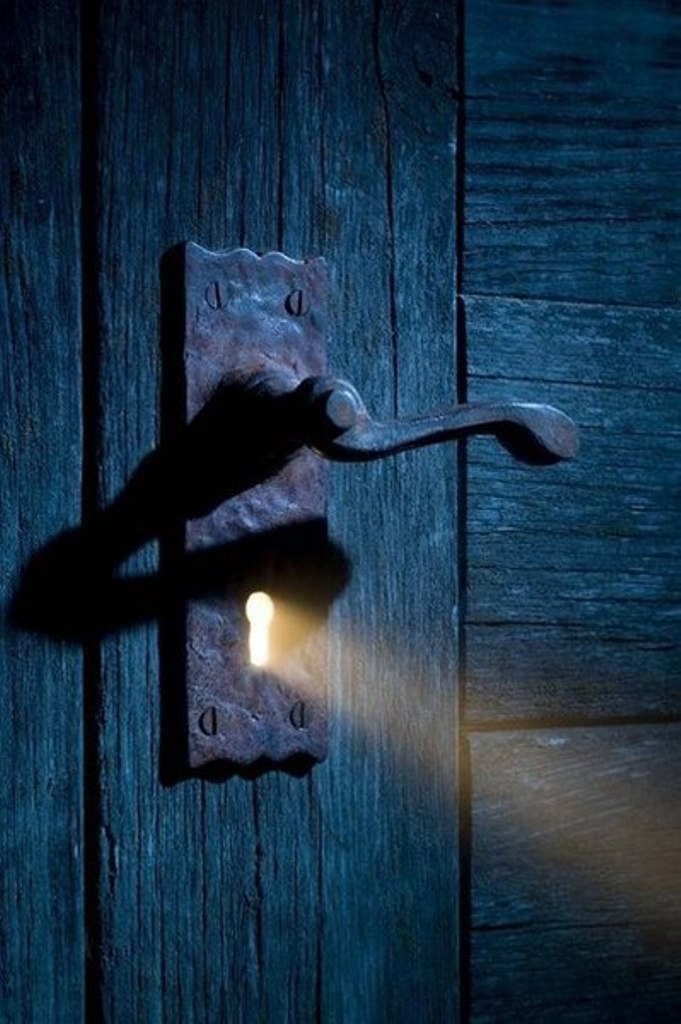
Light can find the way

Light can find the way

Through the narrowest keyhole

If we hold it

Up.

If we open

Eyes and hearts.

Light can show the door

To releasing darkness

Till it is disarmed

Transformed

Transmuted

Away

Into the light of

a new day.

key light