Rosie Rhymes

Ring-a-ring-a-roses KateGreenway MotherGooseNurseryRhymes 1881

Kate Greenway, Mother Goose Nursery Rhymes 1881


“Ring-a-ring-a-roses; A pocket full of posies; Hush-hush, Hush-hush; We’re all tumbled down!”

“She can play like this for hours,” Mary sighed.

Alice gazed at the child, who with arms spread wide to the sides, continued to spin about the garden’s green, dipping a curtsy at the final line before going back again to the first. Her pitch was perfect and her voice was sweet, but the bouncy ringlets and pinafore over a knee-high calico dress only highlighted the oddity.

It was adorable when Rosie was six years old. The girl was nearly thirteen.

“How’s Rosie’s schooling coming along?” Alice tried.

Mary’s smile faltered for a second before a placid screen unfurled over her face. “Just fine,” she breathed. “It’s coming along just fine, dear. Did you try the rose-petal marmalade? Mrs. Hannah outdid herself this year.”

It is like watching a wind-up toy, Alice thought. She never could get her sister to speak candidly about the child. None of them could. They all knew much was wrong, yet it was nigh impossible to discuss it. There’d been some concerns before the accident, of course, though Rosie had been very young then and much was explained away as the idiosyncrasies of an only child with an active imagination.

Then the accident happened and it was as if Mary had stopped the clock. On her own life as well as Rosie’s. The child seemed content enough, delayed and mostly mute outside of singing as she was. But how much did any of them know about the child’s true reality and potential, and how much was her mother’s doing, impeding her growth?

“Ring-a-ring-a-roses …”

Rosie’s singing rang in Alice’s ears and suddenly she could not stand it any longer.

“Mary,” she pressed, “I know this expert …”

Her sister raised a delicate hand. “We have all we need, Alice.”

Alice shook her head. “No, you don’t. I love you, and I know you love Rosie dearly, but she’ll be a woman soon … and she can’t stay six forever. Let me get the both of you some help. It’s not about trying to force her to do what she cannot, if she cannot … I mean, I know she’s a little …” her sister’s eyes stopped her. Brittle. Angry. Warning.

“… I … I can see she seems happy,” Alice inhaled and paused, hoping for a relenting crack in her sister’s eyes.

There was none.

“Indeed she is happy,” Mary clipped. “And we shall keep it this way, shall we?” She turned her head a tad, so that her eyes rested partially on the closed wing of the manor where the stone would forever be a bit dark, and partially on the child she’d frozen in time. The sweet girl who did not need to know more than what she’d known the day before she had tipped a candle onto paper and accidentally, fatally, set fire to her father’s study. “Now, about that marmalade!”


For the SoCS prompt: Rhymes with rosy


Pinned Hopes

Photo prompt © J Hardy Carroll


She planned every detail.

The dress. The cake. The decorations.

What games to play. Who to invite. The invitations.

She fretted over treats and props. The seating arrangement.

The day dawned bright. The weather fair.

The flowers gifted blooms. Butterflies came to visit.

The cake turned out close to perfect.

The dress fit well. Even her hair cooperated.

She breathed it in.

She smiled.

She waited.

The only thing she did not foresee

Was no one showing up,

And only her mama there

To wrap a scarf around her eyes

To hide the tears

As she pinned the donkey.


Note: Dedicated to all the children whose parties turn to pain. To those who are all too often left invisible due to social awkwardness, adversity, disabilities visible and invisible, social isolation, bullying, and the myriad ways indifference (let alone direct cruelty) can a child’s soul maim.


For Rochelle’s Friday Fictioneers


Dive Right In!

Photo prompt © Rochelle Wisoff-Fields


The water glistened.

Gloria shook. “I don’t think I remember how.”

“Just do it,” Jody said. “It’s like riding a bike. Your body never forgets.”

I never had a bike, Gloria thought,  and there is much I worked hard to have my body forget. Especially since that day.

“It’ll come back to you,” Jody urged. Ordered, almost. “Dive right in!”

It was the edge in the trainer’s voice that did it, and what it brought back was not welcome.

“No.” Gloria pulled her swim cap off. “Not here. Not yet. Not today.”


For Rochelle’s Friday Fictioneers


A Heart, Missing

Heart Yael Yehuda

Photo: Yael Yehuda


There stands the empty crib

The room that will not hear

The sounds of cries or coos or laughter.

There are the walls,

Fresh paint

Fresh pain

For the awaited,

For a broken chapter.

A heart

Missing

Breast and breath

For an eternity of loss,

Till the hereafter.


Note: Dedicated with love to all empty-armed mothers (in all their manifestations and realities and outward presentations), on this Mother’s Day.

For Debbie’s One Word Sunday: Missing


In Denial

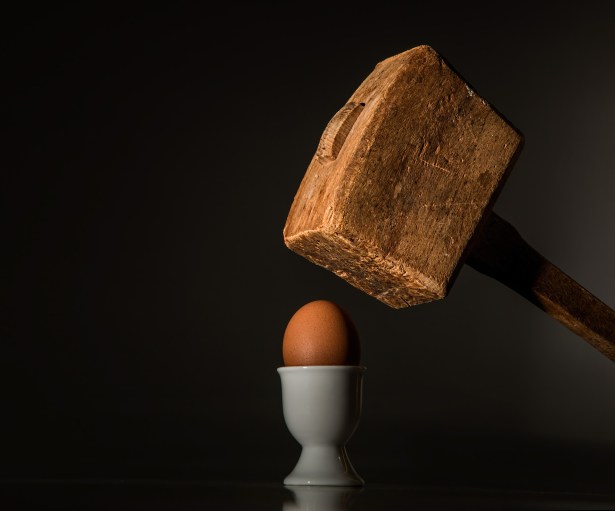
egg-583163_1920

Photo: stevepb-282134 on Pixabay


“He’d never do that.”

“But he’s such a nice guy!”

“She’s lying or she’d have complained sooner.”

“He’s a pillar of the community.”

“Why ruin a man’s name?”

“I’ve never seen him do anything.”

“He said he didn’t do it. What else do you want?”

“Kids are unreliable.”

“Women lie about this stuff all the time.”

Even when videos surfaced following one victim’s suicide. Even after he was convicted. Some kept claiming he’d been the one wronged.


For Sammi’s Weekend Writing Prompt: Denial in 77 words


It Ain’t TMI, Little Guy

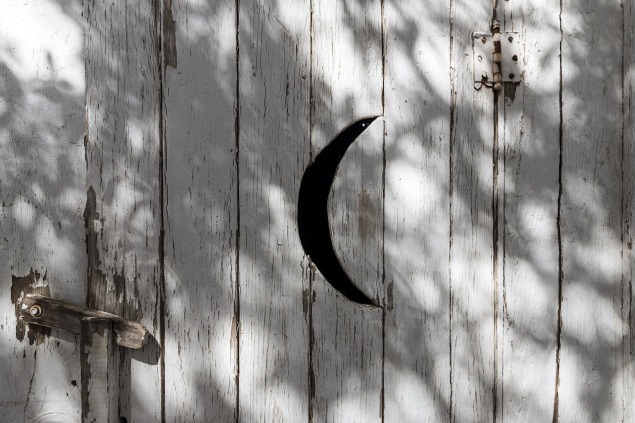
outhouse-door-1544645_1920

Photo: Pixabay


“My face gets all red,” he noted.

“Oh?” I didn’t know where he was going with this little tidbit of self-disclosure, but oftentimes neutral responses worked the best for those.

“Yeah,” he nodded. His hands continued to manipulate a small figurine: twisting, bending, spinning the head around.

I offered a box with a some accessories: a chair, a bike, a car, a bath, a bed, a backpack.

He raised his eyes without really looking at me, and returned his attention to the object in his hands. He wasn’t exactly aggressive as he was persistent. I found myself wondering when he’ll realize the head could come off.

“My face gets all red,” he repeated. “I watched.”

“Hmm?” I responded.

“Yeah.” He looked up, this time meeting my eyes in part-challenge, part-fascination. “In the mirror. Did you know I have ropes in my neck?”

He touched the sides of his neck, then grimaced and twisted his face and torso into a representation of intense muscle tension. Strain or fury or struggle or all.

“See?” he grunted.

The veins in his neck bulged and a small tributary pulsed at his temple, sprouting a delicate delta underneath the almost transparent skin.

“Yes, I do see.”

“It’s what happens every time,” he sighed as he relaxed his face and shoulders. Fierceness gone. Vulnerable.

“It’s what happens, when?” I had some inkling as to what he was describing but I wasn’t fully sure … and not assuming was often the right thing to do, anyhow. Especially with children who’d had so little opportunity to question or discuss or explain or inquire or straighten worries out. This little guy had had almost none, and for a boy who talked with almost no one, it was progress that he could speak about himself at all.

His eyes sought mine and the rising pink in his cheeks competed with the retreating redness from his earlier maneuver. He bent the figurine to sitting position, to a stand, to sitting again.

“When I go,” he muttered. “You know, when I … um … have to, uh, push the poo out.”

“Oh,” I noted blandly. “In the bathroom?”

The boy nodded. The blush spread down to below his chin.

“I think most people strain when they poo. It can make their faces red.”

His eyes widened at that, or perhaps also at my matter-of-fact discussion of matters too many in society render embarrassing even though these are naught but normal body-functions.

“Did you look, too?” he tried.

“At my face? You mean, when I use the bathroom?”

He bit his lower lip and nodded, balancing a tightrope of shame and disclosure and curiosity and possibly worry. Perhaps all. Perhaps more.

“I can’t say I have, but it is just what happens when people move their bowels. It is normal to strain or push a little.”

He thought about it. Continued to play with the figurine in his hands.

I wrestled with whether to say anymore. I wanted to reassure him but also wanted to know if it was hurting him to go to the bathroom, so I would know whether there was a problem that needs to be checked. I wanted to know if anything changed recently … if something happened … Heavens knows plenty had in the past, even if I did not know exactly what. Was this him just being more aware of his own body, or was it an attempt to speak of other things … of other kinds of red-faced strain he might’ve seen? Was it both?

I breathed.

He didn’t look distressed. Then again, Toy-figurine Man had lost his head a few times.

Another moment passed.

“Yeah, Dara does it, too.” He stated, asked.

The new infant at his foster home.

I nodded encouragement.

“Sometimes her face gets really red and funny and then Mama Molly changes her.” He looked at me, shame and blush seeming to recede. “You can smell it,” he giggled, testing.

“I bet,” I smiled.

“It stinks,” he took himself into full-out-laugh zone now. “Mama Molly says Dara’s poo stinks to infinity and beyond.”

I grinned. Mama Molly was a keeper. “Poo sure can.”

“Mine does!” he chortled.

Toy-figurine Man got his head back. Kept it on. Got put onto his bike and taken around the table and into the box.

“So,” the boy raised his chin in the direction of his folder and the games on the chair next to me. “Can we start?”


For Linda Hill’s SoCS prompt: Strain


Life Abridged

willie-fineberg-unsplash 10th st bridge Pittsburgh PA

Photo: Willie Fineberg via Upsplash, 10th St. Bridge, Pittsburgh, PA


She waited.

One more step and she’d have gone more than half-way across, but she found herself unable to move further. She sat on the asphalt, frozen by cemented legs.

So she waited. It was early, but sooner or later something will come by and she’d find out the price of her betrayal.

All her life she’s been bordered by this bridge, the yellow metal rising like a sun in her horizon: untouchable, unapproachable, dangerous.

They were raised to never cross it.

“Evil lives beyond this bridge,” her father had preached in daily sermons in their basement, the family huddled on aching knees and wreathed by incense, fear, and smoking wicks. “Leave here and your soul will be eternally forsaken. Abandon my teachings and you will not be saved.”

Well, she’d had enough. She could tolerate no more of his invasive ‘instruction.’

And she was ready.

To not be saved.


For What Pegman Saw: Pittsburgh, PA


Never Again

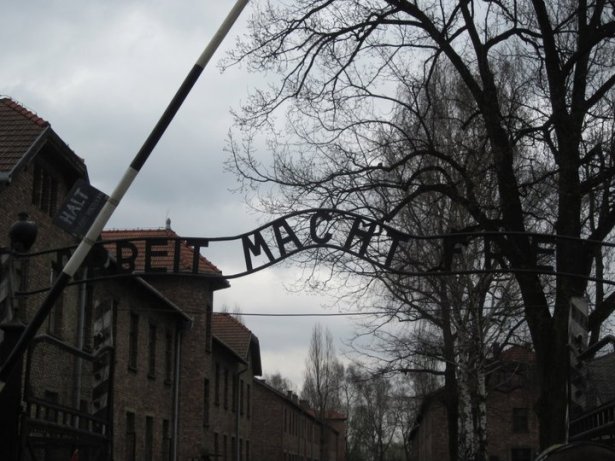
Never Again OfirAsif

Photo: Ofir Asif

May never again slogans of harm,

tattoo death on hearts, souls, and arms.


Note: On the eve of Holocaust Remembrance Day, when we mourn so many lost to deliberate ugliness that nurtured systemic cruelty and harm … and when some try to deepen horrors by claiming the suffering hadn’t even happened … May we find a path out of hate and violence, and away from whatever catchy slogans used to justify a pseudo-superiority. For in reality, we are all one, and the terror of racism leaves none of us unharmed.

For Linda’s One Liner Wednesday


Fraud Code

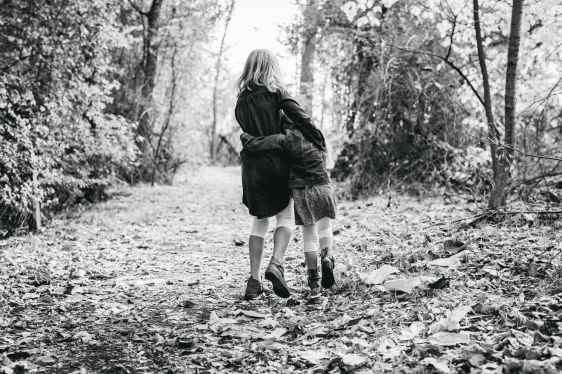
black and white childhood children cute

Photo: Pixabay on Pexels.com


She caught her sister’s eye and an unspoken understanding passed between them.

They’d perfected their “Fraud Code” through years spent in the shadow of a charlatan, and it took nothing more than a gaze for them to signal – and validate to each other – recognition of ‘another one.’

Their childhoods’ costs aside, at least they could sniff out similar quacks from afar.


For the Weekly Writing Prompt: Charlatan in 61 words