Challenges In Adoptions of Traumatized Children


As promised in the previous post, the video above is a recording of my virtual presentation from June 3, 2020, titled: “Does He Even Know How To Be loved?” Challenges in Adoptions of Traumatized Children.”

The hour-long presentation was requested by and offered through Haruv USA, which provides professional development and training on trauma-related topics, to professionals and interested individuals. The presentation is available on YouTube.

Feel free to leave comments or ask questions. Please note that comments are public, so if you want to ask questions more confidentially, please use the contact Na’ama Yehuda page.


השלכות של התעללות והזנחה על שפה ותקשורת של ילדים

The impact of neglect and abuse on language and communication in children – a video presentation (in Hebrew)

אפשר לצפות פה בוידאו המלא של ההרצאה שלי מיוני 2, 2020, בנושא “השלכות של התעללות והזנחה על שפה ותקשורת של ילדים” – ההרצאה היא בעברית (ללא כיתוביות תרגום לאנגלית בשלב זה), וניתנה במסגרת “חרוב מהספה” של מכון חרוב בירושלים

שאלות, הערות, והארות? אפשר להשאיר פה בתגובות לפוסט, אבל חשוב לזכור שתגובות לפוסטים באתר פתוחות לציבור, כך שאם יש שאלה או הערה יותר פרטית, רצוי לפנות דרך דף הקישור

The video above is a recording of my virtual presentation from June 2, 2020, about the “Impact of Neglect and Abuse on Language and Communication in Children.” The hour-long presentation is in Hebrew (no English Subtitles at present). It was requested and offered through Jerusalem’s The Haruv Institute‘s “Haruv From The Couch” initiative, which provides virtual professional development and training on trauma-related topics, to professionals and interested individuals. The presentation is available on YouTube.

For the English speakers among you, I am hoping to post a video of another presentation (on a different but related topic), this time in English, in the coming days. That presentation was requested by Haruv USA and was recorded on June 3rd, 2020. I am waiting for it to be made available. So be on the lookout for another video post!

Feel free to leave comments or ask questions. Please note that comments are public, so if you want to ask questions more confidentially, please use the contact Na’ama Yehuda page.


Swamp Dweller

patrick-smith-OlG-Jv7iU4s-unsplash

Photo: Patrick Smith on Unsplash


He claims crises are never his doing.

He says none of what’s broken

Can be.

Not the harm.

Not the scams.

Not the spread of corruption,

Or growing alarm.

It is all others’

Fault.

Everyone else

Is bad.

If there’s pain

It’s the doing of fools

Who complain

And fake hardships besides.

Obdurate,

He mocks all

Who point out

Lies he told.

To him every word

From his mouth

Is pure gold.


For Sammi’s Weekend Writing Prompt: Obdurate in 72 words


He’ll Do


The new hay-bringer was a handsome one. Calm posture. Wild mane. Warm eyes.

The others hung back as Bella stepped forward to inspect. Molly, heavy with foal, nickered a soft warning, and Bella swished her tail in understanding. Yes, she, too, was expecting, but she was not afraid.

She advanced to within a hoof-kick-space. He stayed put, unperturbed.

He carried no fear smell. No twitchy legs. No mouth yells.

Bella lowered her head some, and he held out his hand for a sniff. Sweat. Musk. Iron. Grass. Faint carrot smell.

She shook her mane, and he laughed and reached into an opening in his leg coverings to reveal an orange section of the vegetable. Offered it on an open palm.

Bella nosed it, lipped, chewed. Good.

She approved.

She tapped her hoof and felt the air shift behind her from tension to curiosity.

He’ll do.

Perhaps he even has apples.


For Crispina’s Crimson’s Creative Challenge


A Key To The Heart

Photo: Sue Vincent


The last thing she believed was that her great-grandmother’s words had been literal.

The old woman was prone to tall tales, lore and fairies, rumors and gossip, odd potions and odder notions. There were always layers of meaning. Lessons. Some ancient moral to decipher. A hidden understanding.

As a young child, Patricia was fascinated by Gramma Gee. She would spend hours dreaming about the meaning of the words of mystery from the wizened woman who had more wrinkles than skin and whose spine bent halfway parallel to the ground.

But by the time she turned an adolescent, Patricia found the elder’s cryptic talk to be boring, dated, and annoying. She only went to visit to assuage her mother’s guilt, and even then did so without enthusiasm and for the briefest stay.

When Mom died at the end of a long illness while Gramma Gee continued living, Patricia — then a college student — stopped visiting altogether. She’d convinced herself that the old woman in the cheerless room in the old people’s home was senile and would not know the difference, but in her heart’s heart she knew that she was angry. Every day the ancient lived felt like one stolen from her mother.

Patricia wondered if her mom had felt that way after Nana died. The sudden death that bled Nana’s life into her brain had left Mom bereft and lonely. Patricia was not quite four years old at the time.

It did not seem fair. Two holes bracketed by a woman so old there could not have been a good enough reason for her to still live.

Then, on Patricia’s twenty-sixth birthday, Gramma Gee breathed her last. She’d just turned ninety-five.

She left Patricia everything: Two tattered suitcases of documents, moth-eaten blankets in a trunk that could have come out of a horror movie, a box of knickknacks, and a four-leaf clover key wrapped in a piece of leather in the shape of a heart.

“There is a key to the heart, and you can use it.”

Patricia had heard Gramma Gee say this phrase more times than she cared to remember. She’d thought it romantic at some point, then irritating.

But was it more than an expression? And if so, a key to what?

The attorney who was the executor of Gramma Gee’s meager estate was no help. A harried man with droopy spectacles and droopier hair, he had not much to tell her. “It could be in the documents,” he said, nicotine-stained fingers fidgeting for her to sign the papers on his desk and let him go handle some other oldster’s odds and ends. “I believe there’s a deed among the documents. To some house in the old country. I don’t expect it to still be standing. Most are not.”

It was mostly not.

But a section was, and part of a stair sticking out of broken walls. And the owner of the bed and breakfast nearby had a small tractor and a strong son he could lend. When they cleared away the rotten beams and tumbled stones and mounds of weeds, there was an intact part of ancient wall revealed, and more steps.

And at the end of those, a closed door. Set with a heart-shaped lock.

She had the key.

And she could use it.


For Sue Vincent’s WritePhoto challenge


Up And Away

Photo prompt © Ronda Del Boccio


They’d waited as long as they could, but in the end had to leave without her. Or lose the opportunity.

There would be hell to pay, of course, but they should not all have to suffer the consequences of Mathilde’s tardiness. Not today.

“She’d be furious,” Wanda bit her lip.

“Yep,” Tanya confirmed. She felt bad but not sorry. Sure, Mathilde liked to make an entrance. She liked to keep others on pins and needles. Not today!

Today, for Tanya’s birthday, they lifted to the sky, burners roaring.

Was that Mathilde’s car, tiny, racing at the edge of their horizon?


For Rochelle’s Friday Fictioneers


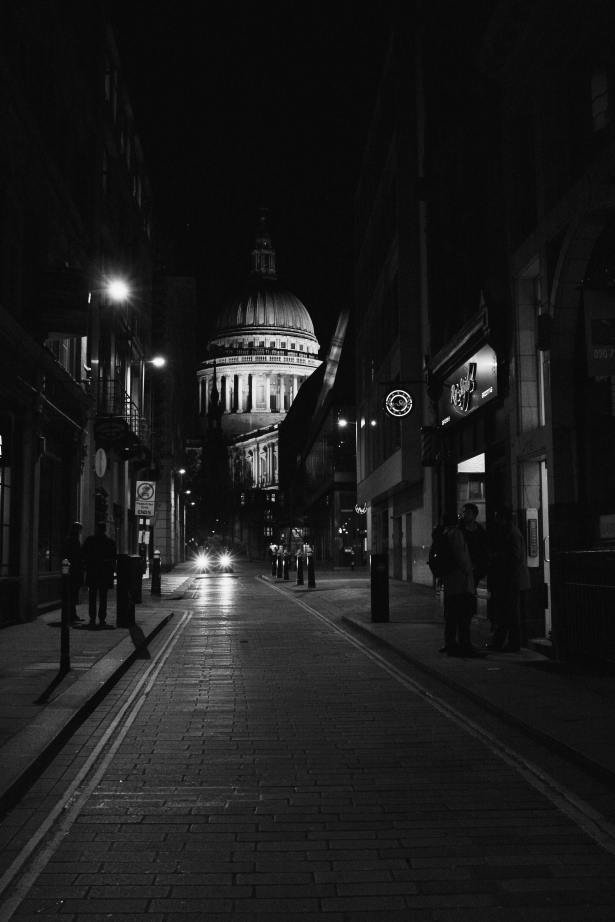
The Street

robert-almonte-Hp8_AaU2Juc-unsplash

Photo: Robert Almonte on Unsplash


The night is not as I’d expected it to be.

The sirens are silent. The windows dark. The very air seems still.

It had been a close call. Too close, almost.

I glance at Malachi. He returns a tremulous shrug.

“Will we be alright?” I ask. I didn’t mean to say it out loud, but the words could not stay in. The sound — although barely above a whisper — boomerangs in my chest.

“We might be,” he mouths.

At least I think he does. I cannot hear much above my heartbeat thundering in my ears. Everything inside me feels tight. I don’t remember being so unnerved. Not since. You know. The other time.

“Will they return?” Fear dries my mouth.

“Who knows.”

We reach the corner and separate. The night breaths as I hurry home and we go in different directions down the imperturbable street.


For the dVerse prosery challenge

Prosery prompt: “We go in different directions down the imperturbable street” (from the poem “An Aspect of Love, Alive in the Ice and Fire” by Gwendolyn Brooks)


The Promise


“It’s not much,” Eric noted.

“That it isn’t,” Morris agreed. “Still …”

Eric nodded. It was better than their tent in the woods. “Walls look sturdy.”

“That they do.” Morris circled the dilapidated farmhouse, hands clasped behind his back. A habit left from years of teaching and one he wasn’t particularly happy to be reminded of.

It still hurt. To have been cast aside. To not be wanted anymore.

“So, she just left it for you?” Eric tried to keep the eagerness out of his voice. He’d hoped for some juicy details ever since Morris had told him about the inheritance.

“That she did,” Morris replied.

He remembered her, of course. Juliette, the brunette. They’d been a couple, in a manner of speaking. “What’s mine is yours,” she had promised. Years ago.

Then they’d parted.

Not once had he thought it to mean anything beyond what she’d shared with him then.


For Crispina’s Crimson’s Creative Challenge


The Others’ Side

Photo: Sue Vincent


“Why is it this way, Mama?”

The woman let the small hoe drop from her hand. She straightened, hands over the small of her back, achy from the bending. The plot was spare, and the harshness of many a hard winter had stripped most of the topsoil off, leaving more pebbles than dirt. Still, it was better than nothing, and she was thankful.

The child had been sorting stones into piles. Larger ones. Medium ones. Smaller. There were repairs to make to walls and fences, and very little in the way of clay. Sizing stones helped make the puzzle of fitting the best bit in the best place, easier. It was a tedious chore that the girl somehow managed to make into a game. She had that magic in her, Margot did, the spark of joy that Annabelle spent every night praying would not ever have cause to slough off or be snuffed out.

“Mama?”

Annabelle nodded and turned her head toward the object of the child’s query. She’d had no option but to sit the child facing the chasm. One did not turn one’s back to the mist. Disrespectful. Ill fated. Even for children, who normally carried more protection by nature of their youth. Still, it was best to take precaution, and what the child learned early, she was less likely to forget later on and take a wrong step.

There was reason this plot was made available. Not many farmed so near the rift. Some claimed the uneasy air made foodstuffs grow small and weary.

Some did not have the luxury of growing theirs elsewhere.

“The light does not quite shine there the same way,” she said.

“What did they do?” the child’s voice was filled with pity, not fear, and Annabelle did not know whether in this particularity the compassion was something to celebrate or warn against.

“Some say they’d tied their soul to dark,” Annabelle sighed. The split and its reality was not something often spoken of. Yet unless some miracle happened and their circumstances changed, the child was destined to spend many days in close proximity to the Others’ side. It was better she heard truth from her mother, than distortions from those who felt more comfortable with lies.

She felt the child’s small hand slip into her calloused palm.

“They are not different than us, Margot. Not really. There was time before the split, before the earth heaved and the crack formed and separated this land into its pieces, where we all lived mixed together, if we even knew we were more than one kind. Now those who had happened to be on the parts that became the other side of this canyon, have the mountains dump the clouds onto them and the rapids raise a constant mist. It diminishes their sun.”

The child shuddered. Annabelle squeezed her hand to reassure her.

“There are those who chose to make their fear into a hatred, Margot. And that led to needing to make those one hated, be worthy of such ill-regard.”

“So they are good?”

“Most are. And some very likely aren’t.”

“And the big rocks?” Margot turned her head to inspect the piles she had just made. The stones balanced atop each other in formations mirroring the massive ones on the misty horizon.

“Put there, no doubt. No one quite knows why or how. Some say the ghosts of evil did it. The goblins that spit poison from the earth and crack the ground. I? I think it was people who’d arranged them. As you had the smaller ones.”

Annabelle had never shared with anyone the image that she’d seen nine months before the child was born. The figures scurrying on the impossible embankment, tucking what appeared to be smaller stones in the places where rocks nestled atop one another. The reverent silence of the people had her wonder whether they perhaps saw the rocks as headstones, memorials to those who had been lost to the maw that had swallowed so many when it had first sliced open the ground. A maw many did not believe anyone crossed.

She used her free hand to lift the girl’s chin so their eyes met. “Why did you put them this way, child?”

The gray eyes widened for a moment. In thought, not worry. “I wanted to respect the other stones, Mama. Their balance. How they don’t fall into the underside.”

Annabelle’s eyes filled. Her breath caught.

She smiled.

She never did find out who had forced her that night. She was blamed aplenty as it was, and so she never did tell anyone that she’d believed it had been someone who might’ve seen her watch them. Someone from the Others’ side.


For Sue Vincent’s WritePhoto