Name Protection, Preschool Style

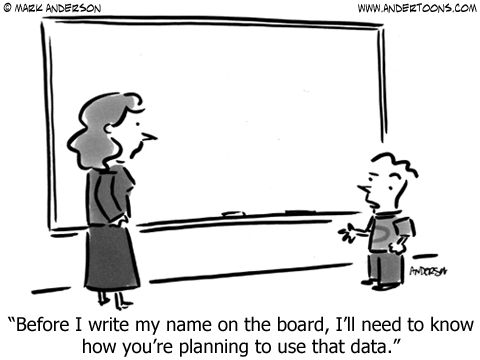
“My mommy said not to write my name.”

“She did?”

I am easy pickings for leg pulling and the kids know it, but somehow this little tyke looks dead serious. None of the tell-tell signs of lip corners dying to lift in merriment. None of the twinkly eyes that let me know I have been had. Again.

I’ve been through all manner of stories that led to hilarity-about-my-gullibility: Believing that a child had gone to the circus instead of school, or that their grandma allowed ice-cream for dinner, that they went to the zoo on a rainy day and everyone got wet (in actuality, this one was wishful thinking, as the trip got cancelled…), or that their dad said they would get another iPad all their own (scratch that, this one ended up being true … the earlier version having lost its sheen, in the eyes of the child or father, I’m not sure …).

This no-writing-name business; however, that was new. No hidden grins, either.

“Your mommy said not to write your name?” Maybe I misheard. Happens.

Little-Tyke nods serenely.

“How come?”

“Because.”

Fair enough. We grownups should get a taste of our own medicine at times. Not that I do a lot of the “because” why-chain-question-closer, but I probably have said it once in a while when it became too clear that questions served to avoid work, and not for real curiosity or learning.

“Hmm. I’m curious, though …”

Little-Tyke gazes at me.

“Is it you who should not write your name, or is everyone not allowed?”

Frown. Tiny creases appear in the five-year-old’s forehead. Cute as a button, this one. Even perplexed. Maybe especially when perplexed.

“I think only me. Me not write it. You can because it is your job already.”

“Ah, okay. That’s good to know.”

Sage nod.

“Why do you think you can’t write your name?” I really want to know. This rings  of misunderstanding of adult-talk.

Throughout this all the nanny, her head buried in her cell phone, ear-buds plugged in, sits motionless by the far table she often chooses to wait by, rather than on the couch near us, where most caregivers sit. I have come to believe that the sessions are a time of rest for her, a calm refuge from having to constantly watch an active munchkin, and I know she has very long days.

“Because you’re not suppose to,” the kid brings me back to the topic. “You not suppose to write your name.”

Now I’m not supposed to, either? Is this a repeat of something he heard said, a glimpse into the bigger context of this misunderstanding?

“Why, though.”

“The bad people will steal it.” The boy’s expression is certainty reincarnate.

“Oh?”

“Yeah, if you write your name then the bad people take it and steal it and take all your numbers and even all your money and then you don’t have a name anymore.”

Identity theft. Preschool style.

A few moments of discussion of private information and how one can still have a name even if they write it … and Little-Tyke is reassured that he ‘probably’ could add his name on the drawing he had made to take home. I leave it as an open option. No pressure … For extra measure of reassurance–and because I don’t want to put him in a bind of doing something I say is okay but that be believes his mom said was not–I send a text to his mom in his presence and following his approval of the query wording: “can LT write his name on the work he does here?”

The mom’s response is “??? of course he can! Is everything okay?”

“All fine.” I respond. “I’ll explain on phone. TTYL,”

The little boy’s eyes have been glued to the phone’s little screen. He sits up suddenly, part-admonishing, part-suspicious, part-gratified. “Aha! You see? You didn’t write your name, either!”
 

info use

Write the breathing of your heart

writebreathe

People ask me how I find the time to write. Though I know they often come from a true query, it never fails to puzzle me … For I don’t see how I could not find the time, when to me writing is like breathing. Writing is my heartbeat.

“How do you find the time to breathe?” I want to ask them back. “How do you make time to see, or hear, or learn, or live, or laugh?”

My heart beats in words. It strings them into sentences and puts them forth into the keyboard or the page. There is magic in writing, certainly. It is not something to claim to own but to allow the flow of. It has in it old life and lives that never happened or might or have not yet been found. It embroiders the fine threads of reality and mystery, interwoven as they are through the uncountable miles of words already written by those who came before: their words that I’ve read, their books that scratched their essence into my soul and changed me, the writers who forged manuscripts out of molten core, the teachers who chiseled rawness into finery, the poets who strung words into daisy chains of soul.

It is a force of nature, writing is. A cumulative tide. A mirror of what is and what could be and what still is hoped for. It is a pool of stillness and a roiling sea.

Writing does gather light from the eyes that read it. Through them it reflects the recognition of what unites all spirits, amplifies the rhythm of all hearts, connects the pace of tides, anchors the pull of moons into the hopes and dreams and grime and steepest climbs. Reading eyes infuses writing with continued life. It strengthens words that last into tomorrow. It is as it should be. Writing is meant to be read.

In its nascent state; however, writing unfurls shoots of new breath into pages for the pure joy of its birthing. It evolves for the very marvel of the stem unbending and the leaves uncurling and the buds of something that could never be imagined until it came through, come true.

“Where do you find the time to write?” I’m asked. “I wish I had the time to write, as you do,” some say. “It must be wonderful to be able to make time for writing,” they comment.

And I don’t know the answer for the ‘where’ or ‘how’ or ‘when’ questions. Nor do I have the key for finding more time (though I wish I did, with writing a vast ocean and only splattered drops finding their way into the daily grind). I do not know where one finds more time for living, when life happens to move through already, interlocking stories as we go. The wonder of the writing I do get, however. The deep gratitude for being allowed the magic in the heartbeat, in life’s pace.

“Writing is like breathing,” I want to tell them. “I can no more cease to do it than I can hold my breath. Oh, for a moment, surely, but not much more. For the words fight back and breathe me and sneak out … as they should. They are my heartbeat. The pulse that crosses time and space to hold together human thought, invention, wonder; life.”

I write because I breathe.

Why do you write?

dandelion

Finding the Ability in Disability

This is a wonderful talk. Inspiring, and well worth the time. Rachel Kolb does a brave, important thing in this talk. Watch it, and let your children watch it, too. Tell your colleagues. If you are a teacher–it is a must. If you work with children–watch it. You will be happy that you had.

Navigating deafness in a hearing world

It is a talk about deafness, but it is not only about deafness. It is about abilities and what we can do and what we worry we cannot and how this in of itself can limit us. It is also about the realities of difference and the many challenges that children (and families) face. It is about the barriers for communication and interaction and how they manifest throughout the domain. It is about the scope of issues that cascade from deafness (and can from other disabilities, as well).

It is about a lot of what still needs to change, and can. In 90% of families of deaf children born to hearing parents, the parents do not learn to communicate effectively (i.e. sign) with their child. Deaf children born to hearing parents are less likely to develop fluent writing skills than those born to deaf parents. It is the result of a fundamental misunderstanding. Where communication suffers, attachment suffers, and abilities suffer. Communication MATTERS.

“Never put limitations on that child,” the Speech Therapist of a then 18 months old Rachel Kolb told her mother. I like that clinician without ever having met her! Because she was right, and because she said Truth: we never do know how far a child would go, and we must give them the tools and support to get there. Not every child will reach the same goals, but we owe it to them to not impose our own limited view onto them.

As for that Speech Therapist–Oh Boy, was she right about Rachel Kolb! This young woman soars! She chooses how to use the abilities she does have, and she uses them spectacularly. This is one wonderfully unlimited woman! You’d be happy to have made the time to listen.

Listen to this talk. It may reassure you that you are on the right path if you are struggling or helping someone else who is. It may help you truly realize how not all differences in perceived ability mean differences in actual ability. It may improve your understanding of the challenges that hearing impaired persons face, and through them, the realities of other limitations. It may help your children understand the difference between accommodating and ‘indulging’, and how someone’s need for help does not mean they cannot think for themselves or should be seen as lesser than.

It is an amazing talk. Instructive, intelligent, impressive.

It WILL inspire you.

For those wondering: eighteen years of Speech Therapy is a long time. It is also not that unusual for people with severe and profound hearing loss to require that amount of time in therapy. This is not because they are slow to learn, but the act of communication is multifaceted and complex and what we take for granted is difficult to do with much reduced and distorted sound. Hearing impaired persons need help not just learn to speak and improve the clarity of their speaking, but also to speech-read (understand what a person is saying from the movement of their lips and face), to discriminate close-sounding words, to learn to rely on context, to identify new words and learn the difference between how they are written and how they are said (and heard/speech-read). They need to keep up with the realities of underlying information in language (e.g. expressions, ambiguous language, discrimination between words that sound the same to them). They work hard in Speech Therapy and they can do exceedingly well, if given the chance.

Rachel Kolb is deaf. But she is not limited. She’s been given the chance and she’s grabbed hold with two hands and then some. There were those she met in who were limited, however. Not deaf, but limited in their vision and understanding. Like the riding instructor who told her that she would never learn to ride. Or others who judge her for her voice without listening to what she has to say. It is them who have a sort of deafness, I suppose. It is them who were limiting, and in that they were limited.

Lets us not be limited. Let children grow limitless in their ability to work hard, master skills, and achieve the best they can do, not the best we think they should be able to.

Find the ability, and the sky is the limit.

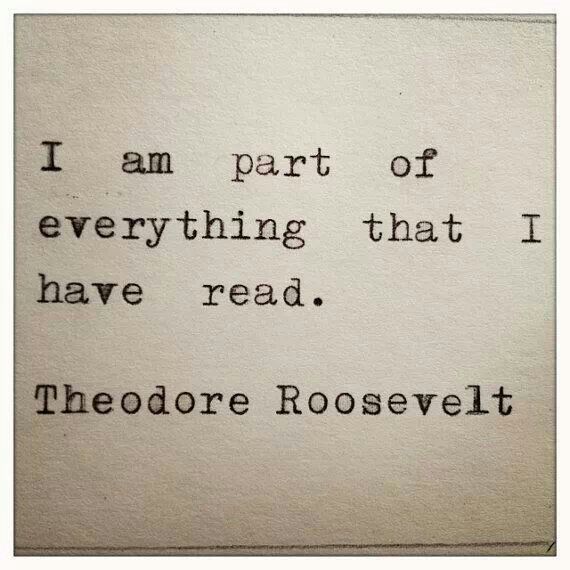
Why do YOU read?

How do you use reading? How does reading handle, challenge, comfort, startle, change, use … you?

Do you read for pleasure? Do you read when you are sad? Do you read for inspiration?

Just for school, research, work-stuff, projects? (if so then that is quite a bit depressing, really, I am sorry it is that bad …) 

Do you read for passing time? Do you read for friendship? Do you read to seek ideas? Do you read to make good use of waiting, lines, your travel? Do you read to undo boredom? Do you read because you can? Do you read to keep on current or to discover what had happened during times before your time? Do you read for imagination? Do you read to reconnect? Do you read for knowledge, wisdom, thought provoking, prayer, fate? Do you read for all these reasons and read some more for just in case?

Do you read books, magazines, publications, journals, newspapers, memos, menus, t-shirt logos, signs? Do you re-read old notebooks, older letters? Do you read your children’s homework, the funnies of another, bits of stickies left in library books by mysterious someones?

Do you read for comfort?
Do you read for hope?
Do you read to understand?

Do you read because it matters? Do you read because you must? Do you read for words you’re learning? Do you read to learn to live or to prepare better how to die? Do you read for things you did not know and need to? Do you read for what you wish you did not need to know yet should not be look away from or deny? Do you read for group discussion? Do you read to share a page? Do you read to walk along the ones who placed the letters onto page and screen and paced into your life?

Do you read a child to sleep? Do you read to calm an elder, to apologize, to woo a loved one? Do you read to spark an interest? Do you read for laughter, for redemption, a good cry? Do you read as prayer or as meditation? Do you read to find a path to bigger pictures, wider seeing, deeper meaning, brighter skies?

Do you read to find your own voice? Do you read for vision?

Or like me, do you read for all of those reasons … as well as for the simple fact that you are addicted to the human language and cannot, would not, do not want to, ever stop …?

ihaveread

Write on!

Today we had: No more snow. No new ice. Partial blue skies. Nice weather bluff and freezing sun. New York City a la Alaska.

Like quite a few of my townspeople, I am learning to appreciate what true northerners deal with every winter, throughout winter, September to late March. They may be chuckling at our overreaction to minus twenty in the sun, but when the Arctic visits this part of my world I am all the more grateful for how most days in this latitude are usually more temperate ones … 

Still, its cold outside. Educational opportunities abound. A child came with a school assignment to write about the “Cold Snap.”

The writing product of the chewed-off-pencil munchkin so far: “It is a cold like snapping peas because when you walk outside the snow snaps and the air snaps at your face and your fingers feel like they are going to snap off.”

Pretty snap on, don’t you think? 😉