Perpetuity

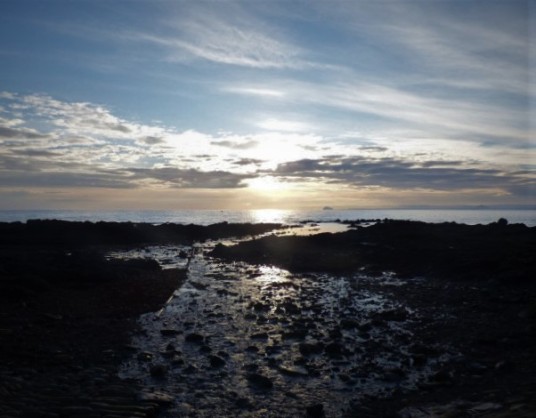
a channel of water flowing out to sea, with the sun reflecting on the water.

Photo: Sue Vincent


“You know,” she said, “this will be home.”

I looked around. Marsh and bog and semi-dry patches that high tide or rain were sure to turn completely water logged. It looked a misery.

“It will, too,” she added, even though I hadn’t said a word. She always knew to read my body’s thoughts, even when I voiced no words and moved not a muscle.

Some days it made me hate her. For my utter lack of privacy.

Other days I felt indebted beyond measure for not having to find ways to explain when words had never been accessible enough to match my thoughts with meaning. And for being seen by her when no one else seemed able to or cared to try.

“Wanna know how?” Fiona pushed a heavy lock of hair off of her eye and I knew then that she already had a plan, and that the plan was sounder than the muddy ground we stood on. I knew that gesture, that flowing move of clear-eyed determination that carried with it more than just a touch of crazy. For neither one of us was sane, but Fiona was nuts enough to get us out of scrapes I did not see a way out of. Somehow my sister, younger by three minutes and wiser by ten decades, thought ahead in moves others did not appear capable of anticipating. It had saved us, more than once, of certain death.

She was about to do so now.

“How?” I asked, though I knew she didn’t need me to.

“Stilts.”

She yanked a twig out of the soggy ground and scratched a diagram into the patch of godforsaken earth in the end of nowhere anybody, that an hour earlier I did not know existed, let alone that it belonged to us by ancestry through crumbling deeds that no one since an ancient relative had made use or taken any heed of.

“They thought the place too wet,” my sister noted as the outline of an elevated house rose like a phoenix from the lines she etched into the dirt. “But not Friar Felix. He saw the same potential that I see. The fish and clams and seaweed. The crabs. The cattails by the spring that makes the stream that gurgles out to the sea. A place to be.”

She glanced up at me and the hazel in her eyes reflected the sun’s rays along with something far older. Like a memory not of hers that nonetheless also held on to our own desperate need for belonging.

“I don’t know if he knew, Finley, but Friar Felix had bequeathed the deed to this land to his sister’s children, and to their children’s children in perpetuity.”

My sister turned her gaze onto the water and her voice dropped to a whisper in the wind.

“We are those children’s children’s children, Finley. This is our home. It will be home. You’ll see.”


For Sue Vincent’s WritePhoto Challenge


At The Window

Wacton church window


She’d drag her trunk over every time she was left alone. It did not happen nearly often enough, so she faked head-hurts when her need got too great.

She’d drag the trunk over and place the foot-stool atop it. Gather her skirts and climb to stand precariously on it, balancing on tiptoes.

It was the only way to reach the window.

It was the only way to look out.

The only way to see the fields. The light upon the water in the distant pond. The green or bloom or brown or white of seasons. The birds. The trees. The world outside.

She didn’t know how long she’d have to stay confined to the Women’s Tower. Probably till she was of age to be married off and be conveyed in a shuttered carriage to the Women’s Tower in some other lord’s estate. The curse of her birth.

Highborn girl-children did not go out of doors very often. They did not spend time in the courtyard after infancy and were never unveiled or unaccompanied. Their chastity required they not be seen.

She watched the peasants’ children frolicking. She watched the girls work the fields, herd the geese, chase stray ducklings, spread seed for the hens, milk the goats, cut the hay, grind the wheat, slap cloth against the rocks at the sparkling stream. She could almost feel them breathe, though when she tried to draw breath herself it only let in suffocation. So much so she sometimes did not need to fake a head-hurt after that.

The latticed windows did not open. Two narrow slats near the corners of the tower room did respond to her mother’s lock in fine weather to allow air through cracks barely as wide as her wrist. Not that she was allowed to try and push an arm through them. It would be unseemly.

Still, she tried. Once. The marginal openings met a stone ledge’s resistance after a few inches’ opening.

Protection from invaders and wild-men, she was told.

Guarantee against escape of any kind, she thought.


For Crimson’s Creative Challenge


First Day Out

transition

Photo: Sue Vincent


It’s been a long time since she was able to hold her head up.

She knew every crack in the ceiling. Every shade of light on the walls. Every spider web.

They kept the latter undisturbed.

“Let them be,” she’d asked when the housekeeper had come in one day, armed with an upended broom. The matronly women had frowned only to have understanding effuse her face with something between pity and compassion.

“You keep ’em company, then,” the housekeeper had said.

She’d cried a little after the woman had left the room, tears accumulating small pools in her ears. In them was the relief for the small thing she could still control to protect, and the hollowing despair for how much of it she’d lost, that she begs company of arachnids.

Months passed since.

The webs accumulated. Elaborated.

The seasons changed.

She watched the spiders, and found her own cobweb to hang on to and get stronger.

She learned how to control a torso that would no longer answer to her command. She found ways to manage the awful dizziness of gravity. She made peace with her chair and its straps as her adopted exoskeleton.

And she was strong enough, finally. To hold her head up.

A gentle sun licked the edge of the gate. The mostly overcast sky offered her pallid indoor skin a needed measure of protection. A glint danced on the fence’s wall and she practically felt it.

As tender and tenacious as a spider web strand.

“I’m ready,” she smiled. “For my first day out.”


For Sue Vincent’s WritePhoto prompt


They Bowed

Photo prompt: Sue Vincent


“They bow, you see,” Mir explained.

The child held on silently to his hand.

Mir peered down at the small head, so uncharacteristically still, the red curls shining like molten gold under the sun.

The quiet lingered and Mir did not break it. More words would not change how there was only so much one could say about some things.

A bird fleeted close. A bee buzzed by. Somewhere a donkey brayed and a dog’s bark answered.

Still the child did not move.

Mir let the air in and out of his lungs mark the passage of time, even as he knew it would not be measured in the same way by the child. Nor would it matter. Time is rarely what it seems to be, anyhow.

The air shimmered. The scent of smoke wafted from someplace beyond the fields, and in it mixed the faintest hints of manure and baking bread.

A caterpillar inched its way atop a blade of grass.

“There is no wind,” the child finally noted.

“There is not,” Mir confirmed.

“Are they tied together?”

“They are holding limbs.”

The child looked at her own hand in her grandfather’s. She did not look up, but Mir could feel the connection being made as it wove a thread of understanding between the two of them, between them all.

A hush fell. Then a sudden breeze rippled through the field and whistled an unnamed sound as it passed through the stacks. The tips nodded.

The child bowed back.


For Sue Vincent’s Thursday Photo Prompt: Wicker


The Intertwined

Photo: Sue Vincent


“Meet me by The Intertwined tonight,” the note said.

Nate trembled. He fingered the rough edge of the faded construction paper and the sensation lifted him into memories filled with the scent of glue and the sounds of children.

It’s been how many years since? Thirty. At least.

He inspected the note again, as if expecting more words to appear among the scrawled letters on the hand-torn bit of yellowed-green. None did.

It was not signed, but even after all this time there would be no mistaking it. Not by him.

Elinor.

Kindergarten sweetheart and schoolyard tormentor, both.

What did she want? Where had she been? Why write him now? Why him? Why this way?

Tears pressed behind his eyes and he was surprised by their intensity. The last time he’d felt that way (well, the last time he consciously admitted to it being so), was when he’d seen that ad, twelve years ago. The image of it unfurled behind his mind’s eye, never really forgotten: “Missing. Elinor Bricks. Age 23. Long dark curly hair. Blue eyes. Medium height and built. Last seen walking into the woods south of Sparrow Street, wearing blue pants, gray jacket, sneakers, and a brown messenger bag.”

Two weeks of searching before the police had folded their tents and left the flyers for the wind and squirrels.

Three months before he could sleep.

Four years before he let himself date anyone. Two more before he married. Five before he lost Marianne and little Morris as the baby tried and could not be born.

Could that have been only last year?

His heart had been hollow. Since.

Now this.

“Meet me by The Intertwined tonight,” the note said.

Their ancestors had planted those trees over a century ago. Hers and his. Far apart enough to stand alone. Close enough to weave together roots and canopy. They were a symbol of connection. The place where marriage took place and funerals left from. Where roots spread fingers to hold on even as they reached to grip new spaces. It was the very place where past and present, love and life and loss and longing intertwined.

His fingers spread over the bit of paper, reaching to embrace it, and interlacing words with the unknown.

He trembled.

His heart thundered.

“I’m sorry, Marianne.”


For Sue Vincent’s WritePhoto Prompt: Rooted


Warp and Heft

Photo: Sue Vincent


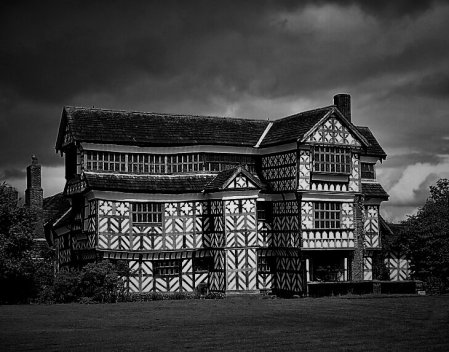
“All houses bow with time,” Agnes fanned herself. The heat lay on the garden like a leaded blanket. Even the shade of the great oak offered only small respite, though their stifling rooms would be far worse.

“Yet not all houses must endure an Edmund,” Joan giggled behind her fan before frowning at her serving-woman for daring a grin. That girl ought to learn her place! Mockery of Edmund’s evident over-fondness for sweets and mutton was for his equals only to indulge in. It would not do to have the servants ridicule their superiors, or who knows who they would dare disrespect next!

At least the obstinate girl had manners enough to blush crimson and lower her eyes.

Agnes tilted her head mildly. “The estate out-dates our dear cousin by two centuries.”

“And may or may not last this one if he does not move his quarters,” Joan deadpanned but only with half-a-heart. Her wit was wilting. She wriggled two fingers and a woman stepped forward with a glass of mead and a linen square to dab the sweat off of her mistress’ forehead. Her own coif and underarms were dark with moisture. Joan sniffed the sachet at her wrist.

Insects buzzed. The minutes lingered. The house brooded heavy against the colorless sky.

“I wish the air would move,” Joan sighed. Her embroidery lay disused in her lap.

“I wish same.” Agnes’s ivory skin bloomed pink patches in the heat. Her needle, too, lay indolent. She gestured with her fan toward the horizon past the house. “Perhaps these clouds would soon shift the wind before them.”

A distant thunder rumbled as if in answer.

Behind the ladies, one of the serving-women squeaked.

Joan frowned.

“What is it, Marianne?” Agnes inquired, not unkindly.

“The house, My Lady,” the young woman’s curtsy was tense and her finger shook as she pointed it at the lattice work on the third story.

“What about the house?” Joan hissed. She found Agnes far too tolerant of serving girls’ dramatics.

A loud groan answered and the air itself seemed to shimmer. Or warp. Or weave.

A silence fell.

Joan felt the hairs at the back of her neck stand on end.

The insects. They’d stopped buzzing.

Even before her thought completed, lightening split the sky and sliced the roof, the latticework, the heavy beam, the second story window, and the chevrons on the wall, knifing deep into the ground.

Another bolt seared her eyes as it hit the oak.

Sudden wind rose and the air fled, taking with it any memory of the burning house against the raging sky.


For Sue Vincent’s Thursday Photo Prompt: Monochrome WritePhoto


Tut’s Trough

Photo prompt: Sue Vincent


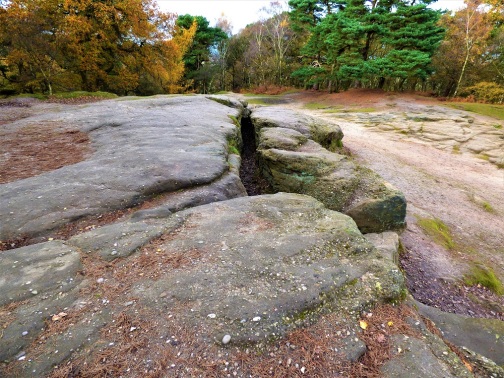
“It’s been here since time before time,” Marty’s voice rose in self-importance.

“I don’t think Mammoths would agree,” Donna deadpanned. She was tired and the tour-de-woods was becoming tedious. It wasn’t that she didn’t like Marty. She did. Or at least, she had … before he’d unleashed his inner Know-it-all in what he appeared to consider some form of seductive foreplay. It did the opposite for her.

To be fair, she’d always claimed men’s minds could be just as attractive as their bodies.

The key being ‘as important’ she sighed to herself, not the sole importance.

Marty, oblivious, nodded. “Mammoths didn’t need troughs,” he added pedagogically. “They weren’t domesticated.”

Donna slapped at some buzzing insect on her arm. The noise ceased. She’d slap away Marty’s patronizing tone, too, if she didn’t so abhor violence. These days.

The very thought stirred guilt. It wasn’t his fault she was there. It wasn’t his fault she was broken and that time hadn’t ever been kind to her kin.

She forced herself to breathe and glanced at the moss-covered structure in an attempt at interest, only to be mortified when the first thought through her mind was how much it resembled a sarcophagus and how peaceful it would be to lie in one for all eternity.

Or until some form of grave-robbers came.

She shuddered.

“You okay?” Marty’s voice filtered through her distress. “You look as though you’d seen a ghost!”

How little you know, Donna thought. “I’m fine,” she said.

The line between his eyebrows smoothed and he gestured grandly toward the vessel. “Some say it is haunted,” he leaned close to her and whispered a mockery of suspense, “for how this simple trough tricks the vulnerable into thinking it resembles King Tut’s tomb.”


For Sue Vincent’s Thursday Photo Prompt

Overreach

Photo prompt © Roger Bultot


“I never meant to hurt you.”

Samuel’s words were sincere and still she found herself looking away as to not see his eyes, where a lie was sure to peek.

“The gardener should’ve never let this grow so,” she responded.

Samuel stilled, confused.

She did not explain, for perhaps it was not only the leafy fingers arching over the path and latching onto her living quarters that had been given leave to cross beyond what was sensible.

“Some bridges need be cut,” she added cryptically. “Good-bye, Samuel. Will you send the gardener to my drawing room on your way out?”


For Rochelle’s Friday Fictioneers


The Place

Photo prompt: Sue Vincent


“I’ll take you to the place,” she promised.

“The place where you came from?” the boy pressed. “Your before home?”

“If it is still there,” she nodded, her eyes clouding over with something between wistfulness and worry.

She watched his eyelids flutter as he curled onto his side and into sleep. There was much to do and little time for it, and still she couldn’t bring herself to rise from his cot. It wasn’t how she thought it would be. It felt too soon. He didn’t know a thing.

Not that she really had a choice, anyhow.

The place. She wasn’t sure exactly what would happen when they got there, or what it would mean to her or to the boy she was entrusted to protect. What would her protection of him entail now that she’d been discovered?

She gazed at the child. He was hers. At least as far as one could belong to someone else, he was.

Most people thought they could not look more different than each other. Her translucent skin to his ebony, her pale eyes to his endless pools of black, her sprinkling of wispy flaxen hair to his rich dark mane. She’d kept his hair in cornrows for tidiness and practicality, but often enough she coaxed him to let her undo them so his hair rose in a magnificent halo about his head. Her princely lion of a child. They didn’t have such locks where she’d come from. He truly was one of a kind.

“Adopted?” nosier people would ask what many others thought but didn’t dare to verbalize.

“In a way,” she’d respond, knowing full well that the answer raised more questions, yet she refused to lie. For he wasn’t. Adopted. Not in the way they’d think.

He was. Just. Hers. Seeded in her before she even understood what he was or would become.

And they were as alike as any, anyhow, considering where she was really from.

A noise jarred her and she looked up to see a mouse scurry across the cabin floor. It reminded her of other footsteps: dangerous and inevitable and far less welcome.

She got up and as the night deepened she did what had to be done. Finally she secured a small bag to her bike and hoisted the still sleeping child into her lap. She wrapped a strip of sheet around them so he could remain snug against her while she pedaled.

She rode through the woods till morning lit the trees and the birds fleeted ahead of her wheels and small living things skittered into the bushes to avoid her.

They knew, she thought, that she was not of them, and neither was the boy who nestled, oblivious, with a head atop her breast.

There would be no hiding who they were. Not anymore.

The light intensified to shine beyond the sun.

There it was. The place. The bright beam.

She dismounted and her legs shook not from hours of pedaling, but from knowing.

And from failure.

She let herself be found out before he was adult enough to continue. She did not protect him long enough to fulfill the promise he held for their kind.

The ship’s beam wavered and the gears in her heart thudded as the light shimmered sorrow through her skin.

They’ll take only him.


For Sue Vincent’s WritePhoto Challenge


The Colonists

Photo: Sue Vincent


They would come out when dark was complete under a moon that was yet to be reborn.

First a scout would be sent. One not quite old enough to have their wisdom be missed, but not quite so young that they’d be careless or uninformed. It was an honor and a worry, both. For not all scouts returned, and laws dictated that no one is to follow and the outing abandoned until the next dark comes. The safety of the colony outweighed any singular life, no matter how heartbroken they were over losing one of their own or how many nightmares wracked the communal dreams for many sleeps afterwards.

Most times, blessed be the hidden stars, the scout would return safely. If they confirmed that all was as it should be, any who could walk would funnel topside through the tunnels that honeycombed their underground world, and out into the rocky canyon which was formed a million years ago by a whip of light from the stars.

The colony would climb over hills of leaves and navigate the muddy ponds at the bottom of the canyon, all in silence that only the heartbeats in their collective chests would pierce. For the predators were many and the colonists were small and peaceable. They lacked fangs or claws and were opposed to weaponry. The universe that sprawled beyond the walls of their rock canyon provided the provisions they required. They took the danger with the blessings.

Once beyond the relative shelter of the canyon walls, they’d fan out to forage and gather: edible leaves, stalks of grass for feed and weave and bedding, acorns, nuts, seeds, berries, and the occasional fallen fruit or discovered tuber that required many hands to trundle back into the tunnels where they lived.

They’d work until the elder who tracked the darkness passed the whisper to return, and they would fall in line to carry the final batches home.

The last to enter the canyon would pull a broom of leaves behind them – a gesture of traditional thanks for the sustenance, and a practical act for sweeping away many footsteps. The ancients had tunneled pathways for them to emerge into the night from, but there was no need to make those very pathways highways to decimation. They took care to not be known.

With all returned, the elders would seal the rocky door and bless it closed, and the colony would sigh relief as the rock itself would seem to whisper as it settled into slumber til the next unborn moon darkened the sky.


For Sue Vincent’s WritePhoto Challenge