City Witty

Photo: Na’ama Yehuda


“You see those?”

“I sure do.”

“Well, that’s where they’d come through.”

“Don’t think I believe you.”

“Well then, just wait and see.”

“Until when would that be?”

“Sometimes ‘tween two and three.”

“What? Are you kidding me!?”


“It’s the city, my friend

And this is not West End …

Alligators won’t poke their head

Till the green light’s delayed.

Sure, they value the park,

The reservoir in the dark,

And the nice scratchy spark

From a bit of tree bark …

But you’d agree it is best

To let most traffic rest

‘Fore you poke scaly breasts

Onto Central Park West.”


For Rochelle’s Friday Fictioneers  –  Thanks for picking my photo of my ‘hood’!

And for those who want more … about this snippet of lore about Alligators living in the tunnels underneath the city … click on the ‘gator below …

The Light On

Photo: Sue-Z


They left the corner light on at night.

A habit.

A ritual.

An understanding.

The stone path had been there before they bought the property, and the remains of a lantern post. It was right where they’d wanted a vegetable garden, and so at first the plan was to plow the area clear and remove the slabs and pebbles.

But then the hoe broke.

And then the belt on the mower.

And then there was the matter of their daughter’s bellowing every time they tried to work on that part of the yard.

She was barely two at the time. Not quite talking. And yet she managed to throw “No! No!” tantrums and pull at their clothing and plop herself in utter-toddler-dejection right onto where they aimed to work.

“You best give up,” their neighbor nodded her warty chin, sage eyes not unkind in understanding.

It was the Fair Ones, she explained. They had their own paths. Their own energy highways.

“The ancients had marked it. To hold space and to deter the mischief. It is easier. And the young ones can still see.”

They left the light on.

Repaired the path.

Moved the vegetable garden.

Life was better calm.


For Sunday Photo Fiction


If Tied

gatepost CrispinaKemp


“If tied,” she said, “come by.”

“If not…?” he asked.

Her shake of head stilled any of the questions he had swirling inside his. It cooled his urge to argue. He knew it wouldn’t help. He knew it would only make what was already unlikely, impossible.

In the days that followed he found every reason to visit the gatepost. He wasn’t meant to come too close, but the nearby field offered cloves that his mare suddenly required, and there were numerous trips to town that merited taking exactly the dirt road that hugged parts of the property.

He drooped with every thread-less passing.

He couldn’t sleep.

He felt angry, worried, sick.

Till one day, as he rode by on an errand for a parcel, he saw it. A pink thread. Tied.

Her parents relenting.

They’d let him court her. Even though his father, in his drunkenness, had killed their son.


For Crispina’s Crimson’s Creative Challenge


Her Reflection

silver-1 SueVincent

Photo: Sue Vincent


She walks along the dunes. There had been very little time away from others. So very few opportunities to be alone. She needs this more than air.

Morris agreed to keep an eye on the children. They were not enthused.

“He’s boring, Mama!” Ethan complained.

“Yeah, and his breath smells!” Lilly pouted.

“You don’t have to kiss him,” she replied. “And if you are bored, I can leave you some chores.”

They skulked away, displeased, but there was nothing for it, grumpy neighbor-as-babysitter or not. She knew she was becoming increasingly impatient. She did not want to cross the line into unkind.

It wasn’t their fault that Paul left. It wasn’t their doing that their dad did not see fit to shoulder any responsibility. She knew they missed him. He didn’t even think of calling on their birthdays. She knew Ethan cried for his dad in his sleep.

She almost took them with her to the dunes. Almost made it a family outing. Lilly loved running in the sand. Ethan’s eyes always lit up at the space. Like her, he loved the breeze and silence.

But she could not. Not this time.

This time she needed to replenish. For herself. For them. They needed a sane mother. She was running low on how.


She walks and breathes and ruminates and lets the worries and the sorrows stream out and flow down her cheeks and neck and chest till they evaporate.

There was a time she had hoped to have a house on the dunes. There was a time she had a dream of living in the solitary calm of gulls and tides and estuaries.

It wasn’t that she regretted having the children (marriage was a whole other story, given what non-partner Paul turned to be). She did not. Not once. She couldn’t imagine her life without them. Just for this morning, though … she needed to let be a part of herself that did not have them in its center.

She walks as if in daydream. The light shimmers and the estuary glints silver in the shrinking distance. It gives her peace. A reminder of how every stagnant-looking pool may in fact be only a pause in flow.


For Sue Vincent’s WritePhoto challenge


Small Fry

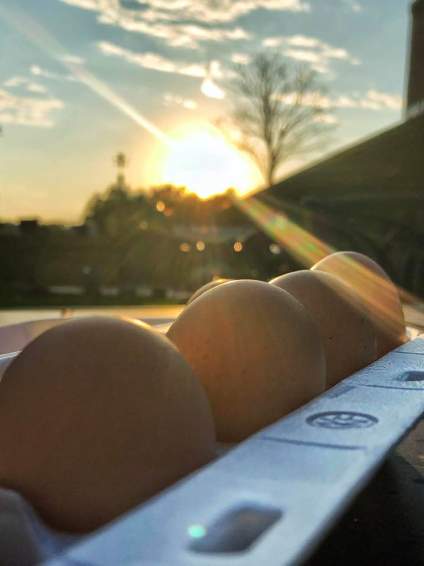
eggcelent-from-todd-foltz

Photo prompt: Todd Foltz


“Are you sure it will work?”

Tim’s chin bobbed up and down enthusiastically.

A bit too enthusiastically. It looked suspiciously like an I’m-clueless-but-want-to-pretend-I’m-not kind of nod.

Benny frowned. He had a bad feeling about the whole plan. “I still think we should have brought a proper pan.”

“Nah,” Tim waved his hand and pointed to the ball of molten orange glaring at them from the horizon. The light shimmered. “They said it was going to be hot enough to fry eggs.”

“In the carton? Don’t you need to crack them first?”

Tim shrugged. “We can always make hard boiled ones.”


For Rochelle’s Friday Fictioneers


River Run


She could not sleep for the excitement.

A dream come true. A lifelong prayer answered.

She lost count of the times they’d gone without, made do with little. They saved. They scrounged. They worked. They sought. They searched. They found.

Only to be turned down. Back onto the merry-go-round.

It was not for sale. It was too old. It was rotten. It was tied up in legal battles. It was too large. Too steeply priced. Too small.

She almost lost hope.

Then this. Beat up and needing some work. Their Goldilocks perfection.

He didn’t want to sell. His late wife’s boat. Her family’s name. Nope.

They begged. They pleaded. They tried to explain.

Finally … he relented. Perhaps they wore him down.

They drew the contract. Argued. Fretted. Signed.

The boat was theirs.

“You must rename her,” he stressed, pen in hand.

Of course.

Tomorrow it will become her River Run.


For Crispina’s Crimson’s Creative Challenge


Eventually

Photo: Sue Vincent


He spent the day lying in the field. Waiting.

Eventually someone would miss him, or wonder about how come he is so late.

Eventually they will think of sending someone to check.

For the moment, all he could do was gaze up at the skies, his leg in an angle that no leg should be in, and his breath curtailed to the smallest gasps as to limit the stabbing pain that traveled through him – like a snake’s bite and a red-hot poker combined – if his lungs filled up enough to move the lower part of his torso. He’d never been more acutely aware of how all joints connect.

A marvel, really.

And a pain.

He almost laughed at his own joke only to remember the infinite well of torture that he’s been finding over the hours he’d been this way. There was no bottom. Only crests of agony he could know and not know of, ride and fall off of, let be and let go.

In the first hour after it happened he’d been angry at himself for the stupidity of attempting to leverage boulders that should not be attempted solo. The stick, not sturdy as he’d hoped, snapped in half, sending him to the ground in an way he could not reconstruct for the blinding nausea of torment that had ensued. He didn’t know what part of his leg it was that broke, or not exactly. Raising his head even just a little led to the world spinning and a blackness closing in, and not only from the clouds that seemed to gather.

He wasn’t angry anymore. There was nothing left in him to spare on blame.

The grayness above grew heavy. It would not be long before the rain.

He’d be miserable in the muddy wet.

It would also bring people faster. They would not expect him to misread the weather. They’ll question. They’ll come.

A drop tickled his nose and he suppressed a sneeze, almost crying with desperation to avoid more pain.

A call sounded, and for a fraction of a second his heart soared. But in the next, awareness filled in: it was not a human’s.

He opened his eyes to a quartet of geese flying overhead. Wings flapping asynchronously against a rising wind.

“Fly safe,” he mouthed, eyes overflowing with misery in spite of himself. They could move. He was jealous. He was helplessly alone.

More drops fell. Tears or rain, it did not matter.

He held on to the imprint of the silhouettes against the spitting heavens.

Soon, his family will realize he hadn’t come home. Soon they’ll wonder about it enough to worry where he was. They’ll send someone.

For the moment, all he could do was breathe, and hold in all the sobs, and let the pain wash over him like rainfall.


For Sue Vincent’s WritePhoto


Top Dweller

Photo prompt © Rochelle Wisoff-Fields


She peered anxiously through the glass. He should have called someone. Who climbs up metal ladders in this frost? What if he falls? Breaks something? Who would care for him? Care for her?

She pressed a knuckle to her mouth, too afraid to call out lest her voice startled him.

“Aha!”

The sound came with a ladder-wobble and she almost screamed. How can he do this to her? He knows she cannot stand to be stressed!

A moment later his foot descended.

Wobble.

Stop.

Wobble.

Next.

Then his elbow.

With a miserable-looking kitten cradled in the crook of his arm.


For Rochelle’s Friday Fictioneers


He’ll Do


The new hay-bringer was a handsome one. Calm posture. Wild mane. Warm eyes.

The others hung back as Bella stepped forward to inspect. Molly, heavy with foal, nickered a soft warning, and Bella swished her tail in understanding. Yes, she, too, was expecting, but she was not afraid.

She advanced to within a hoof-kick-space. He stayed put, unperturbed.

He carried no fear smell. No twitchy legs. No mouth yells.

Bella lowered her head some, and he held out his hand for a sniff. Sweat. Musk. Iron. Grass. Faint carrot smell.

She shook her mane, and he laughed and reached into an opening in his leg coverings to reveal an orange section of the vegetable. Offered it on an open palm.

Bella nosed it, lipped, chewed. Good.

She approved.

She tapped her hoof and felt the air shift behind her from tension to curiosity.

He’ll do.

Perhaps he even has apples.


For Crispina’s Crimson’s Creative Challenge


A Key To The Heart

Photo: Sue Vincent


The last thing she believed was that her great-grandmother’s words had been literal.

The old woman was prone to tall tales, lore and fairies, rumors and gossip, odd potions and odder notions. There were always layers of meaning. Lessons. Some ancient moral to decipher. A hidden understanding.

As a young child, Patricia was fascinated by Gramma Gee. She would spend hours dreaming about the meaning of the words of mystery from the wizened woman who had more wrinkles than skin and whose spine bent halfway parallel to the ground.

But by the time she turned an adolescent, Patricia found the elder’s cryptic talk to be boring, dated, and annoying. She only went to visit to assuage her mother’s guilt, and even then did so without enthusiasm and for the briefest stay.

When Mom died at the end of a long illness while Gramma Gee continued living, Patricia — then a college student — stopped visiting altogether. She’d convinced herself that the old woman in the cheerless room in the old people’s home was senile and would not know the difference, but in her heart’s heart she knew that she was angry. Every day the ancient lived felt like one stolen from her mother.

Patricia wondered if her mom had felt that way after Nana died. The sudden death that bled Nana’s life into her brain had left Mom bereft and lonely. Patricia was not quite four years old at the time.

It did not seem fair. Two holes bracketed by a woman so old there could not have been a good enough reason for her to still live.

Then, on Patricia’s twenty-sixth birthday, Gramma Gee breathed her last. She’d just turned ninety-five.

She left Patricia everything: Two tattered suitcases of documents, moth-eaten blankets in a trunk that could have come out of a horror movie, a box of knickknacks, and a four-leaf clover key wrapped in a piece of leather in the shape of a heart.

“There is a key to the heart, and you can use it.”

Patricia had heard Gramma Gee say this phrase more times than she cared to remember. She’d thought it romantic at some point, then irritating.

But was it more than an expression? And if so, a key to what?

The attorney who was the executor of Gramma Gee’s meager estate was no help. A harried man with droopy spectacles and droopier hair, he had not much to tell her. “It could be in the documents,” he said, nicotine-stained fingers fidgeting for her to sign the papers on his desk and let him go handle some other oldster’s odds and ends. “I believe there’s a deed among the documents. To some house in the old country. I don’t expect it to still be standing. Most are not.”

It was mostly not.

But a section was, and part of a stair sticking out of broken walls. And the owner of the bed and breakfast nearby had a small tractor and a strong son he could lend. When they cleared away the rotten beams and tumbled stones and mounds of weeds, there was an intact part of ancient wall revealed, and more steps.

And at the end of those, a closed door. Set with a heart-shaped lock.

She had the key.

And she could use it.


For Sue Vincent’s WritePhoto challenge