Universality of Love

Today, I marvel at the universality

Of love.

At the way deep care connects us all.

And should. And can.

How it forms us.

How it spells the words of heart upon a child’s new soul.

How it breathes hope into desperation.

How it nourishes across languages and color, tradition, race, religion, state, connecting all.

How it writes upon the slate of birth

And opportunity.

How it shapes resilience to withstand strife and sorrow.

How it holds through thick and thin, through calm and turmoil.


Today, I marvel at the universality,

At the miracle.

Of love.

So utterly expected

So innately ordained

So perfectly humane

Yet so often bent by apathy, oblivion, ignorance, senseless hate, violence, disdain.

The very shock we feel at its absence

In itself speaks volumes

Of Love’s natural flow.

Its ingrained, spirit-sustaining need.

The bounty of fortitude and growth that it can seed.


Today,

I marvel at the awesome

Touching

Never mundane

Breathtakingly beautiful

Universality of love.

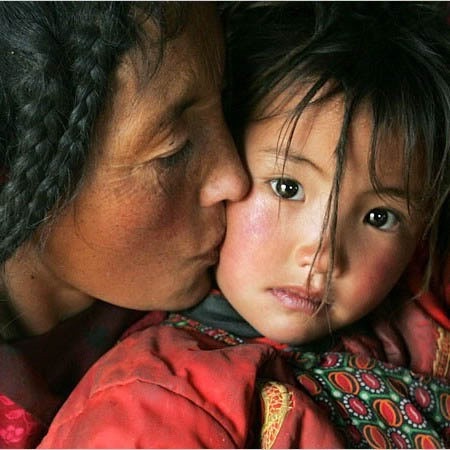
mothers love


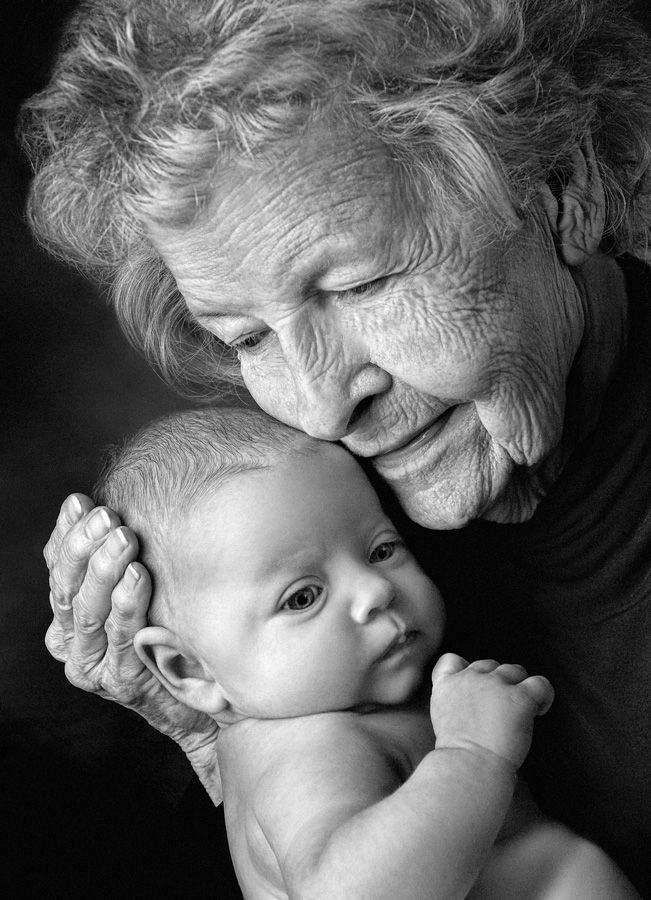
love

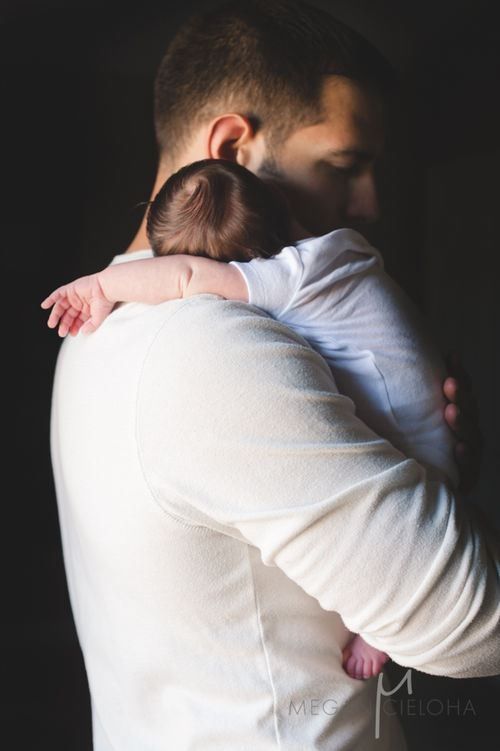
love1

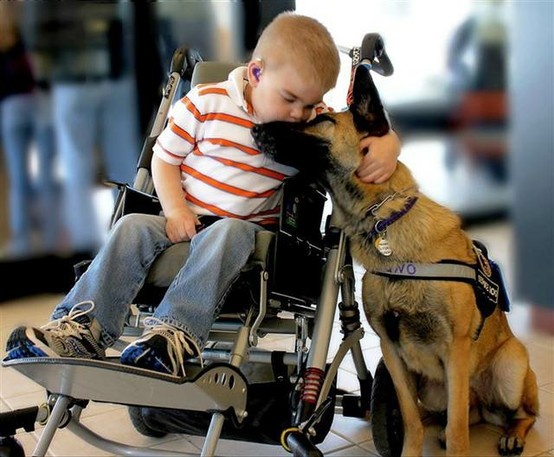
love2

love3


love5


love7

love4


Inside Your Hug

by robert wagt

by robert wagt

She’s a dark-haired gal with doe eyes and willowy body. All arms and legs that find corners and bump into tables and spill things and break stuff and mess up what appear to be the most child-proof settings. She doesn’t want to be clumsy. It is just that her body is full of angles that don’t quite plan their movements and her brain does not quite catch up to what’s happening until it is a moment too late and the damage done.

She wants to be an acrobat or a ballerina. The graceful movement, the delicate balance, the painstaking patience–they are to her the incarnation of what she would want to be and all that she finds terribly difficult. She would do better at hip-hop, her caregiver thought at some point, only to find out that a child who cannot quite catch a ball or toss it without hitting someone or breaking a window, cannot quite coordinate her movements in an elaborately sequenced dance. The teacher all but fired her after one class. Literally too many toes stepped on.

Still, the girl dreams.

She adores delicate, filmy, whispery clothing. Her caregiver thinks it would be more practical to put her in iron-knees pants and canvas but had resigned herself to letting this elephant-in-china-shop gal wear tights and lace-edged shirts. It is an act of faith, as they last about five minutes before they don a massive stain or spring a hole (which, perhaps thankfully, the child rarely seems to notice).

This little girl is a life on steroids. A roller coaster of emotions–she is either elated or devastated, overawed or broken-hearted, eager or despairing. She tries so hard. She keeps failing, falling, disappointing. Adults frown. Teachers scold. Caregivers sigh and try to keep a restraining hand nearby.

It is difficult to make friends, or rather, to keep them. Oh, she’s never mean; in fact, she is quite sensitive at reading others’ emotions and wants to take care of their needs, real or perceived. It is just that she pulls too hard when she holds hands, she pushes when she only wants to touch lightly to call someone’s attention, she messes stuff up and breaks things, she barges into conversations, she speaks too loud.

Her official diagnoses are all kinds. Some of you who recognize the symptoms may have an idea what those could be. Some of you would know why in my work with her, we tackle symbolic language, idioms and stories, auditory memory and following directions. Why we talk about social situations and solutions, practice narrative and inferences, work with predictions, and rephrasing, identifying context clues and finding the main idea in what to her is a soup of details. Why we make charts, write bullets, jot lists, follow steps, check items one by one.

She’s a bundle of everything–stories, anecdotes, questions, observations, feelings spilling over, hands tapping, legs wagging, hair twisting, lip biting, noise making.

I love working with her.

Oh, she’s a handful–in more way than one–but that’s okay. I work with many kids who struggle with managing incoming information, who need help regulating what their body senses and require direction to make sense. Fidgety bodies don’t faze me. Nor do spilled water cups, sticky fingers, rocking on chairs or crumpled papers full of holes from erasing too hard.

What fazes me more is how some of those kids who have an alphabet soup of diagnoses and a history of testing enough to fill a filing cabinet, have internalized that something in them is somehow eternally broken or ill-fitting. How all too often adults around them have come to believe this, too. I absolutely see the places needing tending, but along with the fizzy energy, there is all too often an untapped possibility, just waiting to be helped along through less correction and more connection and an ample dose of calm.

This one? She fiddles with a top while we’re working. When she’s thirsty, I offer her a water bottle (I’m super fast at twisting on a cap …). I corral pencils, crayons, papers, tape, bits of this or that. She hums and makes popping noises while she’s writing–I don’t mind. There is enough control to manage while at school, where it can bother others. With me she can just be and is exactly and perfectly good enough. Indeed she is. She’s working hard. She’s trying even harder. She’s making small but certain steps to a less chaotic path.

And she gives great hugs. They go straight to the heart.

She asks to give one, at the start and end of every session. She wraps her arms around me and leans her head against me as we stand side-by-side. She breathes. Through my hand resting lightly on her shoulder, I can feel her body slow down some.

The other day before she left, arms still around me, she said: “You make my head feel more quiet. You don’t get mad or yell and I can think.” Then she looked up at me sideways, doe eyes filled with wisdom of those whose knowledge is hard-earned and dog-eared with practice. Her arms tightened around my midriff and she sighed: “My quiet place is right here, inside your hug. Sometimes I think about it when other people look at me mad and it helps me not feel I am bad.”

inside hug

Parenting of another Kind…

This is a beautiful story.

Not a new story, as those go, but still freshening and as heartwarming as the day it was first aired. It tells a story that is timeless. Of kindness. Of empathy and care.

It is a story of a regular man who did something quite extraordinary and by that touched the hearts of many along the route. Literally.

This won’t take long–not even three minutes, actually–but it will make your day.

Watch and smile.

http://www.youtube.com/embed/9hnbmml8fOY

Little Emily and Her Big Soul

Little Emily will melt your heart.

Not only precociously verbal, adorable, and poised, she also has empathy, kindness, unflinching generosity, and a huge soul unconstrained by her little body.

Good for her! Good for her parents for advocating caring, recognizing empathy in their child, and sensitively giving her a way to provide a kindness. Good for Uncle Matthew, too … for first giving a haircut to the doll … (love that old trunk booster, man!)

May kindness flow so that unnecessary pain no longer finds foothold and loving actions shine like this child’s heart of gold.

http://www.youtube.com/watch?v=iwQZggdZrOo

How do you teach integrity?

integrity

We all want the children in our lives to have integrity and a moral compass. We want them to not only know right from wrong, but to apply it. We wish for them to have empathy toward others and to choose the better path not just to avoid punishment, but because it is the right thing to do.

That’s all well and good, but how do you teach integrity? How is it related to empathy and is it even something that is learned, or something one has to be born with? Something some of us ‘have’ and others ‘not’?

Though individual sensitivity and empathy-capacity varies, and some children are born with more empathy-capacity than others, empathy is still something almost all children can learn and have develop. Children vary in the age they begin to show clear empathy, but babies and young children are naturally self-centered and egoistical. It is normal for them to view others’ feelings through their own and to judge situations according to whether they’d get a reward or keep from getting punished, rather than the inherent morality. Fairness may be easier to detect, but true morality is learned, as is the reasons for it.

A child may not eat another’s cookie not because they persuade themselves they do not want it, but because the praise for not doing so may be worth more, or the disappointment of another in them if they not abstain may feel worse than the immediate gratification of eating the cookie. Children learn to share–maybe at first not so much because they truly want to share, but because of the positive feedback and praise that they get when they do so. With good modeling and opportunities, they can be taught how others may have feelings just like their own, and that other people’s feelings matter, too (e.g. if someone ate their candy, they’d be sad, so they can understand how if they took another’s treat the other child may feel sad about it). While some toddlers show well developed empathy, oftentimes it is through the preschool and then kindergarten years, that children learn to appreciate another persons’ pain, and to understand that another person may hold a different opinion or agenda and to accept that as okay. They learn to follow rules (all the better when rules are clear, consistent, and kind), and they practice enforcing rules in their peer and imaginary play.

How do they learn that? Well, empathy and integrity are best taught through empathy and integrity. It may sound simplistic, but there are all too many examples of attempts to teach integrity through fear of punishment (“If you take candy without paying, the police will take you to jail”), or empathy through guilt-inducing and shame (“look what you did–now she’s crying! I told you to not take her teddy bear from her!”) Fear can certainly be a deterrent, but fear is not integrity, nor is guilt the same as empathy.

Teach empathy through modeling your own. Children who have sensitive caregivers who show them care, who reflect their feelings back to them, and help them put experiences into words, are more likely to develop empathy themselves and to do so sooner. Be kind, demonstrate sympathy and empathy toward others–let your child see how you help a neighbor, or feed a stray, or hold a door for someone whose arms are full. Explain to your children about disabilities and differences, and make sure that you do not display disgust or ambivalence about the same. Apologize if you hurt someone–the child, too–even if by mistake, and acknowledge the feelings that your error caused and the need (and possibility) for repair. Be respectful of others’ feelings. Be kind.

Similarly, children whose parents and caregivers live by the same rules that they demand, learn integrity as a cohesive, non-confusing concept. Confusing rules result in confused and inconsistent learning. It is rather simple (if not easy): If you don’t want your child to lie, don’t tell them to answer the phone call you don’t want to take and say “Mommy’s not home,” or “Mommy is in the shower” (when you are not). If you don’t want your child to steal, don’t bring home pens from the office … If you don’t want them to cheat, don’t justify not following the rules at other times (lying about a child’s age to get out of fare or parking at a handicap space also counts …). Don’t promise what you do not intend to keep or just to get peace and quiet for the moment (“If you give your toy to your baby sister I will buy you a toy tomorrow”). Promises that are not kept, teach a child that words are empty and that it is okay to use untruth to defer discomfort. Be honest. Even when it is difficult. ‘fess up if you lied and explain how it happened and why you’d work hard to not have it happen again. You don’t have to be perfect, but you have to be a good enough role model … and to have the same patience with your child if they miss a step. Be curious rather than accusatory: a child who said an untruth to escape punishment is not “a liar”–though they may have lied. Don’t label, and let them explain what they feared would happen if they did tell the truth. You may find out something you need to learn, too: are your consequences fair? Would you have indeed flown off the handle or blamed them anyway?

Integrity begins with you. As does empathy. That includes empathy for yourself, as well. Be kind to yourself, let your child see a gentle way of relating to oneself as well as toward others. Be aware of phrases such as “I’m so fat” or “I’m such a loser” or “UGH, I’m such a moron!”–they get copied, they get internalized. Also, not only are you giving a less than kind model, but you are also bad mouthing your child’s parent … it is their mom or dad you are talking about …

Give children consistent fair rules, a good model, kind reflection, sensitive explanation, and they will learn that it feels good to be kind, and feels good to make a choice that is the right one. Even little ones can.

“I saw something amazing” a mom of a kid I work with called to tell me. “I gave Dave (age 5) a treat that he earned for cleaning up his room all week without whining, and he went to play outside on the deck. It is a two-family home and the neighbors’ children often come down to play, too. Tommy,  the neighbor’s kid, came downstairs to play. I saw Dave look at Tommy, then at his fruit-roll-up. He didn’t see me, but you could see his little brain working–clearly Tommy would want some … Dave then pulled out the whole roll-up, tore it in two, and gave half to Tommy. It was so sweet, I wanted to run out and hug him, but I also didn’t want to interfere–he was being kind because he chose to, and that was his moment, not mine. I am so proud!”

So was I.

“I just let it go”–Bullying, undoing Taboo?

Photo Credit: A.M

I see children. As an integral part of what I do, I talk to them. They talk to me. We discuss stuff. Words, events, stories, happenings, expressions. Language, communication. School. Life.

Oftentimes it becomes an opportunity for all manner of learning. Sometimes I even teach them something (I think that more often than not, I am the one who learns more!)

A girl came in the other day, a preteen with all the loveliness, precocity, and gangly limbs that time of life implies, complete with early social angst over boys, hierarchies and wanting to fit in. She’s a precious girl. Relatively sheltered, only child and doted on. Popular, I know. Loved by teachers. Not the best learner, but she’s gracious about what others do better and tenacious about trying to improve her own results. She had made amazing leaps in the few months I’ve known her.

She has also opened up some more. About what is not often spoken of. The real problems of childhood that are frequently hidden under layers of “fine”, “okay”, and “nothing much.”

Yesterday, she spoke about something that is both a numbing non-stop conversation and taboo: Bullying.

Non-stop in the almost weekly pedagogic instruction for “awareness” and “Zero Tolerance,” the speakers that the school brought in to talk to the students about the wrongs of bullying, the memos to the parents, the signup sheets for pledges, and the warning for absolute intolerance of it in the school. Taboo because it still happens, mostly underground and sneakily, and because in some ways it’s become even harder to bring it up.

She is not the first one to tell me of that snailing-in of bully-tactics. I’ve been hearing it. A lot. The children tell it like it is.

“No one wants to be the kid who gets another kid suspended or worse, thrown out of school!” the children tell me. “What do I need someone’s parents calling mine to find out why I’m making trouble for their kid?” These are schools parents line up to get a child into, and pay plenty for tuition and name recognition. Nothing can be allowed to blot a child’s resume. If there’s a problem, it is best handled quietly. The children feel the pressure, too. They know.

“We’re supposed to take care of it on our own, anyway” they tell me. “The teachers are like: ‘you have got the skills, use them’ or ‘sign the pledge, don’t bully, don’t become a witness, step away.’ It’s words, not action. They don’t really want to get involved. Anyway, half the time you can’t even prove it is bullying, and then you’re like, the bully.”

The kids tell it like it is. It’s tough. It’s complicated. Still, talking helps. Many of them are sick of bullying and are indeed taking action–from within. Like the girl.

She’s not the one in the cross-hairs of verbal torment (bullying in her school is the subtly demolishing kind–no heads in the toilet or smashed glasses or bruises–but eroding stings and code words of soft spoken wounding. Lethal still. We know). It is another girl. Two, actually, and creatively isolated from each other by the bullying company so that they cannot seek counsel with each other. The bullies? Four girls. All popular, great students, teachers’ pets, parents on committees, philanthropy going back to bedrock.

“They don’t say anything really mean,” she tells me quietly, anguished, “kind of. But they still do. It is hard to explain.”

“You are explaining,” I encourage. “Sometimes it is in the how you say things that the intended meaning comes through.”

She nods. “They KNOW things,” she whispers. “Stuff that’s private, what they don’t want others to know, small things, embarrassing stuff … I don’t know how they even find out, but they do, and then they say it, kind of in a joke but I can see it is not funny. Some kids laugh because they want to be popular and some really don’t see that it meant to be sneaky. They’re not all mean girls, those who laugh … some of them are my friends and all, but they laugh, and it makes it worse.”

I nod. I understand.

“The girls being bullied,” she continues, “they’re not really my friends. Not because they are being bullied … I mean, they weren’t my friends before, either. I don’t know why. I don’t really like them much. Do you think that makes me bad?”

I smile. “The very fact that you are wondering about it, tells me that you are not bad. Let alone that I already know you to have a very caring heart.”

She looks at me searchingly, but she knows I mean what I say. “Okay,” she says. I’m glad she doesn’t blush.

“I was thinking about it, about what to do,” she starts.

“Tell me.”

“My other friend said that we could find out bad things about the mean girls and we can tell them that if they kept on being mean we’ll tell everyone … but,” she pauses, “that’ll kind’a make me be a bully, too. I don’t want to.”

I smile. She knows what my smile means–another proof that she is farthest from bad.

“… so I told my friend, that we’ll just hang out more with B and C and be their friends more. Invite them over. Sit with them at lunch kind of stuff. They are a little weird sometimes, though,” she sighs. “One of them kind of gets annoying, you know, grabs your stuff, holds on to you, sticky. You know?”

She pauses. Ponders.

“But maybe it’s because she’s kind’a lonely. Or maybe she’s lonely because she’s weird. I don’t know. I don’t want to be mad at her. I don’t want to be mad at the bully girls, either. They are kind of my friends, too, sometimes. It gets me feeling stuck.”

I nod. Sometimes there’s nothing I can say that the child is not already saying, nothing that I need to add. Just listen. I hear her. She wants to think it out.

“It’s a little better, though,” she brightens. “I think. Today, at lunch, the mean girls wanted to sit with us and I was sure it was because they wanted to be mean to B and C–they were sitting with my friend and me, you know, like I said–and I got all like, mad inside, but then I decided that I didn’t want to be mad in advance. So … I just let it go. And you know what? …”

“What?” (smile)

“They were not mean. They were alright.”

1398931_10201570268751331_1255509604_o

Photo Credit: A.M.