“A Bandaid for my heart”

She asked me if I knew about dying.

I said I knew it hurt when someone we love died.

She nodded and fiddled with the pencil, poked the tip against her finger, poked again. Again.

I wondered if she was trying to make the hurting take a form she understood through the pinprick of a just-sharpened pencil. I gently put my hand on hers.

She looked up at me, thankfully without embarrassment or worry of judgment. Feelings weren’t easy for this child, whose very early years were filled with much that couldn’t be expressed and had no wording. Her grandfather passed away right before her birth and a hue of grief lingered many months, adding to her mother’s post-partum depression. Her mother has recovered since, and the home was generally caring, but unspoken early patterns of if-you-are-quiet-you-won’t-overwhelm-mom and waiting for another’s space to open so you can have your needs met still played out often. The girl, not yet ten, was more likely to attend to others’ feelings than her own; more likely to dismiss her anguish to not distress others.

I smiled at her and she smiled back shyly. Her eyes glistened and she sniffed.

“My dad told you?”

“Your mom did.”

Her eyes flew to mine, surprised at being thought of. She took another breath. Tears slid down her cheeks.

“I’m sorry, Sweetie.” I handed her a tissue and snuck a bit of extra affection into the gesture. Just because. She noticed. Smiled the sad smile again.

Her great-grandmother died two nights before. Her father’s grandmother was a fixture in the child’s life. A rock. The one who filled the gaps, stepped in, held, held on. An elder in the best sense of the word. There was a love there that spanned generations. A special bond with this child.

It was a gentle death, the mother said. Doctors believed the grandma had passed away peacefully in her sleep. No pain. No long decline. That was a blessing, but for the child this loss still hollowed.

“I didn’t get to say goodbye,” she whispered.

“I know. I’m sorry.” I moved a strand of hair off her cheek. “You can still say it. Maybe not in the way you’d have wanted, but still …”

“Yeah,” she sniffed. Dismissed. Reconsidered. Looked up. “How?”

“Any way you can think of, almost.”

She pondered. “Dad said she can hear me. In my dreams. In my thoughts.” Her eyes probed. She wanted to believe it.

“I believe that’s possible, yes.”

“How?”

“I don’t know exactly. I just feel it. In my heart. About people I love and passed away. It feels right to me that we are still connected, that in some way they can hear me.”

Her eyes overflowed again but her face softened. “I think I’ll talk to her. Tonight, maybe. You know, just me and her.”

I nodded, smiled.

She sighed. Drew in a shuddering breath. Sighed again.

“I miss her,” she whispered. “It hurts. I wish I had a Bandaid for my heart.”

hands-and-heart


Literally

“My mommy is crazy!” the four-year-old announced as she walked into my office, loudly lisping her /z/s.
“She is?…” I lifted my eyebrows in some amusement. 
The mom alternated startled looks between her child and me but said nothing. She knew I was interested in understanding what this statement was about, before explaining the potentially hurtful use of adjective and offering alternatives. 
The little one nodded emphatically, corkscrew pigtails swinging, “Yea!” she said, undeterred. “She crazy! She tell Daddy not forget to fall on him back when it weekend!”
Picture: from Etsy.com

Picture: from Etsy.com

On The Matter Of Monsters

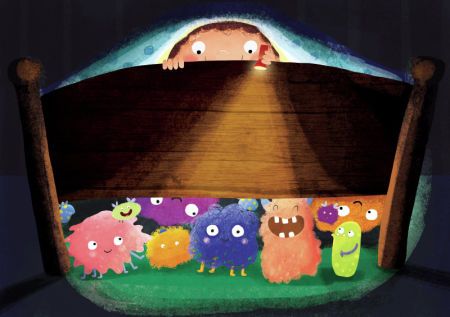
Angelika Scudamore - monsters under bed scene

http://www.angelikasillustrations.com: “monsters under bed scene”


Zane’s mother looked exhausted. I asked her if all was well.

“He won’t go to sleep unless I’m with him, he is taking forever to fall asleep and waking me up several times every night,” she sighed. “It is exhausting.”

“How come?” I asked, looking from the preschooler to his mother.

“It’s the monsters,” he chirped to clarify.

“For the hundredth time, Zane,” his mom exasperated, “there is no such things as monsters and there are certainly none in your room!”

“Is too!” his lower lip tightened in determination then began to tremble.

Zane’s mom took in a long breath and mouthed a silent “help.”

I smiled gently. The matter of monsters comes up often. Many young children–especially between four and six years of age–go through a period where they fear monsters. Under the bed, in the closet, behind the curtains/desk/wardrobe/chair, camouflaged among the stuffed animals on the top shelf … At the age where imagination and reality can merge and the veil between what’s real and what could be is thin, many children find the dark ominous and fear the parting with parents for the night and being left to their own thoughts and imagination. They are often too young to verbalize what it is they fear, exactly, but the feelings are still there: scary, dark, sneaky; the territory and making of monsters.

Scared or fearing to become so, they plead, coerce, and cry for their parents to stay and make sure they are okay.

Some are reassured by the adult checking under bed or dressers. For others, securing the closet door closed can suffice. However, for many, the fear remains in the ‘what if’ category: “what if the monster comes later?”, “what if the monster opens the door?”, “what if it is invisible and you can’t see it?”, “what if it just pretending to be my shoes but it will scare me later?”

Perception, reality, and belief make a sticky trio; and declaring monsters nonexistent rarely helps. To many children–as with Zane–this only makes the fear grow further and adds frustrated loneliness onto it, making nighttime doubly scary.

Zane’s mother needed her sleep. Zane needed his to feel safe. It was time to bring out the ‘big guns.’

I looked at the boy. A messy head of curls, brown piercing eyes under thick brows, a smattering of freckles on a button nose, wide lips, and a tongue that likes to slip out during speech and activity regardless of whether its presence is required (the tongue thrust being the main reason he sees me for speech-therapy).

The little boy regarded me. He needed to ascertain whose side I was on. “I have monsters,” he announced, “under my bed.”

“Yikes,” I replied. “This sounds scary.”

He smiled and turned to glare victoriously at his mommy.

She looked at me with uncertainty.

“You also see monsters!?” he checked, suddenly a bit wary of the possibility. Monsters being real is one thing. Monsters being REAL is quite another.

“Nah,” I shook my head. “But you say you do, so maybe they are there.”

He nodded quickly.

“What do they look like?” I wondered aloud.

“I don’t know!” he exclaimed. “They are hiding under my bed and it’s dark.” He followed that obvious fact with an ‘adults-can-be-so-thick’ look.

“Oh.” I demurred. “What if you turn on the light?”

“You can’t see them in the light. They do magic.”

“Hmm…”

“If I go to sleep by myself they will come and get me,” he warned. “Mommy says they not there but they are.”

“Well then,” I breathed. “I’m not in your house and I haven’t seen them, but just in case they are there, have you tried telling them you don’t want them there?”

“They don’t know English,” he responded.

“They don’t?” I let my voice rise some.

“No!” he explained, “they only speak Monster.”

“Hmm…”

He nodded sagely.

“…and they eat children,” he added for emphasis, then his eyes grew big with fright at the possibility of his own words and he backpedaled, “…um, maybe … if they really hungry.”

“We can’t let that happen,” I said.

He nodded again, reached for my hand.

I squeezed his little palm in reassurance. Children may be small but their fears can still be big, and their imaginations; bigger.

“Good thing we know what to do,” I stated.

He looked at me hopefully.

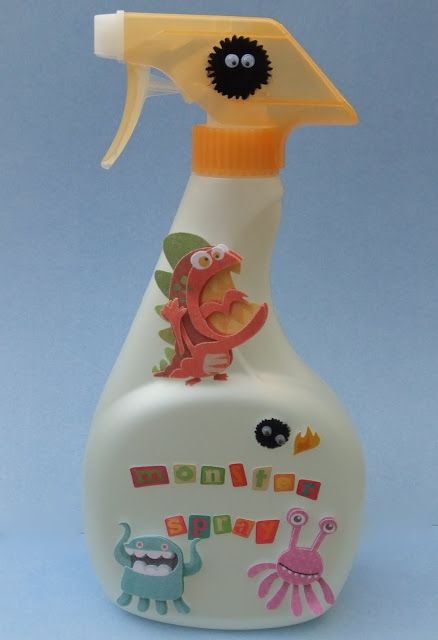
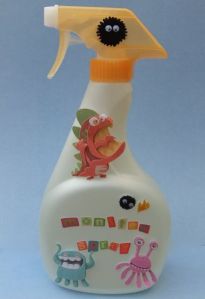
I pursed my lips in contemplation. “Have you tried Monster Spray?”

“Monster Spray?” This sounded intriguing.

“Yeah. They hate the stuff. Makes their noses itch.”

His eyes grew again, this time with wonder. He looked at his mom, clearly expecting her to know everything there is to know about sprays and all manner of remedies.

She raised her palms up in bewilderment and gave me an ‘I hope you know what you are doing’ glare.

“It works every time,” I reassured both of them.

“What’s Monster Spray?” Zane asked. “Mommy, you have to listen, too,” he ordered. “Because you didn’t learn it yet.”

I swallowed a chuckle. I was waiting to see how he would get back at her for not believing him that monsters waited under his bed waiting to eat children (maybe … if they really hungry…).

“It’s a spray and it makes monsters go away. It smells the same as an air freshener or perfume. The monsters don’t know the difference,” I said meaningfully. Mom’s eyebrows lifted and the corner of her month twitched a bit. Good. One aboard.

“Like in the bathroom?” Zane’s eyes narrowed suspiciously.

“Sort of. Doesn’t have to be the same one, though. You can pick any scent you like. They hate all of them. Makes their noses itch. Here is what you have to do. You listening?

He was.

“First, you find a spray that smells good to you. Mommy can help you choose. Next you make a sign that says “Monster Spray” and you tape it on the bottle …”

He nodded in approval. It was important to label things. Especially when it came to monsters.

“…and before you go to sleep you spray a bit under your bed, and if you want you can spray a little in the air, and that’s it. If the monsters are there they will say: ‘Oh, no, Monster Spray, we better come another day!’ and they’ll go away.”

Zane’s jaw hung open in delight. “For really?”

“Yep,” I nodded. “Works every time. If there are monsters there, they’ll run away from the monster spray.”

“What if they come tomorrow?”

“If they come another day, they’ll have to deal with more monster spray … and they’ll say: ‘Oh, no, Monster spray …”

“… better come another day!” he completed, his eyes shining.

“So we’ll have to do this forever?” Zane’s mom. I could sense her wariness about committing to nightly spray-bottle battles till Zane was in college.

“Oh, no,” I clarified. “You see, once you do it a few times, if the monsters come again they will say: ‘Oh no, more Monster Spray; we better go another way.’ They hate this stuff so much, they will tell all their monster friends to go another way!”

“Better go another way!” Zane clapped his hands, intoning, “Oh, no, Monster Spray; better go another way! Hey!” he paused, “Spray-way!” he lisped. “It rhyme!”

“It does indeed!”

“Spray, spray, go away,” Zane sang to himself and doodled as I explained the ‘anti-monster process’ to his mother.

Any scented spray would work. Body mist or freshener or even bottled water with some essential oils, vanilla extract, or lavender for scent. The scent will help Zane remember that the ‘Monster Spray’ is working, and can make associations to feeling safe and in control. I recommended keeping the spray bottle within reach, in case he woke at night and needed a ‘booster squeeze.’

As we returned to speech-sound practice, we spent part of the session making a label with the words “Monster Spray” on it, complete with a drawing of a dark-green/red/black blob (“that’s the monster, but you can’t see it because it is under”) and a figure in a cape holding a spray bottle like a sword (“that’s me, because I am super-Zane”).

The progress report the following week was that the monsters had such itchy noses the first time Zane used the newly minted spray on them, that they declared right away: “Oh, no, Monster Spray; Better go another way.” When a few monsters did not get the memo and tried their luck a few nights later, Zane spritzed them and they reportedly scuttled away to warn all others that: “Zane has Monster Spray, better go another way!”
monster Spray1

Connections

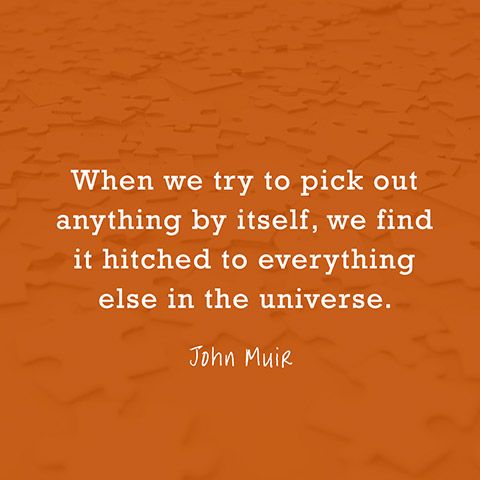
connection muir

The boy, five years old, had his hands deep in soft dough. “What do butterflies eat?” There was a butterfly cutter among the shapes on the table, likely the inspiration.

“Nectar.”

“From the flowers?”

“Yep!”

Silence, a bit more kneading, pulling, twisting and squeezing. This kid has such high sensitivity to textures that it took three months of work with an excellent occupational therapist before he was willing to touch the dough, let alone let it squirt between his fingers. My work with him was reinforcing the OT work in the speech-and-language contexts. Children learn much better when their body is engaged.

“What do frogs eat?” He fingered the frog cutter, put it next to the butterfly one, compared their sizes, lightly pressed the edge of the frog shape into his ball of dough.

“Frogs eat mosquitos as well as other kinds of insects: flies and gnats and such.”

“Good.”

“How come?” I smiled.

“Because mosquitos eat people alive.” His big eyes hang on me, suddenly a little scared by his own repetition of words he’d heard, “but do they really eat people?”

“Not exactly, no. The female mosquito drinks blood for her food, but only a very little bit. It is very small and it doesn’t actually eat you.”

“Oh. Yucky.”

“Yeah, I would not want to be a mosquito.”

“Me neither!” Pause. “Frogs don’t mind, right?”

“Yep.” I can see another question coming.

“Who eats frogs?”

“Snakes do. Some other animals eat frogs, too, even some people eat frogs.”

“People!?” The munchkin was simultaneously impressed and repelled. “People don’t eat frogs, do they?” he turned to his mommy. Usually, I’m an acceptable source for information, but some things require a higher authority.

The mother nodded, amused. “In France they do. Maybe in some other countries.”

“Yuck.” he relished the word. “Yucky, yucky.” He twisted his lips in contemplation, and you could see the wheels turning in the little brain behind the hazel eyes and summer freckles. “But … frogs eat the mosquitos and the mosquito eat blood from people …” he let the question dangle.

I raised my eyebrows, waited.

“It’s like a circle.” He breathed. “It is everything connected!”

From the mouths of babes.

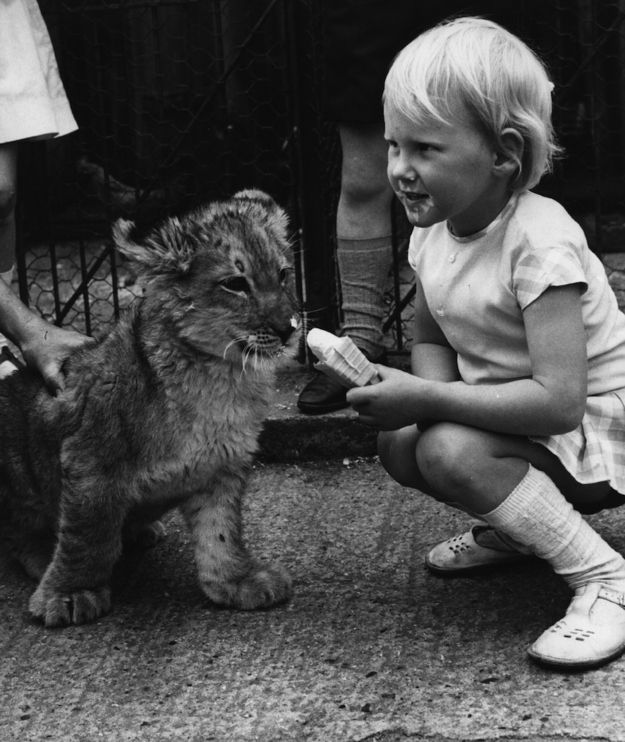
Ice Cream Empathy

The little family was heading to the crossway and in my direction as I was sitting on the bench in the sun, thirty yards from the crossway, waiting for a friend to emerge from a store. They made the prettiest picture: the father pushing a stroller, the mother to his left, holding the hand of a preschooler. The little one skipping, pigtails bouncing, dressed in pink t-shirt and purple tutu, light up sandals, little handbag full of turquoise rhinestones and the latest animated princess character; giddy with the unsuppressed delight that kids that age can have. I had me a feeling they were on their way to the ice-cream store across from the bench I was on. The excited anticipation was written all over the little face.

Steps from the crosswalk and probably noticing the commotion on the corner right behind a row of parked cars and flashing lights, the mother tried to circle to the father’s other side. Maybe she intended to put herself and the other adult as barriers to the scene on the asphalt.

There was a person on the ground ten feet away from the sidewalk, right behind the row of parked cars. Paramedics with a backboard. An ambulance. Two police cars flashing lights and directing traffic from the three lanes to just one, keeping a perimeter so the nosier onlookers not get too close to the accident. Another police man stood by a car parked sideways across one lane, talking to the driver who hit the man. There was concern in the air. I’d been sending some good thoughts when I noticed the family nearing.

The child was too short to see over the parked cars, but either the energy of the congregated people or the movement of her mother caught her attention. She stopped skipping. Stood. Tried to see. The mother stopped, as well, then tugged gently on her daughter’s hand. The child did not move. The woman stood a moment–maybe considering the benefit of picking up the child to get them moving away from the area but give the child a vantage point that could be startling. The father bent toward the little one, said something. The girl nodded and resumed walking, but her head kept swiveling toward the street and as they crossed and the cars no longer obscured everything, she slowed. The mother picked her up and rushed to make it to the other side before the light changed. To put some distance, too.

The child kept talking, the mother shook her head and spoke back, tried to turn the child in her arms to face the other way and still the child kept turning her head over the mother’s shoulder–looking at the scene on the street: the paramedics were lifting the man on the board onto the stretcher. The family walked faster now that the little one was in arms. I could sense the parents urgency in wanting to get her away.

I could hear them as they walked closer.

“So you are ready to get some ice-cream?” The father, his voice kind but a bit too loud and  strained in the slightly false cheer of worried grown ups that children always pick up on.

The girl nodded, her attention still divided. She looked back. “Why he has a big Band-Aid?”

The neck-brace. It did look like a big Band-Aid from the distance.

“They are just helping him be more comfortable,” the dad responded. The mom looked upset, walked faster.

“He has a big boo-boo?” the little girl looked again.

“Maybe. Don’t worry. They’ll take him to the doctor and make sure he’s okay.”

“He fall down?”

“Maybe.”

“I don’t want him to have a big boo-boo,” the little girl said, frowning. Then her eyes brightened. “Maybe he want ice-cream too so he feel all better.”

“He doesn’t want ice-cream,” the mother blurted as  they reached the ice-cream store and walked in.

Maybe not the kind that comes in a cone, I thought, but the energy of sweetness from this child I bet already made him feel better, even if he did not know the pigtailed gold-heart who offered it.

child ice cream2

Evening Standard / Getty Images 1956


Half-Angel

What do you do with a grieving child?

You listen. You hold. You listen some more.

You offer tissues, you offer a hug. You answer lots of questions.

You nod. You tell stories. You honor the small memories told.

You come up with suggestions–or rather, embellish on those that the little one has.

You produce boxes (“too little”, “too big”, “too not-good”, “I don’t like it”, “okay, this one …”), find padding and ribbons and stickers, along with a few extra hugs.

You write what’s requested. Erase the letter that did not look perfect. Write it again. Erase. Write once more. You understand that it has to be just-so.

You provide blank paper and crayons, markers, highlighters, scissors. Play dough.

You oblige to search Google for questions your answers were not good enough, and come across five hundred other interesting things that lead to more questions. Distraction is good medicine, too.

You write down a protocol for ceremony, number the steps, change the order.

You make a headstone from tongue depressors and card stock. Give another hug.

You write the name of the departed. Erase it because it did not come out perfectly. Write. Erase. Write once more.

You draw a picture and told it “doesn’t even look like him.”

You are saved by a photo from the bowels of phone memory–a snapshot of happier times.

You give more hugs. Another tissue.

You stay with. You listen. You know that no small loss is small. That no one is truly replaceable, that loss is confusing and brings along with it the worry of losses far bigger and questions too scary for words. You don’t go where the child does not take you. You comfort, you understand.

What do you do with a grieving child?

You listen. You hug.

You promise not to forget.

You tuck the drawing in the folder (“but be careful”) to keep it safe.

And you use a tissue yourself, when the child wonders aloud if dead fish get to have wings and continues to answer himself:  “Yeah, because they have fins, so Benny was already half-angel.”

beta fish

A Forever Family

The little boy was beaming yesterday.

“You know what?” he said, having barely parked himself on the little chair in my office.

“What?” I pretended.

“I’m SO happy.”

“You are!” I exclaimed, smiling. Even a boulder would see that the little guy was delighted. Delighted and relieved, actually.

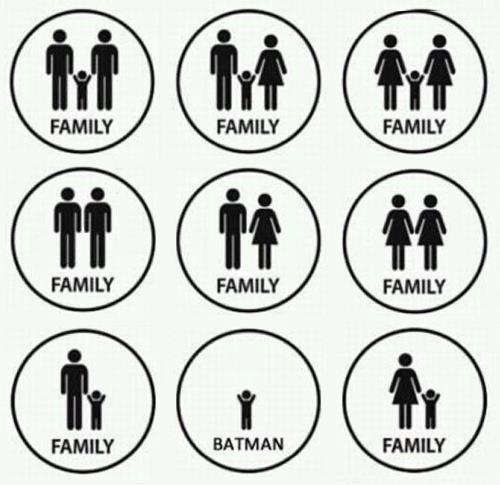
“Now my parents can be my REAL parents!” he gushed. He sobered then–this boy does not take family for granted. Abandoned at birth with visible deformities, trundled through foster care homes and more losses, and finally finding an adoptive home with parents who were dedicated to him and where he was cherished. “If something happens to Daddy …” he paused, “then Papa will still be my father.”

He reached for my hand, excited and a little scared at what he just stated, momentarily overwhelmed by the proximity of both loss and hope. It took a lot of love to get this boy trusting that his home was a ‘forever home’ and that he was really wanted; and sometimes worry still snuck in, triggered by the destabilizing challenges of very real uncertainty.

Such as when he needed surgery and only one of his adoptive parents was allowed to escort him to the operating room, because only ‘legal guardians’ could, and the law did not allow both his parents to adopt him, only one. Daddy was recognized as his parent. Papa was not. It scared him that people could say that Papa was somehow not his real father, that other people could — again — decide about his life.

Or when his legal parent was away on business and the new school guard gave the boy’s papa trouble picking him up because there was no official note on file indicating that he was among the ‘approved caregivers.’ It took a tense while to locate the classroom teacher to confirm that this man that the boy called “Papa” was indeed one of his parents and had collected the boy from school before. For several days later this little boy refused to go to school. He insisted on waiting for Daddy to return. He was scared that school people won’t let Papa take him home.

Now in my office, this little boy fiddled with my bracelet, as children often do when they are feeling a little tender but need to be the ones establishing how much connection to allow. “Sometimes at nighttime I have bad dreams … about having to go back to foster care.” He looked up at me, dark eyes like deer in headlights, hair framing his little face in a frizzy halo.

I squeezed his hand gently. He looked at his papa, who was sitting quietly with us, his own eyes bright, and allowing his son–son in all ways but legally until now that the Supreme Court declared the constitutional right for equality in marriage and family–the space for these complicated feelings.

The boy reached out for his father and received a hug. “It is  going to be more safer now, right?” the boy asked, face buried in his father’s shirt.

“Sure is,” the father planted a kiss on his son’s head, who at not yet six years old was already a veteran of too many worries. “Your home is with me and Daddy. We are a family, you and Daddy and I.”

“And Priscilla!” the boy added in reassured indignation. “You forgot Priscilla!”

His father chuckled. There was no forgetting Priscilla the ever-into-something dog. “Of course, Priscilla is part of our family, too!”

The boy snuggled into his father’s hug another moment. Sighed contentedly. Peeked at me and smiled. “The judges said that my Papa can also be my father now. Like my Daddy. Forever and ever and ever and ever.”

family

Because I understand me!

From Pintrest

From Pintrest

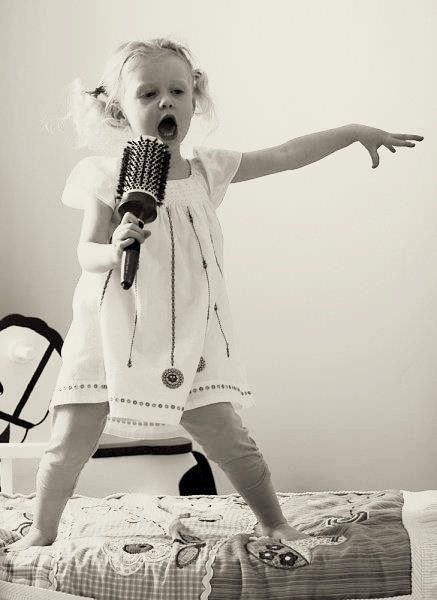
She heard noises coming from her daughter’s room. A heated conversation, animated chattering.

She listened at the door. Changed tone, one voice, empathetic discussion. She peeked–no toys involved, no dolls. Just her four year old sitting on the bed, talking earnestly.

“Who are you talking to?” she asked.

“Me.”

“How come you’re talking to yourself?”

A surprised look, a ‘duh’ voice: “But Mommy! Because I understand me!”

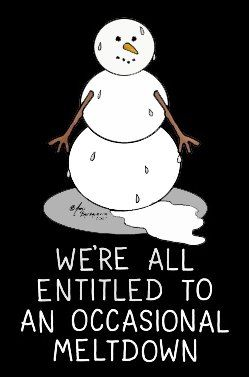
What do you do with a melted child?

I could hear them before they even entered the building … his screech, her frustrated murmuring, unclear words with clear intent to hush and stop the fussing.

It did not get better in the vestibule, or the stairway. Screaming, banging on the rails (there’s fantastic echo in the building–apparently it is spectacularly irresistible for maximizing the effect of tantrums).

The mother’s pleas inched up in volume, from “stop this” to “please behave” and “you are making too much noise” to “other people are going to get mad at you” and “if you don’t stop this there’d be no playdates.” The immediate effect was a proportionate rise in the child’s loudness.

I decided to go meet them half-way. It is not something I usually do, so my very appearance in the hallway was enough to generate sufficient surprise to elicit momentary silence. I capitalized. “Sounds like you are having a hard day,” I noted, directing my words to both red-faced figures, one with mortification, one with the exertion of maximizing vocal output on steep stairs.

“I’m melting,” he noted, quite matter of fact, I might add.

“Oh,” I responded.

The mom looked from him to me and back again. “Melting?”

“A meltdown, I suppose,” I smiled, turned to the boy. “It sure sounds like a major meltdown.”

He nodded emphatically, satisfied.

“Do you think you had enough of a meltdown for one time?” I offered my hand to him. “It sounds pretty exhausting.”

He considered, placed his little hand in mine. Turned to his mother with a rather smug expression. “I done melting now.”

“I’m glad,” she managed.

“What was this about?” I wondered aloud.

“He wanted to be the one to press the button for the bus stop …”

“Ah.”

“But someone else on the bus already pressed it … so he refused to get off …”

I looked at him with a raised eyebrow. He nodded, approving of the testimony. “It was my turn to push the button,” he accused.

“Hmm, maybe other people on the bus didn’t know that.”

He looked shocked at the very notion. How could anyone not know what he clearly had?

We climbed. He pondered.

“It only got worse from there,” his mother added, still debriefing. “I had to carry him off the bus, screaming. He threw himself on the ground …”

It explained the stage of his clothing … it had rained earlier …

“He got himself all wet …” she sighed, “I’m sorry for bringing him in such a mess.”

He turned to her, his face a mask of indignation. “Of course I wet, Mama! I was melting!”

meltdown1

Happiness glide

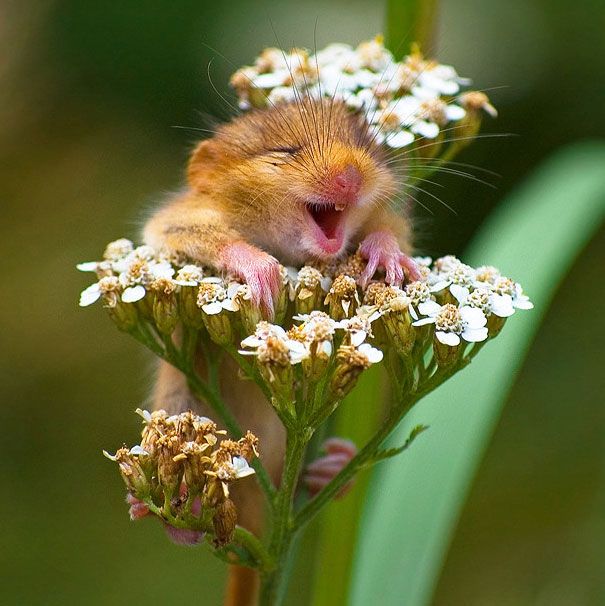
happy chipmunk

“I had the best weekend ever!” the preschooler’s eyes sparkled.

“Oh, wow, that’s so great!” I responded, grinning. It is contagious, you know, this kind of zest for life. And the enthusiasm of this little one was particularly catching. He literally beamed delight.

“We had the best ever dinner and the best ever pizza!” he bounced on his heels, the words not coming nearly fast enough. “And I saw the best movie ever on the Netflix. And my grandpa makes the best popcorn and it like magic in the microwave and I have the best pajamas ever!”

“You have new pajamas?!” My monkey brain had to assume.

He paused and regarded me with some confusion. “I already HAVE the best pajamas ever! It’s superman pajamas!”

Silly me.

He kicked off his shoes and glided on the wood floor with his socks, balancing with his arms. “Wheee! Best floor ever!”

“Did you have the best weekend ever, too?” he added, not quite waiting for a response before sighing contentedly. “You did, right? Because it was the best weekend ever!”

The details change a bit; there’s not always popcorn, sometimes its just TV and not Netflix, sometimes it is the park, or playing ball, or baking cookies, or his dad reading him  story. Doesn’t matter. The weekend is always–always–the best one ever.

And it makes for Happy Mondays; every one.