Make Rain, Not Thunder

rainnotthunder

“ENOUGH!”

How many times have you heard this spoken loudly (word interchangeable, same intention) from a fed-up parent, caregiver or teacher to a child? How many times have you yourself said this or something similar in anger, to a child?

Frustration happens when dealing with little ones with strong opinionated minds and limited awareness for time, urgency, consequences or your priorities; it is inevitable. Children can be persistent, stubborn, wild, loud, aggravating, aggressive, irritating, exhausting. Caregivers get fed up, tired, annoyed, irritated, overwrought. They can have bad days with too much to do, too little sleep, too many children to care for, too many demands with too few hands to do them with, too many worries. Crises, emergencies, a clogged sink, a car that would not start, yet another ‘accident’ right after cleaning is finally done … Children, especially young ones, rarely know to take adult burdens and juggling into account. On the contrary, it is as though they are uncannily aware of any lag or energy slump … and if anything, are more likely to be needy, clingy, whiny, and doubly argumentative exactly when you have the least time or energy to spread around … (FYI, it is mostly not done to drive you nuts, but because children may need to reassure themselves even more when you are stressed, that you are there for them: a difficult cycle, when you have to be extra-patient when there is least patience to be found …).

Parents and caregivers are human. They make errors. They get upset. They may raise their voice, match their child one to one in volume, heel-digging, and demand. It happens, and as long as it does not happen too often, it can be repaired with comfort and apology, time to reconnect, some soothing, an opportunity to explain and understand.

In general, however, children listen better when the volume is set lower. Calm allows the brain to form connections that make meaning, while anxiety and overwhelm awaken circuits of survival while shutting higher learning down. Experienced teachers will tell you that they keep their voice low to keep the children listening: it may seem paradoxical, but in effect it works like a charm. Gentle speaking allows the intonation and cadence of your thoughts to pass through better. It allows the listener to let it in without alarm. It differentiates emotions and helps regulate a child’s understanding of nuance and intention.

A raised voice is a good tool for calling an alarm, to keep the child away from danger, to make clear what should not be done to prevent harm. For instruction, though, the raised voice spins way off the target, and misses by a long shot: the meaning of the words you wanted to convey gets lost in the tone and loudness of the sound.

We cannot force flowers to grow faster by pulling on the stalks, nor would it help if we stalked constantly, demanding them to hasten. We cannot make a plant drink more by spewing a stronger stream of water–it will only exposes roots and hit raw nerves. With children, too, we cannot force growth by raising our voice or hardening our words. We’d get a reaction, maybe, but not learning, and we’d shut down tendrils of potential besides.

“Raise your words, not your voice” Rumi said. Yes. Whenever possible, use good words, taken from and guided by the better part of yourself or the best part of yourself that you can find at that moment. Explain more, demand less: “it is rain that grows flowers, not thunder.”

Children, too, grow best in gentle sprinkles, rather than thunderstorms.

How do you teach integrity?

integrity

We all want the children in our lives to have integrity and a moral compass. We want them to not only know right from wrong, but to apply it. We wish for them to have empathy toward others and to choose the better path not just to avoid punishment, but because it is the right thing to do.

That’s all well and good, but how do you teach integrity? How is it related to empathy and is it even something that is learned, or something one has to be born with? Something some of us ‘have’ and others ‘not’?

Though individual sensitivity and empathy-capacity varies, and some children are born with more empathy-capacity than others, empathy is still something almost all children can learn and have develop. Children vary in the age they begin to show clear empathy, but babies and young children are naturally self-centered and egoistical. It is normal for them to view others’ feelings through their own and to judge situations according to whether they’d get a reward or keep from getting punished, rather than the inherent morality. Fairness may be easier to detect, but true morality is learned, as is the reasons for it.

A child may not eat another’s cookie not because they persuade themselves they do not want it, but because the praise for not doing so may be worth more, or the disappointment of another in them if they not abstain may feel worse than the immediate gratification of eating the cookie. Children learn to share–maybe at first not so much because they truly want to share, but because of the positive feedback and praise that they get when they do so. With good modeling and opportunities, they can be taught how others may have feelings just like their own, and that other people’s feelings matter, too (e.g. if someone ate their candy, they’d be sad, so they can understand how if they took another’s treat the other child may feel sad about it). While some toddlers show well developed empathy, oftentimes it is through the preschool and then kindergarten years, that children learn to appreciate another persons’ pain, and to understand that another person may hold a different opinion or agenda and to accept that as okay. They learn to follow rules (all the better when rules are clear, consistent, and kind), and they practice enforcing rules in their peer and imaginary play.

How do they learn that? Well, empathy and integrity are best taught through empathy and integrity. It may sound simplistic, but there are all too many examples of attempts to teach integrity through fear of punishment (“If you take candy without paying, the police will take you to jail”), or empathy through guilt-inducing and shame (“look what you did–now she’s crying! I told you to not take her teddy bear from her!”) Fear can certainly be a deterrent, but fear is not integrity, nor is guilt the same as empathy.

Teach empathy through modeling your own. Children who have sensitive caregivers who show them care, who reflect their feelings back to them, and help them put experiences into words, are more likely to develop empathy themselves and to do so sooner. Be kind, demonstrate sympathy and empathy toward others–let your child see how you help a neighbor, or feed a stray, or hold a door for someone whose arms are full. Explain to your children about disabilities and differences, and make sure that you do not display disgust or ambivalence about the same. Apologize if you hurt someone–the child, too–even if by mistake, and acknowledge the feelings that your error caused and the need (and possibility) for repair. Be respectful of others’ feelings. Be kind.

Similarly, children whose parents and caregivers live by the same rules that they demand, learn integrity as a cohesive, non-confusing concept. Confusing rules result in confused and inconsistent learning. It is rather simple (if not easy): If you don’t want your child to lie, don’t tell them to answer the phone call you don’t want to take and say “Mommy’s not home,” or “Mommy is in the shower” (when you are not). If you don’t want your child to steal, don’t bring home pens from the office … If you don’t want them to cheat, don’t justify not following the rules at other times (lying about a child’s age to get out of fare or parking at a handicap space also counts …). Don’t promise what you do not intend to keep or just to get peace and quiet for the moment (“If you give your toy to your baby sister I will buy you a toy tomorrow”). Promises that are not kept, teach a child that words are empty and that it is okay to use untruth to defer discomfort. Be honest. Even when it is difficult. ‘fess up if you lied and explain how it happened and why you’d work hard to not have it happen again. You don’t have to be perfect, but you have to be a good enough role model … and to have the same patience with your child if they miss a step. Be curious rather than accusatory: a child who said an untruth to escape punishment is not “a liar”–though they may have lied. Don’t label, and let them explain what they feared would happen if they did tell the truth. You may find out something you need to learn, too: are your consequences fair? Would you have indeed flown off the handle or blamed them anyway?

Integrity begins with you. As does empathy. That includes empathy for yourself, as well. Be kind to yourself, let your child see a gentle way of relating to oneself as well as toward others. Be aware of phrases such as “I’m so fat” or “I’m such a loser” or “UGH, I’m such a moron!”–they get copied, they get internalized. Also, not only are you giving a less than kind model, but you are also bad mouthing your child’s parent … it is their mom or dad you are talking about …

Give children consistent fair rules, a good model, kind reflection, sensitive explanation, and they will learn that it feels good to be kind, and feels good to make a choice that is the right one. Even little ones can.

“I saw something amazing” a mom of a kid I work with called to tell me. “I gave Dave (age 5) a treat that he earned for cleaning up his room all week without whining, and he went to play outside on the deck. It is a two-family home and the neighbors’ children often come down to play, too. Tommy,  the neighbor’s kid, came downstairs to play. I saw Dave look at Tommy, then at his fruit-roll-up. He didn’t see me, but you could see his little brain working–clearly Tommy would want some … Dave then pulled out the whole roll-up, tore it in two, and gave half to Tommy. It was so sweet, I wanted to run out and hug him, but I also didn’t want to interfere–he was being kind because he chose to, and that was his moment, not mine. I am so proud!”

So was I.

Believe in Magic!

magic

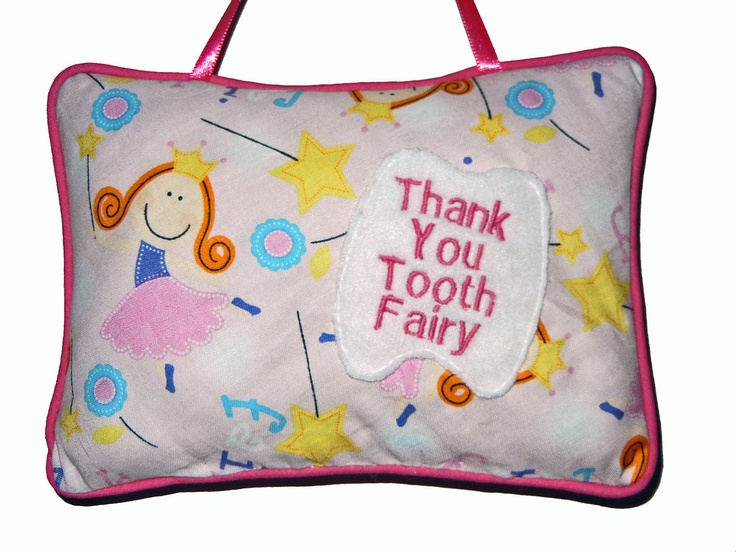
“Is the tooth-fairy real?”

The six-year-old shows me a new hole in her mouth. First wobbly baby tooth fell out over the past week, welcoming this Kindergartener to a new world, as well as placing her face to face with the frail veil between reality and fantasy, logic and magic.

“What do you think?” (again, my standard reply: she must have some hypothesis about this if she’s asking. I’m more interested in knowing what she’s thinking than telling her about mine)

Frown. Pause. A searching look–am I doing the ‘adult avoidance of answers dance’ or am I really interested? She decides I’m worth the effort.

“I think she’s not real,” the little girl curls one side of her mouth with the bitterness of the words.

“Wow, really? Why??” The surprise in my voice is real enough, even if the extra oomph to it is intentional as a way to mirror the depth of the child’s emotion about this.

“Because it is really not her. It is mommies and daddies. The tooth-fairy is just pretend. I saw my mommy put the dollar under my pillow,” she is trying to sound very matter of fact about it, but she is disappointed. Crushed, more like. A little miffed, too, for the charades, and for having noticed it. Certain kinds of knowing exact a high price.

“Oh, well, maybe the tooth-fairy just needed their help,” I note. Sometimes such announcements about magic-loss are actually challenges, fragile requests for help in restoring the possibility of wonder, Santa-Clause, and fairies.

Eyebrows raised–am I trying to trick her?–but there’s also a smallish rounding of wonder in her eyes. She’s curious now. Hopeful. “What do you mean?”

“Well, I’m thinking, all those children losing teeth. I bet sometimes there are just too many in one night for the tooth-fairy to get to, so maybe she asks the parents to help.”

“Oh.” A moment of silent thinking. She’s letting this in, perched on the fence between accepting what she wants to believe, and what would put doubts to rest but also put out magic.

I wait. There’s no rushing works of hearts.

“So …” she pipes up, “Maybe my mommy helped because there’s only one tooth-fairy and she was too busy?”

“Maybe, huh?”

“YEAH!” her face transforms. It is lit now. “Because the tooth-fairy, she only has little wings, and maybe she had to be very far, like in California … so she couldn’t have time to come everywhere at night!” Pause. Smile. Wonder in her eyes. “You think maybe next time … when my other tooth falls, see? (she demonstrates a minor-wiggle in the other top incisor), you think the tooth-fairy will maybe be in New York?”

Magic restored.

thanktoothfairy

Make Memories Together

by etsy

by etsy

One of the best things you can do with children is … well … to DO with children. Children–like all of us–learn through experiencing. Even more than us adults, they are wonderfully open to new learning. Their brains are literally forming as they grow. They are shaped and influenced by what they see, do, hear, feel, perceive, experience, understand, sense, have opportunity for.

Doing with children is not measured by how many classes you sign them up for, how many play-dates you arrange, the kinds of electronic gadgets or software or toys you have, how many flashcards your child can recognize by age one or how early they can recognize letters or write their names. Academics are important (though maybe not as early as some seem to push for), but they should not come instead of making memories. Of taking time to do together.

It is not about school or homework, either. It is about playing with them, spending time with them, reading to them, acting out the stories, building with blocks or constructing castles from cardboard boxes together, making forts from couch cushions and blankets, being silly, going on backyard adventures, telling jokes.

Feeling too short on time? Incorporate doing into household chores. Yes, the children may slow you down, and there may be more messes to clean up or some doing over to complete after their eyes close at night. However, your children will learn, and they will learn from you, and with you: spending time doing things together can be some of the best memories you can give. Children of all ages can benefit from ‘coming along’ or ‘doing with’ (oh, sure, preteens may make a face, but secretly they crave more time with parents, especially if that time is not for formal instruction or ‘grilling’ about school … and you’d be surprised how many conversations happen when hands are busy with a task together).

Every task can be adapted to a child’s age and ability. Baking cookies or making dinner? Depending on your child’s level, you can measure ingredients (cup, ounce, pound, liter, gallon, teaspoon, pinch, dollop …), list items, sizes and order, read or write down a recipe, watch the clock together to learn time, plan a meal, research unusual cuisines. Going for a walk? Pick leaves of different colors, count cars of various colors of identify specific vehicles and the occupations they serve, stare at a pigeon pecking on the sidewalk and compare birds to bugs to mammals to reptiles, compare views and favorites, discuss endangered animals. Folding laundry together? Sort by color, size, material, season, types of fastener, talk of fashion and media, of fitting in and being fit. Empty the dishwasher (silverware, dishes, saucers, bowls, serving platters, large-medium-small, glass, plastic, ceramic, good china, the best meal and the worst experience, school lunch, social tensions in the cafeteria …). Grocery shopping? A bonanza of options: food groups, colors, shapes, containers, ingredients, numbers, top-middle-bottom, left-right shelves. Write down list, read it aloud, check off what you put in the cart, learn about coins’ value and paper money, budget, making choices, sticking to a plan.

Make memories. Your child may not remember how many flashcards you read to them or the name of all the tutors you got for them or even all the places that you took them to … but they may well remember the time you spent teaching them how to sew a button or built a tent in the living-room, helped them bake their first ‘from scratch cookies’ or let them make a mess in the kitchen while you listened to the conundrum they had about a friend and did not judge. Want to reinforce a memory? Take a photo, write a caption, make a book together: “Michel’s First Cookies”–document the process, print the photos, tape them onto paper, write the story of them underneath. Read and have the child ‘read’ it to someone else who was not there with you (grandparents make excellent captive audiences …). Enlist older kids to make photo books or edit images into a video together.

Find wonder in small things. See and seize opportunity. Snowing? Research the unique shapes of flakes, make cutouts, hang them from the ceiling for some ‘indoor snow’ (extra memories credit for glitter …). Raining? Re-create the water cycle, demonstrate gravity, check out about steam and condensation. Grow avocado plants, sprout potatoes (learn of more than one meaning for ‘eye’ and get curious about other multiple meaning words–spring, trunk, bark, nail, key, slip, pen …). Learn together. Try new things. Fail and err and laugh and try again.

Make time for making memories. It’s hard, I know, but find the time. You don’t have to take off from work or travel to a different country. You can pluck time from the tasks you are already doing and turn them into time spent in building your child’s connection with you. You’ll also enrich their brain, skills, confidence, know-how, and sense of worthiness.

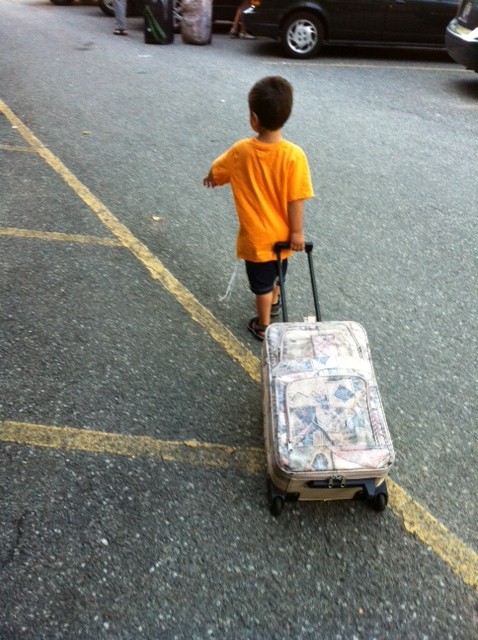
Time flies. Kids grow. Before you know the mess is gone and they are flying solo. Give the gift of sensitive, involved attention. These memories will be what they can pack along ‘to go’.

Photo Credit: S.L.

Photo Credit: S.L.