Ain’t Got Much Of

FF RogerBultot

Photo prompt: Roger Bultot


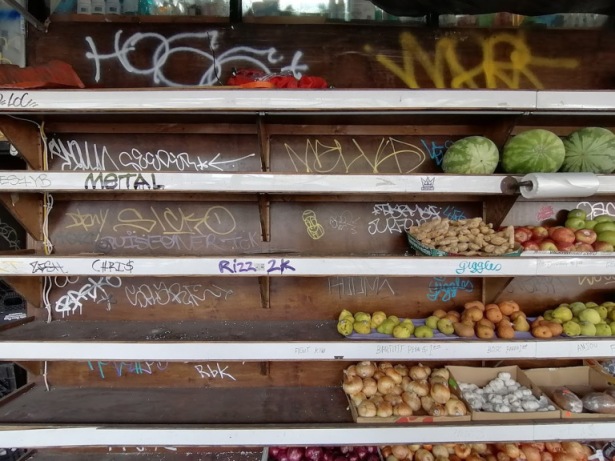
“She keeps the shelves half-empty.”

I turned at the voice. A gnarled hand leaned heavily on a carved stick. The man’s chest was almost parallel to the stained cement floor.

I crouched so I could make eye-contact yet spare him the strain of lifting his head. He smiled. For such an ossified body, his expression was remarkably lively.

“My wife,” he raised an eyebrow at the display. “I’d space the boxes, but she says that what people think we ain’t got much of, reminds them of the empty spaces in their own pantries and how there’s always room for more.”


For Rochelle’s Friday Fictioneers


Another Woman’s Treasure

LandOfGods18 InbarAsif

Photo: Inbar Asif


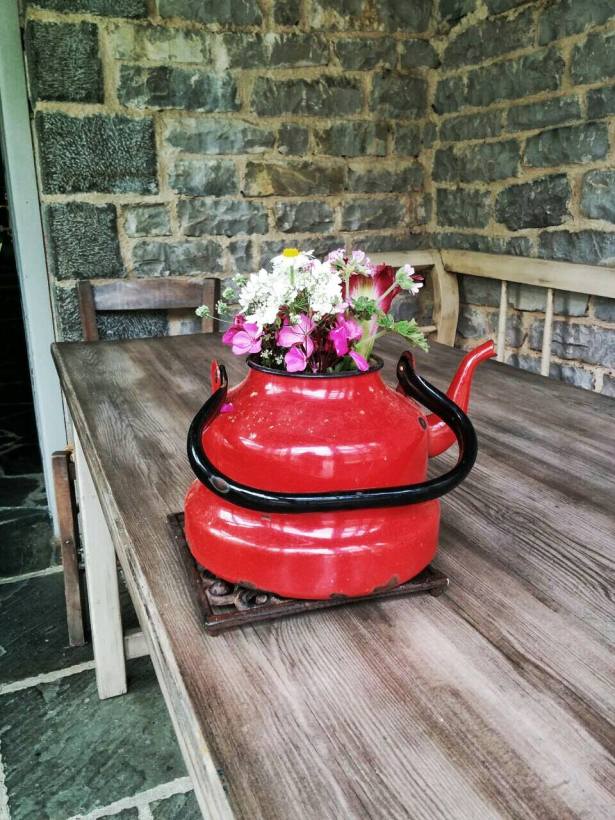
There’s a hole in that kettle …

I don’t care, don’t throw it.

There’s a hole it that kettle —

This junk won’t make tea.

I don’t care if it’s holey

That pretty, red kettle,

I don’t care if it’s holey

It’s perfect for me! …


(Yeah, if you noted a bit of reverberation, this is very loosely based on “There’s a hole in the bucket” children’s folk song … ;))

For the Tuesday Photo Challenge: Junk


Perfect

spring SueVincent

Photo: Sue Vincent


Finally, the light was right, the water mirrored what it ought, the sky spread silk above her head. Even the dotted white of sheep lent the necessary movement to what might otherwise feel a specter of a time too soon or too late.

It was perfect.

Stella pressed the sole of one foot against the trunk and leaned into the tree behind her, balancing the rest of her weight on the other leg. All through her childhood, this preferred pose of hers had driven her mother to distraction.

Though long passed, the memory of a particular exchange about it was yet to fade.

“God gave you two feet to stand on. Use them!” Her mother had demanded.

Stella must have been six or seven years old then. “I am,” she had countered, exasperated with the constant admonitions of what felt to her a perfectly reasonable way to stand. “God also gave me a knee that bends. I’m using that, too.”

Her mother had made her “use her bending knees” to kneel on dried peas for most of that evening, punishment for using God’s name in impertinence. Apparently God also gave children the gift of parents they were not supposed to talk back to.

Stella had carried the bruises of that evening for weeks thereafter, and the ache for longer. She learned to keep quiet when reprimanded, and to adjust her posture and compose her face and straighten her back and never slouch or run or climb or get mud on her skirts or expose her legs. But she still found ways for small rebellions. And whenever she was out of her mother’s line of sight, Stella never did stop planting one sole against a tree or wall when standing. Not even when her brother, whose maleness allowed him liberties that would not be tolerated in a girl, gave her secret away by calling her “Stella Stork.”

And a kind of stork I indeed am, she thought to herself, and pressed her foot into the tree in a sigh of freed determination.

Midwifery did not quite pay the bills. Nor did her artistry through painting. However, between the two callings she had found a certain kind of balance. Granted, she often got paid for the former in apples and hens’ eggs, and while those filled her belly they did not translate into peat or cloth or rent. However, the commissioned illustrations for “Country Ladies” magazine did compensate in some coin, and she had recently been asked to provide a “pastoral series.”

Stella gazed at the scene, adjusted her easel, lifted her brush, and leaned further into the trunk behind her. The past receded. The future waited. The present moment lingered, perfect, as the hours rolled.


For Sue Vincent’s Write Photo


Good Fortune

xinhua county wikipedia

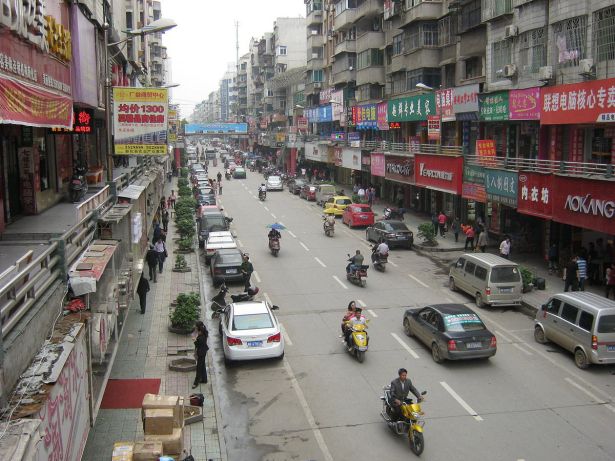
Photo: Xinhua County, China (Wikipedia)


It was the busiest time.

His loneliest.

He sought good fortune in small things. Mostly because it was absent from the big ones. There was always some disaster to contend with: illness, sorrow, loss.

He was born unlucky. His mother pushed by the side of the road because he’d come so quickly. He was blamed for his rash emergence. For her illness. For her early death. Blamed in the not-so-subtle ways that used words like blades.

“You always were impatient,” his grandmother would say. “Show too-little respect.”

He knew his grandmother resented his emerging like a peasant in the dirt when she had clawed her way out of the rice-fields. He had no response.

“Be grateful that you have enough to eat,” she’d frown. “Unlucky boy.”

Xinhua offered work. He fled.

The letter said that his grandmother had died.

New Year approached. His good fortune was to spend it alone.


For What Pegman Saw: Xinhua, China


Darn Yarn

https://crimsonprose.files.wordpress.com/2020/01/alpaca-1.jpg?w=1024&h=682


She never did like thready business.

Yet there she was, darning holes, patching elbows, sewing up dangling hems and chasing runs on stockings.

How did it ever come to that?

She squinted and held the needle to the light.

The story of her life, it was. That squeezing through the eye of the needle. Barely, barely making do. Struggling to fit another stitch before the end of her rope.

It was all wrong.

She tied the knot.

It slipped.

She tied another, hoping it would hold. Hoping that the hidden stitches she put in will keep things covered long enough to soothe the chill that ever lurked, awaiting exposed places.

Existing really should not be so threadbare.

The thin wrap of life, knit together moment by moment in complicated patterns of dropped stitches and messy mistakes.

Will it come together at the end?

She did not know, but she hoped.


For Crispina’s Crimson’s Creative Challenge #63


Eden In A Bubble

Photo prompt © J Hardy Carroll


They were going to have to move.

Her health. His job.

They were going to miss so many things.

The beach. Their yard. The hours spent outdoors.

He laid in bed at night, awake. Her breath gentle at his side.

She would not complain. Even if she could still speak, he knew she wouldn’t put that burden on him. It broke his heart.

He put the shards into action. Poured his mind into design.

He’d build a bubble. An Eden in the forbidding landlocked wintry ground. A lush oasis where they could both breathe in the memories of better times.


For Rochelle’s Friday Fictioneers


Sardines

Photo prompt © Fatima Fakier Deria


“We’ll never all fit,” Sultana groaned.

“Lots of room!” the driver boomed encouragement even as he tightened screws underneath the van.

“C’mon!” Mariam elbowed past her cousin and climbed onto the vehicle, parcels and a flapping hen in hand. “Next one isn’t till dawn.”

Sultana looked around as if better conveyance would miraculously manifest. None did. She sighed, grabbed her packages and hoisted the bleating kid under an arm. She squeezed aboard, the last one on, with barely room enough to sit down.

The door slammed. The goat peed, soaking her lap.

It’ll be a long ride to Jaddati’s farm.


For Rochelle’s Friday Fictioneers


Warehoused

Photo: © J Hardy Carroll


The cells were small. Sturdy enough to keep them separated. Aerated enough to keep them alive. Near enough to let them marinate in each other’s misery.

What the jailers did not foresee, however, was how they were just close enough to offer comfort. Fingers laced through fencing let them hold hands. Almost.

Oh, they moved to corners when anyone came. Pretended to hate each other. Endured each other’s fake bullying that so amused their captors.

But in the silent moments they sat close, back-pressed-through-chain-to-back. Their ‘caretakers’ warehoused them like animals, but the children’s defiance held: they remembered they were siblings.


For Rochelle’s Friday Fictioneers