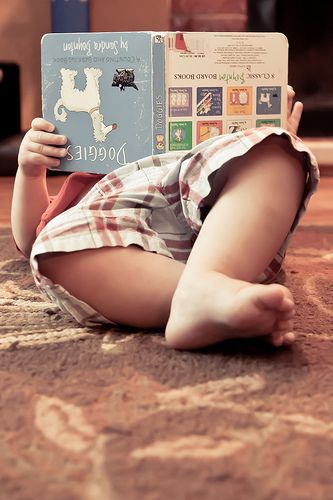
How early? For how long?

book time

I’ve received a query from a parent: “I heard reading to children is good for them. Is it true that it helps language development? How early should I start reading to my baby and how long should I go on reading to her?–Parenting Neophyte…”

It is a good question and one I get often and love getting. It is always worthy of an answer.

Dear Parenting Neophyte,

The facts are clear: Reading to kids is great. Introducing children to books is important for language development, listening skills, later literacy, and general cognitive potential. Stories expand vocabulary, increase imagination, teach social skills, improve narrative. Reading to your children is good parenting and a good investment in their education and future.

As to how early one is supposed to start reading to children and how long one goes on doing that–the simple answer is: “as early as possible and for as long as kids would let you …”

The more detailed reply is that even newborns find interest in clear patterns and drawings, in contrasting colors, in faces (especially in faces), and pictures of familiar objects. They listen. They pay attention. They track. They make connections between sounds and experience. Unfold an accordion book when the baby is playing on the mat. In the stroller. In the playpen. Give them a soft-book to hold in the stroller or to reach for when they loll on the floor during some ‘tummy time’ (check for lead-free paints and non-toxic materials, of course–babies put everything in their mouth!). Certainly introduce picture books as part of every night routine. Talk about the pictures with your infant, point to familiar animals and items. It is not about testing how much they understand or what words they can say or point to. Rather, it is about having reading books become a link in the nightly ritual of cuddling and comfort, connection, familiarity, language, narrative, and stories.

Babies who are read to often gravitate toward books as playing objects, they leaf through, turn pages, pause, look, and ponder, even as they mouth the corners and tear out what they manage to … (all great motor and visual spatial skills, by the way). They also learn to point, to wait, and to associate pictures with words and sounds. They learn to anticipate the next picture, to predict what’s to come. They learn to trust their memory. They rarely tire of adoring the confirmation of seeing the same picture appear as it did the day prior.

For sure, the repetition can be tedious (you’ll know what I mean when your toddler asks for the same book in the two-thousandth time, and wants to read it “again” and “again” and “more time!”), but it is part of children’s normal development during infancy and toddlerhood to like things repeat. So take a deep breath and even as you introduce new books once in a while, and expand the child’s repertoire of stories, do cave in and read “goodnight moon” one more time …

As for the question of “how long to keep reading to children?” The answer truly is to do so for as long as possible. Many professionals recommend reading to children straight through middle school, and certainly throughout the elementary school years.

It tends to surprise parents when I recommend that. Very often they tell me that they’d stopped reading to the child when he or she learned how to read independently–sometimes during the first or second grade. They thought that the move to independent reading marked the end of “needing to be read to” and in fact often had reading time revert into the time of day when the child read to them … It was almost a rite of passage. A mark of moving into the reading world.

Granted, there’s still plenty of bonding potential in cuddling with your child and witnessing their reading progress. It certainly feels good to the parent to measure their child’s progress … and to a child to know their efforts are appreciated. However, being read to is a very different task than reading aloud as decoding practice. The two have very different goals and encompass very different language levels. The books children read are often matched with their decoding ability, rather than their language level. Also, even in later elementary grades, when reading skills allow children to decode most common words, books are chosen with the child’s comprehension level in mind, not necessarily their exposure to higher linguistic material.

Reading TO children is a whole other world of learning opportunity. It is primarily a listening task and allows the child to relax into the story and delve into language while losing oneself in it. Being read to opens space for a child to draw inferences about connections, context clues, idioms, character descriptions, sequence, cause and effect. It is a time for a child to consider possible outcomes, predict to himself what might happen next, check a hypothesis, internalize some of the story characters, discern who they like and who they don’t, who they may want to be, where, how, why. It opens an opportunity for discussion that is very different than the ‘reading comprehension testing’ that happens with school books or those the child reads independently. The books you read to your child become fodder for conversation and self-discovery: what did they like about the book? what did you? why did so and so do this or that? would you so the same? what is your favorite character? which is mine? how come?

Children who are read to through 8th grade, have larger vocabularies than children who are good readers but are not being read to (and we are talking vocabularies that are larger by tens of thousands of words–not just by a small margin!). As a group, they have better listening skills, better auditory processing and auditory memory skills. They have better narrative skills. They use a more varied lexicon in their own writing. They have bigger cache of idioms and expressions that they can infer meaning about. They can converse better and show wider world-knowledge.

Children who are read to tend to enjoy books better than kids who are not read to. They tend to love reading more. They choose a wider variety of books and have a wider foundation in classical literature (read: the books you read to them may not be books they’d otherwise pick up to read themselves … but having listened to them, they may get the ‘book bug’ to look for more classic literature on their own). Want another bonus? Reading to children improves connection with parents and allows children to feel comfortable talking to their parents more, and about more topics (not to mention that stories often bring up issues that they may otherwise not talk about …)

In some families, reading to each other continues as part of family time well into high-school, with teenagers taking turn in reading aloud. Sure, it may seem odd to consider teens today being gung ho about spending an hour “reading boring books aloud” and being commanded to have their thumbs idle (no music, no chat, no texting). However, for families who started early this is often a natural continuation. In families starting a little later (and it is never too late, actually), the benefits are real even if they are grudgingly (or perhaps never verbally) acknowledged. Having your undivided attention is a precious commodity (yes, you have to put down that phone, too …). Knowing you are listening is priceless. It opens yours even as you raise your child to have a more open mind.

Reading to your children builds your relationship with them while also building their relationship with themselves, their inner worlds, the world around them, and their academic and cognitive abilities. It is truly a ‘one size fits all’ intervention. There are no downsides, other than extra cuddle time, honest conversations, and the distinct possibility of difficult questions about life that literature inevitably brings up.

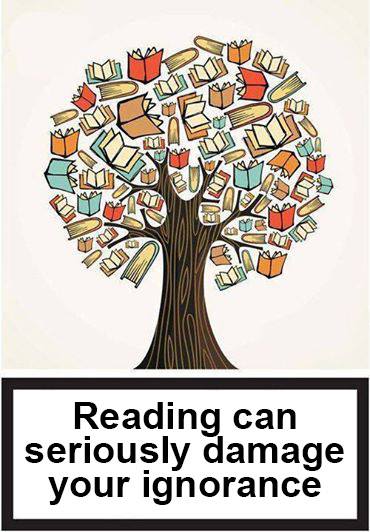
The only warning necessary is … that reading to your child can damage their ignorance …
reading


How did THAT happen?

tom looking for ball

Kids are wizards of pointing out minutia of life that can seem quite arbitrary to us. They note things we missed completely. They seem to ‘insist’ on irrelevant details like the way the plate is organized, who got to open the refrigerator this time, or what touches what. Everything takes far LONGER to do with a little one around …

In good part it may well be because their life moves slower. Time is yet to be shackled onto watches and the ticking of a schedule. They pause mid-sleeve, pondering the way light filters through the cloth, unconcerned with how rushed the morning is. They stare in wonder at a pigeon when the light changed and it is time to cross the street. They have an urgent question or need just when you finally sat down to eat.

And they notice. Everything.

They collect each leaf and pebble. There is no such thing in their vocabulary as a “quick run to the store and back” … not when there’s a big exciting world out there. There is endlessness to explore: Cracks in the pavement. Bits of paper flown by winds. Funny people. Yippy dogs. Horns and beeps and squeaks and windows with wonders and when finally at the store, multitudes of candy at eye-level … How could it be that this was not what you came all the way for? …

They teach us patience, that’s for certain.
They also teach us that time is what we make of it. That stress can catch one breath, and relaxation ride right in upon another. That one can laugh before their tears have dried and emotions coexist and flow without a judgment.
They hold a mirror to the things we have forgotten or have misplaced our truth about or have given up on trying to critically examine.

They listen. Even when they do not seem to.

More than most anything else, they note the mismatch of expression, the ambiguity of tone and matter. The odd things our mouths can say and we do not hear.

In part it is because small children are so literal. They get confused when they listen to the WORDS we say and find it not to match the words’ MEANING. Their reaction (and ensuing cuteness) can have us realize hidden ambiguity. They reflect what we once saw and now are almost blind to: how the world works even though words so often mean things they do not really mean.

Want a few examples?

A father talked about his mother looking after the children when he and his wife had to both be away. “She has a heart of gold,” he gushed. His preschooler daughter piped up and added, “no daddy, you forgot. Nana’s TEETH are gold …”

A mother had forgotten something she needed to ask me. “I’ve had it at the back of my head all day,” she sighed, frustrated. Her three-year-old scrambled up onto the couch and took a look, exclaiming, “No mamma, it is nothing there!”

“It is all politics and money,” another parent moped when a kindergarten admission did not go the way she’d hoped, “there’s absolutely nothing new under the sun!” Her almost kindergartener son looked at her sideways. “That not true, Mommy,” he said, rather accusingly. “I have new Spiderman shoes! You forgetting my new Spiderman shoes?!!”

Then there are the cats and dogs that do not really rain; the invisible pins and needles one can be on (and no wonder one’s child refuses to sit where the parent sat a moment prior!!); the feet in mouths (“You can’t do that no more, Daddy. You’re too old. You can’t reach like baby Deena!”); the bleeding hearts (think on that …); the pants on fire…

Language is a treasure trove of meaning, and learning symbolic language is a big task. It calls for the ability to hold two lines of listening: one for the words, another for the context. Children get very good at that around age 5 or so, though they get thoroughly confused before they realize that “listen to what I say” is far from straight forward.

Kids practice logic. They spend a good bit of their time making connections, figuring out how things work and what brings on what. If you pour too quickly, you spill everything. If you push your brother, mom gets cross. If you don’t stop whining, you may lose a privilege. If you mix milk with chocolate syrup magic happens and you get chocolate milk!

They get right fast at figuring out what makes what, and a never-ending list of ‘why’s helps them figure things out. They realize there are desired outcomes and less favorable ones, some adults that are easier to get things from, that there is misfortune and consequence. They get uncannily creative at hopeful attribution of fault …

They map their world into cause and effect. Into how things happen. Who does what.

And sometimes they make connections that are not quite as we would have put them. … Like the little girl with the (newly) pregnant mom, who asked quite loudly and in public: “Daddy, how did God put a baby inside mommy and didn’t tell her about it until she peed on the stick?”

The B&Bees

The B&Bees

Missing thumb…

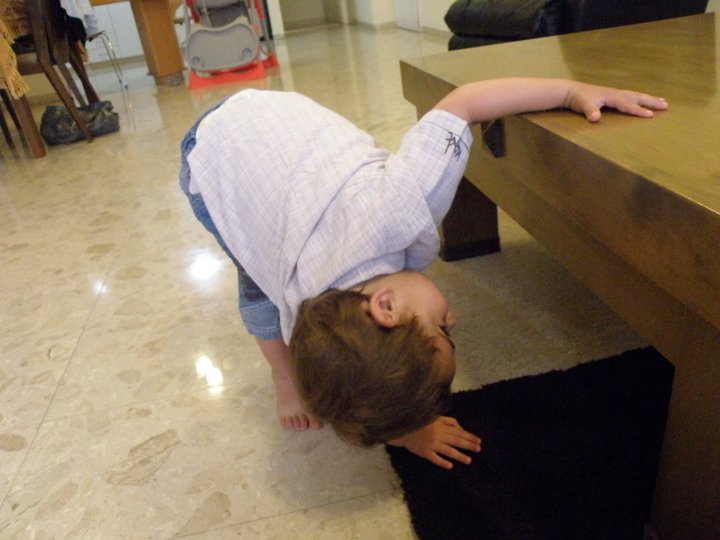
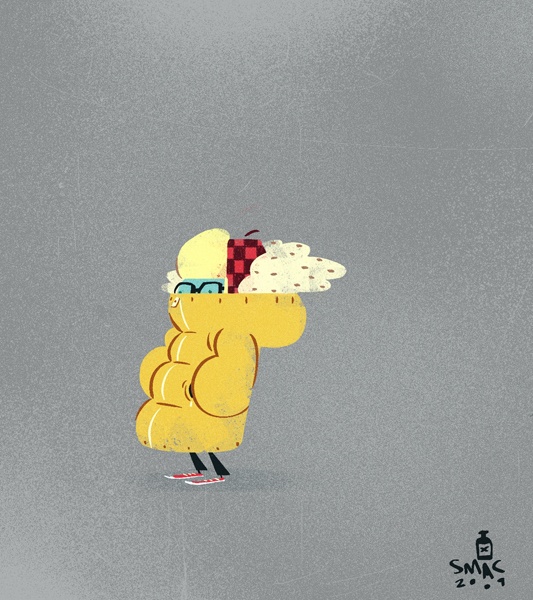
Toddler on the street–temps below freezing, and the little guy is bundled up like an onion: scarves, hat, puffy coat over hoodie and who knows what else–his little arms sticking out scarecrowishly–all you see is eyes and a tip of nose …

“Mommy, my hands went away from my body and I can’t find my thumb.”

freeze


The Language of a Smile

smile

This may be cliche to some, but not to me. I’ve seen it. Many times.

Just the other week, I saw a group of children–preschoolers–play at the airport, in the space between gates with flights departing to globe spanning destinations.

Some among the handful of kids spoke different languages, and none of them knew each other until a moment prior. 

Nonetheless, there was a long wait to be had, a few empty water bottles, a ribbon to pull, and play-ready age-mates to pass the time with. So they found a way. Their giggles filled the space with the ripple of childhood joy that knows no borders, religion, nationality, language, tradition, or race.

The children babbled to each other in their own respective languages, understanding not the words but at the very least enough to go on playing, to take turns, to get a notion for a silly something that sent waves of hilarity through the lot of them …

Adults sat nearby, keeping an eye on their child with a little less wariness of each other, now that their young ones felt so at ease. After all, these were just children playing together: they were not political statements or status symbols or religious flagships. They did not carry burdens of group-mentalities or dogmas or beliefs. It was okay to just be. To share a moment. And a smile.

For the adults, too, smiled. A careful, half-lip smile, weighted by whatever notions and knowings, history and worries adults often have for those they do not know and whose language they don’t understand. A half-smile it began but it grew warmer when eyes met following a child’s antic, a cute gesture, a silly face, a giggly laugh.

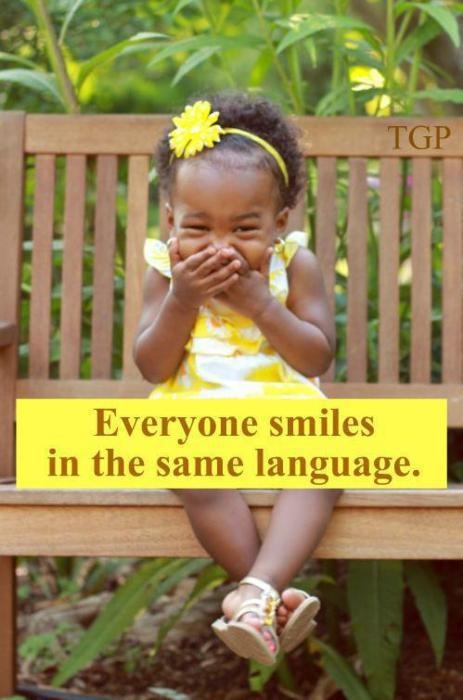
Like the children, the adults smiled the same smile in every language. Or rather, they smiled in one language–the one we all recognize and know by heart. The language of humanity. The language of a smile.


Finding the Ability in Disability

This is a wonderful talk. Inspiring, and well worth the time. Rachel Kolb does a brave, important thing in this talk. Watch it, and let your children watch it, too. Tell your colleagues. If you are a teacher–it is a must. If you work with children–watch it. You will be happy that you had.

Navigating deafness in a hearing world

It is a talk about deafness, but it is not only about deafness. It is about abilities and what we can do and what we worry we cannot and how this in of itself can limit us. It is also about the realities of difference and the many challenges that children (and families) face. It is about the barriers for communication and interaction and how they manifest throughout the domain. It is about the scope of issues that cascade from deafness (and can from other disabilities, as well).

It is about a lot of what still needs to change, and can. In 90% of families of deaf children born to hearing parents, the parents do not learn to communicate effectively (i.e. sign) with their child. Deaf children born to hearing parents are less likely to develop fluent writing skills than those born to deaf parents. It is the result of a fundamental misunderstanding. Where communication suffers, attachment suffers, and abilities suffer. Communication MATTERS.

“Never put limitations on that child,” the Speech Therapist of a then 18 months old Rachel Kolb told her mother. I like that clinician without ever having met her! Because she was right, and because she said Truth: we never do know how far a child would go, and we must give them the tools and support to get there. Not every child will reach the same goals, but we owe it to them to not impose our own limited view onto them.

As for that Speech Therapist–Oh Boy, was she right about Rachel Kolb! This young woman soars! She chooses how to use the abilities she does have, and she uses them spectacularly. This is one wonderfully unlimited woman! You’d be happy to have made the time to listen.

Listen to this talk. It may reassure you that you are on the right path if you are struggling or helping someone else who is. It may help you truly realize how not all differences in perceived ability mean differences in actual ability. It may improve your understanding of the challenges that hearing impaired persons face, and through them, the realities of other limitations. It may help your children understand the difference between accommodating and ‘indulging’, and how someone’s need for help does not mean they cannot think for themselves or should be seen as lesser than.

It is an amazing talk. Instructive, intelligent, impressive.

It WILL inspire you.

For those wondering: eighteen years of Speech Therapy is a long time. It is also not that unusual for people with severe and profound hearing loss to require that amount of time in therapy. This is not because they are slow to learn, but the act of communication is multifaceted and complex and what we take for granted is difficult to do with much reduced and distorted sound. Hearing impaired persons need help not just learn to speak and improve the clarity of their speaking, but also to speech-read (understand what a person is saying from the movement of their lips and face), to discriminate close-sounding words, to learn to rely on context, to identify new words and learn the difference between how they are written and how they are said (and heard/speech-read). They need to keep up with the realities of underlying information in language (e.g. expressions, ambiguous language, discrimination between words that sound the same to them). They work hard in Speech Therapy and they can do exceedingly well, if given the chance.

Rachel Kolb is deaf. But she is not limited. She’s been given the chance and she’s grabbed hold with two hands and then some. There were those she met in who were limited, however. Not deaf, but limited in their vision and understanding. Like the riding instructor who told her that she would never learn to ride. Or others who judge her for her voice without listening to what she has to say. It is them who have a sort of deafness, I suppose. It is them who were limiting, and in that they were limited.

Lets us not be limited. Let children grow limitless in their ability to work hard, master skills, and achieve the best they can do, not the best we think they should be able to.

Find the ability, and the sky is the limit.

Be a Light

be a light

“Can people be like light?” The question comes from a bright-eyed five-year-old (who in my view lights the room wherever she goes …).

“What do you think?” (my almost standard response to children’s questions–lets me know what they already have in mind …)

“I don’t know,” frown, scowl, “that’s why I’m asking YOU!”

(Oops, strategy backfired. Okay, I guess I deserved that)

“Why are you asking?” I am treading carefully here, asking again in a different way, but I am really interested in knowing what the question is about.

“My Nana told me I’m her light,” the girl’s young forehead creases in concentration. “She said, ‘you the light of my life!'”

“Aw … it’s a great expression! And a very sweet thing for her to say. I can totally see why.” Children of her age group often begin to notice that there are some things people say that do not quite make sense: the words don’t add up, and they realize that there has to be another meaning, something else that’s being conveyed by the words but is not the words themselves (e.g. “she has a sharp tongue” or “he has no heart” or “raining cats and dogs” …). Sometimes they can infer the meaning, sometimes they are lost or have some sense they are not sure about. I love it when they ask. “What do you think she meant?”

Girl shoots me a “there she goes again with her Speech Pathologist questions again” look, but she relents. She’s patient with me. “That she loves me?”

“Yep … and what else do you think it can mean that you are the light of her life?” I wait.

Eyebrows up, lips scrunched in thought, “… and … that she’s really happy to have me or happy to see me maybe?”

“Yes! Both. Very much so. Also that you are important to her, and that you bring her joy, and that you make her feel better by simply being you. All of that.”

The child smiles. Beams, more like.

We go on with the session. Suddenly she stops again and asks (it is very often that things percolate a while before another level of query bubbles up to the surface): “Can someone be a light for other people?”

“Do you mean for more than one person?” I want to make sure I understand.

A nod.

“Absolutely. I think you can be a light in many people’s lives.”

Pause, thought, creased forehead. Smile. “Oh, like, if you turn the light on then it is light for everyone?”

My turn to nod. My turn to smile. Super smart cookie, that one.

“Cool!” Eyes wide.  Now that she’s got it, she runs with it. “I wish … I wish I could be a light for every every EVERY ONE in the whole wide world!  A big light that goes all over around! You think I can?”

She may not know it, but I think she already is one …


Make Memories Together

by etsy

by etsy

One of the best things you can do with children is … well … to DO with children. Children–like all of us–learn through experiencing. Even more than us adults, they are wonderfully open to new learning. Their brains are literally forming as they grow. They are shaped and influenced by what they see, do, hear, feel, perceive, experience, understand, sense, have opportunity for.

Doing with children is not measured by how many classes you sign them up for, how many play-dates you arrange, the kinds of electronic gadgets or software or toys you have, how many flashcards your child can recognize by age one or how early they can recognize letters or write their names. Academics are important (though maybe not as early as some seem to push for), but they should not come instead of making memories. Of taking time to do together.

It is not about school or homework, either. It is about playing with them, spending time with them, reading to them, acting out the stories, building with blocks or constructing castles from cardboard boxes together, making forts from couch cushions and blankets, being silly, going on backyard adventures, telling jokes.

Feeling too short on time? Incorporate doing into household chores. Yes, the children may slow you down, and there may be more messes to clean up or some doing over to complete after their eyes close at night. However, your children will learn, and they will learn from you, and with you: spending time doing things together can be some of the best memories you can give. Children of all ages can benefit from ‘coming along’ or ‘doing with’ (oh, sure, preteens may make a face, but secretly they crave more time with parents, especially if that time is not for formal instruction or ‘grilling’ about school … and you’d be surprised how many conversations happen when hands are busy with a task together).

Every task can be adapted to a child’s age and ability. Baking cookies or making dinner? Depending on your child’s level, you can measure ingredients (cup, ounce, pound, liter, gallon, teaspoon, pinch, dollop …), list items, sizes and order, read or write down a recipe, watch the clock together to learn time, plan a meal, research unusual cuisines. Going for a walk? Pick leaves of different colors, count cars of various colors of identify specific vehicles and the occupations they serve, stare at a pigeon pecking on the sidewalk and compare birds to bugs to mammals to reptiles, compare views and favorites, discuss endangered animals. Folding laundry together? Sort by color, size, material, season, types of fastener, talk of fashion and media, of fitting in and being fit. Empty the dishwasher (silverware, dishes, saucers, bowls, serving platters, large-medium-small, glass, plastic, ceramic, good china, the best meal and the worst experience, school lunch, social tensions in the cafeteria …). Grocery shopping? A bonanza of options: food groups, colors, shapes, containers, ingredients, numbers, top-middle-bottom, left-right shelves. Write down list, read it aloud, check off what you put in the cart, learn about coins’ value and paper money, budget, making choices, sticking to a plan.

Make memories. Your child may not remember how many flashcards you read to them or the name of all the tutors you got for them or even all the places that you took them to … but they may well remember the time you spent teaching them how to sew a button or built a tent in the living-room, helped them bake their first ‘from scratch cookies’ or let them make a mess in the kitchen while you listened to the conundrum they had about a friend and did not judge. Want to reinforce a memory? Take a photo, write a caption, make a book together: “Michel’s First Cookies”–document the process, print the photos, tape them onto paper, write the story of them underneath. Read and have the child ‘read’ it to someone else who was not there with you (grandparents make excellent captive audiences …). Enlist older kids to make photo books or edit images into a video together.

Find wonder in small things. See and seize opportunity. Snowing? Research the unique shapes of flakes, make cutouts, hang them from the ceiling for some ‘indoor snow’ (extra memories credit for glitter …). Raining? Re-create the water cycle, demonstrate gravity, check out about steam and condensation. Grow avocado plants, sprout potatoes (learn of more than one meaning for ‘eye’ and get curious about other multiple meaning words–spring, trunk, bark, nail, key, slip, pen …). Learn together. Try new things. Fail and err and laugh and try again.

Make time for making memories. It’s hard, I know, but find the time. You don’t have to take off from work or travel to a different country. You can pluck time from the tasks you are already doing and turn them into time spent in building your child’s connection with you. You’ll also enrich their brain, skills, confidence, know-how, and sense of worthiness.

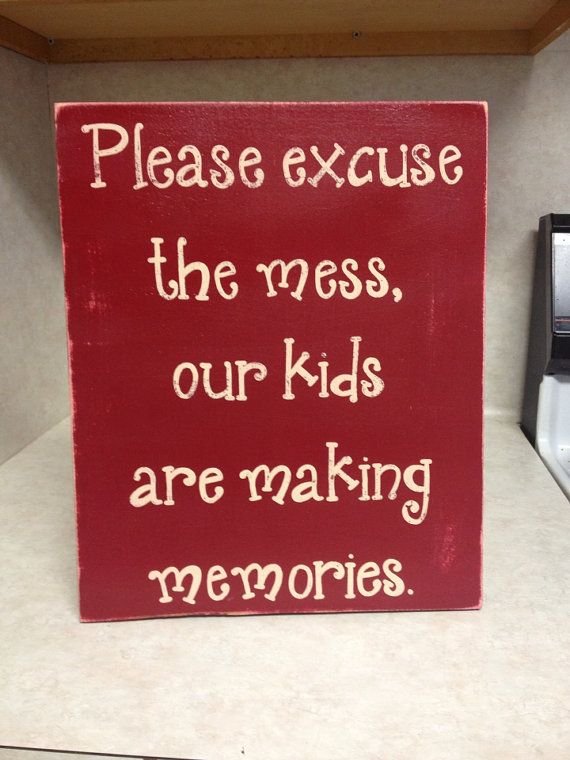
Time flies. Kids grow. Before you know the mess is gone and they are flying solo. Give the gift of sensitive, involved attention. These memories will be what they can pack along ‘to go’.

Photo Credit: S.L.

Photo Credit: S.L.

Your child hates books. Now what?

Photo Credit: S.L.

Photo Credit: S.L.

Many of the kids I see do not like reading. They find reading hard. They find it challenging. The words are too new or too many or too complicated. The letters transpose and the spelling’s tricky. They don’t like answering questions. Summaries give them stomach aches and rashes. They choose books not by topic but by least page number, thinnest spine, biggest font, and most page-gobbling illustrations. They become experts as word-counting and can pick the shortest paragraph in a glance. They often complain that they hate all books. That no genre speaks to them. For them, reading equals schoolwork, books are naught but tedious demand, and stories are equated with comprehension tests and loathsome reading responses.

Granted, the children who require Speech Therapy are often predisposed to some difficulty. They struggle with language/learning issues, they may have dyslexia, dysgraphia, learning disorders, language delay, word retrieval issues, auditory processing problems, hearing loss, attention deficit, difficulties with identifying, understanding and responding to social demands.

It would make sense that they would not like reading, concentrating as it often does all of those needed skills into a neatly typed package of condensed language. It would make sense that books would feel intimidating, crowded with small-font letters, complicated words and confusing expressions and metaphors.

All true. Yet truth remains that many children who are not language/learning disabled hate books. Maybe your child does, too. Maybe you have tried cajoling, bribing, promising, charting, stars, stickers, brownie points … and they still prefer cod liver oil to reading. Don’t despair–it does not have to be this way.

We can change that. You can change that. Here’s how:

All too often we confuse books and stories with reading. Teachers and parents clump together the child’s reading level with their interest level and language level, though those are not always compatible. Also, we stop reading TO the children and ask them to read aloud to us instead. It is good practice, we are told, we believe. It “counts” toward the 20-minutes-a-day requirement from school and catches two birds with one stone–story time and reading homework. Done. In addition, it makes us feel good to “keep tabs” on the child’s progress, and unwittingly, we make every page a test of skill, every story a piece of work. When the child resists, some parents are told to strike a compromise: “take turns reading,” they are told. It makes the book move faster, yes. It also pulls the child out of whatever listening and imagining the story they might otherwise manage, and thrusts them into the arduous task of deciphering and vocalizing. No wonder they become masters of paragraph word counting.

Children’s reading level may be far below that of the language they should and can enjoy listening to. This is true not only in First Grade, but through the elementary and middle school years. Focus on reading at the child’s reading level only, and the child is bored. Focus on reading age-appropriate books only, and the child is constantly failing to keep up as she struggles to decipher, loses track, loses interest, sees books as “too hard!”

Reading is a world onto itself. It is a skill, but also a place for wandering in a dream and conjuring up pictures from a story. It is where the association between book and pleasure can come in.

Have a child who is reading reluctant? First and foremost, divorce the reading task from the world of stories. Take upon yourself to read TO the child. Find a childhood book you loved or a story that is of interest for the child (and no, you don’t have to start with David Copperfield, the Iliad, or Huckleberry Finn…). Read it to them. This is for pleasure. Not for tallying pages for a log or counting down the minutes for homework. Not for testing, either. No demands from the child but to relax and listen. No turn taking. No asking questions to reassure yourself how much the child understood. No queries about vocabulary words you “think the child should know” unless the child stops you to ask. Let the child absorb whatever their heart lets in, even if they daydreamed half-way into the story–there is no test at the end of this one, no requirement to keep on track. You, too, relax into the book with them and read awhile. You are not wasting time but investing in the child’s internal imagery and listening. You are building book-love.

Stop before the child tires of listening. Even better, leave the reading at a cliff-hanger till the next evening. It works for TV episodes and a good mystery. It works for children, too. It gives a taste of ‘more’.

For the child’s own reading–offer books that are almost too easy but not quite. Don’t over-reach. Don’t urge them to “try something harder for a change”–one or two words that are difficult to read in every page are more than enough. Don’t push them to read “this book because I have read this and loved it when I was your age.” Don’t urge on them the book another child in class “already read a year ago.” Reading is not about just getting through the page. It is not about struggling so much to read each sentence that you must re-read it to know what it meant. Reading is about success and flow, words that string together into sentences with little effort and almost no breaks. More than the story itself, you want the child to have a sense of mastery over reading. A sense that they can read and are not exhausted by it. Make it fun. Be enthusiastic but not cloying (children have a super sensitive bull-detector for such stuff, as you know).

Keep at it. Especially keep at reading TO the child. Children who are read to through 8th Grade have bigger and more flexible vocabularies than children who are not being read to. Reading to children fosters richer imaginations and creativity. It helps with predicting and inferences, at understanding nuance, satire, metaphor, and humor. All that said–remember–the stories you read TO the child are not a platform for testing them for knowledge or comprehension. After all, when you pick up a bestseller or a favorite novel, you don’t have to write a narrative about it later … you are not made to answer formal questions about vocabulary, who did what to whom when why or where, or to find examples of simile and metaphor …

Keep at it. Soon enough you’d find yourself leaving the book (cliff hanger dangling) someplace within the child’s reach, and catch a little nose stuck in it when you aren’t looking. An insider’s hint: this works even better with a flashlight within reach and a off-handed story about how your aunt or uncle or second-cousin got into trouble reading under the covers after lights were officially to be out …

Have fun, and may the reading fairies smile.